



Understanding why is cloud security part of cybersecurity
Yes, cloud security vs cyber security is a common point of confusion, but it is part of cybersecurity, functioning as a specialized subset focused on protecting data, applications, and infrastructure within virtualized environments. While cybersecurity serves as the overarching umbrella for all digital protection strategies, cloud security addresses unique challenges introduced by the shared responsibility model, such as API vulnerabilities, misconfigured storage buckets, and multi-tenancy risks.
Shared objectives in threat mitigation
Both cloud security and general cybersecurity operate under the core mandate of the CIA triad: Confidentiality, Integrity, and Availability. These objectives remain constant regardless of whether an asset resides on-premises or within a public cloud provider like AWS, Azure, or Google Cloud.
- Confidentiality: Both domains employ encryption—at rest and in transit—to ensure unauthorized parties cannot access sensitive information. In cloud environments, this often involves managing complex Identity and Access Management (IAM) policies to enforce the principle of least privilege.
- Integrity: Protecting data from unauthorized modification is critical. Cybersecurity teams utilize hashing and digital signatures, while cloud-native tools like AWS CloudTrail or Azure Monitor provide audit logs to track changes in infrastructure state, preventing malicious configuration drift.
- Availability: Ensuring systems remain operational is a shared goal. Cybersecurity focuses on DDoS mitigation and network redundancy. Cloud security practitioners leverage auto-scaling groups, multi-region deployments, and load balancers to maintain uptime during traffic spikes or regional outages.
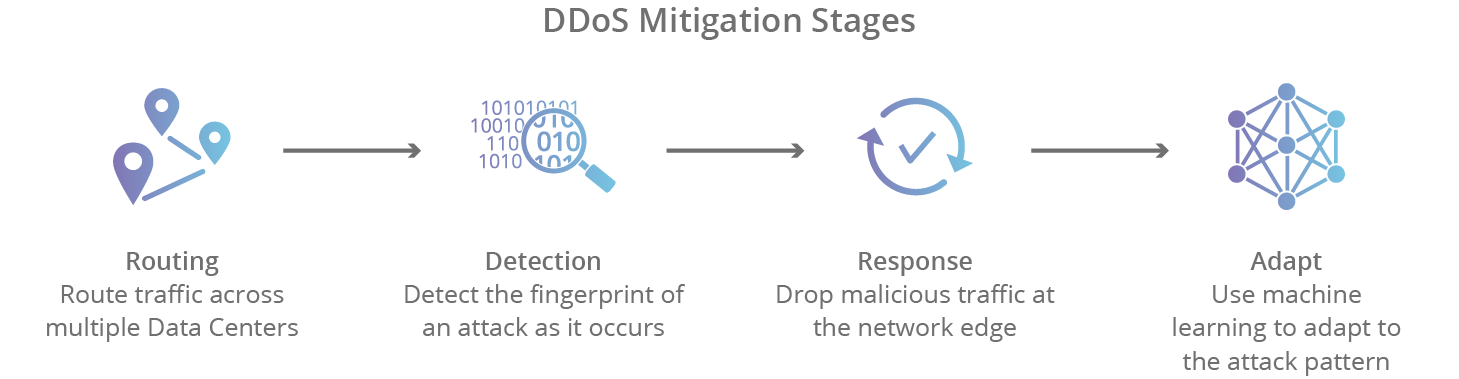
The distinction lies in the implementation mechanism. Traditional cybersecurity often relies on perimeter-based defenses like firewalls and physical access controls.
Conversely, cloud security operates in a perimeter-less environment where the identity of the user and the security of the API call become the primary control planes. Understanding this relationship is vital for organizations transitioning from legacy data centers to cloud-native architectures, as it prevents the dangerous assumption that cloud providers manage all aspects of security automatically.
Distinguishing cloud security from traditional cybersecurity
While cloud security is fundamentally a subset of cybersecurity, it operates on a distinct set of principles. Traditional cybersecurity focuses on securing perimeter-based infrastructure, such as on-premises servers, firewalls, and physical hardware located within a corporate data center.
In contrast, cloud security addresses the protection of data, applications, and infrastructure hosted in virtualized environments managed by third-party providers like AWS, Microsoft Azure, or Google Cloud. The primary shift lies in the concept of the “perimeter.” In a traditional setup, the security team controls the entire stack from the physical cabling to the application layer.
In the cloud, the perimeter is identity-centric. Access management, API security, and encryption of data in transit between distributed microservices become the primary defensive layers, rather than physical network segmentation.
The shared responsibility model
Understanding the shared responsibility model is essential for any organization migrating to the cloud. This framework dictates that security is a collaborative effort between the cloud service provider (CSP) and the customer. For smaller entities, a comprehensive cloud security guide for SMEs can be particularly helpful. The specific division of labor depends on the service model:
- Infrastructure as a Service (IaaS): The CSP is responsible for the security of the physical data centers, hardware, and the virtualization layer. The customer retains responsibility for securing the guest operating system, network configuration, firewall rules, and all data stored within the environment.
- Platform as a Service (PaaS): The CSP manages the underlying infrastructure and the runtime environment. The customer focuses primarily on securing their application code and the data processed by that application.
- Software as a Service (SaaS): The CSP manages almost the entire stack, including the application itself. The customer is primarily responsible for identity and access management (IAM), endpoint security for devices accessing the service, and data governance.
A common failure point occurs when organizations assume that moving to the cloud automatically offloads all security risks to the provider. In reality, misconfigurations—such as leaving an S3 bucket public or failing to implement multi-factor authentication—remain the customer’s responsibility. Even if the CSP provides the tools, the customer must implement them correctly to maintain a secure posture.
Technical mechanisms defining cloud security
Cloud security operates through a distinct set of technical controls designed to protect distributed, ephemeral environments. Unlike traditional on-premises security that relies on physical firewalls and network segmentation, cloud security integrates directly into the application stack and API layers. This shift requires security teams to manage shared responsibility models where the provider secures the underlying hardware while the client secures the data, configurations, and access protocols. Many professionals acquire these essential skills, and understanding if cloud security requires coding is part of this, through free cloud security certification.
Identity and Access Management (IAM) in the cloud
In cloud-native environments, identity has effectively replaced the network perimeter. Because cloud resources are accessible via public APIs, traditional IP-based filtering is insufficient.
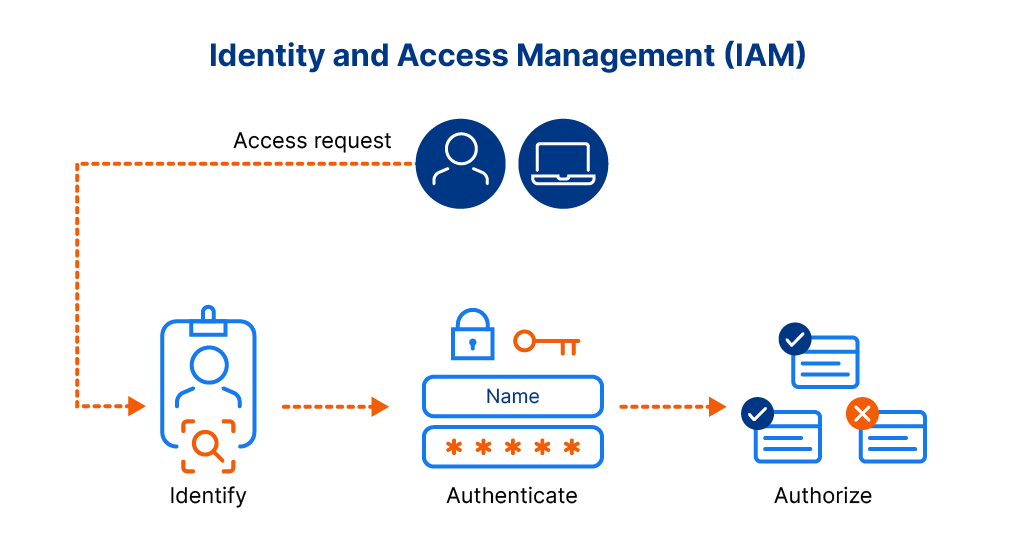
IAM serves as the primary enforcement point, utilizing granular policies to dictate what a user or service account can perform. Organizations must implement the principle of least privilege, ensuring that service roles are restricted to specific actions—such as read-only access to an S3 bucket—rather than broad administrative permissions. By leveraging temporary security tokens and multi-factor authentication (MFA), administrators can mitigate the risks associated with credential theft, which remains the leading cause of cloud data breaches.
Cloud Security Posture Management (CSPM) tools
Cloud environments are prone to human error, particularly regarding misconfigured storage buckets or overly permissive security groups. If you are wondering what is cloud security posture management, these tools provide continuous monitoring and automated remediation across platforms like AWS, Azure, and GCP.
These tools scan the environment against industry benchmarks, such as the CIS Foundations Benchmark, to identify deviations from security best practices. For instance, a CSPM platform can automatically detect if an RDS database is publicly accessible and trigger a Lambda function to restrict access immediately. By automating the detection of configuration drift, security teams move away from manual audits toward a proactive, policy-as-code approach that keeps the infrastructure compliant with evolving security standards.
Operational limitations and risk factors
While cloud security is a specialized subset of cybersecurity architecture, operational friction often arises when organizations treat these domains as distinct silos. The primary limitation stems from the shared responsibility model, where the cloud service provider (CSP) manages the infrastructure, but the client remains responsible for data, identity, and access management.
Misinterpreting these boundaries frequently leads to misconfigured storage buckets, overly permissive IAM roles, and neglected API security.
Risks of security fragmentation
Security fragmentation occurs when an organization maintains disconnected policies for on-premises data centers and cloud-native environments. This lack of architectural cohesion creates blind spots that attackers exploit through lateral movement.
When security teams use disparate toolsets—such as legacy firewalls for local traffic and cloud-native security posture management (CSPM) tools for virtual private clouds—they lose the ability to enforce a unified security policy. This mismatch results in inconsistent logging, fragmented visibility, and delayed incident response times.
The dangers of this fragmentation are particularly evident in hybrid deployments. For example, an organization might implement robust multi-factor authentication (MFA) for on-premises VPN access while leaving cloud-based management consoles exposed with only password-based authentication. This inconsistency creates a path of least resistance for credential-stuffing attacks.
:quality(75)/2024_1_28_638419969626692851_mfa-la-gi-1.png)
Furthermore, fragmented policies complicate compliance auditing. Auditors often struggle to verify security controls when the configuration logic for a database in a private cloud differs significantly from the logic applied to an Amazon RDS or Azure SQL instance.
To mitigate these risks, security architects must adopt a unified identity-centric approach. By integrating cloud access security brokers (CASB) with existing security information and event management (SIEM) systems, teams can normalize logs across environments. This integration, often seen in cloud security vs DevSecOps discussions, ensures that a security alert generated in a containerized environment is treated with the same priority and policy enforcement as an alert from an on-premises server. Failing to bridge this gap leaves the organization vulnerable to configuration drift, where security settings unintentionally degrade over time as cloud resources scale automatically without human oversight.
Strategic integration for enterprise resilience
Integrating cloud security into the broader cybersecurity framework is not merely a compliance exercise; it is a fundamental requirement for maintaining operational continuity. When organizations treat cloud infrastructure as an isolated silo, they create blind spots that attackers exploit through lateral movement. If you are considering a career in this field, you might ask is cloud security a good career, given the high demand for experts who can bridge these gaps and the increasing availability of remote cloud security jobs. Understanding the cloud security engineer salary benchmarks is also crucial for career planning.
Unified security monitoring strategies
Achieving comprehensive visibility requires the aggregation of telemetry from disparate sources into a centralized Security Information and Event Management (SIEM) system. Relying on native cloud logs alone—such as AWS CloudTrail or Azure Monitor—is insufficient for identifying sophisticated threats that traverse hybrid networks.
Security teams must implement a unified pipeline that normalizes data from cloud control planes, endpoint detection and response (EDR) agents, and traditional network firewalls. To build an effective monitoring strategy, follow these technical steps:
- Log Normalization: Use a common schema, such as the Open Cybersecurity Schema Framework (OCSF), to ensure that logs from different vendors are comparable and searchable.
- Contextual Enrichment: Tag cloud resources with metadata, such as business unit or environment type, to prioritize alerts based on the criticality of the affected asset.
- Automated Correlation: Configure your SIEM to trigger alerts only when anomalous patterns appear across multiple layers. For example, a successful login from an unknown IP followed by an unusual API call in the cloud environment should be treated as a high-severity incident.
- API-Driven Response: Leverage SOAR (Security Orchestration, Automation, and Response) tools to execute automated playbooks, such as isolating a compromised virtual machine or revoking an IAM role, immediately upon threat detection.
By centralizing these data streams, security operations centers (SOCs) can shift from reactive firefighting to proactive threat hunting. This integrated approach confirms that cloud security is an inseparable component of the overarching cybersecurity strategy, allowing for a unified defense posture that adapts as the enterprise footprint expands into new cloud regions or services.
Frequently Asked Questions
Classification of cloud security within cybersecurity
Yes, cloud security is a specialized subset of cybersecurity. While cybersecurity covers the broad protection of digital assets, cloud security focuses specifically on the unique challenges of cloud-based environments, such as multi-tenancy, API vulnerabilities, and the shared responsibility model between providers and users.
Key distinctions between cloud and traditional cybersecurity
Traditional cybersecurity often focuses on perimeter-based defense of on-premises hardware. Cloud security shifts the focus to identity-centric security, data protection in transit and at rest across third-party servers, and the management of ephemeral resources that scale automatically.


