



Defining what is cloud security posture management beyond the marketing
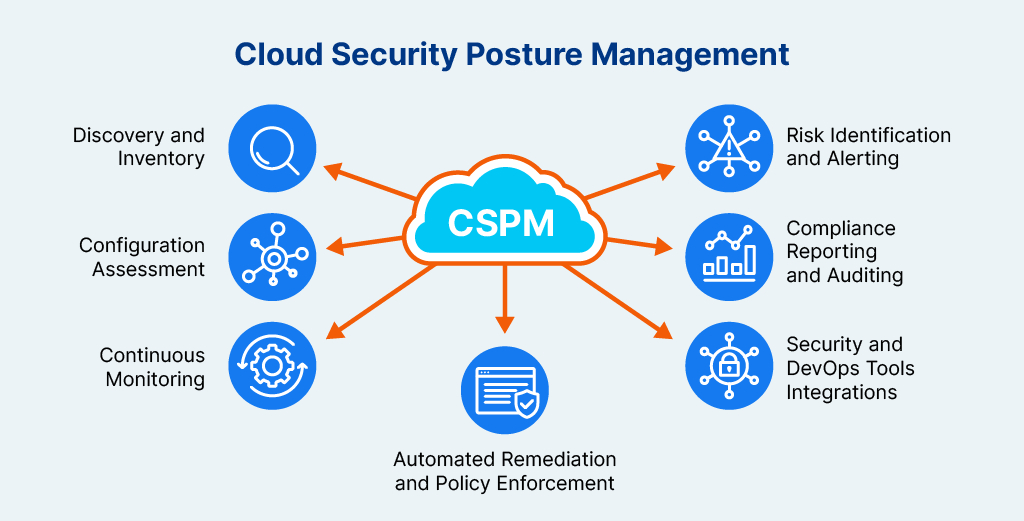
Cloud security posture management (CSPM) is a specialized security discipline designed to identify, visualize, and remediate misconfigurations across cloud infrastructure. It acts as a continuous monitoring engine that evaluates your cloud environment against security best practices to prevent data breaches caused by human error.
Core mechanisms of automated compliance
CSPM tools function by ingesting metadata from cloud provider APIs—such as AWS Config, Azure Resource Graph, or Google Cloud Asset Inventory—to create a real-time map of your resources. These tools then map the current configuration state against industry-standard frameworks, including CIS Benchmarks, SOC2, HIPAA, or PCI-DSS. When a resource, such as an S3 bucket with public read access, deviates from a defined policy, the CSPM engine triggers an alert or, in some cases, an automated remediation script to restore the secure state.
Myth of the set-and-forget security automation
A prevalent misconception is that deploying a CSPM tool provides comprehensive security without further human intervention. In reality, CSPM is a diagnostic tool, not a silver bullet; it requires significant operational effort to tune policies to the specific risk tolerance of your organization. Without active management, these platforms often generate thousands of low-priority alerts, leading to security team burnout.
Necessity of context-aware policy tuning
Generic rules provided by vendors often fail to account for unique business architectures. For instance, a rule flagging all unencrypted databases might trigger false positives for development environments where encryption is intentionally disabled for testing. Customizing these policies to ignore specific resource tags or environments is essential to ensure that your security team focuses only on high-fidelity, actionable threats.
Distinguishing CSPM from cloud workload protection platforms
While CSPM focuses on the control plane and infrastructure configuration, Cloud Workload Protection Platforms (CWPP) focus on the data plane and the runtime environment. CSPM tells you that a virtual machine has an open port, whereas CWPP tells you if a malicious process is actually running inside that machine.
Operational boundaries between configuration and runtime
CSPM lacks visibility into the internal state of a workload, such as memory usage, file integrity, or network traffic patterns. Attempting to use CSPM as a replacement for endpoint security or workload-level agents leaves significant blind spots, as it cannot detect sophisticated exploits that occur after a resource is correctly configured.
Reality of multi-cloud visibility limitations
Managing disparate cloud environments through a single pane of glass is technically constrained by the varying maturity of cloud provider APIs. While CSPM tools aim to provide a unified view, they are ultimately limited by the data quality and latency provided by the underlying cloud platforms.
API rate limits and data latency challenges
When a CSPM tool polls multiple cloud environments, it must navigate strict API rate limits to avoid performance degradation. This often results in data latency, meaning the security dashboard may reflect a state that existed several minutes ago, rather than the absolute current reality of your infrastructure.
Strategic integration of CSPM into DevSecOps workflows
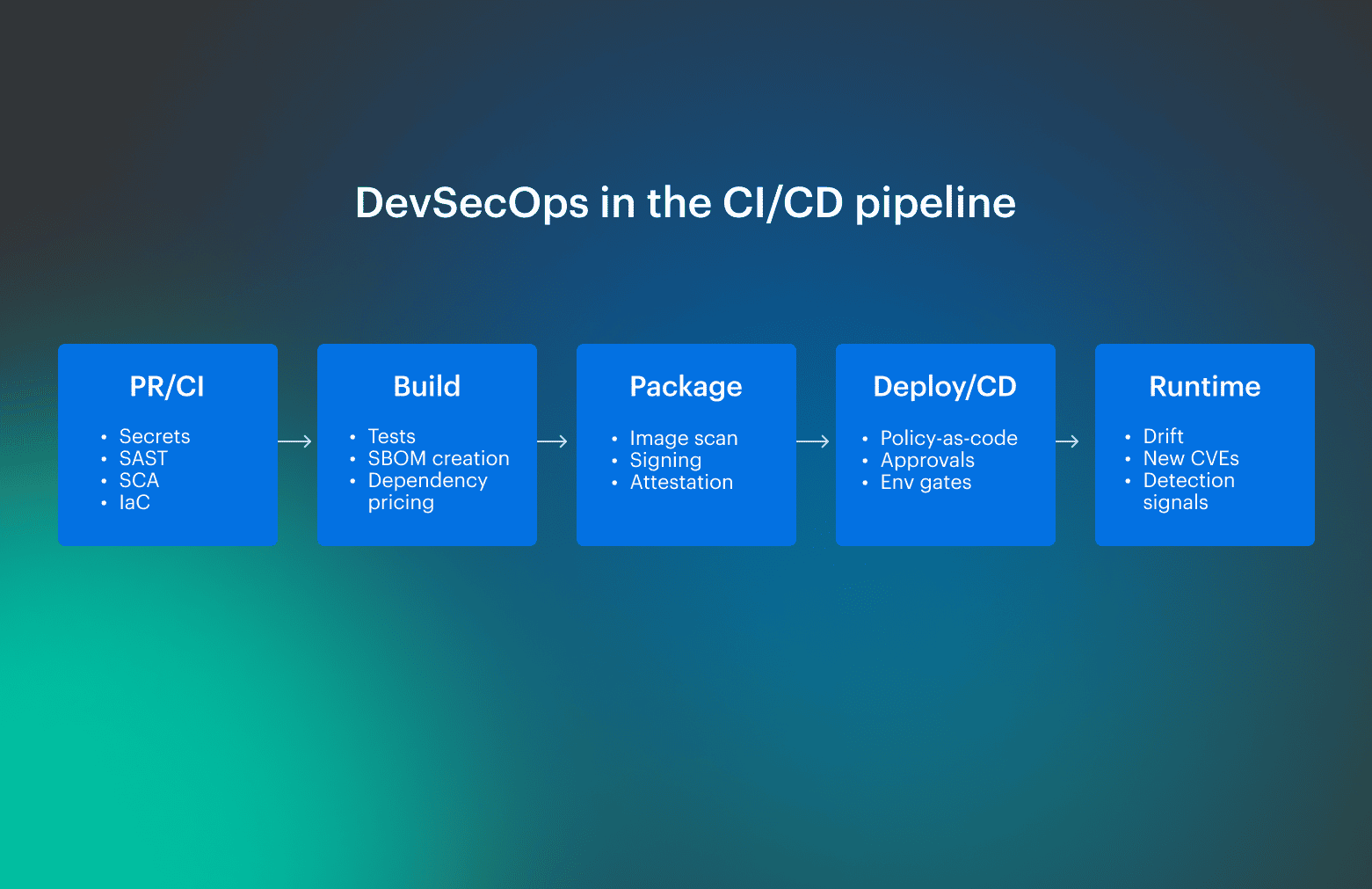
To be effective, CSPM must move beyond passive monitoring and integrate directly into the development lifecycle. This involves shifting security left by running infrastructure-as-code (IaC) scans within CI/CD pipelines, allowing developers to catch misconfigurations before they are deployed to production.
Automating remediation versus manual intervention
Auto-remediation offers the promise of instantaneous security, but it carries the risk of breaking production applications. A misconfigured automated script could, for example, inadvertently shut down a critical service by revoking necessary permissions. Organizations should prioritize manual approval workflows for production environments while reserving automated remediation for non-critical or development assets.
Practical implementation steps for security teams
To successfully implement CSPM, start by auditing your current cloud footprint to identify high-risk assets. Next, prioritize the deployment of baseline policies that align with your specific compliance requirements, such as CIS benchmarks. Finally, establish a feedback loop where security engineers regularly review alert volume to refine policy thresholds, ensuring that the tool remains a source of actionable intelligence rather than noise.
Advanced considerations for cloud security posture management
Beyond basic compliance, mature organizations use CSPM to manage identity and access management (IAM) drift. IAM permissions often expand over time as developers add roles for temporary tasks, creating excessive privilege risks. Advanced CSPM implementations analyze actual usage logs to identify unused permissions, allowing teams to enforce the principle of least privilege dynamically.
Handling ephemeral infrastructure
Modern cloud environments rely heavily on serverless functions and containers that may exist for only seconds. Traditional scanning methods often miss these ephemeral assets. Effective CSPM strategies must utilize event-driven triggers—such as AWS CloudTrail or Azure Activity Logs—to scan resources the moment they are provisioned, rather than relying on periodic polling cycles.
Frequently Asked Questions
Comparison of cloud security and traditional cybersecurity
Yes, it is often considered more complex due to the shared responsibility model, the speed of infrastructure changes, and the vast, distributed nature of cloud environments.
Technical skill requirements for cloud security engineers
While not always mandatory, proficiency in languages like Python or Go is highly beneficial for automating security tasks and interacting with cloud APIs.
Recommended cloud security certifications for beginners
The CCSP (Certified Cloud Security Professional) or platform-specific certifications like the AWS Certified Security – Specialty are excellent starting points.
Growth trajectory of cloud security careers
Yes, as organizations continue to migrate to the cloud, the demand for professionals who can secure these complex environments is significantly outpacing the supply.
Distinctions between cloud security and network security
Network security focuses on protecting the perimeter and traffic flow, whereas cloud security encompasses identity, data, application, and infrastructure configuration across virtualized environments.
Operational mechanics of cloud security
Cloud security works by implementing a combination of identity management, encryption, continuous monitoring, and automated policy enforcement to protect data and resources across cloud platforms.


