



Core architecture requirements for cloud security
Effective cloud security relies on a shared responsibility model where the provider secures the underlying infrastructure while the client manages data and access configurations. Establishing a baseline requires verifying that the provider supports native encryption at rest and in transit, alongside robust hardware-backed key management.
Encryption standards and key management protocols
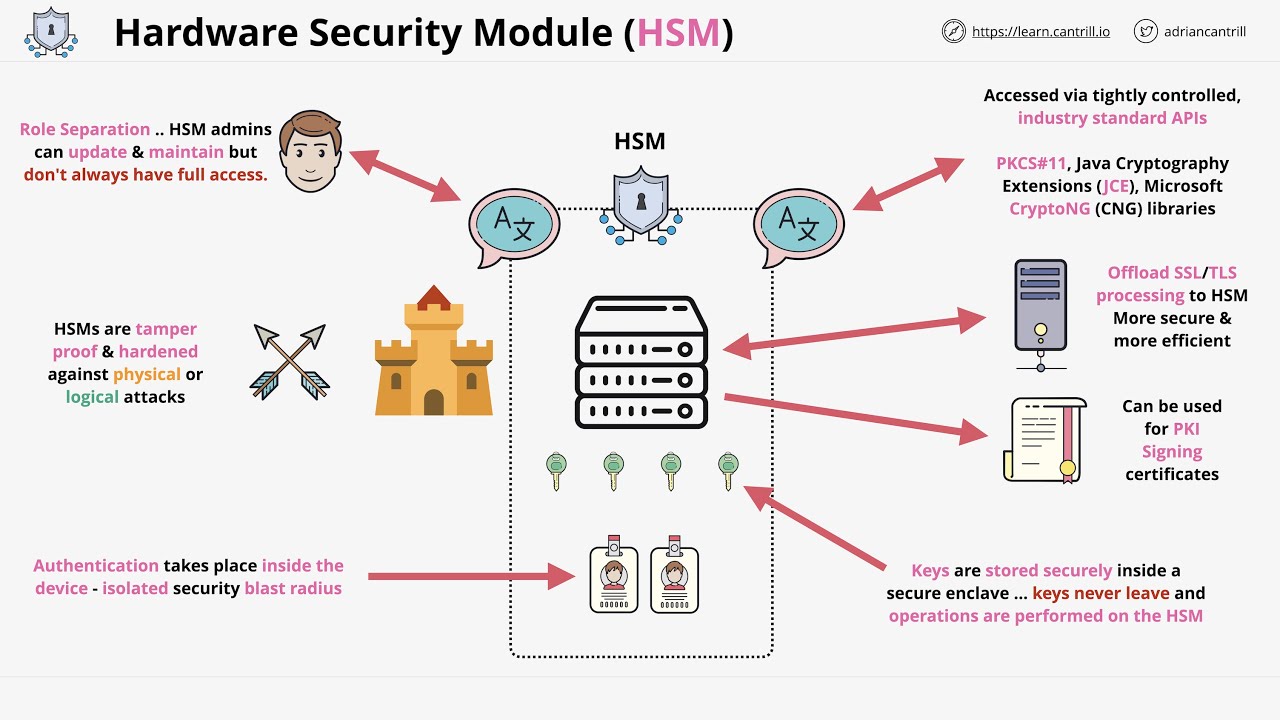
Ensure the provider implements AES-256 encryption for all data volumes by default. A mature vendor must offer integration with Hardware Security Modules (HSM) or Key Management Services (KMS) that allow customers to maintain control over their own encryption keys (BYOK). This prevents the vendor from accessing plaintext data without explicit authorization.
Identity and access management integration
Centralized identity management is the primary defense against unauthorized access. Your chosen platform must support Multi-Factor Authentication (MFA) across all administrative accounts and provide granular Role-Based Access Control (RBAC). Verify that the system integrates seamlessly with existing enterprise identity providers like Okta, Azure AD, or Ping Identity via SAML 2.0 or OIDC protocols.
Compliance and regulatory alignment
Mapping vendor capabilities to your specific industry requirements is essential to avoid legal liability. Look for third-party certifications such as SOC 2 Type II, ISO 27001, and HIPAA compliance reports, which should be readily available in the vendor’s compliance portal.
- SOC 2 Type II: Essential for service-based organizations.
- ISO 27001: Global standard for information security management.
- HIPAA/HITECH: Mandatory for healthcare data handling.
- PCI DSS: Required for processing payment card information.
Audit trail and reporting capabilities
Granular logging is non-negotiable for forensic analysis and regulatory compliance. The platform must provide immutable audit logs that capture every API call, user login, and configuration change. Automated compliance monitoring tools should flag deviations from your security policy in real-time, providing actionable reports rather than just raw data.
Operational visibility and threat detection
Visibility into cloud environments requires tools that can ingest and analyze telemetry data from virtual machines, containers, and serverless functions. A robust security posture depends on the ability to detect anomalies before they escalate into full-scale breaches.
Automated incident response workflows
Modern platforms should offer automated remediation capabilities, such as isolating a compromised instance or revoking an IAM role automatically upon detecting suspicious activity. These workflows must be customizable to prevent false positives from disrupting critical business operations.
Integration with existing security operations centers
Your cloud environment must feed data directly into your existing SIEM (Security Information and Event Management) and SOAR (Security Orchestration, Automation, and Response) platforms. Native API connectors for tools like Splunk, IBM QRadar, or Google Chronicle are critical for maintaining a unified security view.
Data sovereignty and regional storage controls
Legal risks regarding data residency are managed by selecting providers that offer specific regional data centers. Ensure the vendor allows you to pin your data to specific jurisdictions, such as the EU for GDPR compliance, preventing data from being replicated or stored in unauthorized geographic locations.
Vendor service level agreements and support
Service Level Agreements (SLAs) define the legal boundaries of your security partnership. Scrutinize the fine print regarding uptime guarantees, which should ideally be 99.99% or higher, and verify the compensation structure if these metrics are not met.
Defining acceptable downtime and recovery time objectives
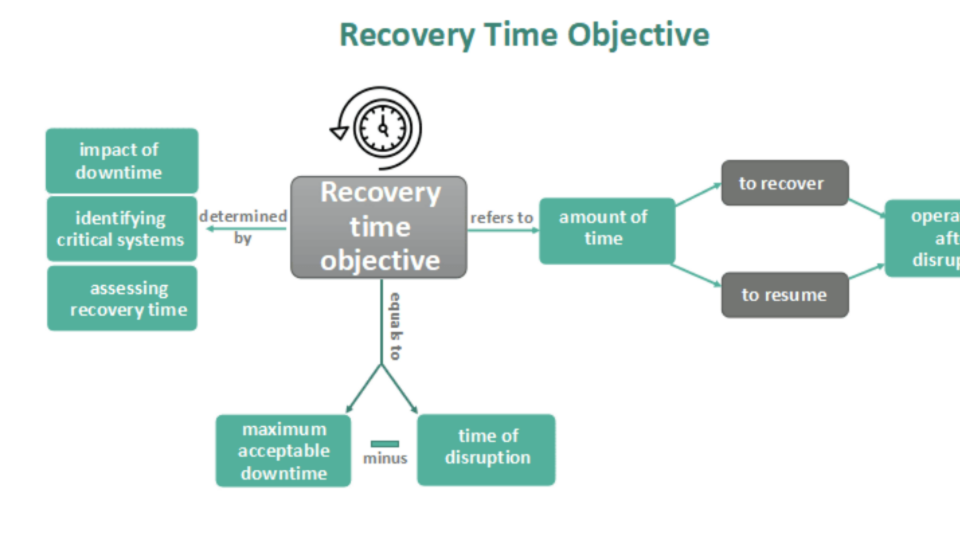
Establish clear Recovery Time Objectives (RTO) and Recovery Point Objectives (RPO) within your contract. A reliable vendor provides documented disaster recovery procedures and guarantees the availability of backups, ensuring business continuity even during major service disruptions.
Scalability and performance impact
Security tools should not become a bottleneck for application performance. Evaluate the overhead of agent-based security software on CPU and memory usage, and ensure that network-based security controls, such as Web Application Firewalls (WAF), do not introduce unacceptable latency to your user-facing traffic.
Cost structure and total cost of ownership
Subscription fees are only part of the financial commitment. Factor in egress costs for moving data out of the cloud, the cost of specialized security personnel training, and the potential expense of premium support tiers required for rapid incident response.
Exit strategy and data portability
Avoid vendor lock-in by ensuring your data can be exported in standard, non-proprietary formats. Test your ability to migrate configurations and infrastructure-as-code templates to a secondary provider, ensuring that your security policies remain consistent regardless of the underlying cloud platform.
Strategic considerations for long-term resilience
Building a resilient posture requires continuous assessment. Organizations must move beyond static checklists and adopt a proactive stance. This involves regular penetration testing, red-teaming exercises, and constant monitoring of the threat landscape. By prioritizing automation and visibility, enterprises can effectively mitigate risks associated with distributed cloud architectures.
Advanced Cloud Security Threat Modeling
Enterprises should conduct regular threat modeling exercises to identify potential attack vectors specific to their cloud deployment. This involves mapping out data flows between microservices and identifying where sensitive information is exposed. Using frameworks like STRIDE (Spoofing, Tampering, Repudiation, Information Disclosure, Denial of Service, and Elevation of Privilege) helps security teams anticipate how an attacker might exploit misconfigured S3 buckets or overly permissive IAM roles. Documenting these findings allows for the implementation of compensating controls before a vulnerability is exploited in production.
Implementing Zero Trust Architecture
Modern cloud security requires moving away from perimeter-based defenses toward a Zero Trust model. This approach assumes that no user or device is inherently trustworthy, regardless of whether they are inside or outside the corporate network. To implement this, organizations must enforce strict identity verification for every access request, utilize micro-segmentation to limit lateral movement, and apply the principle of least privilege (PoLP) to all service accounts. By treating every connection as a potential threat, enterprises significantly reduce the blast radius of a successful credential compromise.
Evaluating Cloud Security Posture Management (CSPM) Tools
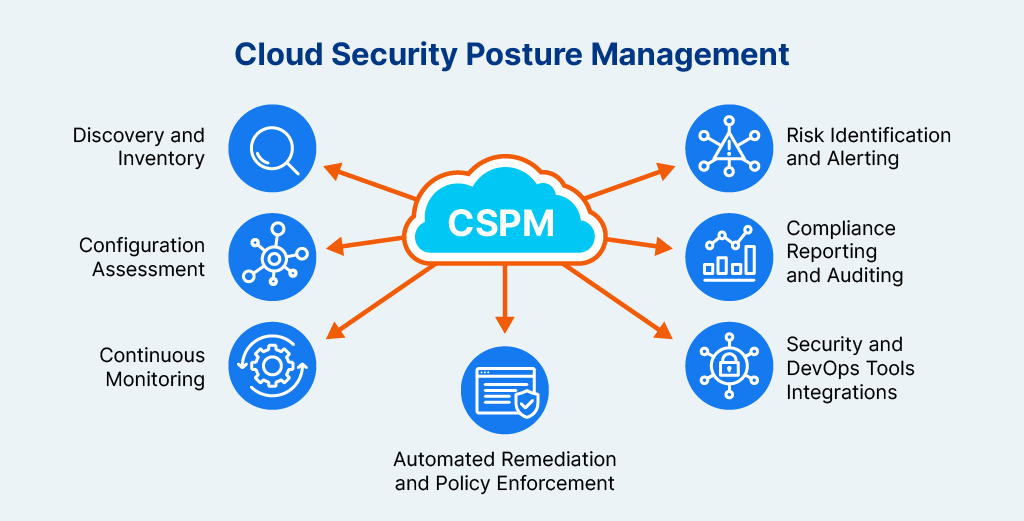
Beyond manual configuration, enterprises should deploy CSPM tools to automate the detection of misconfigurations. These tools continuously scan your cloud environment against industry benchmarks like the CIS Foundations Benchmark. For example, a CSPM tool can automatically detect if an S3 bucket is publicly accessible or if an RDS instance lacks encryption, providing a remediation path to fix the issue before it becomes a security incident. This proactive layer is essential for maintaining a consistent security posture across multi-cloud environments.
Supply Chain Security in Cloud Environments
Modern cloud security must extend to the software supply chain. Enterprises often rely on third-party libraries and container images that may contain hidden vulnerabilities. Implementing a Software Bill of Materials (SBOM) allows security teams to track every component within their applications. Furthermore, integrating container image scanning into your CI/CD pipeline ensures that only verified, vulnerability-free images are deployed to production environments. This prevents the introduction of malicious code through compromised dependencies, a common vector in modern cloud-native attacks.
Container and Serverless Security
Modern enterprise cloud deployments heavily leverage containers (e.g., Docker, Kubernetes) and serverless functions (e.g., AWS Lambda, Azure Functions) for agility and scalability. Evaluating cloud security for these ephemeral workloads requires specialized considerations beyond traditional VM-based security.
Runtime Protection for Containers and Serverless
Ensure the cloud security solution offers robust runtime protection. For containers, this means monitoring for suspicious process execution, unauthorized file access, and network anomalies within the container itself. Solutions should integrate with Kubernetes admission controllers to enforce security policies at deployment time, preventing vulnerable images from running. For serverless functions, look for capabilities that analyze function code for vulnerabilities, monitor execution environments for deviations from baseline behavior, and restrict network access to only necessary endpoints.
Image Scanning and Vulnerability Management
A critical aspect of container security is continuous image scanning. The chosen platform should integrate with your CI/CD pipeline to scan container images for known vulnerabilities (CVEs) and misconfigurations before they are deployed. This includes scanning base images, application layers, and third-party dependencies. Regular rescans of images in registries are also vital to catch newly discovered vulnerabilities in deployed applications. For serverless, this translates to scanning function code and dependencies for security flaws.
Network Micro-segmentation for Cloud-Native Workloads
Implementing network micro-segmentation is crucial for limiting the blast radius in containerized and serverless environments. Evaluate solutions that can define granular network policies between individual containers, pods, or serverless functions. This ensures that even if one component is compromised, an attacker cannot easily move laterally to other parts of the application or infrastructure. Policies should be enforced at the network layer, often leveraging service meshes or native cloud network controls.
Frequently Asked Questions
Comparison of cloud security versus traditional cybersecurity
It is different rather than harder. While traditional security focuses on physical perimeters, cloud security requires a shift toward identity-centric controls and managing ephemeral, software-defined resources.
Technical skill requirements for cloud security engineers
Yes, coding skills are essential. You need to understand Infrastructure as Code (IaC) tools like Terraform or CloudFormation and be able to script in Python or Go to automate security tasks.
Recommended cloud security certifications for beginners
The CCSK (Certificate of Cloud Security Knowledge) by the Cloud Security Alliance is widely considered the best entry-level certification for understanding cloud security fundamentals.
Growth trajectory of the cloud security career field
Yes, it is one of the fastest-growing sectors in IT due to the global migration of enterprise workloads to cloud environments and the increasing sophistication of cyber threats.
Distinctions between cloud security and network security
Network security focuses on protecting the perimeter and traffic between devices, while cloud security focuses on securing data, applications, and identities within a shared, virtualized infrastructure.
Functional mechanics of the shared responsibility model
The shared responsibility model functions by delineating duties: the provider manages the physical hardware, networking, and virtualization layers, while the customer is responsible for data encryption, identity management, and application-level security configurations.
- Is Cloud Security a good career? Realities for technical professionals
- Cloud security posture management realities beyond the automation myth
- Discrepancies in cloud security engineer salary benchmarks and market valuation
- Evaluation framework for top cloud security tools in enterprise infrastructure


