



Operational scope of cloud security vs devsecops
Cloud security and DevSecOps represent two distinct layers of a modern enterprise defense strategy. Understanding the cloud security vs cyber security landscape is essential, as cloud security focuses on the integrity of the environment itself, while DevSecOps integrates security protocols directly into the software development lifecycle (SDLC).
Misunderstanding this distinction often leads to gaps where infrastructure is hardened but application code remains vulnerable to injection or logic flaws.
Core objectives of cloud security
Cloud security is primarily concerned with maintaining a secure posture for the underlying infrastructure provided by platforms like AWS, Azure, or GCP. Its operational scope includes:
- Identity and Access Management (IAM): Enforcing the principle of least privilege using tools like AWS IAM or Azure Active Directory to ensure only authorized entities access cloud resources.
- Data Protection at Rest: Implementing encryption standards such as AES-256 for storage buckets (e.g., Amazon S3 or Google Cloud Storage) to prevent unauthorized data exfiltration.
- Infrastructure Posture Management: Utilizing what is cloud security posture management (CSPM) tools like Wiz or Palo Alto Prisma Cloud to detect misconfigurations, such as publicly exposed S3 buckets or overly permissive security groups.
Core objectives of DevSecOps
DevSecOps shifts the security focus from reactive perimeter defense to proactive, automated integration within the CI/CD pipeline. The goal is to identify vulnerabilities before code reaches production. Key mechanisms include:
- Shift-Left Testing: Integrating Static Application Security Testing (SAST) tools like Snyk or SonarQube directly into the developer’s IDE or the build process to catch insecure coding patterns in real-time.
- Automated Pipeline Security: Embedding Software Composition Analysis (SCA) to scan third-party dependencies for known CVEs (Common Vulnerabilities and Exposures) during the build phase.
- Infrastructure as Code (IaC) Scanning: Using tools like Checkov or Terraform-compliance to validate configuration files before deployment, ensuring that security policies are treated as code rather than manual checklists.
By distinguishing these roles, organizations can avoid the trap of relying solely on cloud platform tools to protect custom-built applications. Effective security requires the infrastructure-level controls of cloud security to work in tandem with the code-level automation inherent in DevSecOps. Professionals looking to validate their expertise in these areas often pursue a free cloud security certification to build a foundational knowledge base.
Market demand and professional opportunity mapping
The distinction between cloud security vs devsecops is increasingly blurred as enterprises shift from reactive perimeter defense to proactive, pipeline-integrated security. Cloud security focuses on protecting the infrastructure layer—such as AWS IAM policies, S3 bucket encryption, and Azure Key Vault management.
DevSecOps embeds security controls directly into the CI/CD pipeline. This integration creates a distinct professional niche where engineers must understand both infrastructure-as-code (IaC) and automated vulnerability scanning.
High-growth sectors for cloud security specialists
Regulated industries are driving the most aggressive hiring for cloud security professionals. In fintech, firms like Stripe and Revolut require experts who can manage PCI-DSS compliance within ephemeral cloud environments.
Similarly, healthcare providers leveraging AWS or GCP must adhere to HIPAA standards, necessitating specialists who can configure GuardDuty or Google Cloud Security Command Center to detect unauthorized access in real-time. These roles demand a deep understanding of Zero Trust architecture and the ability to audit cloud-native identity providers.
The premium on DevSecOps automation skills
Organizations are paying a significant cloud security engineer salary premium for engineers who can bridge the gap between rapid code deployment and security compliance. Unlike traditional cloud security roles that focus on monitoring, DevSecOps professionals are tasked with building automated guardrails.
This involves integrating tools like Snyk, Prisma Cloud, or HashiCorp Sentinel directly into Jenkins, GitLab CI, or GitHub Actions workflows. By automating the scanning of container images for vulnerabilities before they reach production, these engineers reduce the mean time to remediation (MTTR).
Companies prioritize candidates who can write custom policies in Open Policy Agent (OPA) to enforce compliance as code. This shift represents a transition from manual security reviews to a model where security is treated as a programmable feature of the application stack.
Implementation trade-offs and resource requirements
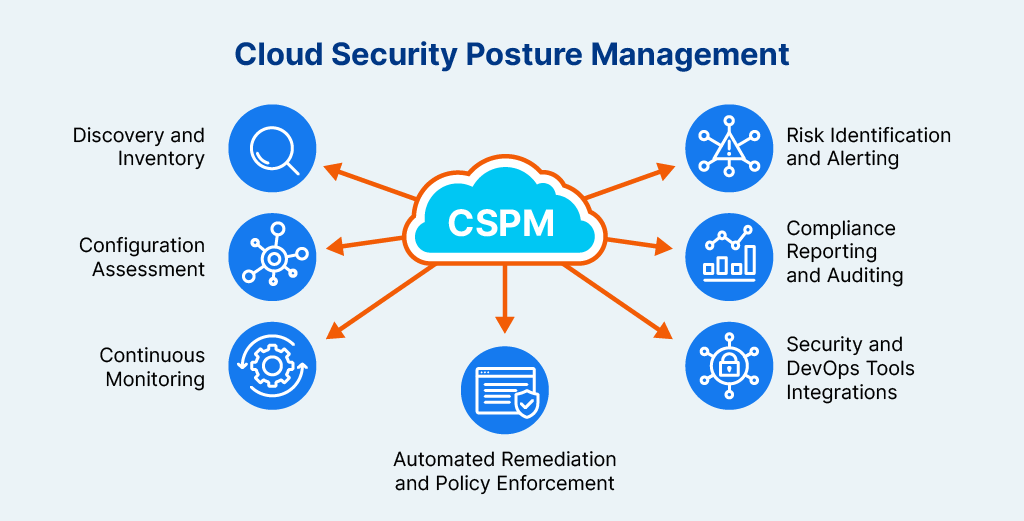
Choosing between a standalone CSPM framework and a full DevSecOps integration requires balancing immediate risk mitigation against long-term operational agility. CSPM provides a centralized dashboard for compliance, while DevSecOps shifts the responsibility of security testing into the development lifecycle itself.
Infrastructure overhead in cloud security
Deploying CSPM tools like Palo Alto Networks Prisma Cloud or Wiz requires significant initial investment in API integration and continuous monitoring configurations. Organizations must account for the cost of dedicated Security Operations Center (SOC) analysts who interpret the high volume of alerts generated by these platforms.
Without a mature security team, these tools often lead to alert fatigue. Critical misconfigurations in AWS S3 buckets or Azure Blob storage may remain unaddressed due to the sheer noise of low-priority findings.
Cultural and technical barriers to DevSecOps adoption
DevSecOps integration demands more than just installing automated scanners; it requires a fundamental shift in how developers and security engineers collaborate. The primary barrier is the friction between the velocity-driven goals of DevOps teams and the risk-averse nature of traditional security departments.
Implementing automated security gates—such as Snyk or Checkmarx—within a Jenkins or GitLab CI/CD pipeline often slows down deployment cycles initially. This friction is exacerbated if the existing pipeline lacks maturity; if code builds are unstable, adding static application security testing (SAST) or software composition analysis (SCA) can create bottlenecks.
Successful adoption necessitates training developers to fix vulnerabilities at the IDE level rather than relying on security teams to patch issues post-deployment.
Strategic prioritization for enterprise security posture
Organizations often struggle to balance foundational infrastructure protection with the agility of modern development pipelines. The debate regarding cloud security vs devsecops integration is not about choosing one over the other, but rather determining the maturity level required to implement each effectively.
Enterprises that attempt to automate security policies before establishing basic visibility often encounter alert fatigue and broken deployment cycles.
Conditions for prioritizing cloud security foundations
Before integrating complex automation, security teams must establish a baseline of visibility across their multi-cloud environment. This involves utilizing CSPM tools like Wiz, Palo Alto Networks Prisma Cloud, or Orca Security to identify misconfigurations in S3 buckets, IAM roles, and network security groups.
Without this baseline, developers lack the context needed to remediate issues. Prioritize these foundations when your organization lacks a centralized inventory of cloud assets or suffers from frequent shadow IT deployments that bypass standard governance.
Scaling security through DevSecOps integration
Once visibility is established, the focus shifts to embedding security directly into the CI/CD pipeline, moving from reactive monitoring to proactive, code-based enforcement. This transition requires the adoption of Infrastructure as Code (IaC) scanning tools such as Checkov, Terrascan, or Snyk.
By integrating these tools into GitHub Actions or GitLab CI, teams can catch security vulnerabilities—such as hardcoded secrets or overly permissive security groups—before the infrastructure is even provisioned.
Effective DevSecOps integration relies on three specific mechanisms:
- Policy-as-Code: Using Open Policy Agent (OPA) to define guardrails that automatically reject non-compliant Terraform or CloudFormation templates.
- Automated Vulnerability Scanning: Running container image scans in the registry (e.g., Amazon ECR or JFrog Artifactory) to block images with known CVEs from reaching production.
- Feedback Loops: Providing developers with immediate, actionable feedback within their IDE or pull request comments, rather than sending a security report days after a deployment.
This proactive approach reduces the mean time to remediation (MTTR) by shifting the security burden left, ensuring that security is a shared responsibility rather than a bottleneck at the end of the development lifecycle.
Frequently Asked Questions
Primary differences between cloud security and DevSecOps
Cloud security focuses on protecting the infrastructure, data, and access controls within a cloud environment, whereas DevSecOps integrates security practices directly into the CI/CD pipeline to automate vulnerability scanning and compliance checks during code deployment.
ROI comparison for enterprise security teams
DevSecOps typically offers higher long-term ROI by reducing the cost of remediation through ‘shift-left’ security, while cloud security provides the essential baseline protection required for regulatory compliance and threat detection in production. For those wondering if is cloud security a good career, the answer lies in the growing demand for these specialized skill sets.


