



Incident response dynamics in cloud security vs cyber security
Cloud security focuses on protecting virtualized assets and ephemeral workloads through API-driven controls, whereas traditional cyber security centers on securing physical perimeters and network traffic.
When a breach occurs, the primary difference lies in the speed of response. Cloud environments allow for programmatic isolation, while traditional infrastructure often requires manual intervention at the hardware or switch level.
Shared responsibility model constraints
Cloud security relies heavily on the provider’s API to enforce policy, meaning your control is limited to the configuration layer defined by the Service Level Agreement (SLA).

In contrast, traditional cyber security grants full control over the hardware stack. This allows engineers to physically disconnect devices or perform deep packet inspection without relying on third-party infrastructure availability.
Identity-centric defense mechanisms
Traditional cyber security relies on network segmentation and firewalls to create a ‘castle-and-moat’ defense. Cloud security shifts this priority to Identity and Access Management (IAM) policies, as the network perimeter is often porous or non-existent in serverless architectures.
Securing a cloud environment requires granular control over service accounts and roles rather than just IP-based filtering.
Case study: Ransomware containment in a hybrid environment
Consider a scenario where ransomware hits a hybrid network. Security teams must simultaneously address on-premise servers and cloud-native instances.
For the on-premise segment, the team physically isolates the affected VLANs at the core switch. Simultaneously, for the cloud segment, they must immediately revoke the compromised service account’s permissions to prevent lateral movement to other cloud buckets or databases.
Isolating cloud-native workloads
To isolate a compromised cloud workload, engineers use CLI commands or Infrastructure as Code (IaC) templates to modify Security Group rules. By stripping all inbound and outbound traffic permissions from the specific instance tag, the workload is effectively quarantined.
This is a stark contrast to shutting down a physical server, which risks data corruption and requires physical access to the data center.
Tooling and visibility gaps
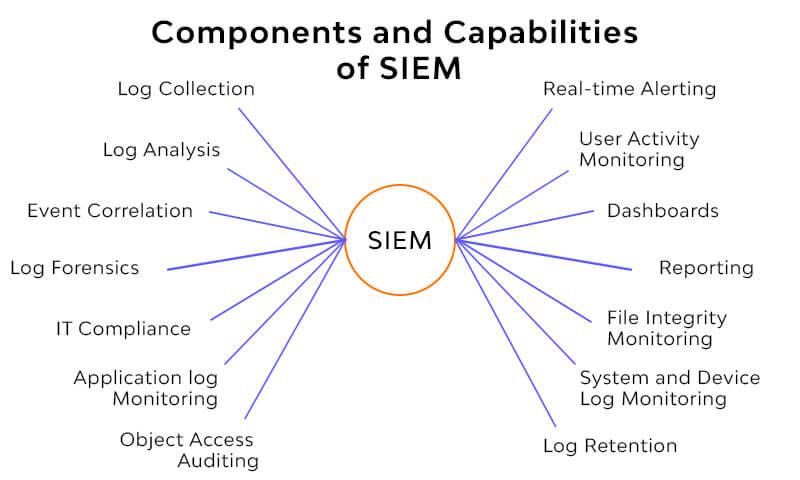
Monitoring tools for traditional networks, such as legacy SIEM systems, often struggle to ingest the high-volume, event-driven logs generated by cloud providers. Cloud Security Posture Management (CSPM) tools are designed to bridge this gap by continuously scanning for configuration drift against compliance benchmarks like CIS Foundations, a function legacy firewalls cannot replicate. When selecting these solutions, it is vital to consult a cloud security buyers checklist to ensure your enterprise infrastructure is fully covered.
Log aggregation challenges
Correlating cloud provider logs with legacy firewall traffic is a significant technical hurdle. Cloud logs are often stored in object storage (like AWS S3) and require specific ingestion pipelines, while legacy firewalls typically export Syslog data.
Normalizing these disparate formats into a single pane of glass requires robust data normalization layers, often leading to visibility gaps during active incidents.
Strategic trade-offs in resource allocation
Balancing budgets between cloud-specific security and general cyber security requires a risk-based approach. Organizations should allocate funds toward CSPM and automated IAM auditing for cloud assets, while maintaining investment in endpoint detection and response (EDR) for legacy on-premise hardware.
Prioritizing automated remediation
Automated remediation is essential for cloud environments where threats move at machine speed. Using Lambda functions or Azure Functions to automatically rotate exposed keys or shut down non-compliant instances is far more effective than the manual ticket-based workflows common in traditional cyber security.
However, manual oversight remains critical for on-premise systems where automated scripts could inadvertently trigger catastrophic downtime for legacy applications.
Evaluating the cloud security vs cyber security skill gap
The transition between these domains often reveals a significant skill gap. Traditional security professionals are accustomed to static IP addresses and physical hardware maintenance, whereas cloud security requires mastery of ephemeral resources.
For instance, in a cloud environment, an IP address might exist for only minutes, rendering traditional IP-based blacklisting ineffective. Professionals must pivot toward attribute-based access control (ABAC) and understand how to secure container orchestration platforms like Kubernetes, where security policies are defined in YAML files rather than physical firewall rules.
Advanced considerations for hybrid security
Managing the intersection of these two domains requires a unified policy engine. Organizations often deploy a ‘Security Service Edge’ (SSE) to enforce consistent access policies across both on-premise data centers and cloud-native applications.
This approach mitigates the risk of configuration drift, where a security policy updated in the cloud is not reflected in the legacy firewall, creating a blind spot for attackers. Furthermore, implementing ‘Zero Trust’ architecture is more feasible in cloud environments due to the granular nature of IAM, whereas retrofitting Zero Trust into a legacy network often requires a complete overhaul of the internal routing and VLAN structure.
Frequently Asked Questions
Comparative difficulty of cloud security and traditional cybersecurity
It is not necessarily harder, but it requires a different skillset focused on API management, identity-centric policies, and ephemeral infrastructure rather than physical hardware.
Coding requirements for cloud security engineers
Yes, proficiency in scripting languages like Python or PowerShell and experience with Infrastructure as Code (IaC) tools like Terraform are essential for does cloud security require coding proficiency.
Recommended cloud security certifications for beginners
The CCSP (Certified Cloud Security Professional) or platform-specific certifications like AWS Certified Security – Specialty are highly regarded industry standards. Beginners looking to build a foundation can also explore free cloud security certification options to gain practical knowledge.
Growth trajectory of cloud security careers
Yes, as organizations continue to migrate sensitive data to multi-cloud environments, the are cloud security jobs remote question is increasingly relevant for top talent.
Distinctions between cloud security and network security
Network security focuses on protecting the perimeter and traffic between devices, while cloud security focuses on protecting data, identity, and applications within virtualized environments.
Functional mechanisms of cloud security
Cloud security works by applying shared responsibility models, using IAM to control access, and leveraging top cloud security tools to monitor configurations and detect threats in real-time.


