



Misconfigured S3 buckets as a primary entry point
Misconfigured Amazon S3 buckets remain one of the top cloud security threats because they bypass perimeter defenses entirely by exposing data directly to the public internet. When an S3 bucket is set to ‘public’ due to a simple policy misconfiguration, it essentially removes the authentication layer required to access sensitive objects.
The mechanism of public access exploitation
Attackers utilize automated scanners like GrayhatWarfare or custom Python scripts to crawl IP ranges and bucket namespaces. These tools identify buckets with ‘ListBucket’ or ‘GetObject’ permissions enabled for the ‘AllUsers’ group. Once a target is identified, the script recursively downloads the entire contents, often leading to the exposure of database backups, PII, or internal configuration files.
Credential theft via compromised CI/CD pipelines
Modern DevOps workflows rely on CI/CD pipelines that frequently hold excessive permissions, making them a high-value target for attackers. By compromising a pipeline, an adversary can inject malicious code into production environments without triggering standard application-level security alerts.
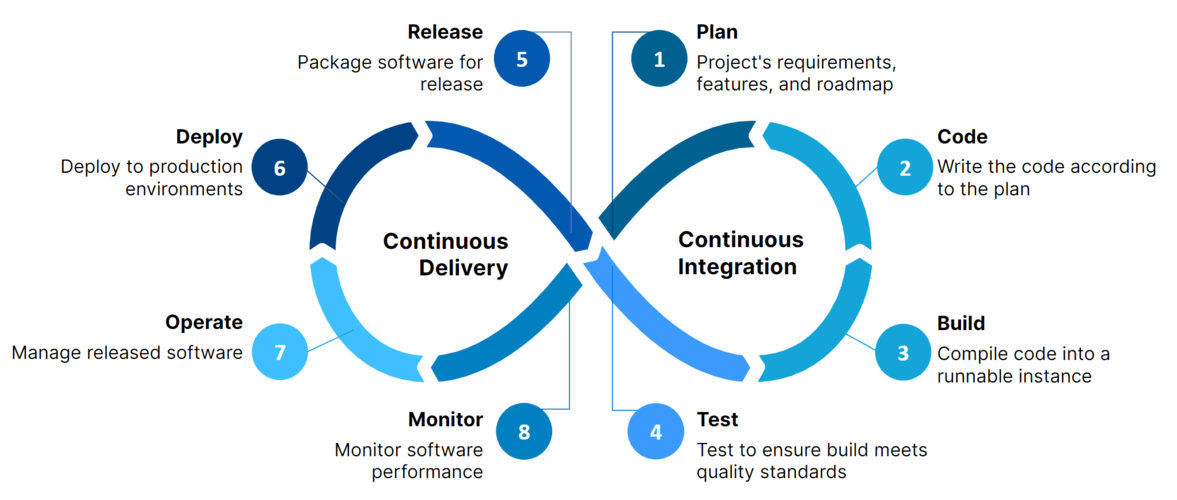
Tracing the lifecycle of an exposed API key
The path to environment takeover often begins with a developer accidentally committing a hardcoded AWS IAM key or a GitHub Personal Access Token (PAT) to a public repository. Automated bots monitor GitHub commits in real-time; once the key is pushed, it is harvested within seconds. The attacker then uses the key to perform reconnaissance via aws sts get-caller-identity, subsequently escalating privileges by creating new IAM users or modifying existing security groups to open backdoors.
Insecure interfaces and APIs as top cloud security threats
APIs serve as the connective tissue of microservices, yet they are frequently deployed with insufficient authorization checks. Over-privileged endpoints allow attackers to interact with backend services in ways the developers never intended.
Bypassing authentication through broken object-level authorization
Broken Object-Level Authorization (BOLA) occurs when an API endpoint fails to verify if the authenticated user has permission to access the specific object ID requested. For example, an attacker might change a user ID in a REST API call from /api/v1/orders/1234 to /api/v1/orders/1235. If the server only checks if the user is logged in but not if they own order 1235, the attacker successfully exfiltrates unauthorized data.
Server-Side Request Forgery (SSRF) in cloud environments
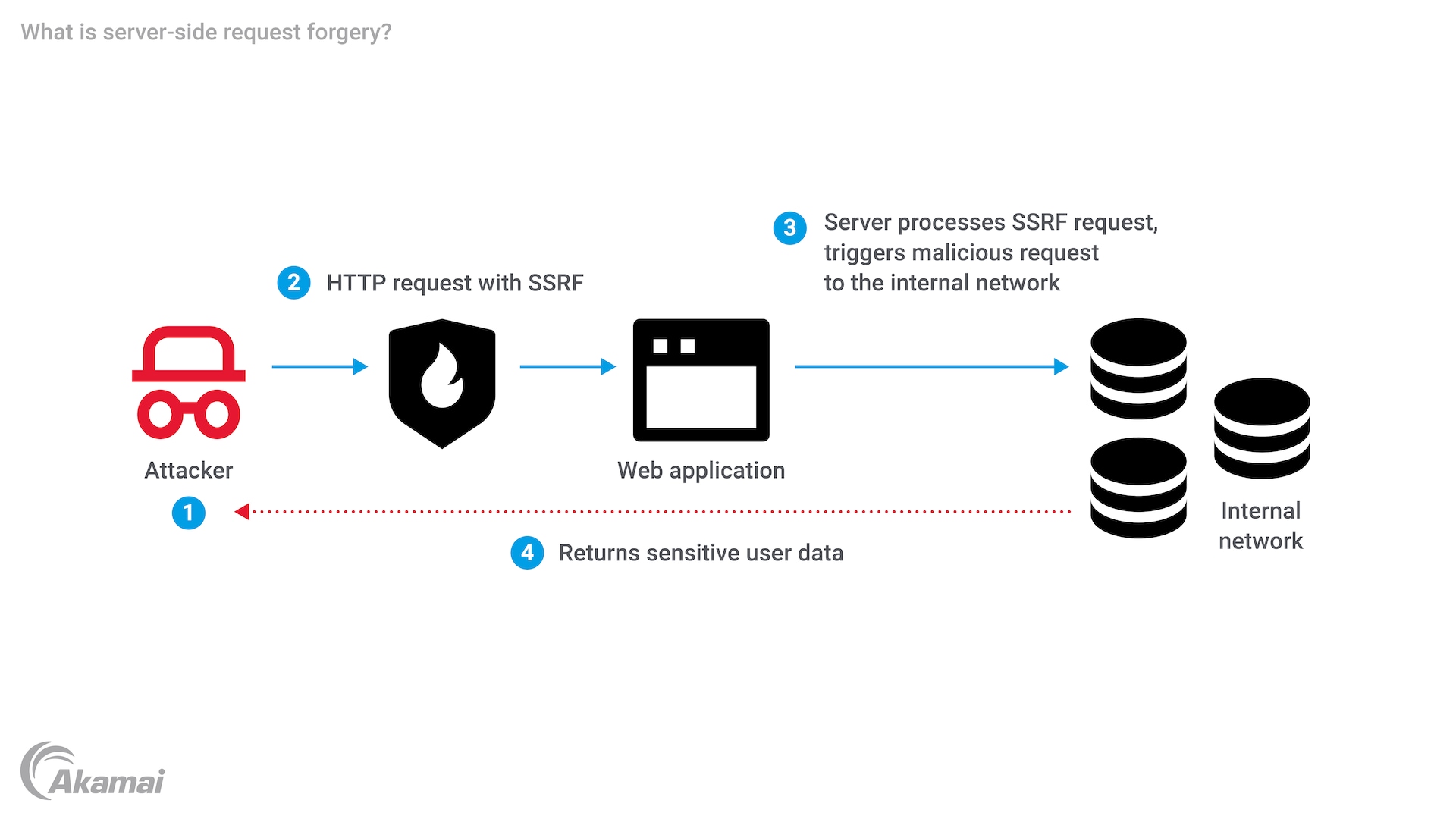
SSRF is a critical vulnerability where an attacker forces a server-side application to make requests to unintended locations. In cloud environments, this is particularly dangerous because the application can reach the Instance Metadata Service (IMDS) at 169.254.169.254. By querying this local endpoint, an attacker can retrieve temporary security credentials associated with the IAM role assigned to the EC2 instance, effectively hijacking the instance’s identity to access other cloud resources like S3 buckets or RDS databases.
Insider threats and privilege escalation
Internal actors, whether malicious or simply negligent, pose a significant risk due to their existing access to internal systems. Privilege escalation allows these users to move beyond their assigned scope, often by exploiting misconfigured IAM policies that grant ‘AssumeRole’ permissions to overly broad groups.
Detecting lateral movement in IAM roles
Security teams must monitor for anomalous API calls, such as a developer role suddenly executing iam:CreateAccessKey or ec2:AuthorizeSecurityGroupIngress. Tools like AWS CloudTrail or Azure Monitor are essential for logging these events, but they require active alerting rules to catch lateral movement before the attacker achieves persistence.
Supply chain risks in containerized environments
Beyond infrastructure, the software supply chain represents a growing vector for top cloud security threats. Attackers frequently target public container registries by uploading malicious images that mimic popular official packages. If a developer pulls an image containing a hidden cryptominer or a reverse shell, the malicious code executes within the container runtime, potentially escaping to the host node.
Mitigating container runtime threats
Organizations should implement image signing and verification using tools like Cosign to ensure that only trusted, scanned images are deployed to production. Furthermore, enforcing a ‘least privilege’ policy for container execution—such as running containers as non-root users—limits the blast radius if a container is successfully compromised.
Limitations of automated security posture management
Cloud Security Posture Management (CSPM) tools provide visibility into misconfigurations, but they are not a silver bullet against sophisticated, multi-stage attacks. These tools often struggle to correlate disparate events across a complex, distributed infrastructure.
Balancing alert fatigue with genuine threat detection
Security operations centers (SOCs) face a trade-off between strict security policies and operational velocity. If a CSPM tool is configured with too many high-severity alerts, teams suffer from alert fatigue and begin ignoring critical warnings. Effective security requires a tiered approach where automated remediation handles low-risk misconfigurations, while human analysts focus on complex behavioral patterns that indicate an an active breach.
Frequently Asked Questions
Comparison of cloud security and traditional cybersecurity
Cloud security is often considered more complex because it involves a shared responsibility model, ephemeral infrastructure, and a massive, constantly changing attack surface that traditional cybersecurity cannot cover.
Technical coding requirements for cloud security engineers
Yes, coding skills, such as proficiency in languages like Python or Go, are essential for automating security tasks, writing Infrastructure as Code (IaC) templates, and analyzing CI/CD pipeline vulnerabilities for cloud security engineers.
Recommended cloud security certifications for beginners
The CCSK (Certificate of Cloud Security Knowledge) or the AWS Certified Security – Specialty are widely recognized starting points for professionals entering the field.
Growth trajectory of the cloud security career field
Yes, as organizations continue to migrate critical workloads to the cloud, the demand for cloud security professionals who can secure these environments significantly outpaces the current supply of talent. Many of these roles offer remote work viability.
Distinctions between cloud security and network security
Network security focuses on protecting the perimeter and traffic flow, whereas cloud security encompasses identity management, data protection, API security, and the configuration of virtualized resources.
Operational mechanics of cloud security
Cloud security works by implementing a combination of identity and access management (IAM), encryption, automated monitoring, and policy enforcement to protect data and applications hosted on third-party infrastructure.


