



Incident response integration requirements for top cloud security tools
Modern enterprise cloud security tools must function as a cohesive ecosystem rather than isolated silos. Effective incident response hinges on the ability of a Cloud Security Posture Management (CSPM) or Cloud Workload Protection Platform (CWPP) to trigger automated playbooks within a Security Orchestration, Automation, and Response (SOAR) system.
When selecting cloud security tools, prioritize those that offer bidirectional synchronization. This allows security teams to receive alerts and execute remediation commands—such as isolating a compromised EC2 instance or revoking an IAM role—directly from the central dashboard.
API connectivity and data latency
The efficacy of your security stack is dictated by the speed of data ingestion and the reliability of API-based telemetry. Tools like Wiz, Palo Alto Networks Prisma Cloud, and Orca Security rely heavily on cloud-native APIs to scan for vulnerabilities and misconfigurations. However, high-frequency API polling can introduce latency, potentially delaying the detection of a breach by several minutes.
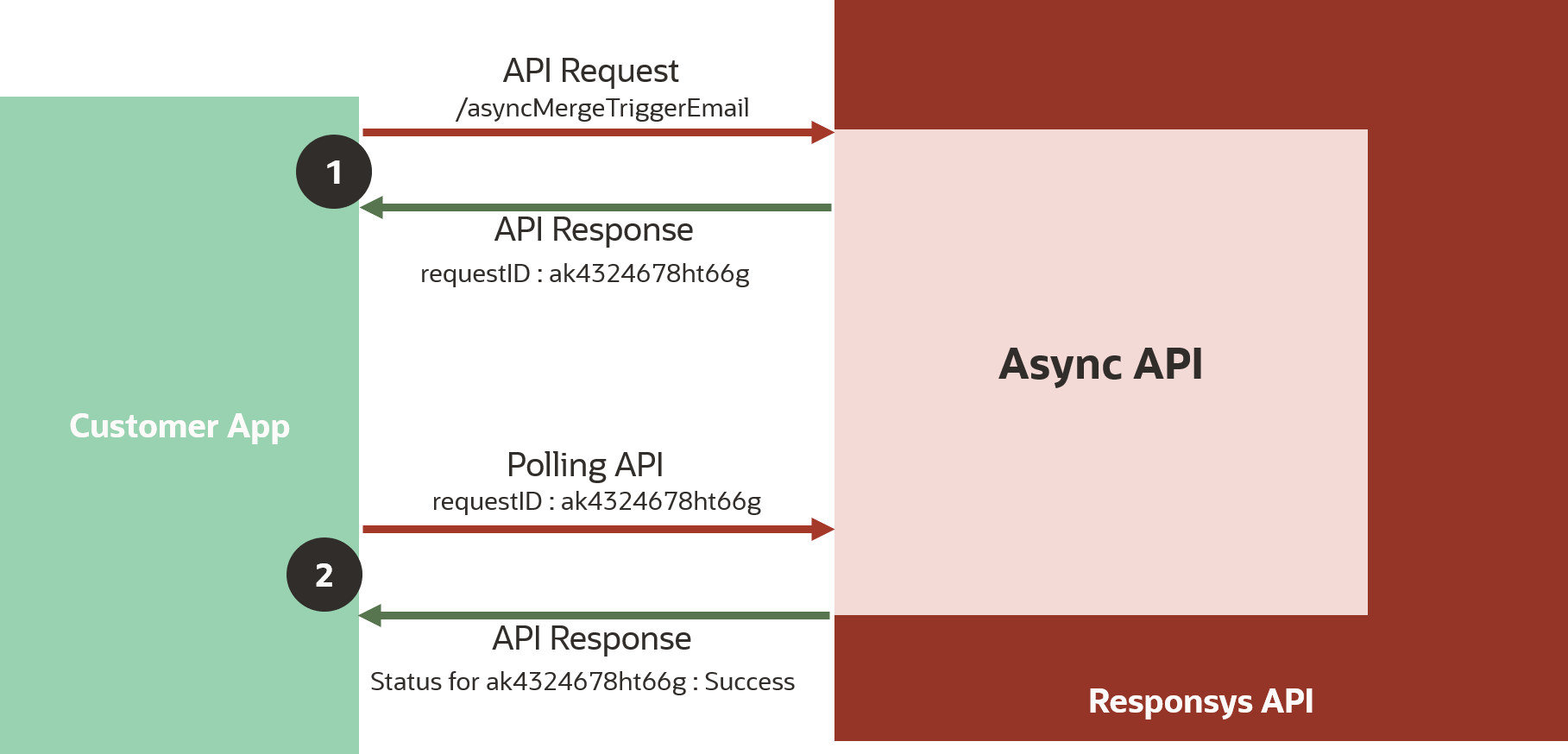
To minimize this, evaluate tools based on their support for event-driven architectures. Instead of relying solely on periodic API snapshots, the tool should integrate with native cloud logging services like AWS CloudTrail, Azure Monitor, or Google Cloud Logging. This event-driven approach ensures that security events are pushed to the security tool in near real-time, reducing the mean time to detect (MTTD).
When benchmarking these tools, measure the ‘time-to-alert’ from the moment an unauthorized S3 bucket policy change occurs until the security tool triggers an automated response. If a tool requires more than 60 seconds to process a high-severity event through its API layer, it may be insufficient for high-velocity enterprise environments.
Automated compliance monitoring mechanisms
Enterprise cloud environments require continuous visibility into configuration states to maintain adherence to frameworks like SOC2, HIPAA, or PCI-DSS. Top cloud security tools such as Wiz, Palo Alto Networks Prisma Cloud, and Orca Security utilize agentless API-based scanning to map resource configurations against compliance benchmarks in real-time.
Unlike manual audits, these platforms ingest metadata from AWS Config, Azure Resource Graph, and GCP Cloud Asset Inventory to flag non-compliant resources—such as S3 buckets with public read access or unencrypted RDS instances—before they can be exploited.
Drift detection and remediation workflows
Managing the trade-off between automated remediation and operational stability is the primary challenge for DevOps teams. While tools like Terraform Cloud and AWS Systems Manager offer automated drift detection, enabling auto-remediation can inadvertently break production services if a configuration change was intentional but undocumented.
Organizations should implement a tiered remediation strategy:
- Detection-only mode: Use for critical infrastructure where manual review is mandatory. Tools send alerts via PagerDuty or Slack, requiring a human to approve the revert action.
- Policy-as-Code enforcement: Integrate tools like Open Policy Agent (OPA) or Checkov into the CI/CD pipeline. This prevents non-compliant infrastructure from being deployed in the first place, shifting security left.
- Automated remediation: Reserved for low-risk, high-impact violations, such as automatically closing security groups that allow 0.0.0.0/0 on SSH ports (22) or RDP ports (3389).
To maintain stability, security teams must define ‘exception tagging’ within their cloud security tools. By tagging specific resources as ‘exempt-from-auto-remediation,’ engineers can bypass automated workflows for legacy systems or specialized testing environments that require non-standard configurations. This granular control allows security teams to enforce global compliance policies without disrupting the velocity of the development lifecycle.
Identity and access governance capabilities
Enterprise-grade cloud security tools must move beyond simple authentication to provide comprehensive Identity and Access Governance (IAG). Effective platforms like Okta, SailPoint, and Ping Identity integrate directly with cloud-native IAM roles to provide visibility into over-privileged accounts.
These tools automate the lifecycle of user permissions, ensuring that access is revoked immediately upon role changes or employee offboarding, which is a critical defense against lateral movement in hybrid environments.
Least privilege enforcement strategies
Implementing granular access controls without hindering developer velocity requires a shift toward Just-in-Time (JIT) access. Rather than maintaining static, long-lived credentials, modern tools like HashiCorp Boundary or CyberArk allow engineers to request temporary, scoped access tokens. This mechanism limits the blast radius of a compromised credential, as the access expires automatically after a set duration, typically ranging from 30 minutes to four hours depending on the task complexity.
To maintain operational speed, security teams should prioritize tools that support Policy-as-Code (PaC). By using frameworks like Open Policy Agent (OPA), organizations can codify access requirements directly into CI/CD pipelines. This ensures that infrastructure deployment scripts are scanned for excessive permissions—such as overly broad S3 bucket access or wildcard IAM policies—before they are ever provisioned in the production environment.
This programmatic approach reduces the friction between security teams and DevOps, as developers receive immediate feedback on policy violations during the build phase rather than facing manual audits after deployment. When evaluating these tools, look for native support for Multi-Cloud Identity Federation. Using a centralized governance tool that maps disparate roles across AWS, Azure, and GCP into a single identity provider (IdP) is essential for maintaining consistent security posture.
Visibility limitations in hybrid environments
Maintaining a unified security posture across hybrid infrastructure requires tools capable of ingesting heterogeneous data streams. Enterprise environments often struggle because native cloud provider logs—such as AWS CloudTrail, Azure Monitor, and Google Cloud Operations Suite—utilize proprietary schemas that do not natively interoperate. Without a centralized abstraction layer, security teams face blind spots where lateral movement between on-premises data centers and public cloud VPCs goes undetected.
Data silos and fragmented logs
Addressing the challenges of normalizing telemetry from disparate cloud providers requires specific integration capabilities found in top cloud security tools. Platforms like Splunk Enterprise Security or Datadog Security Monitoring act as the primary ingestion engine, but they rely heavily on pre-built connectors to parse disparate log formats. If a tool lacks a robust API-first integration for a specific IaaS provider, the resulting data silo forces analysts to pivot between consoles, increasing mean time to detection (MTTD).
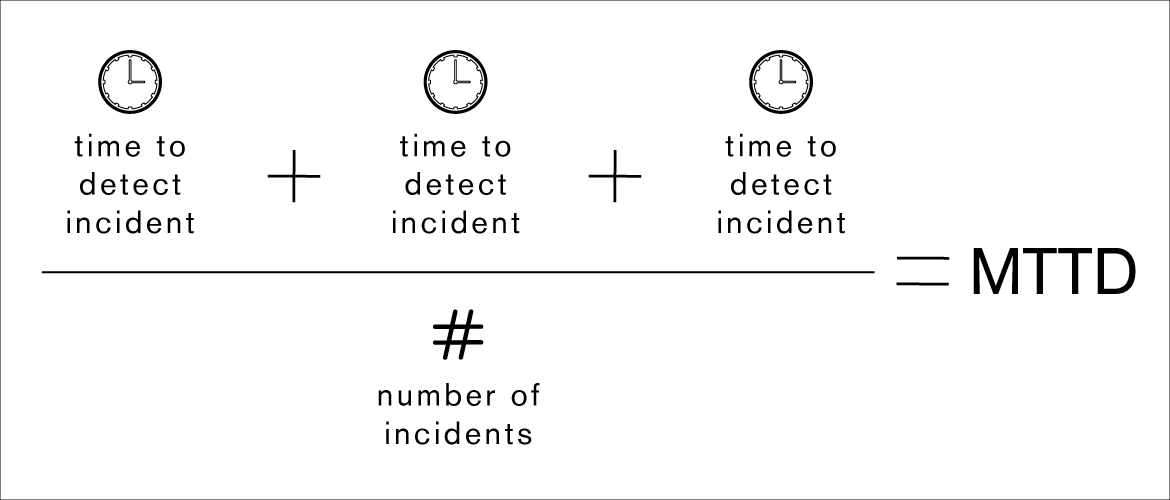
To mitigate this, security architects must prioritize tools that support the Open Cybersecurity Schema Framework (OCSF). By adopting OCSF, organizations can normalize logs from diverse sources into a common language before they reach the SIEM. This reduces the computational overhead required for correlation rules and ensures that threat detection logic remains consistent regardless of the underlying infrastructure.
When evaluating tools, verify the following technical requirements:
- Schema Mapping: Does the tool support automated mapping of vendor-specific logs (e.g., GCP VPC Flow Logs vs. AWS Flow Logs) into a unified format?
- API Rate Limits: Can the tool handle high-volume ingestion from multiple cloud accounts without hitting API throttling limits that cause data gaps?
- Retention Parity: Does the tool allow for consistent long-term storage policies across both on-premises syslog data and cloud-native audit trails?
Failure to implement these normalization standards often results in “log fatigue,” where the sheer volume of unrefined data obscures critical alerts. Effective tools must provide automated enrichment, tagging internal assets with metadata like VPC IDs, instance tags, and IAM roles to provide context to otherwise opaque log entries.
Operational overhead and maintenance costs
Selecting top cloud security tools requires a realistic assessment of the total cost of ownership beyond the initial licensing fees. Enterprise security teams often underestimate the engineering hours required to integrate tools like Wiz or Palo Alto Prisma Cloud into existing CI/CD pipelines. If a platform requires manual policy mapping for every new microservice deployment, the operational burden can quickly lead to alert fatigue and misconfigurations.
Maintenance costs typically scale with the complexity of the cloud environment. Organizations using multi-cloud setups must account for the time spent normalizing data across AWS, Azure, and Google Cloud. Tools that offer automated remediation, such as Orca Security’s side-scanning technology, often reduce the manual workload for DevOps teams by eliminating the need to deploy and manage individual agents across thousands of virtual machines.
Staff training and skill gap considerations
The efficacy of any security stack is limited by the team’s ability to operate it. Many advanced cloud security tools utilize proprietary query languages—such as KQL for Microsoft Sentinel or custom SQL-like syntax for cloud asset inventory tools—which necessitate dedicated training cycles. Before committing to a vendor, assess whether your current security operations center (SOC) analysts possess the necessary cloud-native proficiency to interpret complex telemetry.
Consider the following factors when evaluating the skill requirements for your chosen tools:
- Policy-as-Code (PaC) proficiency: Tools like HashiCorp Sentinel or Open Policy Agent (OPA) require staff to write and maintain code, shifting the burden from traditional GUI-based management to developer-centric workflows.
- Integration maintenance: Security engineers must be capable of managing API-based integrations between security tools and incident response platforms like PagerDuty or Jira.
- Vendor-specific certification: Evaluate if the tool requires specialized training, such as the Palo Alto Networks Certified Network Security Engineer (PCNSE) or similar credentials, to ensure the platform is tuned correctly to avoid false positives.
If your team lacks experience in infrastructure-as-code (IaC) scanning, prioritize tools that provide guided remediation steps rather than those that simply flag vulnerabilities. Reducing the learning curve for junior analysts is a critical component of maintaining a sustainable security posture in high-velocity cloud environments.
Frequently Asked Questions
Primary metrics for evaluating cloud security tools
The primary metric is the ‘time-to-remediation’ for critical vulnerabilities, which measures how quickly a tool identifies a misconfiguration and triggers an automated fix via CI/CD pipelines.
Impact of security tools on network latency
Tools that utilize inline inspection, such as Cloud-Native Application Protection Platforms (CNAPP) with deep packet inspection, can introduce millisecond-level latency. Evaluating the performance overhead in a staging environment is essential before full-scale deployment.


