



Core infrastructure alignment for best cloud security companies
Selecting the best cloud security companies requires a rigorous audit of how their proprietary software integrates with your existing stack. A provider that excels in securing AWS environments may lack the necessary API hooks or granular visibility for a complex Google Cloud Platform (GCP) or Azure deployment.
You must prioritize vendors that offer unified control planes, such as Wiz or Palo Alto Networks’ Prisma Cloud. These are designed to normalize security telemetry across disparate cloud service providers (CSPs) rather than forcing your team to manage siloed dashboards.
Multi-cloud versus native integration strategies
When evaluating potential partners, verify whether their agentless scanning technology supports your specific multi-cloud architecture. Native tools like AWS Security Hub are highly effective within the Amazon ecosystem but provide limited visibility into third-party SaaS applications or non-AWS infrastructure.
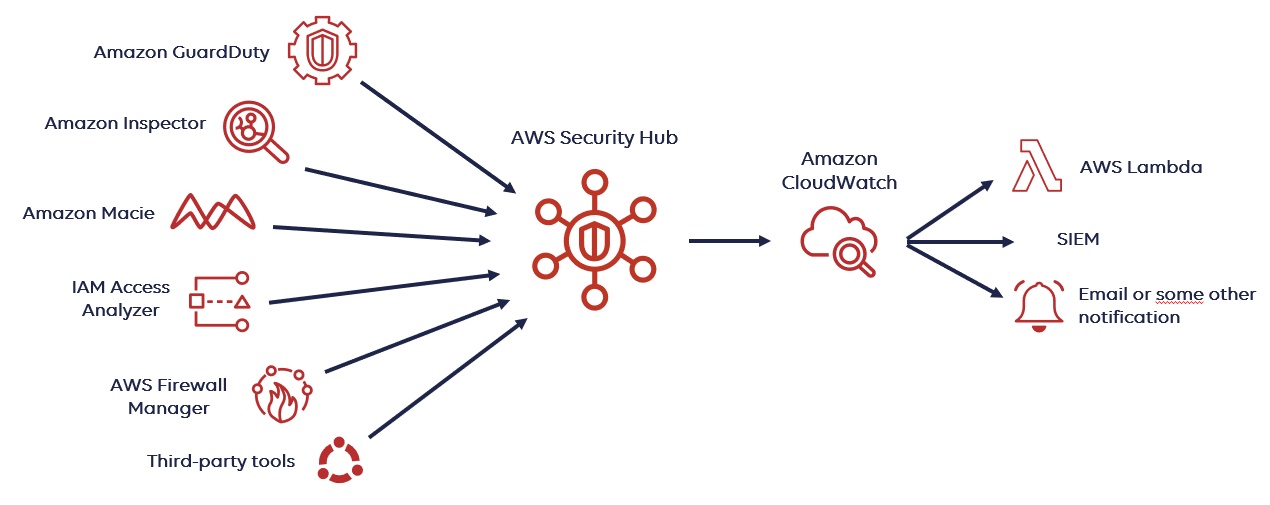
The best cloud security companies provide cross-platform compatibility, allowing you to enforce consistent security policies—such as IAM (Identity and Access Management) governance and data loss prevention (DLP) rules—across AWS, Azure, and GCP simultaneously. If your organization relies on a hybrid model, ensure the vendor provides specific support for on-premises connectivity via dedicated gateways or VPN tunnels that do not introduce latency or bottleneck your traffic.
Shared responsibility model clarity
A critical failure point in vendor selection is the ambiguity surrounding the shared responsibility model. You must demand a clear, written breakdown of exactly which security controls the vendor manages versus those that remain your team’s responsibility.
For example, a managed security service provider (MSSP) might handle the configuration of your cloud-native firewalls and intrusion detection systems (IDS), but they may not be responsible for patching vulnerabilities within your custom application code or managing end-user access credentials. Review the vendor’s Service Level Agreement (SLA) to confirm they provide incident response support for cloud-specific threats like misconfigured S3 buckets or unauthorized API access. If the contract does not explicitly define the boundary of accountability for data breaches resulting from configuration errors, you risk significant liability gaps that internal security teams are often ill-equipped to cover alone.
Compliance and regulatory mapping
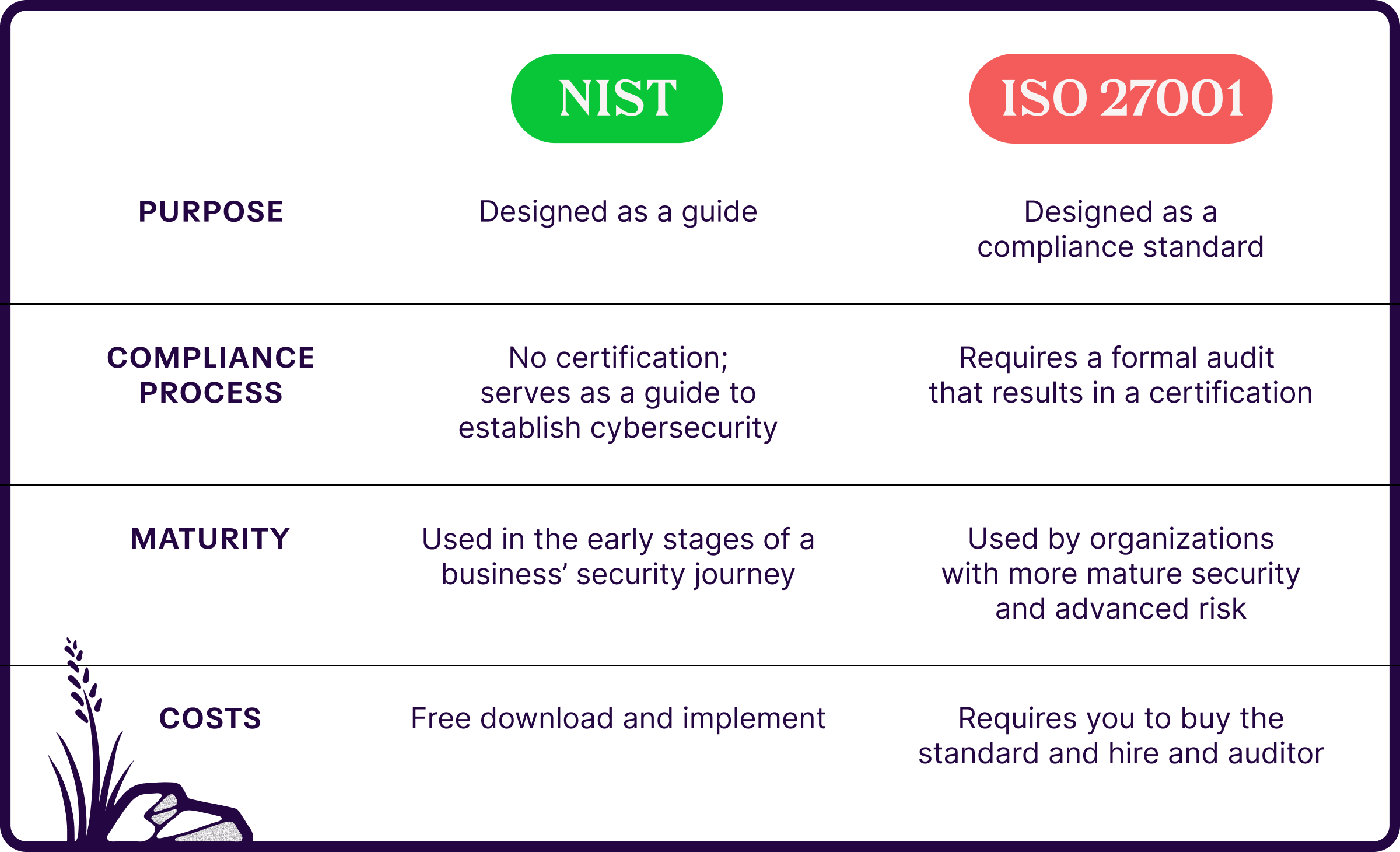
Selecting the best cloud security companies requires a rigorous assessment of how their platforms map technical controls to specific legal frameworks. Enterprise-grade providers must offer more than just threat detection; they must provide a centralized dashboard that translates raw security events into actionable compliance metrics.
When vetting vendors like Wiz, Palo Alto Networks (Prisma Cloud), or Lacework, prioritize those that offer pre-built policy sets for frameworks such as NIST CSF, ISO 27001, and CIS Benchmarks. A critical differentiator among the best cloud security companies is their ability to perform continuous compliance monitoring across multi-cloud environments.
Instead of static, point-in-time assessments, top-tier vendors utilize agentless scanning to identify drift from established security baselines. This ensures that infrastructure changes—such as an S3 bucket becoming public or an unencrypted RDS instance—are flagged immediately against your organization’s specific regulatory requirements.
Automated audit reporting requirements
Evaluating the capability of tools to generate real-time compliance documentation for SOC2, HIPAA, or GDPR is essential for reducing the administrative burden on your security operations center. The best cloud security companies automate the evidence collection process, which is often the most time-consuming phase of an external audit. If you are looking to optimize your internal processes, understanding does cloud security require coding can significantly improve your audit readiness.
- Evidence Mapping: Look for platforms that automatically link cloud configuration data to specific controls within the SOC2 Trust Services Criteria.
- Custom Reporting: Ensure the vendor allows for the creation of audit-ready reports that can be exported directly for third-party auditors, reducing the need for manual screenshots or spreadsheet tracking.
- Data Residency Controls: For GDPR compliance, verify that the security vendor provides granular controls to ensure logs and sensitive metadata remain within specific geographic boundaries.
When comparing vendors, request a demonstration of their ‘Compliance Score’ feature. A robust provider will not only show you where you are non-compliant but will also provide a remediation path, including Infrastructure-as-Code (IaC) templates that can be pushed to your CI/CD pipeline to fix the issue at the source. This shifts compliance from a reactive checkbox exercise to a proactive security posture.
Operational visibility and incident response
When evaluating the best cloud security companies, the ability to maintain granular visibility across multi-cloud environments is the primary differentiator. High-performing vendors like Palo Alto Networks (Prisma Cloud) and Wiz provide unified dashboards that aggregate telemetry from AWS, Azure, and Google Cloud, preventing the data silos that often lead to missed security events.
Effective incident response hinges on the provider’s ability to map these events against the MITRE ATT&CK framework in real-time. For those considering a transition into this field, understanding the nuances of cloud security vs cyber security is essential for modern infrastructure teams.
Latency in threat detection and alert triggers
The industry standard for acceptable detection latency is under 60 seconds for high-severity threats. When vetting providers, request a proof-of-concept (PoC) that tests the time between a simulated unauthorized S3 bucket access and the generation of an alert.
Top-tier companies utilize stream processing engines rather than batch processing to ensure that alerts are not delayed by scheduled polling intervals. If a provider’s architecture relies on periodic API scraping, you will inevitably face a blind spot during the intervals between scans, which is unacceptable for production-grade cloud environments.
Integration with existing SIEM and SOAR workflows
The best cloud security companies do not operate as isolated islands; they function as extensions of your existing Security Operations Center (SOC). You must verify that the vendor supports native API-based ingestion into your specific SIEM, such as Splunk, IBM QRadar, or Microsoft Sentinel.
A critical requirement is the availability of pre-built playbooks for SOAR platforms like Palo Alto Cortex XSOAR or Tines. These playbooks should allow for automated remediation—such as isolating a compromised EC2 instance or revoking an IAM user’s credentials—without manual intervention. During the selection process, confirm the vendor provides a robust webhook architecture that allows for custom filtering, ensuring your SOC team is not overwhelmed by false positives from low-fidelity cloud events.
Scalability and cost predictability
When evaluating the best cloud security companies, organizations must distinguish between vendors that offer flat-rate enterprise licensing and those relying on consumption-based models. A provider’s ability to scale infrastructure security across multi-cloud environments—such as AWS, Azure, and GCP—without linear cost increases is a primary indicator of operational maturity.
Companies like Palo Alto Networks (Prisma Cloud) and Wiz often utilize resource-based pricing that decouples security coverage from total data volume, allowing for more predictable budgeting as your cloud footprint expands.
Usage-based pricing risks
Many security vendors, particularly those focused on Cloud-Native Application Protection Platforms (CNAPP) or Security Information and Event Management (SIEM) integrations, charge based on the volume of logs ingested or the number of monitored assets. This creates a significant financial risk during security incidents or routine infrastructure scaling.
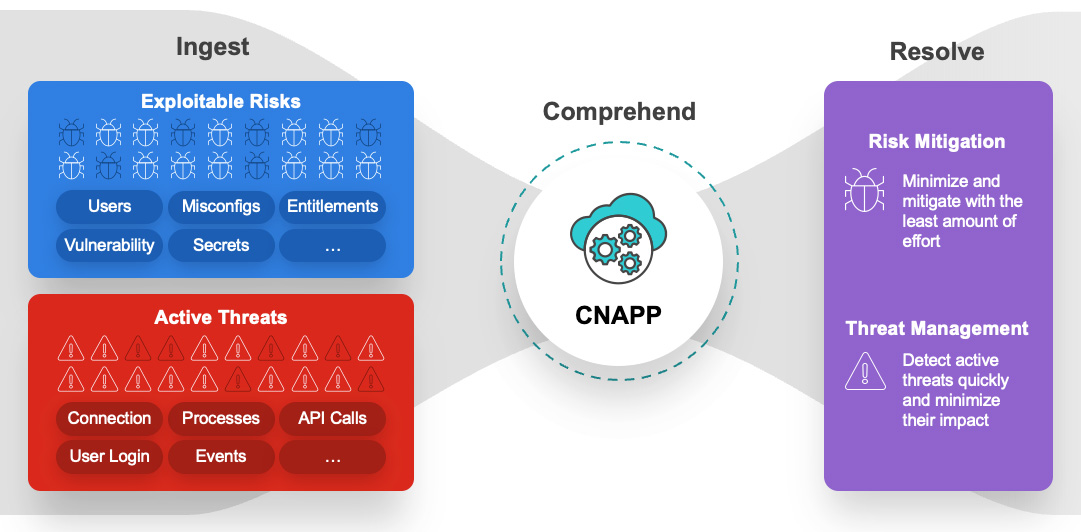
For example, if a DDoS attack triggers a massive spike in log generation, a usage-based security contract can lead to unexpected, five-figure overage fees within a single billing cycle. To mitigate these risks, prioritize companies that offer the following contractual safeguards:
- Tiered volume discounts: Ensure the contract includes pre-negotiated pricing tiers that trigger automatically as your data ingestion grows, preventing price-per-gigabyte penalties.
- Asset-based vs. Data-based licensing: Prefer vendors that charge per protected workload or virtual machine rather than per gigabyte of traffic, as workload counts are generally easier to forecast than volatile network traffic patterns.
- Burst capacity clauses: Seek providers that allow for temporary spikes in log ingestion without immediate financial penalties, often referred to as ‘bursting’ or ‘buffer’ capacity in enterprise service level agreements (SLAs).
Before finalizing a partnership, request a ‘cost-of-ownership’ projection based on your historical peak traffic data. If a vendor cannot provide a model showing how their costs scale during a 200% increase in cloud activity, they likely lack the architectural maturity to support a growing enterprise.
Technical support and vendor lock-in mitigation
Selecting the best cloud security companies requires a rigorous assessment of their support SLAs and the long-term flexibility of their service contracts. Many enterprise-grade providers, such as Palo Alto Networks (Prisma Cloud) or CrowdStrike (Falcon Cloud Security), offer tiered support models. If you are a smaller organization, it is vital to utilize a cloud security guide for smes to navigate these complex vendor landscapes.
You must verify if your contract guarantees 24/7/365 access to a dedicated Security Operations Center (SOC) engineer rather than a general help-desk representative. A failure to secure high-priority response times during a live breach can lead to catastrophic data loss, regardless of the security platform’s technical capabilities.
Vendor lock-in remains a significant risk when integrating proprietary security agents into your cloud infrastructure. If a security company mandates the use of proprietary, non-standardized agents across your AWS, Azure, and Google Cloud environments, migrating to a competitor becomes a multi-month engineering project. Evaluate whether the provider utilizes open-source standards like OpenTelemetry or follows the Cloud Security Alliance (CSA) Cloud Controls Matrix (CCM) to ensure interoperability.
Exit strategy and data portability
Before signing a multi-year agreement, demand a clear exit strategy that outlines how your organization will retrieve its security logs, forensic data, and policy configurations. The best cloud security companies provide automated API-based export tools that allow you to pull your telemetry data into a neutral format, such as JSON or CSV, without incurring exorbitant egress fees.
Test the portability of your security policies during the proof-of-concept (POC) phase. If you define complex firewall rules or identity access management (IAM) policies within a vendor’s dashboard, check if these can be exported as Terraform or Pulumi code. If the vendor forces you to manually recreate thousands of rules in a new system, you are effectively locked into their ecosystem. Always include a “Right to Audit” and a “Data Return” clause in your Service Level Agreement (SLA) to ensure that your security data remains your property, even if the business relationship terminates.
Frequently Asked Questions
What is the primary indicator of a reliable cloud security company?
The primary indicator is the ability to provide verifiable, real-time evidence of compliance with frameworks like SOC2 Type II, ISO 27001, and HIPAA, alongside a transparent incident response playbook that details their specific role in your shared responsibility model.
Methods for verifying infrastructure compatibility
Request a technical audit of their integration capabilities with your specific stack, such as AWS, Azure, or GCP. A competent provider must demonstrate experience with your specific container orchestration tools like Kubernetes or serverless architectures.


