



The trade-off between theoretical frameworks and implementation speed
Choosing between static documentation and live codebases represents the primary friction point for technical leads integrating decentralized identity. While What is Self-Sovereign Identity (SSI)? Whitepapers & PDF Resources provide the necessary conceptual foundation for architectural alignment, they often lag behind the rapid iteration cycles of production-ready SDKs.
Static documentation versus live SDK integration
Static documents are essential for establishing the trust model, governance, and cryptographic assumptions of a protocol. However, relying solely on these resources can lead to integration delays. Prioritize whitepapers during the initial feasibility study to ensure the protocol aligns with your identity security requirements. Once the conceptual fit is confirmed, pivot immediately to live GitHub repositories and SDK documentation to test latency, error handling, and gas efficiency.
Core components of high-utility Self-Sovereign Identity Whitepapers & PDF Resources
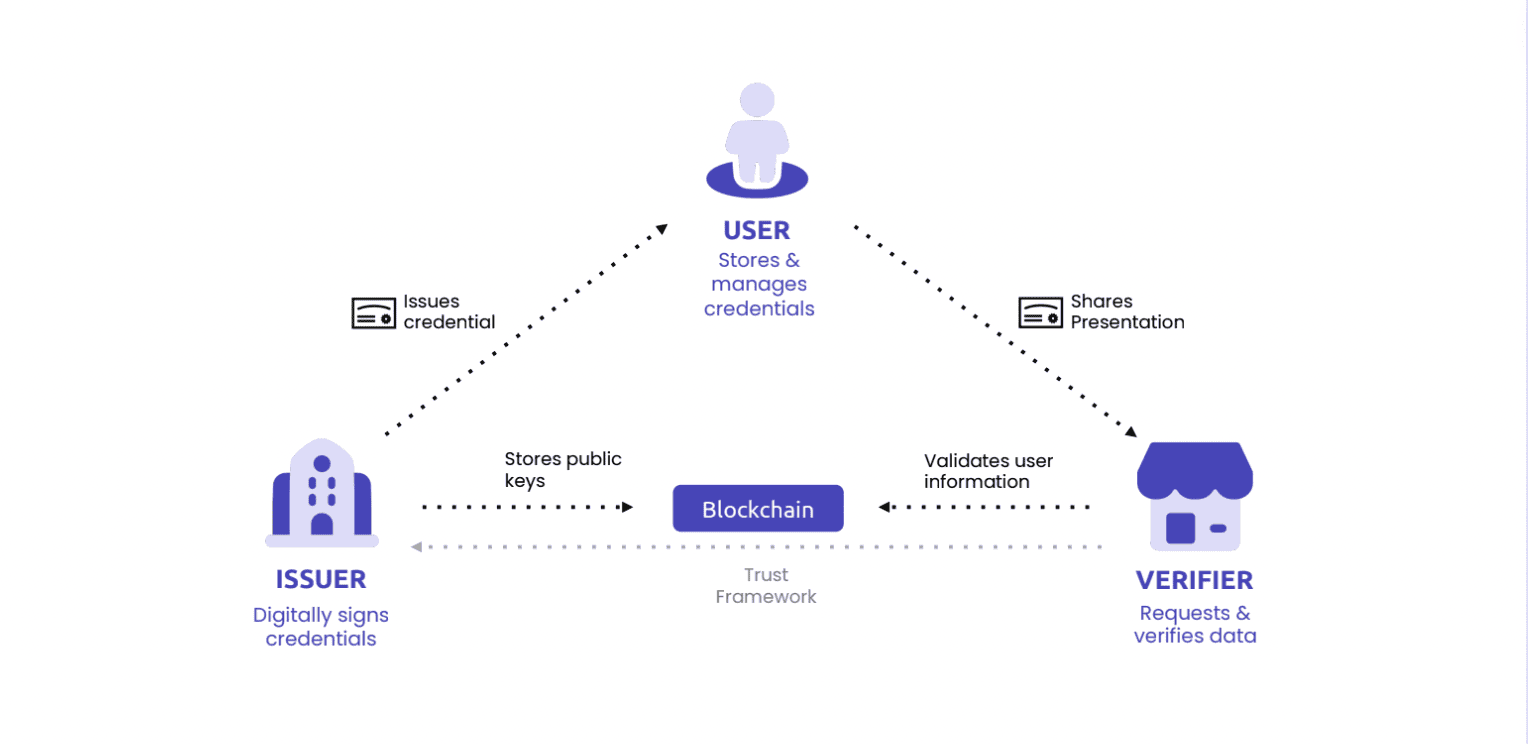
Not all technical documentation offers the same level of utility. High-quality resources must move beyond marketing rhetoric to provide granular detail on the underlying mechanics of decentralized identifiers (DIDs) and verifiable credentials (VCs).
Verification of cryptographic primitives and trust models
A robust whitepaper must explicitly define the cryptographic libraries used for signing and verification. Look for documentation that details the specific elliptic curves, such as Ed25519 or secp256k1, and explains the key rotation mechanisms. If a document lacks a clear threat model regarding key compromise or revocation, treat the protocol as experimental rather than production-ready.
Analyzing the consensus mechanism and ledger dependency
Beyond cryptography, examine how the documentation describes the underlying ledger. Does the protocol rely on a permissionless public blockchain, or is it a permissioned consortium chain? A high-utility whitepaper will detail the consensus mechanism—such as Proof-of-Stake or Proof-of-Authority—and explain how it impacts the finality of identity transactions. Understanding these dependencies is critical for assessing long-term network stability and potential censorship risks.
Evaluating protocol maturity through technical documentation
The depth of a project’s documentation serves as a reliable proxy for its long-term viability. A well-maintained repository of whitepapers and technical specs indicates a commitment to transparency and community-driven governance.
Identifying vendor lock-in risks in decentralized standards
Be wary of documentation that prioritizes proprietary extensions over established W3C standards. Effective SSI stacks should demonstrate interoperability with existing DID methods. If a whitepaper focuses heavily on a closed-source ecosystem without providing a path for cross-chain credential verification, it suggests a high risk of vendor lock-in that could complicate future migrations.
When to bypass whitepapers for direct protocol testing
There is a clear threshold where reading documentation becomes less efficient than executing a proof-of-concept. If your team has already validated the protocol’s theoretical alignment, further reading often yields diminishing returns compared to actual implementation.
Practical limitations of paper-based architecture reviews
Theoretical designs often fail to account for real-world constraints like network latency or variable gas costs on Layer 1 or Layer 2 blockchains. A whitepaper might describe an elegant zero-knowledge proof verification process, but the actual execution cost in a production environment could be prohibitive. Always validate these metrics through a sandbox environment before committing to a full-scale deployment.
Benchmarking against real-world throughput
When reviewing technical documentation, look for performance benchmarks that simulate high-concurrency environments. Many whitepapers present idealized scenarios; however, you should specifically search for data regarding DID resolution times under load. If the documentation fails to provide metrics on how the system handles thousands of concurrent credential verifications, use tools like K6 or JMeter to run your own stress tests against the protocol’s testnet nodes.
Standardized criteria for comparing SSI documentation sets
Technical leads should utilize a scoring rubric to evaluate documentation quality. This ensures that the chosen identity stack meets the specific performance and security requirements of the project.
Mapping documentation depth to project requirements
Match the complexity of the resource to your team’s expertise. A project requiring high-throughput credential issuance needs documentation that details API rate limits and batch processing, whereas a simple authentication use case may only require basic integration guides. Use the following criteria for your assessment:
- Standards Compliance: Does it adhere to W3C DID and VC specifications?
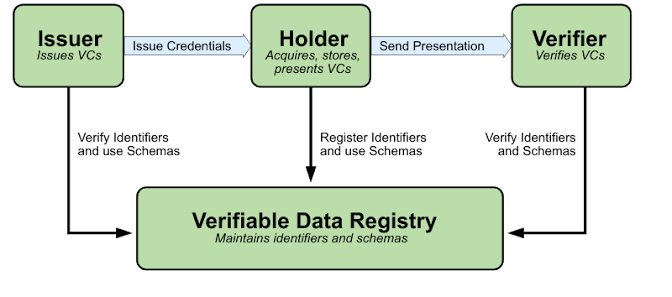
- Cryptographic Transparency: Are the signing algorithms and key management processes clearly defined?
- Governance Clarity: Is the process for protocol upgrades and consensus changes transparent?
- Developer Experience: Does the documentation include functional code snippets and clear error-handling examples?
Frequently Asked Questions
Operational mechanics of self-sovereign identity
Self-sovereign identity works by giving users control over their own digital identifiers and credentials through decentralized technologies like blockchains, allowing them to verify their identity without relying on a central authority.
Definition and scope of self-sovereign identity
Self-sovereign identity is a model for managing digital identities where individuals have full ownership and control over their personal data, credentials, and how they are shared across different platforms.
Core characteristics of self-sovereign identity ssi
SSI stands for Self-Sovereign Identity, a framework that utilizes decentralized identifiers (DIDs) and verifiable credentials (VCs) to enable secure, privacy-preserving digital interactions.
Integration of artificial intelligence with self-sovereign identity
SSI plus AI refers to the integration of decentralized identity systems with artificial intelligence, where AI agents can verify credentials securely while maintaining the user’s privacy and data sovereignty.
Conceptual meaning of self-sovereign identity
It means the individual is the ‘sovereign’ of their digital identity, meaning they do not depend on a third-party provider to store or validate their identity information.
Historical evolution of self-sovereign identity
The concept emerged from the need to address privacy and security flaws in centralized identity systems, gaining significant traction around 2016 with the development of W3C standards for DIDs and VCs. For specialized sectors, organizations are also exploring Self-Sovereign Identity for Electric Vehicle Charging to ensure data privacy, while others are focusing on Self-Sovereign Identity Jobs & Career Opportunities to support the growing ecosystem.
- What is self-sovereign identity (SSI)? Moving beyond centralized trust
- Vendor selection framework for self-sovereign identity for healthcare using blockchain
- Economic evaluation of self-sovereign identity for electric vehicle charging
- Technical skill sets driving demand for self-sovereign identity jobs & career opportunities


