



This article highlights the Top 10 identity security companies redefining digital access in the USA, focusing on firms that secure human, machine, and AI identities across complex digital environments. Modern organizations now operate across cloud infrastructure, SaaS platforms, APIs, remote environments, automated workloads, and AI-powered applications. Employees are no longer the only entities accessing business systems. Applications, service accounts, workloads, APIs, bots, and AI agents can all request permissions and interact with sensitive resources.
As the number of digital identities grows, so does the complexity of deciding what should be trusted.
This is creating a new generation of identity security companies focused on a broader question: how can organizations establish, manage, and continuously verify trust across an increasingly complex digital environment?
From identity governance and authorization to non-human identities, workload access, and AI agents, these companies are helping redefine how digital access works in the United States.
Note: This is an editorial list, not a ranking by revenue, valuation, or market capitalization. The focus is on specialized identity security companies with notable technology, market relevance, and innovation.
Why Identity Security Is Becoming a Critical Security Layer
Identity has always been central to cybersecurity. But the definition of identity has expanded dramatically.
A modern enterprise may manage thousands of employees and contractors, alongside applications, service accounts, API keys, cloud roles, workloads, automation tools, and machine credentials.
Many of these identities can access sensitive resources without a human being directly involved.
The rise of AI agents adds another layer of complexity.
AI systems are increasingly being deployed to retrieve information, interact with applications, call APIs, execute workflows, and make decisions. Saviynt, for example, has expanded its identity platform to manage AI agents alongside human and non-human identities, reflecting the growing importance of AI identity governance.
This changes the fundamental identity-security question.
It is no longer simply:
“Who are you?”
It is increasingly:
-
What identity are you?
-
What are you trying to access?
-
Why do you need that access?
-
Who authorized it?
-
What level of privilege do you have?
-
Is that access still necessary?
-
What happens if your behavior changes?
That shift is creating opportunities for specialized identity security companies across the United States.
Top 10 identity security companies redefining digital access in the USA
1. Saviynt — Building an Identity Control Plane for the AI Era
Headquarters: Los Angeles, California
Focus: Identity governance, AI identity security, privileged access, non-human identities
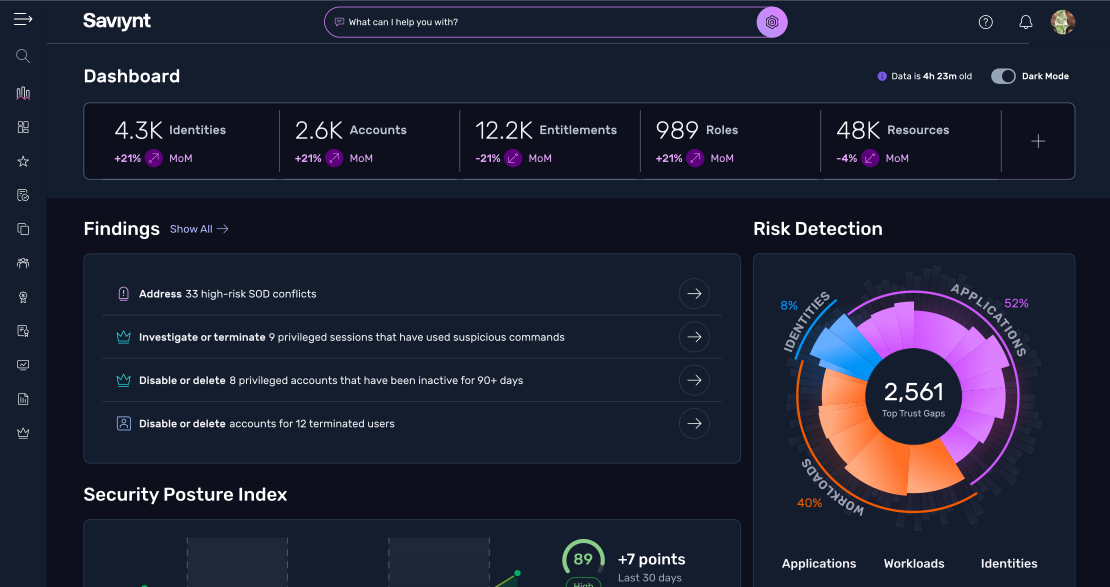
Saviynt is one of the most established specialists in modern identity security, with a platform spanning identity governance, application access, privileged access, and non-human identity management.
The company’s recent strategy, however, goes beyond traditional enterprise identity management.
Saviynt has increasingly positioned identity as a foundational security layer for AI. In March 2026, the company introduced its Identity Security for AI platform, designed to provide visibility, lifecycle governance, and runtime authorization for AI agents.
This reflects a fundamental change in enterprise identity.
AI agents may behave differently from traditional users. They can operate autonomously, interact with multiple applications, and execute actions at machine speed. Organizations therefore need to know not only which agents exist but also who owns them, what permissions they have, and what they are allowed to do.
Saviynt has subsequently expanded this direction through its AI identity platform, Zuma. In July 2026, the company announced that it had surpassed $300 million in annual recurring revenue while launching Zuma as an enterprise AI identity security platform.
The company also emphasizes governance for non-human identities such as workloads, credentials, and service accounts.
Why it stands out:
Saviynt is moving identity security beyond traditional workforce IAM toward a broader control plane covering human, machine, and AI identities.
2. Veza — Making Authorization Visible
Headquarters: San Francisco, California
Focus: Authorization, identity security, access intelligence, AI security
Authentication tells an organization who someone is.
Authorization determines what that identity is actually allowed to do.
Veza focuses heavily on the second problem.
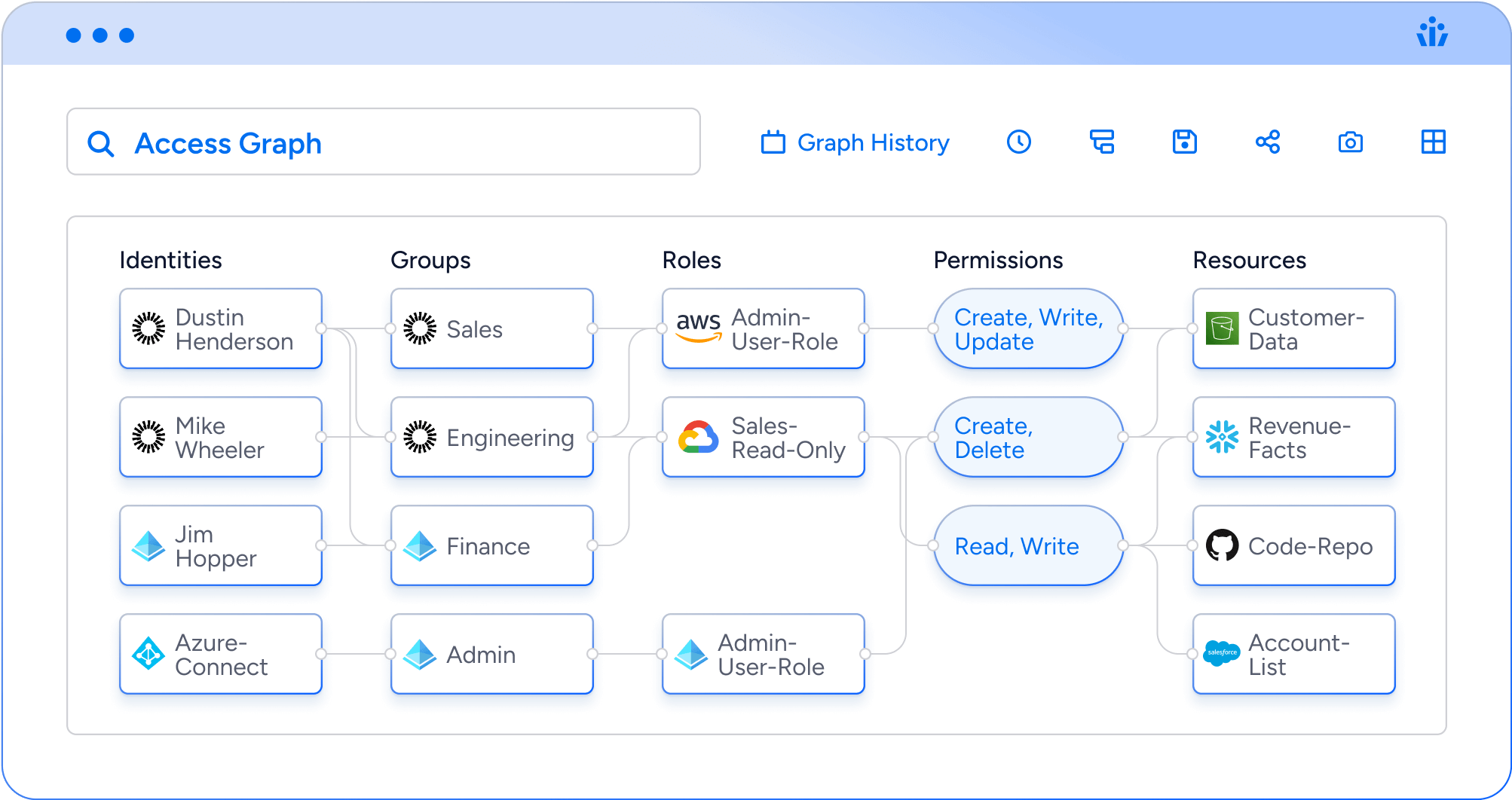
The company has developed an authorization-centric approach designed to give security teams visibility into relationships between identities, resources, and permissions across complex enterprise environments.
This becomes increasingly important as organizations adopt cloud platforms, SaaS applications, and AI systems.
Access relationships can become difficult to understand when permissions are distributed across dozens of systems. A user may have access through multiple groups, roles, applications, or indirect relationships.
Veza’s approach is designed to provide a unified view of these authorization relationships.
The company is also expanding into AI security. At RSAC 2026, Veza highlighted its work around AI agents, non-human identities, authorization visibility, and AI guardrails.
The company’s location in San Francisco also places it close to the broader ecosystem of AI and cloud infrastructure companies developing new approaches to digital access.
Why it stands out:
Veza demonstrates how identity security is evolving from simply verifying identities toward understanding what those identities can actually access.
3. Oasis Security — Securing the Non-Human Identity Layer
Headquarters: New York, New York
Focus: Non-human identity security, machine identities, AI agents
Not every identity in a modern enterprise belongs to a person.
Service accounts, API keys, cloud roles, tokens, workloads, automation systems, and AI agents all represent forms of non-human identity.
Oasis Security has built its business around this rapidly expanding category.
The company focuses specifically on Non-Human Identity Management, helping organizations discover, govern, secure, and manage identities that exist outside traditional employee IAM systems.
This addresses a major visibility problem.
Human identities are usually connected to systems such as HR platforms, managers, departments, and employment lifecycle events. Machine identities often have no equivalent governance structure.
A service account may be created by a development team, used by an automated workload, given excessive privileges, and remain active long after the original purpose has disappeared.
Oasis has expanded its platform into NHI provisioning, allowing organizations to establish ownership and access controls when machine identities are created rather than attempting to clean them up later.
The company is also moving deeper into AI-agent security, positioning AI agents as another major class of non-human identity.
Why it stands out:
Oasis is helping turn non-human identity from an overlooked infrastructure problem into a dedicated security category.
4. Clutch Security — Building Security for Machine Identities
Focus: Non-human identity, secrets, machine access, AI agents
Clutch Security is another specialist focused on the growing problem of machine identities.

The company approaches identity security around the relationships between identities, credentials, applications, workloads, and resources.
This is important because simply knowing that a credential exists does not tell security teams whether it is safe.
They also need to know:
-
Who owns it?
-
What created it?
-
Which workload uses it?
-
What resources can it access?
-
Is the identity still required?
-
What happens if the credential is revoked?
Clutch’s technology focuses on creating greater visibility into these relationships and the lifecycle of non-human identities.
Its focus is particularly relevant to modern development environments where credentials and machine identities can be created automatically across cloud platforms, CI/CD systems, APIs, and applications.
The company is part of the broader NHI platform category evaluated by ISG in its 2026 cybersecurity research.
Why it stands out:
Clutch is addressing the identity-security gap created when software begins operating at a scale and speed that traditional human-centric IAM systems were never designed to manage.
5. Aembit — Giving Workloads Their Own Identity
Focus: Workload identity, machine-to-machine access
Human identity management is relatively mature.

Workload identity is a different challenge.
Modern applications constantly communicate with other applications, databases, APIs, cloud services, and infrastructure components.
Historically, these connections have often relied on API keys, secrets, service accounts, and other static credentials.
Aembit focuses on workload identity, giving applications and workloads a way to establish trusted access without relying exclusively on long-lived credentials.
This is particularly important in cloud-native environments where workloads may be created, destroyed, scaled, or moved automatically.
The identity question therefore changes from:
“Which employee is accessing this resource?”
to:
“Which workload is making this request, and should it be allowed to access this resource?”
Aembit is included among the non-human identity platforms assessed by ISG’s 2026 cybersecurity research, alongside companies such as Oasis Security, Clutch Security, P0 Security, and Saviynt.
Why it stands out:
Aembit focuses on one of the most important layers beneath modern applications: machine-to-machine trust.
6. P0 Security — Bringing Least Privilege to the Cloud
Focus: Cloud authorization, privileged access, identity governance
Cloud environments have made identity and access management more complicated.

A single enterprise may have thousands of permissions distributed across cloud infrastructure, databases, Kubernetes environments, SaaS platforms, and developer tools.
P0 Security focuses on helping organizations control this access through more dynamic and least-privilege-oriented approaches.
Its platform can be used to automate privileged access and reduce the need for manually maintained groups and static permissions.
One example is P0’s work with Afresh, where the company helped automate access escalation across systems including Azure, Snowflake, GitHub, and Kubernetes.
The goal is to give users the access they need when they need it without permanently granting broad privileges.
This is particularly important for engineering teams.
Developers often need elevated access to investigate incidents, deploy changes, or troubleshoot production systems. Permanent administrative access, however, creates unnecessary security exposure.
Just-in-time and least-privilege approaches attempt to balance both requirements.
Why it stands out:
P0 Security represents the shift from static permissions toward dynamic, context-aware privileged access in cloud environments.
7. Beyond Identity — Moving Authentication Beyond Passwords
Headquarters: New York, New York
Focus: Passwordless authentication, phishing-resistant MFA, identity defense
Beyond Identity approaches the identity problem from the authentication layer.
Its core premise is that passwords remain one of the weakest links in digital authentication.
The company developed passwordless authentication using device-bound cryptographic credentials, replacing traditional passwords with stronger authentication mechanisms. It was launched in New York in 2020 by technology veterans Jim Clark and Tom Jermoluk.
The company has since expanded its platform beyond passwordless authentication into broader identity defense.
Its approach combines phishing-resistant authentication with device trust and risk signals, allowing organizations to evaluate both the identity and the device involved in an access request.
This is increasingly relevant as attackers continue to target credentials through phishing, credential theft, and identity-based attacks.
The fundamental idea is simple:
If the credential itself is difficult to steal, the attack surface changes.
Why it stands out:
Beyond Identity demonstrates that re-engineering trust can begin at the authentication layer by replacing passwords with cryptographically stronger identity mechanisms.
8. Linx Security — Bringing AI-Native Intelligence to Identity Security
Headquarters: United States
Focus: Identity security, identity governance, AI agents, human and non-human identities
Linx Security is taking a more modern approach to identity governance by combining access management with identity security posture and AI-driven automation.
Traditional identity governance often relies on periodic access reviews, predefined policies, and manual remediation. That approach can become difficult to maintain as organizations accumulate thousands of users, applications, permissions, and machine identities.
Linx approaches the problem through an Identity Graph, designed to connect identities, applications, permissions, and access relationships across an organization’s environment.
The goal is not simply to show who has access to what, but to continuously identify potentially risky access and help organizations take action.
This becomes particularly relevant as enterprises begin managing both human and non-human identities. AI agents, service accounts, workloads, and other machine identities can create access relationships that traditional identity governance systems were not designed to monitor continuously.
Linx’s platform is positioned around combining identity governance with security posture management, automated risk detection, and remediation. Industry comparisons in 2026 have highlighted its focus on human and non-human identities within a unified identity graph, as well as its AI-native approach to governance.
This represents a broader shift in identity security: instead of waiting for an access review to reveal a problem, organizations can increasingly use automation to identify identity risk as it develops.
Why it stands out:
Linx Security represents the movement from traditional, review-driven identity governance toward continuous, AI-assisted identity security and automated access-risk management.
9. SGNL — Making Authorization Continuous
Focus: Continuous authorization, Zero Trust, access control
Traditional access systems often make a decision at the beginning of a session.
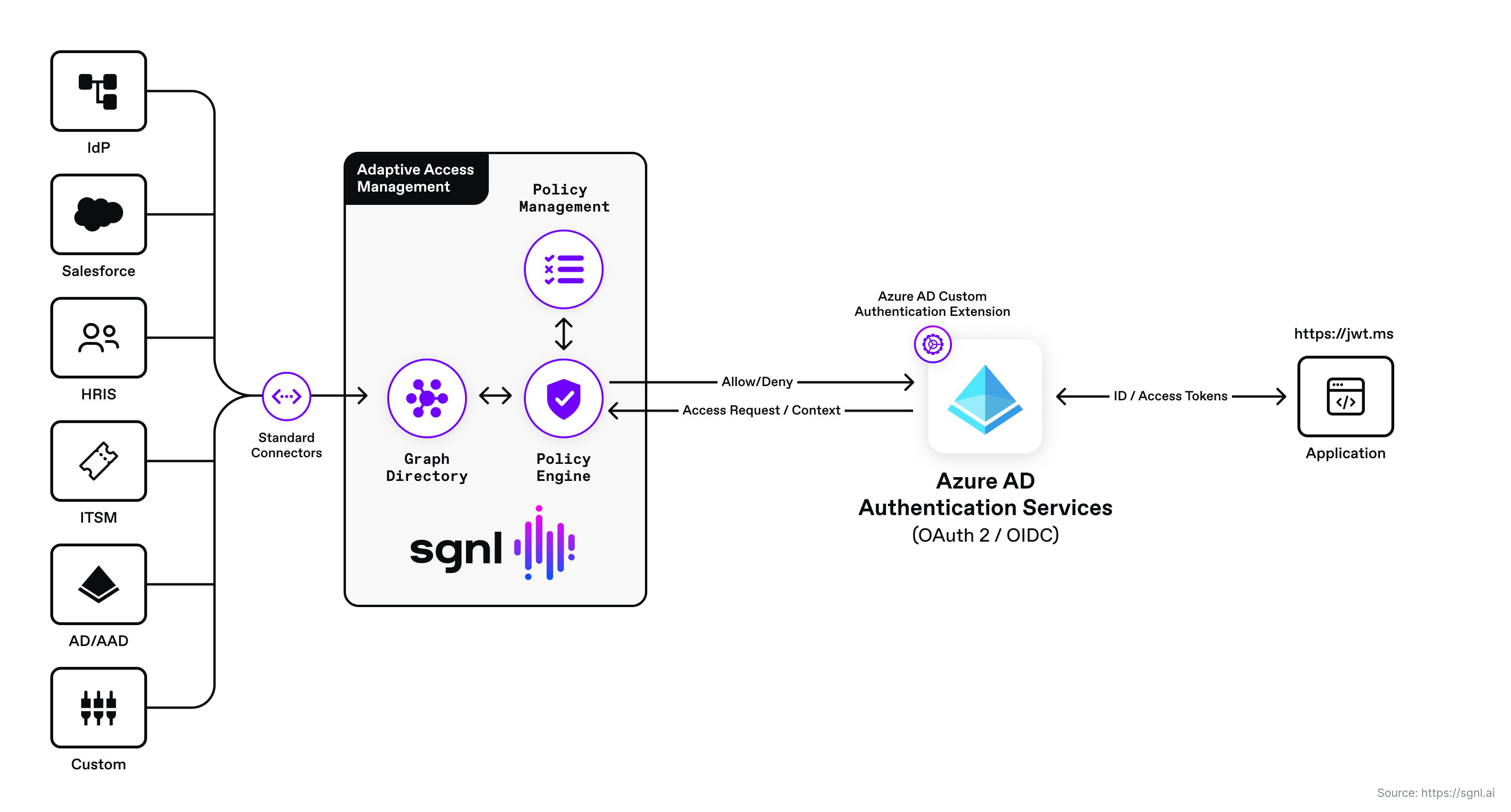
Once the user is authenticated and access is granted, the system may continue to trust that session for a period of time.
SGNL takes a different approach.
Its focus is continuous authorization — making access decisions dynamically based on changing context.
This reflects the principles behind Zero Trust.
A user’s identity alone may not be sufficient to determine whether access should continue. Other signals can matter, including device state, location, resource sensitivity, behavior, and risk.
The concept becomes even more important as organizations move away from traditional corporate networks toward distributed cloud environments.
In these environments, the idea of being permanently “inside” a trusted network becomes less meaningful.
Instead, access needs to be evaluated around the specific resource and context involved.
Why it stands out:
SGNL represents the transition from one-time trust decisions to continuous access evaluation.
10. Keycard — Bringing Identity Security to Non-Human Access
Focus: Non-human identity, machine access, workload security
Keycard is part of the emerging group of security companies focused on the growing population of non-human identities.
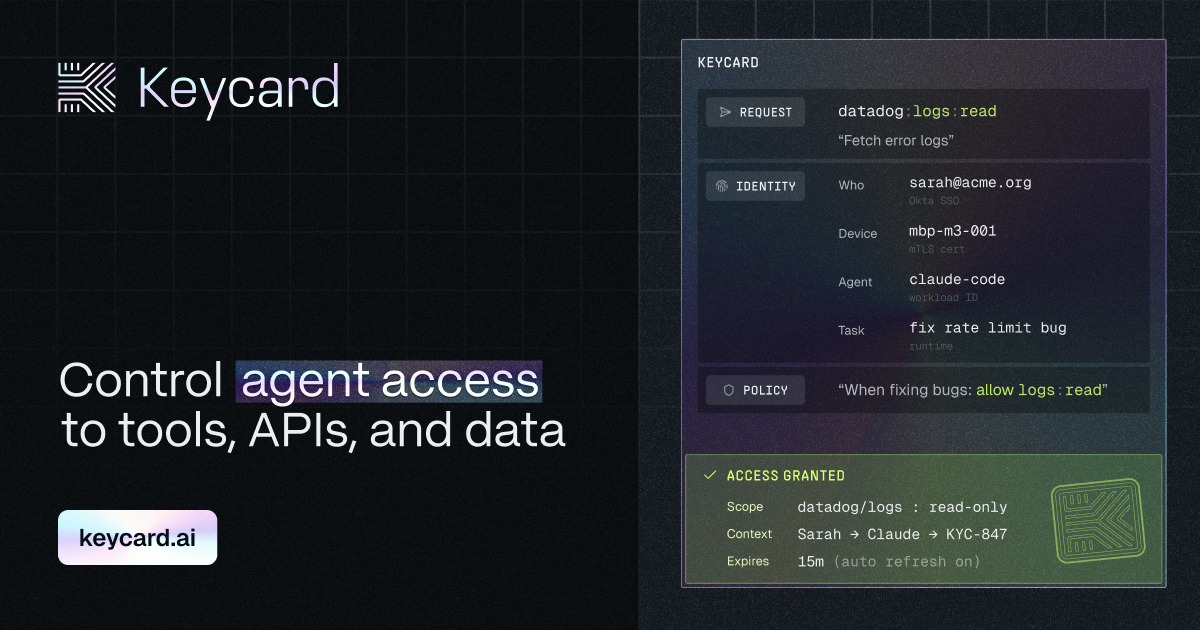
The company’s focus aligns with a larger industry shift: organizations are increasingly dealing with identities that are created and used by software rather than people.
Organizations need to maintain visibility throughout their lifecycle. They need to know when an identity is created, what it can access, whether the access is necessary, and when it should be revoked.
This category is becoming increasingly recognized by security analysts. ISG’s 2026 Non-Human Identities Platforms research evaluates providers across areas including identity discovery, credential management, authorization, lifecycle management, behavioral monitoring, and support for AI-driven environments.
Why it stands out:
Keycard represents the broader movement toward treating machine access as a first-class identity security problem rather than an infrastructure afterthought.
The Bigger Shift: From IAM to Identity Security
These companies may focus on different parts of the identity ecosystem, but together they reveal a larger transformation.
Traditional IAM was primarily designed around:
People → Accounts → Applications → Permissions
Modern identity security is expanding toward:
People → Devices → Applications → Workloads → APIs → Machines → AI Agents
Every additional identity creates another potential access path.
And every access path creates another trust decision.
AI Agents Are Creating a New Identity Problem
The emergence of AI agents could make identity security even more important.
An AI agent can potentially:
-
Read enterprise data
-
Call APIs
-
Access applications
-
Execute workflows
-
Communicate with other agents
-
Make decisions
-
Act on behalf of employees
The key issue is authority.
If an AI agent has access to a user’s permissions, it may inherit more access than it actually needs.
If it operates through a service account, the organization may struggle to understand which actions are being performed by the agent.
Saviynt’s 2026 identity-security work specifically focuses on discovering, governing, and authorizing AI agents, while Oasis has similarly expanded its NHI platform toward AI-agent identity and access management.
This suggests that AI security and identity security are increasingly becoming interconnected.
Frequently Asked Questions
1. What is identity security?
Identity security is the practice of protecting digital identities and controlling their access to applications, data, infrastructure, and other resources. It includes authentication, authorization, identity governance, privileged access, machine identity security, and increasingly AI-agent governance.
2. What are identity security companies?
Identity security companies develop technologies that help organizations verify identities, control access, manage permissions, detect identity-related risks, and protect human and non-human identities.
3. Why is identity security important in the USA?
U.S. enterprises increasingly operate across cloud security, SaaS platforms, remote environments, APIs, and AI systems. This creates complex access relationships and increases the importance of controlling who and what can access sensitive resources.
4. What is a non-human identity?
A non-human identity is a digital identity that does not represent a person. Examples include service accounts, API keys, workload identities, cloud roles, application identities, bots, and AI agents.
5. What is AI identity security?
AI identity security focuses on establishing and governing identities for AI agents and other AI-powered systems. It can include agent discovery, ownership, lifecycle management, authorization, least privilege, monitoring, and runtime controls.


