



Core tax treatment of tokenized securities
Investors holding tokenized securities generally face the same capital gains tax obligations as those holding traditional equities. Because these tokens represent ownership stakes in underlying real-world assets—such as real estate, private equity, or corporate debt—tax authorities view them as investment property rather than currency.
When you sell a tokenized security for a profit, the difference between your cost basis and the sale proceeds is subject to capital gains tax rates. These rates vary based on your holding period and tax jurisdiction. For those looking to understand the broader landscape, comparing tokenized assets vs traditional assets tax comparison is essential for long-term planning.
Regulatory classification and reporting requirements
The IRS classifies most tokenized securities as securities under the Securities Act of 1933, meaning they are subject to standard financial reporting protocols. Unlike decentralized cryptocurrencies that may fall under more ambiguous “virtual currency” guidance, tokenized securities are typically issued through regulated platforms that provide Form 1099-B or similar documentation.
This integration simplifies tax reporting, as the platform tracks the acquisition date and cost basis, mirroring the experience of a traditional brokerage account. Internationally, the landscape is shifting toward standardized reporting. The OECD’s Crypto-Asset Reporting Framework (CARF) mandates that service providers report transactions involving tokenized assets to tax authorities to ensure transparency.
If you hold these assets in a self-custodied wallet, the burden of proof shifts to the investor. You must maintain detailed records, including:
- The exact timestamp of the token acquisition.
- The fiat-equivalent value at the time of purchase.
- Transaction fees paid during the acquisition and disposal phases.
- Documentation of any corporate actions, such as dividends or token splits, which may trigger taxable events.
Failure to report these gains accurately can lead to significant penalties, as tax authorities increasingly use blockchain analytics tools to trace wallet activity back to KYC-verified exchange accounts. While tokenized securities offer the benefit of 24/7 trading and fractional ownership, they do not provide a “tax haven” status. Investors should treat these assets with the same rigorous accounting standards applied to stocks held in a standard brokerage account.

Comparative analysis of capital gains tax on tokenized securities
The tax treatment of tokenized securities often mirrors traditional financial assets, yet the underlying settlement infrastructure creates distinct reporting challenges. In most jurisdictions, including the United States under IRS guidance, tokenized assets are treated as property.
Consequently, any appreciation in value from the cost basis at the time of acquisition to the time of disposal is subject to capital gains tax on tokenized securities. Unlike traditional assets where the brokerage provides a consolidated Form 1099-B, tokenized assets often require investors to manually track how to calculate cost basis for tokenized assets across decentralized wallets or custodial platforms.
If an investor swaps a tokenized stock for a stablecoin or another digital asset, this transaction constitutes a taxable event. The lack of standardized tax reporting software for blockchain-based securities means the burden of proof for the cost basis rests entirely on the individual taxpayer.
Liquidity events and taxable triggers
Traditional brokerage assets typically operate on a T+2 settlement cycle, where the legal transfer of ownership and the finality of the trade occur days after the execution. This delay provides a clear window for tax accounting.
In contrast, tokenized securities leverage smart contracts to achieve near-instantaneous atomic settlement. While this efficiency improves market liquidity, it creates a high-frequency environment where taxable triggers occur in seconds rather than days. Automated settlement mechanisms in tokenized environments often bypass the intermediary reporting layers found in traditional finance.
For instance, if a smart contract automatically reinvests dividends or triggers a rebalancing event, the investor may inadvertently trigger a capital gains tax liability without a traditional cash-out event. Investors must distinguish between:
- Realized Gains: Occurring when the tokenized security is sold for fiat or another cryptocurrency.
- Deemed Disposals: Occurring when smart contract protocols initiate a swap or migration that the tax authority classifies as a disposal of the original asset.
Because smart contracts execute 24/7, the volume of potential taxable events is significantly higher than in traditional markets. Investors utilizing automated yield-bearing tokenized assets must utilize blockchain analytics tools to export transaction histories, ensuring that every automated settlement is accounted for to avoid underreporting capital gains during tax filing season.
Cost basis tracking and record-keeping mechanisms
Accurate cost basis reporting is the primary hurdle for investors managing capital gains tax on tokenized securities. Unlike traditional brokerage accounts that issue standardized 1099-B forms, tokenized assets often exist on public ledgers where cost basis is not automatically calculated or reported to tax authorities.
Investors must maintain a precise audit trail of the original acquisition price, gas fees paid during purchase, and any subsequent corporate actions or token splits.
Automated reporting tools versus manual ledger reconciliation
The divergence between blockchain-native accounting and traditional brokerage statements creates a significant operational gap. Traditional brokerages provide consolidated year-end reports that aggregate realized gains and losses, effectively offloading the burden of calculation from the investor.
In contrast, tokenized securities require the use of specialized software to bridge the gap between raw blockchain data and tax compliance requirements. Manual reconciliation involves exporting transaction history from a digital wallet or security token platform and mapping every movement to a specific fiat value at the time of execution.
This process is prone to human error, particularly when dealing with high-frequency trading or complex liquidity provision. Automated tools mitigate these risks by syncing directly with blockchain nodes or API endpoints provided by tokenization platforms. These tools automatically categorize transfers, identify wash sales, and apply FIFO (First-In, First-Out) or HIFO (Highest-In, First-Out) accounting methods to optimize the tax outcome.
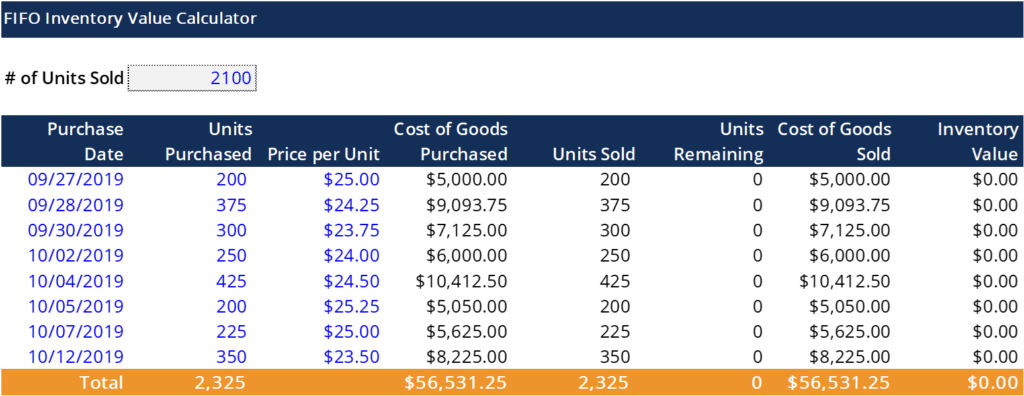
Investors should prioritize platforms that support specific security token standards, such as ERC-3643 or ERC-1400, as these protocols often embed metadata regarding the asset’s origin. Relying on manual spreadsheets for tokenized portfolios is rarely sustainable for long-term investors due to the difficulty of tracking historical cost basis across multiple decentralized exchanges or secondary markets.
By integrating automated reporting tools early, investors ensure their records remain compliant with local tax authority requirements for granular transaction history, effectively reducing the risk of audits and penalties associated with misreported capital gains.
Strategic decision framework for asset selection
Investors must weigh the administrative burden of blockchain-based reporting against the liquidity benefits of digital assets. While tokenized securities offer fractional ownership and 24/7 settlement, the tax reporting for tokenized assets in the US often necessitates specialized software to track cost basis across decentralized protocols.
Choosing between these structures requires an analysis of your current tax jurisdiction and the specific reporting capabilities of your chosen custodian.
Scenarios favoring traditional brokerage accounts
Traditional brokerage accounts remain the superior choice for investors who prioritize simplicity and automated tax documentation. When you hold assets through a regulated broker, the institution issues a Form 1099-B, which automatically reports your cost basis and proceeds to both you and the IRS.
This eliminates the manual effort of calculating capital gains tax on tokenized securities, where you are often responsible for tracking every transaction, gas fee, and wallet transfer yourself. You should favor traditional brokerage accounts if:
- Tax Reporting Automation: You prefer consolidated tax statements that integrate directly with standard tax preparation software like TurboTax or H&R Block.
- Cost Basis Tracking: You hold assets for long durations and want to avoid the risk of losing historical purchase data, which is common when moving tokens across multiple non-custodial wallets.
- Regulatory Clarity: You operate in a jurisdiction where the tax treatment of tokenized assets remains ambiguous, potentially leading to audits or penalties due to misclassification of income versus capital gains.
- Loss Harvesting: You utilize automated tax-loss harvesting services provided by robo-advisors, which are currently difficult to replicate with tokenized assets due to the lack of integrated tax-lot accounting in most decentralized exchanges.
By keeping core portfolio holdings in a traditional brokerage, you ensure that your annual tax filing remains straightforward. Tokenized securities are best utilized as a satellite strategy for specific assets that offer unique yield-bearing opportunities or fractional access not available in traditional markets. Before shifting significant capital into tokenized formats, verify that your accounting tools can ingest blockchain transaction data to prevent costly errors during tax season.
Risk factors in cross-border tokenized transactions
Investing in tokenized securities across international borders introduces significant regulatory complexity. While blockchain technology enables 24/7 global trading, tax authorities operate within rigid, localized frameworks that often struggle to categorize digital representations of real-world assets.
Investors must account for the fact that the location of the token issuer, the trading venue, and the investor’s tax residency may all trigger different reporting obligations.
Double taxation and jurisdictional arbitrage
The primary danger for global digital asset holders is the risk of double taxation, where two or more countries claim the right to tax the same capital gain. Because tokenized securities often exist on decentralized ledgers, tax authorities may interpret the ‘situs’—or legal location—of the asset differently.
For instance, a jurisdiction might view the location of the smart contract deployment as the asset’s origin, while another might prioritize the residency of the token holder. This conflict can lead to situations where an investor is taxed on the full gain in both jurisdictions without a clear mechanism for claiming foreign tax credits.
Furthermore, jurisdictional arbitrage attempts—where investors move assets to lower-tax regions—are increasingly under scrutiny by global bodies like the OECD. The implementation of the Crypto-Asset Reporting Framework (CARF) is designed to close these gaps by mandating automatic exchange of information between tax administrations.
Investors should not assume that the pseudonymity of a blockchain wallet provides a shield against cross-border tax enforcement regarding capital gains tax on tokenized securities. If a tokenized asset is linked to a regulated real-world security, such as a tokenized bond or equity, the underlying asset’s tax status will almost certainly supersede the digital nature of the token itself.
Practically, this means maintaining meticulous records of the cost basis in the investor’s local currency at the time of purchase. Fluctuations in exchange rates between the tokenized asset’s denomination and the investor’s home currency can create phantom gains or losses that complicate tax filings. Before engaging in cross-border tokenized transactions, consult with a tax professional who specializes in both traditional securities law and the evolving guidance on digital assets to ensure compliance with the specific tax treaties applicable to your residency.
Frequently Asked Questions
Tax distinctions between tokenized securities and traditional stocks
In many jurisdictions, tax authorities treat tokenized securities as property or securities, meaning capital gains tax on tokenized securities generally mirrors the treatment of traditional brokerage assets. However, the complexity arises in reporting, as decentralized exchanges may not provide the same 1099-B forms as traditional brokers.
Reporting procedures for capital gains on tokenized assets
You must track the cost basis and fair market value at the time of acquisition and disposal. Unlike traditional brokers that automate this, you may need to use specialized crypto tax software to aggregate transaction data from your wallet addresses to calculate your taxable gain or loss. For those struggling with this, understanding tax consequences of tokenized asset liquidation is equally vital for portfolio optimization.
- Compliance strategies for managing tax implications of tokenized assets
- Strategic compliance frameworks for tax reporting for tokenized assets in the US
- Tax treatment of tokenized gold and capital gains implications
- Regulatory classification challenges for tax treatment of tokenized dividends and yield


