



Classification of tokenized assets under current tax frameworks: Tax consequences of tokenized asset liquidation
Tax authorities, including the IRS in the United States and the HMRC in the United Kingdom, treat the liquidation of tokenized assets based on their underlying economic substance rather than their technological format. When you liquidate a tokenized asset, the tax consequences depend on whether the asset is categorized as a security, a commodity, or a digital utility.
Failing to correctly identify the asset class often leads to incorrect capital gains reporting, potentially triggering audits or penalties.
Distinction between utility tokens and security tokens
The legal classification of a token dictates how the liquidation event is recorded on your tax return. Security tokens represent an investment contract, often granting the holder rights to dividends, profit-sharing, or equity in a project.
Liquidating these assets typically triggers capital gains tax, calculated as the difference between the cost basis and the fair market value at the time of sale. You must track the acquisition cost precisely, including any gas fees paid during the initial purchase, to determine your taxable gain or loss.
Utility tokens, by contrast, are designed to provide access to a specific product or service within a blockchain ecosystem. While some tax jurisdictions view utility tokens as personal use property, others classify them as intangible assets.

If you liquidate a utility token that has appreciated in value, the gain is generally subject to capital gains tax. However, if the token is used solely as a medium of exchange for services within a platform, the tax treatment may mirror that of a currency exchange, where minor fluctuations are sometimes exempt from reporting depending on local de minimis thresholds.
Investors must consult the specific whitepaper or legal disclosure provided at the time of token issuance to determine the intended classification. If a token was marketed as an investment vehicle but lacks clear regulatory status, tax agencies often default to treating the liquidation as a taxable event involving a capital asset.
Maintaining a detailed ledger of transaction dates, asset types, and the specific exchange or protocol used for the liquidation is essential for substantiating your best crypto tax software for tokenized assets during an audit.
Calculating cost basis for tokenized asset liquidation
Determining the cost basis for tokenized assets requires precise tracking of the original purchase price, including any transaction fees paid during the acquisition. When you liquidate a tokenized asset, the tax consequences of tokenized asset liquidation hinge on the difference between the net proceeds and this how to calculate cost basis for tokenized assets.
Because blockchain transactions are immutable, tax authorities expect taxpayers to provide a verifiable audit trail linking specific wallet addresses to the initial capital outlay.
Methods for tracking acquisition costs in blockchain environments
To substantiate your cost basis, you must aggregate data from both centralized exchanges and decentralized protocols. Relying solely on exchange-provided 1099 forms is often insufficient for complex DeFi activity.
Instead, you should utilize blockchain explorers like Etherscan or Solscan to export your transaction history, ensuring you capture the exact timestamp and fiat value of the asset at the moment of acquisition.
Effective tracking strategies include:
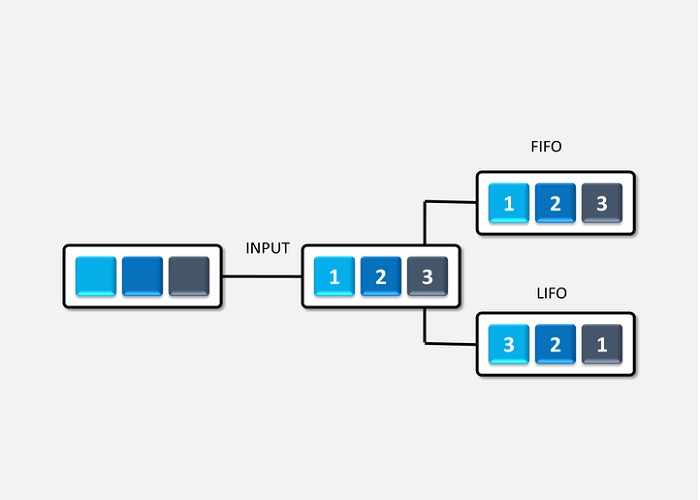
- Wallet Aggregation: Use portfolio tracking tools like Koinly, CoinTracker, or ZenLedger to sync your public keys. These tools automatically calculate the cost basis using standard accounting methods such as First-In, First-Out (FIFO) or Specific Identification.
- Gas Fee Capitalization: Remember that gas fees incurred during the purchase of a tokenized asset are considered part of the acquisition cost. You should document these fees as they increase your cost basis, thereby reducing the total capital gain realized upon liquidation.
- On-Chain Reconciliation: For assets acquired through liquidity pools or yield farming, the cost basis is often the fair market value of the underlying collateral at the time of deposit. Keep records of the token price at the exact block height of your transaction to defend your calculations during a tax audit.
If you fail to maintain accurate records, tax authorities may assign a cost basis of zero to your assets. This oversight forces you to pay capital gains tax on the entire liquidation amount, significantly increasing your tax liability.
Maintaining a comprehensive spreadsheet or using specialized crypto tax software is the most reliable way to ensure your reporting aligns with current regulatory expectations.
Reporting requirements for cross-border tokenized transactions
Liquidation of tokenized assets across international borders triggers complex reporting obligations that vary significantly by jurisdiction. When a taxpayer liquidates a tokenized real estate interest or security held on a foreign-based blockchain protocol, they must determine whether the transaction constitutes a reportable event under local laws like the U.S. Foreign Account Tax Compliance Act (FATCA) or the Common Reporting Standard (CRS).
Failure to disclose these holdings often results in severe penalties, as tax authorities increasingly treat tokenized assets as equivalent to traditional financial instruments.
Investors must maintain detailed records of the cost basis, the date of acquisition, and the specific exchange or decentralized protocol used for the liquidation. Because blockchain transactions are immutable, tax authorities use forensic tools like Chainalysis or Elliptic to verify the movement of funds.
If the liquidation occurs on a decentralized exchange (DEX) without a centralized intermediary to issue a Form 1099-B, the burden of proof for the capital gain or loss rests entirely on the taxpayer.
Mitigating double taxation risks
Cross-border tokenized liquidations frequently expose investors to double taxation, where both the source country of the asset and the investor’s country of residence claim taxing rights. To mitigate this, taxpayers should leverage existing bilateral tax treaties designed to prevent such overlaps.
Most modern treaties allow for a Foreign Tax Credit (FTC), which permits an investor to offset taxes paid to a foreign government against their domestic tax liability.
To successfully claim these credits, investors must provide documentation proving the tax was paid to the foreign jurisdiction. This typically involves submitting a tax receipt or a certificate of tax residency from the source country.
It is essential to verify if the specific tokenized asset qualifies for treaty benefits, as some jurisdictions classify tokenized real estate differently than traditional property. If a treaty does not exist between the two nations, the taxpayer may still be eligible for a deduction of foreign taxes paid as a business expense, though this is often less favorable than a direct credit.
Consulting with a tax professional experienced in digital asset cross-border flows is necessary to navigate the specific interplay between local reporting requirements and international treaty provisions.
Documentation standards for tax audits
Tax authorities increasingly view tokenized assets through the same lens as traditional securities or commodities. When you liquidate these assets, the burden of proof rests entirely on you to substantiate the cost basis, holding period, and final proceeds.
Relying solely on a centralized exchange statement is often insufficient, as these platforms may not capture the nuances of on-chain activity or decentralized protocol interactions.
Essential data points for audit-ready records
To withstand a potential audit regarding the tax consequences of tokenized asset liquidation, your records must bridge the gap between blockchain activity and fiat reporting. Maintain a comprehensive ledger that includes the following specific data points:
- Transaction Hashes: Every liquidation event must be linked to its corresponding on-chain transaction hash. This allows auditors to verify the exact timestamp and the smart contract address involved.
- Smart Contract Interaction Logs: If you utilized a decentralized exchange or liquidity pool, save the input data and function calls. This proves the nature of the transaction, such as whether it was a direct sale, a swap, or a redemption of a collateralized position.

- Gas Fee Records: Transaction costs incurred during the liquidation process are generally deductible. Ensure you track the native token amount spent on gas and the USD value of that token at the time of the transaction.
- Wallet Ownership Verification: Maintain a record of the public addresses you control. If an auditor questions the origin of funds, you must be able to demonstrate that the wallet belongs to you, often through a signed message or a simple transaction history export from your non-custodial wallet provider.
- Conversion Rates: Since tokenized assets are often priced in other cryptocurrencies (like ETH or USDC) before being converted to fiat, you must document the exchange rate at both the point of liquidation and the point of final fiat conversion.
Standardizing these records in a CSV or dedicated crypto-tax software format simplifies the reconciliation process. If you utilize automated portfolio trackers, ensure they are synced with your wallet addresses to capture off-exchange movements.
Discrepancies between your reported figures and on-chain reality are the primary triggers for tax inquiries; therefore, reconciling your wallet history against your tax filings annually is a critical defensive measure.
Common pitfalls in liquidation tax reporting
Many investors mistakenly treat tokenized assets as simple currency transactions, failing to recognize that liquidating these holdings often triggers complex capital gains events. A primary error involves neglecting the cost basis tracking of fractionalized assets.
When you liquidate a portion of a tokenized real estate share or a fractionalized security, you must accurately calculate the proportional cost basis of that specific unit, rather than using an average cost method that may not be supported by your jurisdiction’s tax authority.
Misinterpreting wash sale rules for tokenized assets
A frequent point of confusion is whether the wash sale rule—which prevents claiming a loss on a security sold at a loss if a ‘substantially identical’ asset is purchased within 30 days—applies to tokenized assets. Currently, the Internal Revenue Service (IRS) in the United States classifies most digital assets as property rather than securities.
Consequently, the formal wash sale rules under Section 1091 do not technically apply to most cryptocurrencies or utility tokens. However, this creates a dangerous assumption.
If your tokenized asset represents a direct interest in a traditional security, such as a tokenized stock or a regulated investment fund, the IRS or local tax authorities may look through the tokenization layer to the underlying asset. In these cases, the tax consequences of tokenized asset liquidation could be subject to wash sale restrictions.
Relying on the ‘property’ classification for a tokenized equity could lead to an audit if the tax authority deems the underlying instrument a security.
Another common pitfall is the failure to account for gas fees or platform liquidation fees. These transaction costs are deductible expenses that reduce your realized capital gain. Investors often report the gross proceeds from a decentralized exchange (DEX) liquidation without subtracting the network fees, effectively overpaying their tax liability.
Always maintain a detailed ledger of transaction hashes and associated costs to substantiate these deductions during a tax filing. Finally, ensure that you are not double-counting assets that have been moved across multiple wallets, as automated tax software often struggles to reconcile cross-chain transfers, leading to inflated gain reports that require manual correction.
Frequently Asked Questions
Comparative tax treatment of tokenized versus traditional assets
In many jurisdictions, tax authorities treat tokenized assets as property or securities. While the underlying asset class (e.g., real estate or gold) dictates the tax category, the liquidation process requires precise on-chain documentation to prove cost basis and holding periods. You can learn more about the tokenized assets vs traditional assets tax comparison to better understand these distinctions.
Standard procedures for calculating cost basis
The cost basis is typically the purchase price plus any transaction fees or gas costs incurred during acquisition. When liquidating, you must subtract this basis from the net proceeds to determine your capital gain or loss. Furthermore, the broader shift from crypto payments tokenized assets represents a significant evolution in how digital value is managed and reported.
- Compliance strategies for managing tax implications of tokenized assets
- Understanding capital gains tax on tokenized securities versus traditional brokerage assets
- Strategic compliance frameworks for tax reporting for tokenized assets in the US
- Tax treatment of tokenized gold and capital gains implications


