



The top 10 RWA tokenization companies by layer of the stack are those that specialize in distinct infrastructure roles, such as issuance, compliance, custody, and asset management, rather than competing on identical functionality. Real-world asset tokenization has evolved beyond simple digitization, with the 2026 ecosystem now requiring specialized protocols for token standards, regulated distribution, and onchain lifecycle management. If you are looking to understand the core mechanics, our guide on real estate tokenization frameworks provides a clear look at how these systems function for institutional assets.
RWA.xyz currently tracks more than 200 tokenization platforms, illustrating how fragmented the market has become. Its platform data also shows that tokenized assets span government debt, private credit, real estate, funds, commodities, and other asset classes.
This guide maps 10 established players according to where they sit in the RWA technology and market stack. The list is intended as an industry overview rather than a universal performance ranking. Some companies provide end-to-end platforms, while others focus on a specific infrastructure layer.
Top 10 RWA tokenization companies by layer of the stack
1. Tokeny — Token and Compliance Layer
Layer: Token standard, compliance and issuance infrastructure
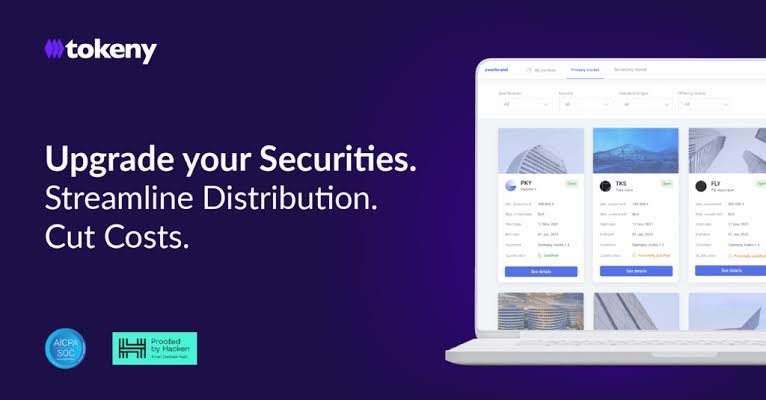
Tokeny is one of the most recognizable infrastructure providers in the compliant asset-tokenization market. Founded in 2017, the company developed the T-REX protocol, which later became ERC-3643, an open-source standard for permissioned tokens.
Rather than positioning tokenization simply as creating an ERC-20-style token, Tokeny focuses on embedding identity and compliance requirements into the asset itself. ERC-3643 uses permissioned token mechanics so that eligibility and transfer conditions can be enforced at the blockchain level.
Its platform also provides APIs and user interfaces on top of the underlying token infrastructure, connecting blockchain-based assets with traditional financial and operational systems.
Key capabilities
- Permissioned token issuance
- ERC-3643 infrastructure
- Onchain identity and compliance
- Token lifecycle management
- APIs and enterprise integrations
- Issuance, transfer and distribution workflows
Best fit
Tokeny is particularly relevant for financial institutions, fund managers and enterprises that need compliance-aware token infrastructure rather than simply launching a basic blockchain token.
Its position is especially important at the technical and compliance layer, where legal eligibility needs to translate into programmable transfer rules.
2. Securitize — Institutional Issuance and Servicing Layer
Layer: Digital securities issuance, servicing and distribution
Securitize operates closer to the institutional issuance layer of the RWA stack. The company provides infrastructure for creating and managing digital securities and has become one of the most visible platforms in institutional tokenization. For those seeking to partner with a digital marketing agency for saas companies to scale their platform reach, it is essential to evaluate their specific experience in the fintech sector.
RWA.xyz currently lists Securitize among the largest tokenization platforms by distributed RWA value, with exposure across U.S. Treasury funds, venture capital and other asset classes.
The company’s role is broader than simply deploying smart contracts. Its platform connects digital securities with workflows around issuance, investor access and asset servicing.
Securitize has also continued expanding institutional RWA activity in 2026. For example, a February 2026 partnership involving Hamilton Lane and Securitize targeted an RWA-backed stablecoin structure, combining private-market assets with regulated tokenization infrastructure. For those interested in performance, we have analyzed various real estate tokenization case studies to highlight how these assets perform in practice.
Key capabilities
- Digital securities issuance
- Institutional tokenization
- Investor onboarding
- Asset servicing
- Transfer and compliance workflows
- Institutional distribution
Best fit
Securitize is relevant to institutional issuers and asset managers looking to move regulated financial products onchain without building the entire issuance and servicing infrastructure themselves.
Its place in the stack can be summarized as the institutional operating layer between the underlying asset and onchain investors.
3. Zoniqx — Compliance-Native RWA Infrastructure
Layer: Issuance, compliance and lifecycle infrastructure
Zoniqx focuses on the infrastructure required to structure, issue, distribute and manage tokenized real-world assets. When building these complex systems, developers often look for top 10 smart contract security audit companies in 2026 to ensure their protocols remain robust against exploits.
Its current platform is organized around two major components: z360, which handles issuance and lifecycle operations, and zConnect, which provides connectivity to eligible distribution channels.
The company describes its infrastructure as compliance-native, with support for asset categories including private credit, funds, real estate, infrastructure and yield products. Its architecture also incorporates KYC, KYB, accreditation and jurisdiction-specific compliance requirements into tokenized asset workflows.
This makes Zoniqx particularly interesting because compliance is treated as an infrastructure component, rather than something added after token issuance.
Key capabilities
- RWA issuance
- Compliance controls
- Asset lifecycle management
- Investor eligibility
- Distribution connectivity
- Cross-chain infrastructure
- Institutional asset workflows
Best fit
Zoniqx can be relevant for institutions and asset owners that need structured RWA infrastructure across multiple jurisdictions and asset types.
Its strongest positioning is around the middle of the stack: turning an underlying asset into a compliant, manageable and distributable digital asset.
4. Brickken — Issuance and Asset Lifecycle Layer
Layer: Token issuance, investor management and lifecycle operations

Brickken takes a more application-oriented approach to RWA tokenization. Its platform brings issuance, compliance, investor onboarding and lifecycle management into a single environment.
The platform supports tokenization across categories such as private equity, funds, bonds, real estate, commodities, energy and intellectual property. It also provides investor portals, KYC/KYB workflows, cap-table management, corporate actions and reporting.
Brickken reports more than 150 clients and more than $660 million in total tokenized value on its current platform materials.
Key capabilities
- No-code token issuance
- Investor portals
- KYC/KYB
- Cap-table management
- Corporate actions
- Reporting
- White-label infrastructure
- API integration
Best fit
Brickken is particularly suited to asset owners, funds, private companies and financial businesses that want a more turnkey tokenization workflow.
Instead of focusing primarily on the underlying blockchain standard, Brickken emphasizes the operational layer that users interact with when launching and managing a tokenized asset.
5. DigiShares — Issuance and Investor Management Layer
Layer: Asset issuance, investor onboarding and tokenized ownership infrastructure
DigiShares provides an end-to-end asset tokenization platform focused on tokenized securities and real-world assets.
Its platform combines token issuance with KYC/AML onboarding, investor management and cap-table functionality. The company also emphasizes applications involving traditionally illiquid assets such as real estate and private equity.
The distinction is useful because tokenization is not finished when a token is created. Issuers still need to manage investors, ownership records, compliance procedures and ongoing asset operations. When evaluating these platforms, it is helpful to understand real estate tokenization platform pricing models to ensure cost-efficiency.
Key capabilities
- Tokenized securities issuance
- RWA tokenization
- KYC/AML workflows
- Investor onboarding
- Cap-table management
- Investment portals
- Secondary-market infrastructure
Best fit
DigiShares can be considered by asset managers, real-estate businesses and private-market issuers that need an integrated environment for both token creation and investor operations.
It sits mainly in the issuer application layer, connecting the blockchain infrastructure underneath with the business workflows above it.
6. Polymath — Blockchain and Protocol Layer
Layer: Blockchain infrastructure and regulated asset protocol
Polymath occupies a different part of the stack from conventional SaaS tokenization providers. Through Polymesh, the company focuses on blockchain infrastructure designed specifically for regulated assets.
Polymath’s current platform materials describe Polymesh as a purpose-built network for regulated financial assets, with identity, compliance, governance and transfer controls integrated into the infrastructure.
The approach is therefore not simply “put a token on an existing chain.” Instead, the blockchain itself is designed around requirements associated with regulated assets.
In 2026, Polymath also announced a partnership with tZERO to support regulated RWA issuance on Polymesh, combining Polymesh’s blockchain infrastructure with tZERO’s regulated broker-dealer and trading capabilities.
Key capabilities
- Purpose-built RWA blockchain
- Identity infrastructure
- Compliance controls
- Governance
- Regulated token issuance
- Institutional settlement infrastructure
Best fit
Polymath is relevant to institutions that want blockchain-level controls designed specifically for regulated financial assets.
Its role is closer to the foundation of the stack than an application sitting on top of a general-purpose blockchain.
7. Centrifuge — Onchain Asset Management Layer
Layer: Tokenized asset infrastructure, private credit and DeFi connectivity
Centrifuge is particularly associated with tokenized private credit and institutional onchain asset management. As the industry matures, many are looking at the Top 10 best fintech companies in 2026: Leaders shaping the future of finance to see how these infrastructure providers integrate with broader market trends.
Its current infrastructure supports tokenization and management of funds, credit, Treasuries and other institutional assets, while connecting those assets to onchain liquidity and DeFi applications.
The company’s architecture has also evolved toward multichain deployment. Centrifuge V3 launched across EVM networks including Ethereum, Plume, Base, Arbitrum, Avalanche and BNB Chain.
This makes Centrifuge different from an issuer-facing SaaS platform. It is positioned more as financial infrastructure for bringing institutional assets into onchain markets.
Key capabilities
- RWA tokenization
- Private credit infrastructure
- Tokenized funds
- Treasury products
- Portfolio operations
- Multichain deployment
- DeFi connectivity
- Onchain reporting
Best fit
Centrifuge is particularly relevant for asset managers, private-credit originators and institutional teams looking to connect tokenized assets with onchain liquidity.
It sits between the tokenization and financial-market layers of the stack.
8. Taurus — Custody, Tokenization and Transaction Layer
Layer: Custody, tokenization and trading infrastructure
Taurus approaches tokenized assets from the institutional digital-asset infrastructure side.
Its platform combines custody, tokenization and trading capabilities. For tokenized assets specifically, Taurus supports the issuance, management and trading of securities including equity, debt and funds.
This layer is critical because institutions often need more than token issuance. They also need secure asset custody, transaction controls, settlement workflows and connections with existing financial systems.
Taurus therefore represents an important operational infrastructure layer between tokenized assets and institutional financial infrastructure.
Key capabilities
- Digital asset custody
- Tokenized securities issuance
- Tokenized asset management
- Trading infrastructure
- Settlement
- Institutional controls
Best fit
Taurus is relevant for banks, financial institutions and institutional asset managers that require tokenization to work alongside custody and broader digital-asset operations.
9. Libeara — Regulated Issuance and Distribution Layer
Layer: Institutional tokenization, regulated issuance and distribution
Libeara is focused on helping financial institutions and asset managers issue and distribute tokenized financial products.
The company was incubated by SC Ventures and has been building infrastructure around institutional RWA issuance. In March 2026, Libeara announced that it had obtained a Capital Markets Services licence from the Monetary Authority of Singapore covering dealing in securities and collective investment schemes.
In June 2026, Libeara announced a $14 million strategic funding round led by GSR, with the company stating that the capital would support its expansion as a provider of tokenization infrastructure.
Key capabilities
- Institutional RWA issuance
- Tokenized investment products
- Regulated distribution
- Capital-markets infrastructure
- Asset-manager integrations
- Digital-asset workflows
Best fit
Libeara is particularly relevant to financial institutions and asset managers operating in regulated markets, especially those looking for infrastructure that combines technology with regulated market access.
Its position is therefore closer to the regulated financial-services layer than pure blockchain development.
10. InvestaX — Issuance, Distribution and Secondary Market Layer
Layer: Regulated RWA issuance, distribution and trading
InvestaX has operated in the digital-securities and RWA space since 2018 and currently positions itself as a MAS-licensed RWA tokenization platform.
Its platform supports the issuance, distribution and trading of tokenized real-world assets, with activity spanning funds, private credit, Treasuries and commodities.
The company holds Capital Markets Services and Recognized Market Operator licences in Singapore, giving it a regulated market infrastructure component in addition to its technology platform.
InvestaX’s ecosystem map also distinguishes between tokenization platforms, exchanges, custodians, blockchain networks and other RWA infrastructure categories, illustrating how its own platform sits across several connected parts of the market stack.
Key capabilities
- RWA tokenization
- Regulated issuance
- Investor onboarding
- Tokenized funds
- Tokenized Treasuries
- Private-credit products
- Secondary-market access
- Institutional distribution
Best fit
InvestaX is particularly relevant to institutions and qualified investors operating within regulated capital markets, especially in Asia.
Its role demonstrates an important point about RWA tokenization: infrastructure and market access increasingly overlap, with some providers supporting both issuance and distribution.
How the RWA Tokenization Stack Fits Together
The 10 companies above illustrate why comparing RWA tokenization companies solely by features can be misleading. They do not all solve the same problem.
A simplified RWA stack looks like this:
1. Asset and Legal Layer
This is where the underlying asset exists: real estate, private credit, funds, bonds, commodities, infrastructure or other assets. To properly assess these, you should review the latest valuation methods for real-world assets (RWA) on-chain.
The legal structure determines what the token actually represents. Depending on the product, this could involve a fund, SPV, debt instrument, equity interest or another legal structure.
2. Token and Compliance Layer
This layer translates legal ownership and investor restrictions into blockchain rules.
Tokeny is particularly relevant here through ERC-3643 and its permissioned-token infrastructure. Polymath approaches similar requirements at the blockchain-protocol level.
3. Issuance Layer
This is where the asset becomes a blockchain-based instrument.
Platforms such as Securitize, Zoniqx, Brickken, DigiShares and Libeara provide different approaches to issuance, investor onboarding and lifecycle management.
4. Asset Management Layer
After issuance, the asset still needs to be managed.
This can include NAV updates, reporting, distributions, corporate actions, portfolio operations and investor servicing.
Centrifuge is particularly relevant to this layer, especially for institutional credit and fund structures.
Why RWA Tokenization Is Becoming a Multi-Layer Market
The RWA sector is increasingly developing into an infrastructure ecosystem rather than a single category of “tokenization platforms.”
Current RWA data illustrates this fragmentation. RWA.xyz separates platforms that distribute tokenized assets from platforms that use blockchain primarily as a recordkeeping layer. It also tracks distinct asset classes, networks and platform structures.
This matters because the requirements for a tokenized Treasury product can be very different from those for a tokenized private-credit fund or real-estate asset.
As the market develops, the stack can therefore be expected to include several specialized components:
Legal structure → Asset origination → Tokenization → Compliance → Custody → Distribution → Trading → Settlement → Reporting
No single provider necessarily needs to own every layer.
Instead, the market can function as a modular ecosystem in which an issuer combines a tokenization platform with custody, identity, blockchain, oracle, compliance and distribution providers.
That architecture is already visible across today’s RWA ecosystem maps, which separate tokenization platforms from blockchains, exchanges, custodians, DeFi applications, compliance providers and data platforms.
Frequently Asked Questions
1. What are RWA tokenization companies?
RWA tokenization companies provide technology or regulated infrastructure for representing real-world assets as blockchain-based digital assets. Depending on the provider, this can include issuance, compliance, investor onboarding, custody, asset management, distribution and secondary trading.
2. What can be tokenized as an RWA?
Common examples include government securities, private credit, investment funds, real estate, corporate debt, commodities, infrastructure and other financial or physical assets.
3. What is the difference between an RWA tokenization platform and an RWA blockchain?
An RWA tokenization platform typically provides applications and services for creating and managing tokenized assets. An RWA blockchain provides the underlying network infrastructure on which those assets can be issued and transferred.
Polymath, for example, positions Polymesh as a blockchain specifically designed around regulated assets, while platforms such as Brickken focus more directly on issuer workflows.
4. Is RWA tokenization the same as creating a cryptocurrency?
No. An RWA token generally represents an underlying real-world asset or a legal/economic interest connected to that asset. The token’s rights depend on the legal structure behind the offering.
5. Why is compliance important for RWA tokenization?
Many tokenized financial products can fall within existing securities or capital-markets frameworks. Compliance infrastructure helps determine who can hold or transfer an asset and under what conditions.
Which layer of the RWA stack is most important?
There is no universal answer because each layer solves a different problem. An issuer may prioritize compliant issuance, while a financial institution may prioritize custody and settlement. A private-credit protocol may place more emphasis on asset servicing and onchain liquidity.
The more useful approach is to identify the required workflow first and then select providers that cover the relevant layers.


