



Quantifying the economic value of decentralized authentication
Self-Sovereign Identity for Electric Vehicle Charging (SSI-EVC) transforms the economic model of EV infrastructure by replacing fragmented, proprietary authentication systems with a unified, user-controlled framework. By leveraging Decentralized Identifiers (DIDs) and Verifiable Credentials (VCs), charging point operators (CPOs) can bypass the high costs associated with maintaining closed-loop authentication databases and complex roaming agreements. To better understand the underlying principles of this technology, it is helpful to explore what is Self-Sovereign Identity (SSI) in the context of modern digital ecosystems.
Reduction in customer acquisition and onboarding costs
Traditional EV charging networks often require users to download specific apps and register accounts for every new provider, leading to high abandonment rates. Implementing SSI allows drivers to present a single, universal credential that is instantly verified by any compliant charger.
This shift reduces customer acquisition costs (CAC) by eliminating the need for marketing campaigns focused on app downloads. Instead of paying for proprietary backend infrastructure to manage user identity, CPOs can utilize open-source identity wallets. This reduces the technical overhead of managing PII (Personally Identifiable Information) and minimizes the compliance burden associated with GDPR and CCPA, as the identity data remains exclusively with the user.

Operational efficiency gains in cross-network billing
Current cross-network billing relies on manual reconciliation between CPOs and e-Mobility Service Providers (eMSPs), often involving third-party clearinghouses that charge transaction fees ranging from 2% to 5%. SSI-EVC enables automated, peer-to-peer settlement via smart contracts.
When a vehicle authenticates itself through a DID, the charging session can be cryptographically signed and linked to a payment channel. This allows for near-instantaneous, automated clearing of funds without the need for intermediary settlement layers. By removing these intermediaries, operators can significantly lower their operational expenditure (OPEX) and improve cash flow cycles. Furthermore, the use of automated settlement reduces the risk of payment disputes and reconciliation errors, which currently account for a notable percentage of administrative costs in the EV charging sector.
Cost drivers for Self-Sovereign Identity for Electric Vehicle Charging
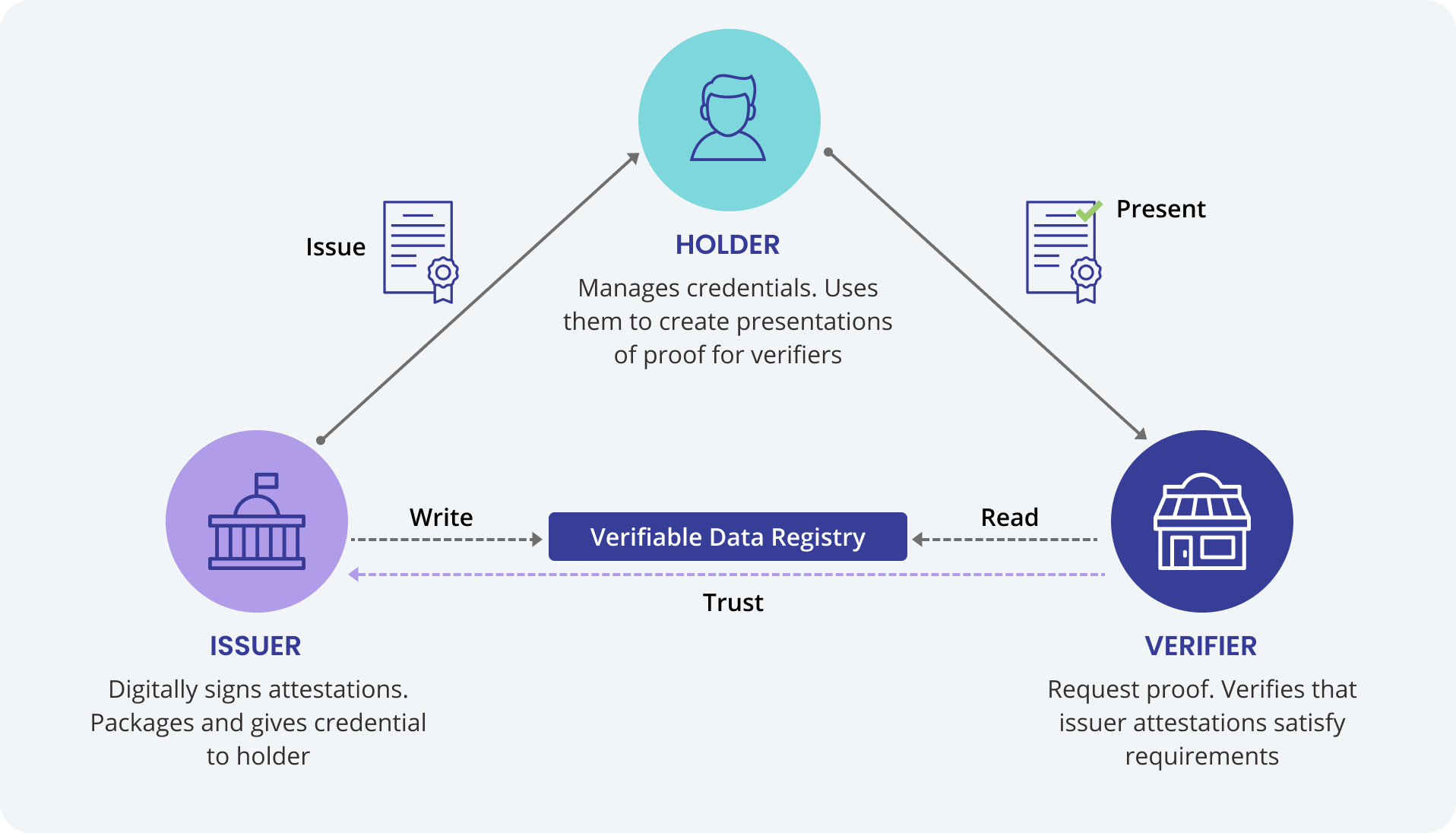
Implementing decentralized identity frameworks requires a shift from centralized database management to a distributed trust model. The primary financial burden lies in transitioning legacy hardware to support W3C-compliant Verifiable Credentials (VCs). Operators must account for both initial development cycles and the long-term operational costs of maintaining a decentralized trust registry.
Infrastructure integration and middleware development
Connecting existing Open Charge Point Protocol (OCPP) infrastructure to SSI wallets involves significant middleware development. Most current EV charging stations rely on centralized backend servers for authentication, which lack the native capability to parse Decentralized Identifiers (DIDs). Developers must build an abstraction layer—often referred to as an SSI-to-OCPP gateway—to facilitate communication between the vehicle’s digital wallet and the charger’s controller.
Technical debt accrues when custom wrappers are built to bridge these disparate protocols. Expect to allocate 600 to 1,200 engineering hours for a pilot integration, depending on the complexity of the existing OCPP 1.6 or 2.0.1 implementation. This includes the development of secure signing modules that allow the charger to verify the driver’s credential without querying a central server, effectively shifting the authentication logic to the edge.
Maintenance of decentralized public key infrastructure
Unlike traditional PKI where a single Certificate Authority (CA) manages trust, SSI relies on a decentralized public key infrastructure (dPKI). Maintaining this environment involves recurring costs related to node operation and the lifecycle management of credentials. Operators must budget for the hosting of validator nodes that ensure the availability of the DID document registry, which is essential for verifying signatures in real-time.
Credential revocation services represent a hidden but critical cost. In an SSI ecosystem, if a user’s wallet is compromised or a subscription expires, the system must broadcast a revocation status across the network. Managing these status lists or revocation registries requires consistent compute resources and monitoring to prevent latency during the charging handshake. Failure to optimize these services can lead to increased transaction times, directly impacting the user experience at the charging station. Organizations should anticipate a 15-20% annual increase in operational overhead compared to standard OAuth-based authentication due to the distributed nature of these validation checks.
Risk-adjusted ROI modeling for charging operators
Operators deploying Self-Sovereign Identity for Electric Vehicle Charging shift their financial model from centralized data storage to decentralized verification. By utilizing verifiable credentials, operators eliminate the need to maintain massive, high-risk databases of user PII. This transition reduces the annual cost of cybersecurity insurance and the potential impact of data breach litigation, which currently averages $4.45 million per incident according to industry benchmarks.
Regulatory compliance savings under GDPR and CCPA
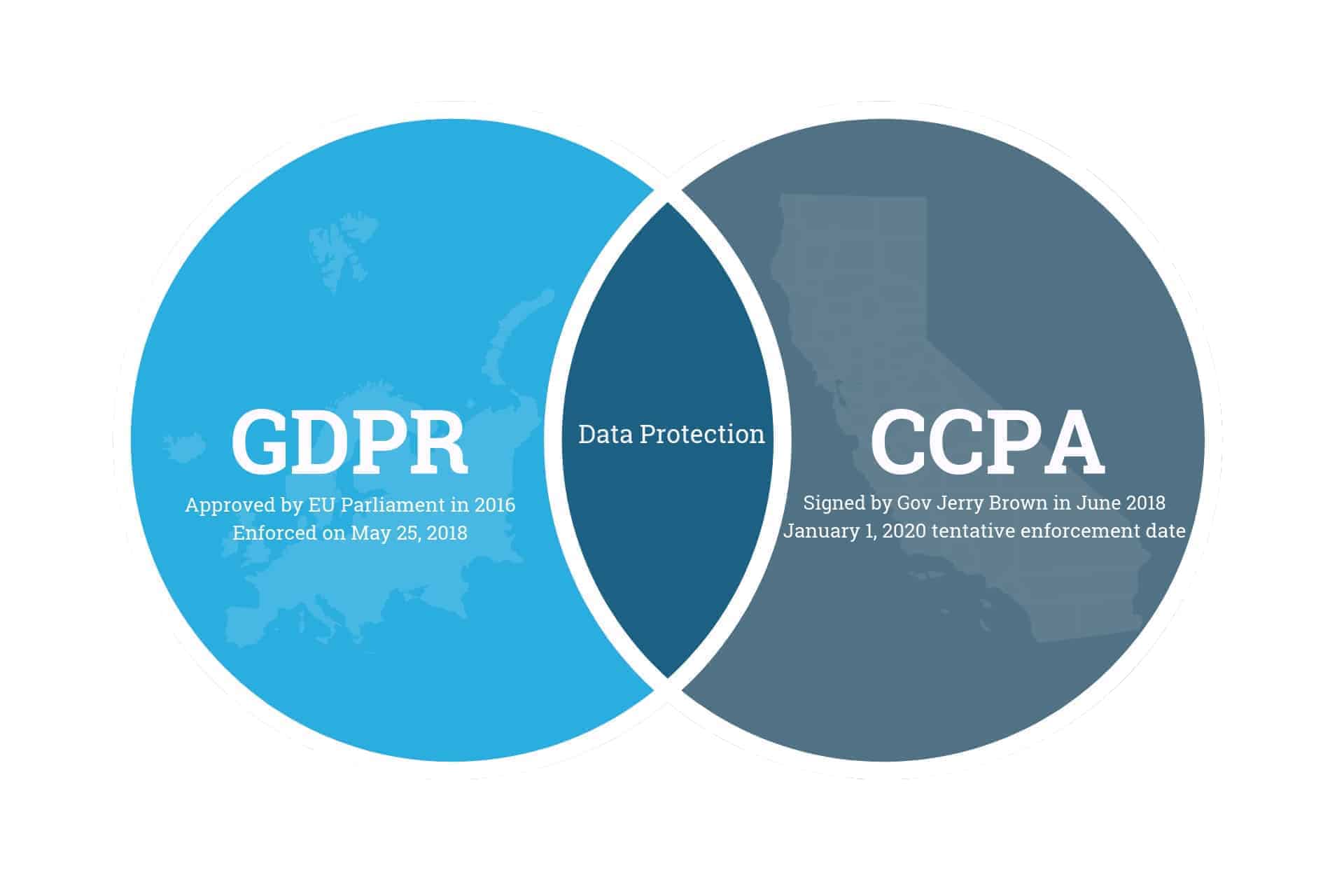
Traditional charging networks incur significant overhead managing data subject access requests (DSARs) and ensuring compliance with GDPR and CCPA. SSI-EVC leverages zero-knowledge proofs (ZKPs), allowing a vehicle to prove it has a valid subscription or payment method without the operator ever seeing or storing the underlying sensitive data. This approach mirrors the security benefits seen in Self-Sovereign Identity for Healthcare using Blockchain, where patient privacy is paramount.
By moving to a ‘privacy-by-design’ architecture, operators reduce their compliance audit surface area by an estimated 60-70%. This reduction in data management overhead directly correlates to lower operational expenditure (OPEX) and mitigates the risk of non-compliance fines, which can reach up to 4% of global annual turnover under GDPR.
Market expansion through interoperability
The current fragmentation of charging networks acts as a barrier to entry for many EV drivers. SSI-EVC enables seamless roaming, where a driver’s digital wallet is recognized across competing networks without requiring multiple proprietary app downloads or manual account creation. For operators, this interoperability acts as a revenue multiplier.
By lowering the friction of the ‘first charge’ experience, operators capture a higher percentage of transient traffic that would otherwise bypass their stations. Implementing decentralized identifiers (DIDs) allows for automated, instant settlement between network providers. This eliminates the 3-5% transaction fees typically lost to third-party clearinghouses, directly improving the net margin per kilowatt-hour delivered. Operators who adopt these open standards position themselves to participate in broader energy-as-a-service ecosystems, turning charging stations into high-utility touchpoints rather than isolated hardware assets.
Strategic implementation timeline and capital recovery
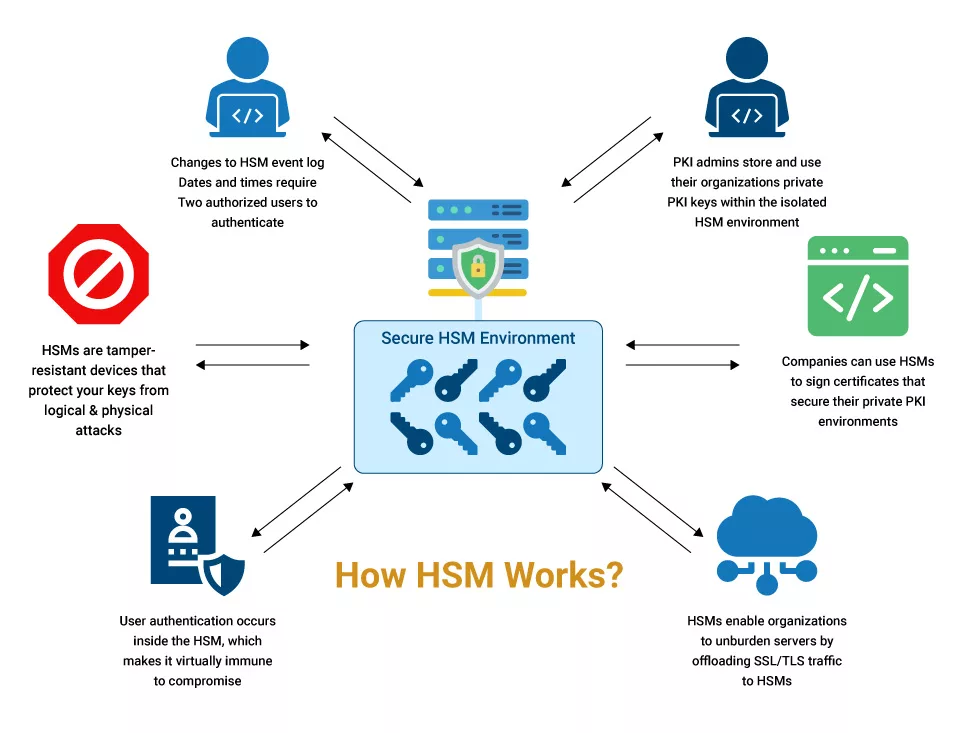
Achieving a positive return on investment for decentralized authentication requires a structured transition from legacy proprietary protocols to open-standard frameworks. Initial capital expenditure focuses on upgrading hardware security modules (HSMs) within charging stations to support W3C-compliant Verifiable Credentials. Operators typically see a 15-20% reduction in transaction processing overhead within the first 18 months, as the elimination of centralized clearinghouse fees offsets the initial integration costs.
Phased pilot deployment versus full-scale rollout
Localized testing serves as the primary risk-mitigation strategy for infrastructure providers. By deploying Self-Sovereign Identity for Electric Vehicle Charging in a controlled geographic zone—such as a municipal fleet or a single commercial parking complex—operators can validate interoperability between diverse vehicle OEMs and charging hardware without risking network-wide downtime. This phase typically lasts 6 to 9 months, focusing on latency benchmarks and credential revocation speed.
In contrast, full-scale rollout demands a significant upfront investment in decentralized identifier (DID) registry management. While the financial risk is higher due to the complexity of scaling across multiple jurisdictions, the long-term ROI improves through network effects. A unified identity layer allows providers to capture data from roaming users across different brands, effectively turning the charging network into a data-rich ecosystem. Capital recovery in a full-scale model is accelerated by:
- Reduced Fraud Losses: Cryptographic proof of identity eliminates chargeback risks associated with stolen credit card data.
- Operational Efficiency: Automated billing via smart contracts removes the need for manual reconciliation between energy providers and payment processors.
- Regulatory Compliance: Automated audit trails for energy consumption reporting reduce administrative labor costs by approximately 30% annually.
Providers should prioritize a hybrid approach, where the identity infrastructure is built to be backward-compatible with ISO 15118 standards. This ensures that while the network transitions to decentralized protocols, legacy vehicles can still utilize the infrastructure, protecting revenue streams during the migration period. The break-even point for most mid-sized networks is projected at 36 months post-deployment, assuming a steady adoption rate of 12% year-over-year in EV penetration within the service area.
Frequently Asked Questions
Operational cost reduction mechanisms for EV charging
By eliminating the need for centralized identity databases and proprietary roaming agreements, operators reduce administrative overhead and technical debt associated with managing disparate user accounts.
Primary drivers of ROI for decentralized identity in EV charging
The primary ROI driver is the reduction in transaction friction and the ability to automate cross-network payments without intermediary clearinghouse fees.


