



Case study: Tokenized property ownership and tax liability
Understanding the tax implications of tokenized assets requires analyzing how specific blockchain distributions are classified under local law. Consider a commercial real estate project in Berlin tokenized via an ERC-20 compliant protocol on the Ethereum blockchain. An investor purchases 50 tokens representing a fractional interest in the property.
When the property generates rental income, the smart contract automatically distributes stablecoins to the investor’s wallet. Under current German tax law, this distribution is treated as capital income. The investor must report the gross amount received at the time of receipt, regardless of whether they convert the stablecoins to fiat currency.
This scenario highlights that tokenization does not bypass traditional tax obligations. It shifts the reporting burden to the moment of automated distribution.
Defining the taxable event: Distinguishing between token issuance, secondary market trading, and dividend distribution
Tax authorities categorize tokenized asset activities into distinct buckets, each carrying unique reporting requirements. Token issuance typically represents the acquisition of an asset, where the cost basis is established at the purchase price.
Secondary market trading triggers a realization event. If an investor sells their property tokens on a decentralized exchange for a profit, the difference between the sale price and the original cost basis constitutes a capital gain. Dividend distributions function differently; these are often classified as passive income. Investors must track the fair market value of the distributed tokens or stablecoins at the exact timestamp of the transaction to ensure accurate income tax reporting.
Jurisdictional nexus and withholding requirements: Physical asset location versus token issuer domicile
Determining tax liability often involves a conflict between the location of the underlying asset and the legal domicile of the token issuer. In many jurisdictions, real estate is subject to source-based taxation, meaning the country where the property physically resides maintains the primary right to tax the income it generates.
If a US investor holds tokens for a property in France, the French tax authorities may mandate a withholding tax on rental distributions. The token issuer, acting as the withholding agent, must verify the investor’s tax residency status to apply the correct treaty rates. Failure to integrate automated tax compliance tools into the smart contract architecture can lead to significant penalties. The burden of proof for tax residency often rests on the platform facilitating the tokenization.
Classification of tokenized assets for tax reporting
Tax authorities, including the IRS in the United States and HMRC in the UK, generally categorize tokenized assets based on their underlying economic substance rather than their technological wrapper. When a real-world asset—such as real estate, fine art, or corporate debt—is digitized on a blockchain, the tax treatment follows the asset class it represents.
Investors must look past the token ticker and analyze the legal rights embedded in the smart contract to determine whether the holding constitutes a capital asset, a commodity, or a security.
Equity-like versus debt-like token structures
The distinction between equity-like and debt-like token structures significantly alters the tax implications of tokenized assets. Smart contract terms often dictate whether a token holder is entitled to a share of profits or a fixed interest payment, which triggers different reporting requirements.
- Equity-like tokens: If a token represents an ownership stake in a project or entity, distributions are often treated as dividends. These are typically subject to specific withholding tax rates and must be reported on tax forms as investment income. Capital gains are realized only upon the sale or exchange of the token itself.
- Debt-like tokens: Tokens structured as fixed-income instruments, such as tokenized bonds or lending protocols, generate interest income. This income is generally taxed at ordinary income rates rather than the preferential long-term capital gains rates applied to equity. Smart contracts that automate periodic interest payments create a continuous stream of taxable events that require precise record-keeping for every distribution cycle.
The complexity arises when a token exhibits hybrid characteristics. For instance, a token that provides both a revenue share and a redemption right at maturity requires a bifurcated tax approach.
Investors should maintain a detailed ledger of smart contract interactions to substantiate the nature of these payments during an audit. Relying solely on exchange-provided 1099 forms is often insufficient for tokenized assets. These platforms may misclassify complex instruments, leading to potential underreporting of income or incorrect tax liability calculations.
Navigating the tax implications of tokenized assets across borders
Cross-border transactions involving tokenized real estate, debt, or equities introduce significant complexity. Tax authorities often apply different rules based on the residency of the issuer, the location of the underlying asset, and the investor’s domicile. Because blockchain transactions are borderless by design, they frequently trigger multi-jurisdictional reporting requirements.
Investors must determine whether their tokenized holdings are classified as securities, commodities, or intangible property in each relevant jurisdiction. This classification dictates the applicable withholding tax rates and reporting obligations.
Applying double tax avoidance agreements: Practical steps for claiming foreign tax credits on tokenized income
Many investors mistakenly assume that tokenized assets are exempt from traditional tax treaties. In reality, Double Tax Avoidance Agreements (DTAAs) often apply, provided the investor can substantiate their tax residency. To claim foreign tax credits on income generated from tokenized assets, follow these practical steps:
- Obtain a Tax Residency Certificate (TRC): Secure an official TRC from your local tax authority. This document is the primary evidence required by foreign jurisdictions to prove your eligibility for treaty benefits.
- Identify Withholding Tax (WHT) leakage: When an issuer distributes dividends or interest via smart contracts, they may automatically withhold tax at the maximum rate. Review the smart contract’s distribution logic to see if it allows for the submission of a WHT exemption form or a reduced rate application based on your specific DTAA.

- Document the chain of custody: Keep detailed records of the token issuance, the wallet addresses involved, and the specific smart contract addresses. Tax authorities require proof that the income originated from the specific asset covered by the treaty.
- File Form 1116 (for U.S. taxpayers): If you are a U.S. taxpayer, use IRS Form 1116 to claim a credit for income taxes paid to foreign governments. Ensure that the income reported on your tax return matches the gross income distributed by the tokenized asset platform before the foreign tax was withheld.
Failure to properly document these transactions often leads to double taxation, where the investor pays the full foreign withholding rate without the ability to offset it against domestic liabilities. Always consult with a tax professional experienced in digital asset cross-border compliance to ensure your reporting aligns with current OECD guidelines on the taxation of decentralized finance.
Cost basis tracking and capital gains calculation
Determining the cost basis for tokenized assets requires granular attention to the acquisition price, including any associated gas fees or platform service charges. Unlike traditional securities where brokerages provide standardized 1099-B forms, tokenized real-world assets often exist across decentralized protocols where data fragmentation is common.
Investors must maintain a chronological record of every transaction. The IRS and other global tax authorities generally apply First-In, First-Out (FIFO) or Specific Identification (SpecID) methods to calculate capital gains upon disposal. When calculating gains, you must convert the asset’s value into your local fiat currency at the exact timestamp of both the acquisition and the sale.
Discrepancies between the token price and the underlying asset value can lead to audit triggers if not documented consistently. Using a standardized valuation methodology, such as the daily closing price from a reputable decentralized oracle or a primary exchange, is essential to justify your position during a tax review.
Automated ledger reconciliation tools
Manual spreadsheets are insufficient for managing the tax implications of tokenized assets due to the high frequency of on-chain interactions and the complexity of smart contract executions. Automated ledger reconciliation tools serve as the bridge between raw blockchain data and tax compliance requirements. Platforms like Koinly, ZenLedger, and CoinTracker integrate directly with wallet addresses via read-only APIs to pull transaction history across multiple chains.
These tools utilize blockchain analytics to categorize transactions automatically. They distinguish between taxable events—such as selling a tokenized property share—and non-taxable events like wallet-to-wallet transfers. During an audit, these platforms provide a comprehensive audit trail that links specific transaction hashes to your cost basis calculations. By maintaining a verifiable link between the on-chain activity and the reported gain or loss, you significantly reduce the risk of penalties associated with underreporting. Always ensure your chosen software supports the specific token standard (e.g., ERC-20, ERC-3643) used by your asset issuer to ensure accurate parsing of transaction metadata.
Reporting requirements for decentralized finance participation
Navigating the tax implications of tokenized assets requires precise tracking of every interaction with decentralized protocols. Tax authorities, including the IRS in the United States and HMRC in the UK, generally categorize DeFi activities as taxable events. You must maintain a comprehensive ledger that records the fair market value of tokens at the exact moment of acquisition, exchange, or disposal.
Reporting income from automated market makers
When you provide liquidity to automated market makers (AMMs) like Uniswap or Curve, the tax treatment depends on the specific mechanism of the protocol. Most jurisdictions view the act of depositing assets into a liquidity pool as a taxable disposition if you receive a liquidity provider (LP) token in return. You are effectively trading your underlying assets for a derivative representation of your share in the pool.
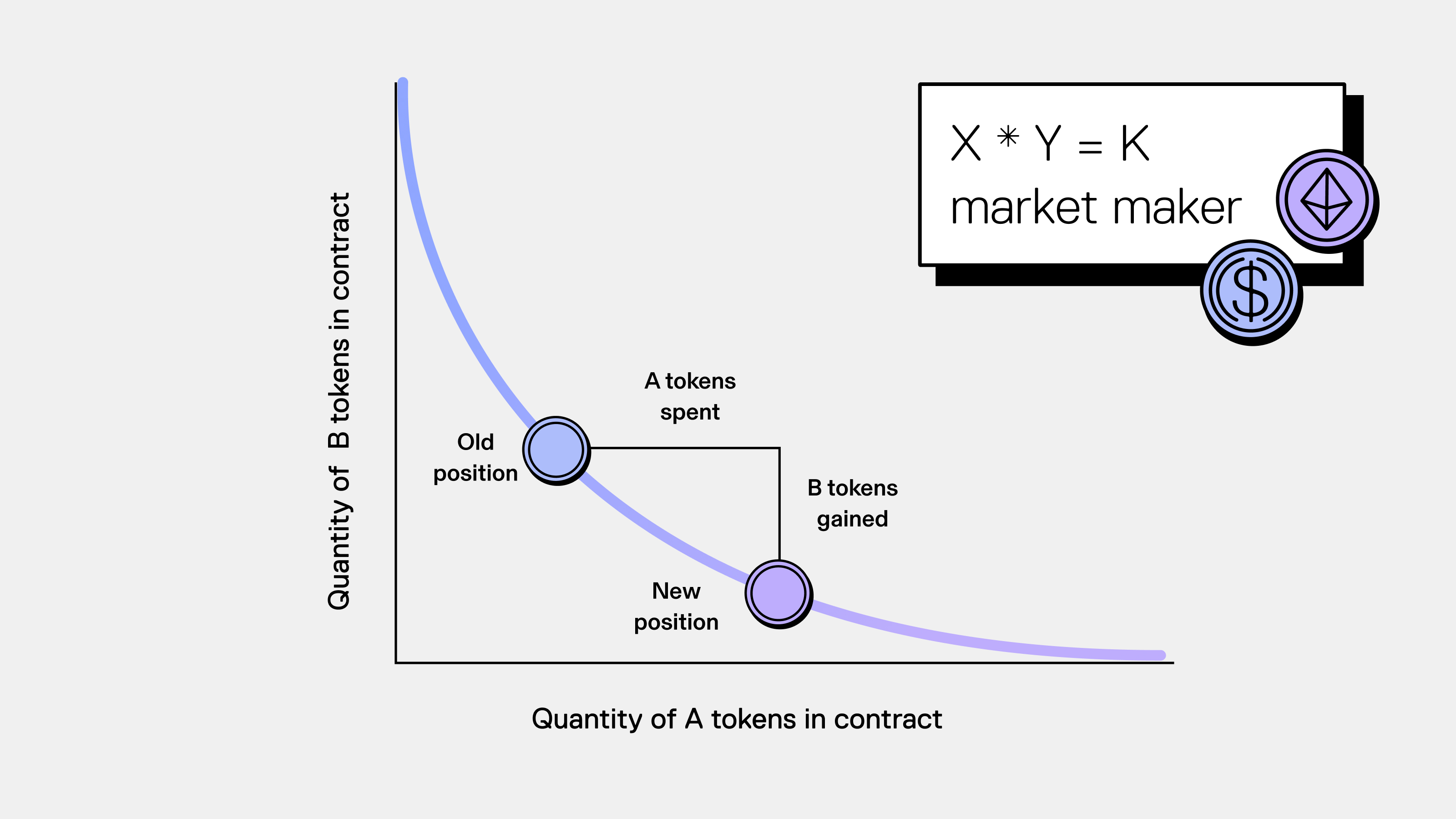
To calculate your tax liability accurately, follow these steps:
- Track LP Token Issuance: Record the cost basis of the assets deposited. If the value of these assets has increased since you originally acquired them, you may trigger a capital gains event upon deposit.
- Monitor Yield Distributions: Rewards earned through trading fees or governance token emissions are typically classified as ordinary income. You must calculate the fair market value of these rewards at the time they are claimed or credited to your wallet.
- Account for Impermanent Loss: While impermanent loss is a common DeFi risk, it is only realized for tax purposes when you withdraw your liquidity. Keep detailed records of the withdrawal transaction to offset your capital gains or claim a capital loss.
Using specialized crypto-tax software such as Koinly, CoinTracker, or ZenLedger can automate the ingestion of smart contract data via wallet addresses. However, these tools often struggle with complex multi-hop transactions or obscure protocols. You should manually verify that the software correctly identifies the difference between a return of principal and actual yield generation. Failing to distinguish between these two can lead to significant overpayment of taxes or, conversely, an audit risk due to underreporting of income.
Limitations of current tax guidance
Current tax frameworks often struggle to categorize tokenized assets, as many jurisdictions rely on legacy definitions that do not account for fractional ownership or programmable smart contracts. For instance, the Internal Revenue Service (IRS) in the United States currently treats most tokens as property. Yet, this classification fails to address the unique liquidity profiles of real-world asset (RWA) tokens.
Investors frequently find themselves in a gray area where the distinction between a security, a commodity, and a digital currency remains ambiguous, leading to inconsistent reporting practices. The lack of standardized international reporting protocols further complicates the tax implications of tokenized assets. Because these assets can be traded across decentralized exchanges without traditional intermediaries, taxpayers often face challenges in calculating cost basis, especially when dealing with automated market makers (AMMs) or complex yield-bearing protocols.
Without clear guidance on how to treat staking rewards or governance-related distributions, investors risk unintentional non-compliance during tax audits.
Risks of retroactive regulatory changes
Tax authorities are increasingly scrutinizing the digital asset sector, and the possibility of retroactive enforcement poses a significant threat to long-term portfolio management. Regulatory bodies such as the European Securities and Markets Authority (ESMA) and the SEC are actively updating their frameworks to capture value generated from decentralized finance (DeFi). As the industry matures, understanding how crypto payments tokenized assets have evolved is crucial for compliance. If a jurisdiction decides to reclassify a specific class of tokenized real estate or debt instruments as taxable income rather than capital gains, investors could face unexpected liabilities for previous fiscal years. To mitigate these risks, market participants should adopt a conservative approach to documentation. This involves maintaining a comprehensive ledger of every transaction, including the specific smart contract addresses involved and the fair market value at the time of acquisition.
Relying on automated portfolio trackers is insufficient if those tools do not account for the specific tax residency requirements of your jurisdiction. Investors should prioritize platforms that provide detailed tax-lot reporting and exportable audit trails, as these records serve as the primary defense against shifting regulatory interpretations. When in doubt, consulting with a tax professional who specializes in blockchain forensics is essential to ensure that your reporting methodology aligns with the most recent guidance, even if that guidance is still evolving.
Frequently Asked Questions
Comparison of tokenized assets and traditional securities taxation
In many jurisdictions, tax authorities treat tokenized assets based on their underlying economic reality rather than their digital form. If a token represents a share in a property, it is typically taxed as a security or real estate interest, regardless of its blockchain-based issuance.
Primary compliance challenges for tokenized asset holders
The primary challenge is the lack of standardized reporting. Unlike traditional brokerage accounts that issue 1099 forms, many tokenized platforms do not provide automated tax documentation, forcing investors to manually track cost basis and holding periods. For those looking to raise capital, understanding how tokenized fundraising works is essential for ensuring that the issuance process remains compliant with local tax and securities laws.
- Understanding capital gains tax on tokenized securities versus traditional brokerage assets
- Strategic compliance frameworks for tax reporting for tokenized assets in the US
- Tax treatment of tokenized gold and capital gains implications
- Regulatory classification challenges for tax treatment of tokenized dividends and yield


