



Securing modern development pipelines requires moving beyond basic vulnerability scanning, as evidenced by recent research in software supply chain security a systematic literature review. By synthesizing academic findings and real-world attack data, organizations can shift from reactive patching to proactive integrity verification. This analysis breaks down the technical gaps between current industry practices and the rigorous standards required to defend against sophisticated supply chain compromises.
The myth of automated dependency scanning as a total solution
Automated dependency scanning serves as a foundational layer, yet it is not a comprehensive defense against modern supply chain threats. Relying solely on static analysis tools creates a false sense of security, as these systems often fail to detect malicious logic embedded in legitimate package updates. Effective security requires integrating manual code review, behavioral analysis, and context-aware verification to identify anomalies that automated scanners overlook.
Limitations of automated vulnerability databases
CVE databases and automated scanners rely on known vulnerability signatures. They are inherently reactive, meaning they cannot identify zero-day supply chain attacks where a malicious actor compromises a maintainer account to inject code. Because these databases track historical flaws, they remain blind to novel obfuscation techniques used in recent high-profile incidents, such as the XZ Utils backdoor.
Revisiting the role of open source trust models
The assumption that high download counts or long-standing repository history equate to security is a dangerous fallacy. Academic analysis reveals that popularity often attracts malicious actors who target maintainers through social engineering to gain repository control. Trust must be earned through verifiable provenance and reproducible builds rather than social metrics.
Evidence on maintainer fatigue and malicious takeovers
Research indicates that maintainer burnout is a primary vector for supply chain compromise. When lead maintainers become unresponsive, attackers exploit this gap to propose “helpful” pull requests that introduce subtle vulnerabilities. Data shows that projects with fewer than three active maintainers are significantly more susceptible to takeover attempts via social engineering.
Operational realities of software supply chain security a systematic literature review
Synthesizing academic findings reveals that technical resilience depends on moving beyond perimeter-based defenses. A systematic literature review of current practices highlights that organizations achieving high security maturity emphasize cryptographic artifact signing and strict dependency pinning. These measures ensure that the code running in production is identical to the code reviewed in the repository.
- Level 1 (Basic): Automated dependency scanning and basic SBOM generation.
- Level 2 (Intermediate): Dependency pinning, lockfiles, and regular vulnerability audits.
- Level 3 (Advanced): Cryptographic artifact signing (Sigstore), reproducible builds, and runtime integrity monitoring.
- Level 4 (Resilient): Sandboxed build environments, automated provenance verification, and continuous threat modeling.
Balancing velocity with rigorous provenance checks
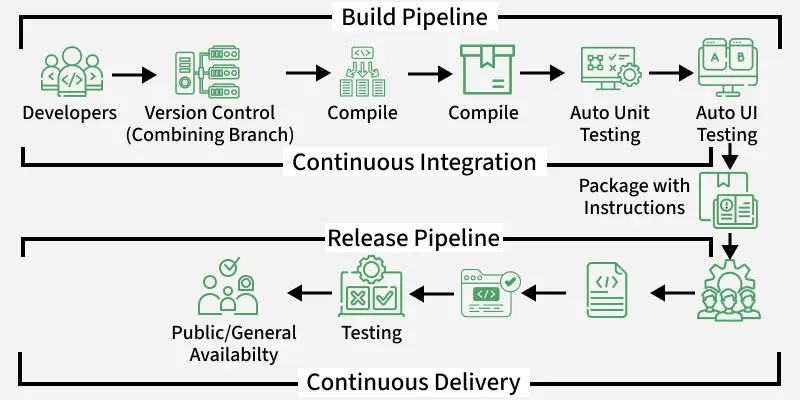
High-velocity development teams often view security checks as bottlenecks. However, implementing automated cryptographic signing within the CI/CD pipeline minimizes friction. By using tools like Sigstore, teams can automate the verification of artifact provenance without manual intervention, effectively balancing speed with the necessity of supply chain integrity.
The necessity of reproducible builds
Reproducible builds are a critical component of supply chain integrity, ensuring that a given source code always produces the exact same binary output. By comparing hashes of artifacts generated in isolated, ephemeral build environments, organizations can detect if a build server has been compromised or if unauthorized code was injected during the compilation process. This practice eliminates the reliance on “black box” binaries provided by third-party vendors.
The gap between policy compliance and technical resilience
Compliance frameworks often focus on administrative controls rather than technical system hardening. Achieving compliance with standards like NIST SSDF does not automatically mitigate the risk of a compromised dependency. Organizations must prioritize technical controls—such as sandboxing build environments—to ensure resilience against actual attack vectors.
Lagging compliance frameworks in modern attack vectors
Regulatory requirements are static by design, while supply chain threats evolve daily. Compliance frameworks struggle to keep pace with dynamic threats like dependency confusion or typosquatting. A robust strategy treats compliance as a baseline, not a target, focusing instead on continuous monitoring and threat modeling.
Future directions for supply chain integrity
The future of enterprise security lies in shifting from static documentation to real-time integrity verification. Modern architecture requires a move toward automated, machine-readable evidence of every build step. This transition is essential for maintaining trust in an increasingly modular and distributed software ecosystem.
Integrating SBOMs into real-time threat detection
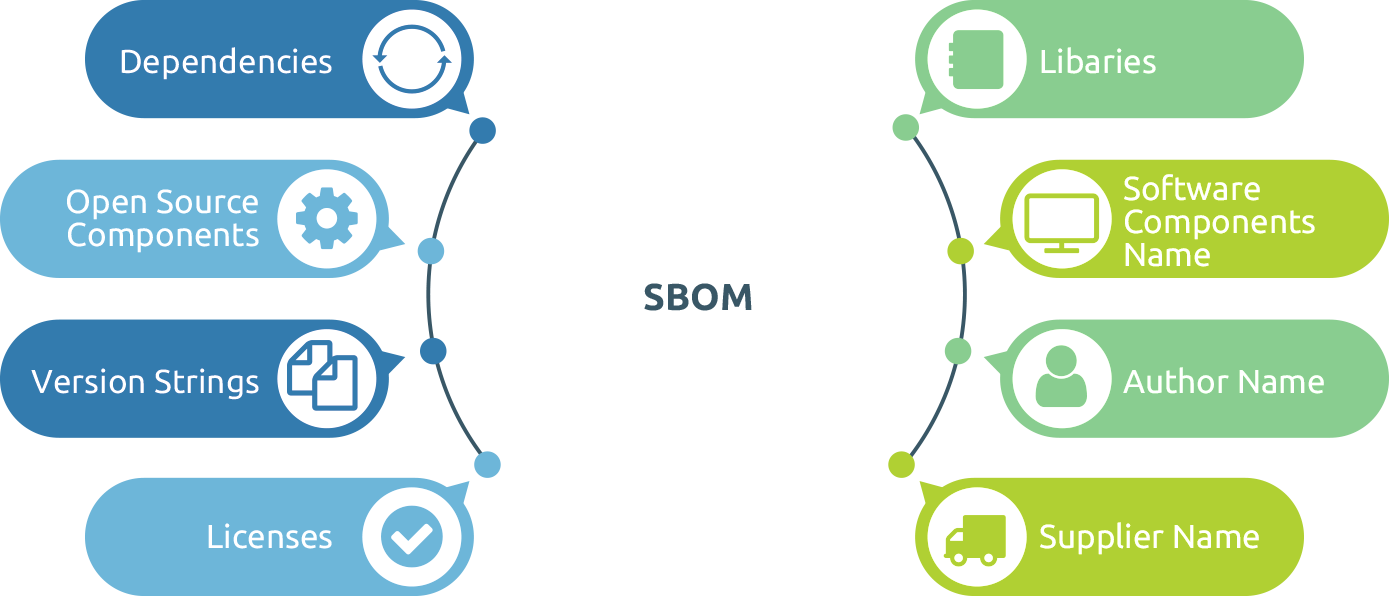
Software Bill of Materials (SBOMs) are currently used primarily for audit purposes. The next evolution involves integrating SBOM data into runtime threat detection systems. By continuously comparing the running environment against the generated SBOM, security teams can detect unauthorized code execution or drift in real-time.
Frequently Asked Questions
Distinctions between supply chain security and general cybersecurity
General cybersecurity focuses on protecting infrastructure and data from external access. Software supply chain security specifically targets the integrity of the code, dependencies, and tools used to build software before it reaches the end user. If you are looking to expand your expertise, understanding cloud security vs cyber security is a logical step for many security professionals.
Implementation steps for a supply chain security program
Begin by generating an accurate Software Bill of Materials (SBOM) for all projects, implementing dependency pinning, and mandating cryptographic signing for all build artifacts.
Common software supply chain attack vectors
Common vectors include dependency confusion, typosquatting, malicious code injection via compromised maintainer accounts, and the exploitation of vulnerabilities in open-source libraries. To defend against these, organizations should evaluate their best cloud security companies alongside their supply chain risks.
Tooling requirements for supply chain security
Yes, you should utilize tools for SBOM generation (like Syft), artifact signing (like Sigstore), and automated dependency analysis, though these must be integrated into a broader security workflow. You can find guidance on selecting the cloud security guide for smes to support these efforts.
Confidential computing roles in supply chain integrity
Confidential computing protects data and code during processing by using hardware-based TEEs (Trusted Engineering Environments), ensuring that even if the underlying infrastructure is compromised, the code remains secure. For those managing complex infrastructure, it is vital to review what is cloud security posture management standards to ensure your environment is hardened.
Core definitions of software supply chain security
It is the practice of securing the entire lifecycle of software development, including source code, third-party dependencies, build systems, and delivery pipelines, to prevent unauthorized code injection or tampering. Many professionals find that does cloud security require coding a common question when defining their specialization.


