



Market shifts driving demand for specialized design partners
The best user experience companies are currently defined by their ability to reduce cognitive load and transaction latency rather than their capacity to produce high-fidelity visual assets. As crypto-native platforms and decentralized finance (DeFi) protocols mature, the industry has pivoted away from the ‘sleek but opaque’ design trends of the 2021 bull market. Institutional-grade interfaces now prioritize data density, accessibility, and the elimination of friction points that lead to slippage or failed execution.
Shift from aesthetic-first to transaction-efficiency
In high-frequency trading environments, visual polish is secondary to latency and error-handling. A dashboard that renders a beautiful gradient but fails to update order book depth in real-time is a liability. The best user experience companies now deploy design systems that focus on ‘information architecture’—the logical arrangement of data to facilitate rapid decision-making under pressure.
Key performance indicators for these design partners have shifted toward:
- Time-to-Transaction: Measuring the number of clicks required to execute a trade or bridge assets across chains.
- Error-State Clarity: Replacing generic ‘Transaction Failed’ alerts with actionable feedback that explains why a gas fee was insufficient or why a liquidity pool is currently imbalanced.
- Latency Perception: Utilizing optimistic UI patterns where the interface acknowledges user intent immediately, even while the blockchain confirmation is pending in the background.
This transition reflects a broader recognition that in crypto, design is not a cosmetic layer; it is a functional component of the protocol’s security and usability. When a user interacts with a smart contract, the interface acts as the primary risk-management tool. If the design obscures the complexity of the transaction, it invites user error. Consequently, the most sought-after design firms are those that integrate directly with engineering teams to ensure that UI constraints align with the technical limitations of the underlying blockchain architecture.
Technical competency requirements for best user experience companies
Selecting the best user interface design services in the blockchain sector requires moving beyond aesthetic design portfolios. A firm must demonstrate a deep understanding of asynchronous data fetching and the specific constraints imposed by decentralized networks. Competent partners should prioritize latency management, ensuring that UI elements remain responsive even when the underlying blockchain experiences high congestion or block finality delays.
Integration of smart contract state into UI feedback loops
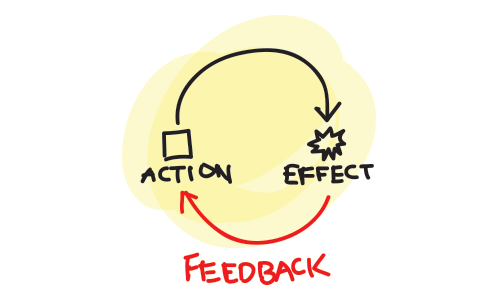
A design partner must treat smart contract state as the primary source of truth for all interface interactions. When evaluating a potential user interface design agency, request a walkthrough of how they handle optimistic UI updates versus confirmed on-chain states. A high-performing team will implement specific patterns to mitigate user anxiety during transaction processing:
- Transaction Lifecycle Mapping: The UI must distinguish between ‘pending,’ ‘confirmed,’ and ‘reverted’ states using distinct visual cues. If a design team suggests generic loading spinners without providing granular status updates, they lack the necessary blockchain-specific UX expertise.
- Gas Estimation Visualization: The best user experience companies integrate real-time gas price feeds directly into the transaction modal. This allows users to adjust their priority fees before signing, preventing failed transactions due to insufficient gas.
- Error Handling for Reverts: A robust design system must interpret raw EVM revert strings and translate them into human-readable instructions. If the UI simply displays ‘Transaction Failed’ without explaining the underlying cause—such as a failed requirement check or slippage tolerance breach—the UX is fundamentally flawed.
To verify these capabilities, ask for a case study involving a complex dApp interaction, such as a multi-step liquidity provision or a governance proposal submission. Observe whether their design documentation includes ‘edge case’ flows for network timeouts or wallet rejection scenarios. A mature agency will provide a clear logic map showing how the interface reacts when a user rejects a signature request in their hardware wallet, ensuring the application state remains synchronized with the user’s actual intent.
Security-first design protocols as a selection filter
When evaluating the best user experience companies within the crypto sector, security cannot be treated as an afterthought. A firm’s design process must integrate threat modeling directly into the wireframing and prototyping phases. Companies that prioritize security-first design demonstrate this by implementing strict input validation, clear transaction signing flows, and defensive UI patterns that prevent user error during high-stakes interactions.
Verification of secure component libraries
The most reliable design agencies maintain internal, audited UI component libraries. These libraries serve as the foundation for all client projects, ensuring that critical elements—such as modal windows for transaction approvals, seed phrase input fields, and wallet connection buttons—are built on hardened code. When vetting a potential partner, request documentation on how they maintain these libraries. A top-tier firm will provide evidence of regular dependency audits and explain how they mitigate risks associated with third-party JavaScript libraries that could introduce supply chain vulnerabilities.
Effective security-first design also involves rigorous testing of the user journey against common attack vectors. For instance, a professional firm should demonstrate how they handle ‘blind signing’ risks. They should design interfaces that force the user to review human-readable transaction data rather than raw hexadecimal strings. If a design team cannot explain how their UI components mitigate common wallet-drain vulnerabilities, they lack the necessary specialization for decentralized finance applications.
Beyond the code, look for companies that employ a ‘security-by-design’ checklist during the handoff process. This checklist should include:
- Anti-phishing UI cues: Implementing consistent branding and URL verification indicators that are difficult for malicious actors to spoof.
- Rate-limiting feedback: Designing interfaces that provide clear, non-intrusive feedback when a user triggers security locks or rate limits.
- Graceful error handling: Ensuring that error messages do not leak sensitive system information or reveal backend architecture details to potential attackers.
By prioritizing these technical benchmarks, you ensure that the design partner you select contributes to the overall integrity of your platform rather than introducing unnecessary attack surfaces.
Operational transparency and delivery velocity
Top-tier UX firms in the blockchain sector distinguish themselves through radical transparency in their development pipelines. Unlike traditional web design agencies, crypto-native UX partners must provide visibility into their integration with GitHub repositories, Jira boards, or Linear workspaces. This level of access allows your internal engineering team to audit the design-to-code handoff process in real-time, ensuring that design tokens and CSS variables are correctly implemented without manual overhead.
Measuring iteration cycles against market volatility
Design velocity is often tested during periods of extreme market movement. When a protocol update or a sudden shift in liquidity requires an immediate UI adjustment, the best user experience companies demonstrate resilience by maintaining a modular design system. Evaluate a potential partner by asking for their specific protocol for ’emergency design patches.’ A high-performing firm will utilize a pre-built component library that allows for rapid UI scaling without breaking existing smart contract interactions.
To assess their capability, request a breakdown of their average ‘Time-to-Deploy’ for a new feature. A firm that takes three weeks to iterate on a simple wallet connection modal during a market rally is likely under-resourced or overly bureaucratic. Look for teams that utilize:
- Atomic Design Principles: Ensuring that small UI changes do not require a full site redesign.
- Automated Regression Testing: Using tools like Playwright or Cypress to ensure that design updates do not inadvertently impact transaction flows.
- Direct Communication Channels: Dedicated Slack or Discord channels that bypass account managers, connecting your product leads directly with the designers and front-end developers.
The most effective firms treat design as an extension of the protocol’s logic. If a design agency cannot explain how their interface changes affect gas estimation or transaction signing latency, they lack the technical depth required for the crypto industry. Prioritize partners who can demonstrate a history of shipping updates within 48 hours of a protocol upgrade, as this agility is the primary benchmark for survival in decentralized finance environments.
Risk mitigation in agency-client collaboration
Selecting the best user experience companies requires more than evaluating a portfolio; it demands a rigorous framework for risk management. Operational failures often stem from misaligned expectations regarding deliverables, timeline slippage, and communication silos. To mitigate these, establish a master service agreement that explicitly defines the scope of work, acceptance criteria, and specific milestones for design handoffs.
Regular cadence meetings are essential, but they must be structured around tangible outputs rather than status updates. Require agencies to utilize shared project management tools like Jira or Linear, granting your internal team full visibility into the development backlog and sprint velocity. This transparency prevents the ‘black box’ effect, where design decisions are made without consideration for technical feasibility or budget constraints.
Intellectual property and code ownership in decentralized projects
In the context of blockchain and decentralized applications, the transfer of intellectual property (IP) is a critical point of failure. Many design firms operate under proprietary licensing models that can lock a project into their specific tech stack or design system. To ensure long-term sustainability, your contract must mandate that all source files, including Figma design systems, component libraries, and documentation, are transferred to your organization upon completion.
For decentralized projects, code ownership is non-negotiable. Ensure the design firm provides clean, documented code that remains under the project’s control. This includes:
- Documentation: Comprehensive guides on how to maintain the design system and update components without breaking existing smart contract integrations.
- Repository Access: Immediate and exclusive access to the GitHub or GitLab repository, with the agency acting only as a contributor rather than the owner.
- Open Source Compliance: If the project is intended to be open-source, verify that the agency uses licenses compatible with your project’s goals, such as MIT or Apache 2.0, and that no third-party licensed assets are embedded without explicit written permission.
By enforcing these standards, you protect your project from vendor lock-in and ensure that your codebase remains an asset you can audit, fork, or scale independently of the original design agency.
Frequently Asked Questions
Operational metrics defining the best user experience companies
The best user experience companies prioritize transparent communication loops, documented design systems, and iterative testing cycles over purely visual output. Look for firms that provide clear documentation on their research methodology and version control processes.
Strategic considerations for agency size in UX partnerships
Agency size is less critical than the stability of their core team. High turnover in design firms often leads to knowledge gaps in complex projects. Prioritize firms that demonstrate long-term employee retention and consistent project management frameworks. If you are also seeking a digital marketing agency for saas companies, ensure they understand the unique growth metrics of your platform.