



ChatGPT Ads: What They Are, How They Work, Costs, Setup, and Optimization Strategies represent a new advertising model where businesses place sponsored content within the ChatGPT interface to reach users during natural language interactions. Artificial intelligence is transforming how people discover information, evaluate products, and make purchasing decisions. As conversational AI becomes an increasingly important part of everyday digital experiences, businesses are exploring new ways to connect with audiences beyond traditional search engines and social media platforms.
One of the most notable developments in this space is ChatGPT Ads, OpenAI’s advertising initiative that introduces sponsored content into the ChatGPT experience.
Unlike conventional advertising formats that primarily rely on keywords, browsing behavior, or demographic targeting, ChatGPT Ads operates within a conversational environment where users express their needs through natural language. This creates new opportunities for businesses to reach audiences while they are exploring topics, comparing solutions, or researching products.
However, advertising on ChatGPT also introduces new considerations. Businesses need to understand how ads are displayed, how campaigns are configured, what costs to expect, how performance is measured, and how user privacy is protected. Understanding the underlying technology is as important as knowing how smart contracts work in the broader blockchain ecosystem.
This comprehensive guide explores everything businesses need to know about ChatGPT Ads in 2026, from the fundamentals of the platform to campaign setup, budgeting, optimization, and future developments.
ChatGPT Ads: What They Are, How They Work, Costs, Setup, and Optimization Strategies
ChatGPT Ads are paid advertising placements within the ChatGPT interface that allow businesses to promote their products, services, or brands to eligible users.
These advertisements are designed to appear in relevant conversational contexts, creating an additional touchpoint between businesses and potential customers.
For example, when someone asks ChatGPT about project management software, a sponsored placement from a relevant software provider may appear alongside the conversation.
The purpose is to connect advertising with the topics users are already exploring, rather than interrupting their experience with unrelated promotional content.
How Do ChatGPT Ads Work?
ChatGPT Ads operate through a contextual advertising model. The platform considers relevant signals to determine which advertisements may be appropriate for a particular conversation.
The process can be understood through four main stages:
-
User interaction: A person asks ChatGPT a question, explores a topic, or seeks recommendations.
-
Contextual relevance: The advertising system evaluates whether available sponsored content is relevant to the conversation.
-
Ad placement: An eligible advertisement may appear in a designated advertising area, separate from ChatGPT’s response.
-
User engagement: The user can interact with the advertisement or visit the advertiser’s landing page.
Importantly, advertising placements are distinct from ChatGPT-generated answers. Advertisers cannot pay to influence the model’s responses or purchase a preferred position within an answer.
OpenAI’s advertising policy provides further information about this distinction.
ChatGPT Ads vs. Traditional Digital Advertising
Traditional digital advertising often relies on specific keywords, audience segments, browsing activity, or social engagement signals.
ChatGPT Ads introduces another context: conversational intent.
Consider someone searching for “employee management software.” Their actual needs may include:
-
Understanding what an HR management system does.
-
Finding software suitable for a small business.
-
Comparing employee scheduling tools.
-
Exploring solutions for leave management.
-
Evaluating software providers before making a purchase.
A conversational environment can provide additional context about these needs, potentially creating more relevant advertising opportunities.
However, contextual relevance does not guarantee that an advertisement will appear or that the user intends to purchase a product.
2. Key Features of ChatGPT Ads
ChatGPT Ads introduces several characteristics that distinguish it from conventional advertising platforms. Just as businesses must ensure compliant crypto ads to maintain trust, advertisers on AI platforms must adhere to strict transparency guidelines. If you ever find your Binance wallet browser extension not working, you know how critical technical reliability is for digital assets.
2.1. Contextual Advertising Rather Than Keyword-Only Targeting
In traditional search advertising, advertisers often build campaigns around specific keywords. However, the same keyword can represent several different user intentions.
For example, someone searching for “HR management software” may be:
-
Researching the HR technology market.
-
Comparing software providers.
-
Looking for pricing information.
-
Preparing to implement an HR platform.
-
Seeking a solution for a specific operational problem.
ChatGPT Ads can consider conversational context to help determine which advertisements are relevant to the user’s current needs.
Advertisers can also provide context hints at the ad-group level to guide relevance around specific topics, conversations, or keywords. These hints are not equivalent to exact keyword matching and do not guarantee placement in a particular conversation.
2.2. Reaching Customers During the Decision-Making Process
One of the most notable opportunities presented by conversational advertising is the ability to reach users while they are actively exploring potential solutions.
For example, someone asking ChatGPT about website design platforms may be in the early research stage or preparing to select a provider.
A relevant advertisement can introduce a brand during this process, even before the user has identified a specific product or company.
For businesses, this creates opportunities to participate in different stages of the customer journey.
Nevertheless, interest in a topic should not automatically be interpreted as purchase intent. Advertisers still need to evaluate traffic quality, engagement, and actual conversion performance.
2.3. Ads Remain Separate From ChatGPT’s Answers
OpenAI identifies the independence of ChatGPT’s responses as a core principle of its advertising approach.
Under its published policies:
-
Advertisements are clearly labeled.
-
Sponsored placements are visually separated from ChatGPT’s responses.
-
Advertisers cannot pay to change the content of answers.
-
An advertisement appearing alongside a conversation does not mean OpenAI endorses the advertised product.
This distinction is essential when evaluating ChatGPT Ads. Paid advertising and AI-generated recommendations are separate elements and should not be treated as interchangeable.
3. Where Do ChatGPT Ads Appear?
According to OpenAI’s published documentation, advertisements may appear below ChatGPT’s responses.
This placement allows users to recognize sponsored content as a separate element rather than confusing it with the AI-generated answer.
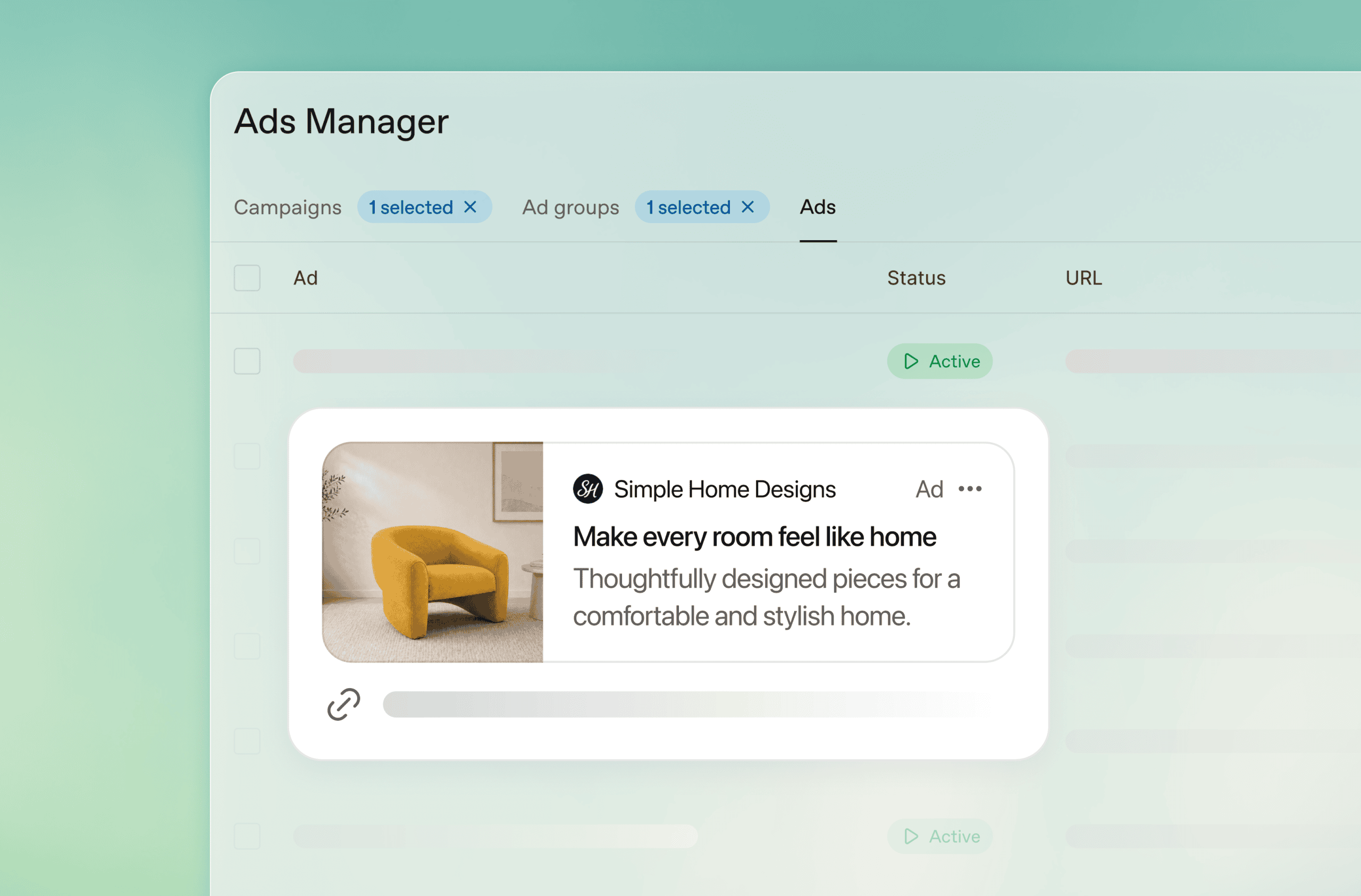
A ChatGPT ad unit may include the following components:
| Component | Function |
|---|---|
| Advertiser Name | Identifies the business or brand |
| Favicon | Displays the brand’s visual identity |
| Headline | Communicates the main advertising message |
| Description | Provides additional information about the product or service |
| Landing Page | Directs users to the advertiser’s website |
| Image Asset | Supports the advertising message visually |
4. Who Can See ChatGPT Ads?
Not every ChatGPT user is eligible to see advertisements.
According to OpenAI, ads may appear for eligible users on the Free and Go plans in supported markets.
Users on Plus, Pro, Business, Enterprise, and Edu plans do not see advertisements. OpenAI also states that it does not serve ads to accounts identified as belonging to users under 18.
When evaluating ChatGPT Ads as a potential acquisition channel, businesses should consider their target audience, geographic market, language, and the likelihood that their products are relevant to eligible users.
How Can Users Control Their Advertising Experience?
OpenAI provides options for users to manage their advertising experience, including:
-
Managing ad personalization.
-
Viewing advertising activity.
-
Clearing advertising data.
-
Hiding or reporting irrelevant advertisements.
Specific options may vary depending on location and account eligibility.
For advertisers, these controls reinforce the importance of relevance, accuracy, and content quality rather than focusing exclusively on increasing impressions.
5. Is ChatGPT Ads Available in Vietnam?
As of September 28, 2026, Vietnam is included in OpenAI’s list of countries supported for self-serve Ads Manager access.
This means eligible businesses in Vietnam can register and configure advertising accounts through the platform’s official process.
However, three concepts should be distinguished:
-
ChatGPT availability: Users can access and use the service in a particular country.
-
Ads Manager availability: Businesses in that country may be eligible to create and manage advertising accounts.
-
Ad delivery: Campaigns must meet account, payment, review, content, and delivery requirements.
A country appearing on the supported-market list does not guarantee that every account will be approved or that ads will begin delivering immediately.
OpenAI also specifies that the advertiser’s legal entity country and billing entity must meet its supported-market requirements.
Therefore, Vietnamese businesses should verify their account status, legal entity information, and payment eligibility during registration.
6. How to Run ChatGPT Ads: A Step-by-Step Guide
To launch ChatGPT Ads, businesses need to prepare an advertising account, define campaign objectives, develop creative assets, configure budgets, and monitor performance.
The following process reflects the capabilities publicly described for OpenAI’s Ads Manager Beta.
Step 1: Access OpenAI Ads Manager
Businesses need an OpenAI account to begin the registration process.
Depending on account eligibility and market requirements, additional verification or setup steps may be necessary.
Step 2: Set Up Your Advertiser Account
During account creation, businesses should prepare the following information:
-
Business name.
-
Official website.
-
Brand logo.
-
Advertising account country or region.
-
Currency.
-
Time zone.
-
Billing and tax information, where required.
Some account-level settings may not be editable after creation. Businesses should therefore verify their legal entity, currency, and time zone before submitting their setup information.
Step 3: Define Your Campaign Objective
Before creating an advertisement, determine what the business wants to achieve.
For brand awareness, campaigns should prioritize reach and memorable messaging.
For lead generation, advertising content should direct users toward product pages, registration forms, or contact pages.
For sales campaigns, businesses need an appropriate conversion measurement system and a landing page capable of supporting purchasing decisions.
A common mistake is choosing objectives simply because their associated metrics are easy to increase.
For example, a campaign may generate substantial traffic without producing qualified leads if the landing page does not meet user expectations.
Step 4: Create a Campaign and Ad Group
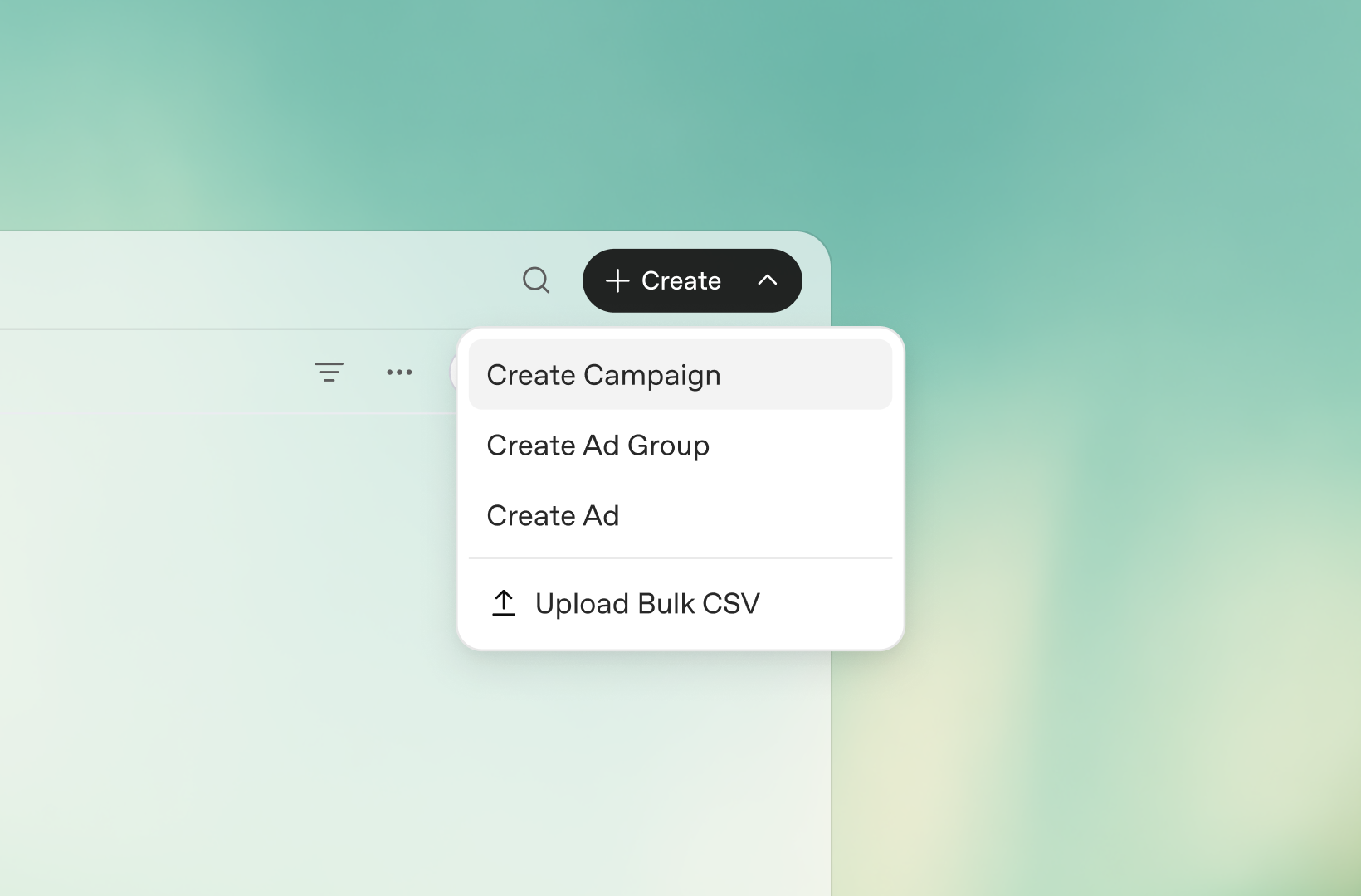
Ads Manager Beta supports campaign creation, ad-group management, and individual ad creation. The platform also provides bulk-upload functionality for advertisers managing multiple creative assets.
When configuring an ad group, consider the following elements:
-
Campaign objective.
-
Budget.
-
Bidding strategy.
-
Relevant context information.
-
Creative assets and landing page.
-
Conversion events to track, where applicable.
Step 5: Write Your Ad Copy
Effective advertising copy should communicate three essential points:
-
What problem is the customer trying to solve?
-
How does the product or service address that problem?
-
What should the user do next?
Step 6: Configure Your Landing Page and Tracking
The landing page is an essential part of the conversion journey.
| Pricing Model | How It Works | Common Use Case |
|---|---|---|
| CPM | Cost per 1,000 impressions | Brand awareness and reach |
| CPC | Cost per valid click | Website traffic and engagement |
| Conversion-optimized bidding | Optimizes toward supported conversion events | Campaigns with specific action-based goals |
A landing page designed for ChatGPT Ads should include:
-
A headline aligned with the advertisement.
-
A clear product description.
-
Key features and benefits.
-
Credibility signals or evidence of expertise.
-
A visible call to action.
-
Mobile-friendly design.
-
Reasonable page-loading speed.
-
Relevant privacy policies and contact information.
To track traffic sources, businesses can use static UTM parameters in their landing-page URLs. OpenAI confirms that these parameters can be preserved when users click advertisements and used with existing analytics tools.
Step 7: Review, Launch, and Optimize
Before launching, verify that:
-
Ad copy is accurate.
-
Landing pages are functional.
-
Links are correct.
-
Budgets and bids are configured.
-
Conversion events are recording correctly.
-
Advertising content complies with platform policies.
Once the campaign is active, monitor performance across an appropriate reporting period rather than drawing conclusions from the first few days alone.
7. How Much Does ChatGPT Ads Cost?

One of the most common questions about ChatGPT Ads concerns advertising costs. Just as you might need to calculate cost basis for tokenized assets to manage your tax liability, advertisers must understand the bidding mechanics of this new platform.
OpenAI supports multiple advertising and bidding models, including pricing based on impressions and clicks.
For CPC campaigns, advertisers can set a maximum bid at the ad-group level.
OpenAI recommends an initial maximum CPC bid of approximately $3–$5 per click. This is a starting recommendation, not a fixed price, guaranteed delivery rate, or commitment to actual campaign costs.
The platform uses a second-price auction mechanism that considers relevance, with the goal of balancing value for advertisers and users.
Frequently Asked Questions
1. What are ChatGPT Ads?
ChatGPT Ads are paid advertising placements within the ChatGPT interface that allow businesses to reach users through sponsored content relevant to conversational contexts. Ads are clearly labeled and remain separate from ChatGPT’s responses.
2. Is ChatGPT Ads available in Vietnam?
As of September 28, 2026, Vietnam is included in the list of countries supported for self-serve Ads Manager access. Businesses must still meet account, legal entity, payment, and review requirements.
3. How can businesses sign up for ChatGPT Ads?
Businesses can visit ads.openai.com , register an account, and follow OpenAI’s setup instructions. Access and campaign-launch capabilities depend on account and market eligibility.
4. How much does ChatGPT Ads cost?
ChatGPT Ads supports impression-based and click-based pricing, along with certain conversion-optimized bidding options. Actual costs depend on bids, objectives, competition, and ad delivery.
OpenAI recommends an initial maximum CPC bid of approximately $3–$5 per click, but this is not a fixed price or guarantee of performance.
5. Do ChatGPT Ads influence ChatGPT’s answers?
No. OpenAI states that advertisements operate independently of the answer-generation system. Advertisers cannot pay to modify ChatGPT’s responses or purchase placement within them.


