



Protecting proprietary AI with tools for monitoring distillation attacks
Securing high-performance AI models against unauthorized knowledge extraction is a critical operational requirement for modern enterprises. Adversaries frequently employ distillation attacks to scrape input-output pairs from your API, using that data to train cheaper, smaller student models that mimic your proprietary capabilities. Implementing specialized tools for monitoring distillation attacks allows security teams to identify these scraping patterns in real-time, effectively neutralizing threats before significant intellectual property loss occurs.
Understanding the mechanics of model extraction
Distillation attacks function by treating your model as a black-box teacher. An attacker systematically queries your API with a diverse set of prompts, capturing the resulting responses. These pairs are then used as a synthetic dataset to fine-tune open-source architectures like Llama 3 or Mistral, a process often referred to as model distillation. By doing so, the attacker gains a model that performs at a level comparable to your proprietary system while bypassing the massive R&D costs associated with training the original model.
The anatomy of an extraction script
Attackers typically automate this process using Python-based scripts that leverage libraries like LangChain or direct REST API calls. These scripts cycle through thousands of prompts designed to cover specific knowledge domains or reasoning tasks. Because the goal is to map the teacher model’s decision boundaries, the queries are often structured to elicit high-confidence outputs, which are the most valuable for training a student model.
Essential features of tools for monitoring distillation attacks
To defend against these automated threats, your security stack must move beyond basic rate limiting. Effective monitoring requires observability at the application layer to distinguish between legitimate user traffic and systematic data harvesting. When selecting or building your top cloud security tools for enterprise infrastructure, prioritize these core capabilities:
- Request entropy analysis: High-entropy traffic—where query diversity is artificially inflated—is a hallmark of automated scraping.
- Output variance tracking: Monitoring whether a specific API key consistently requests outputs that mirror the model’s most confident decision boundaries.
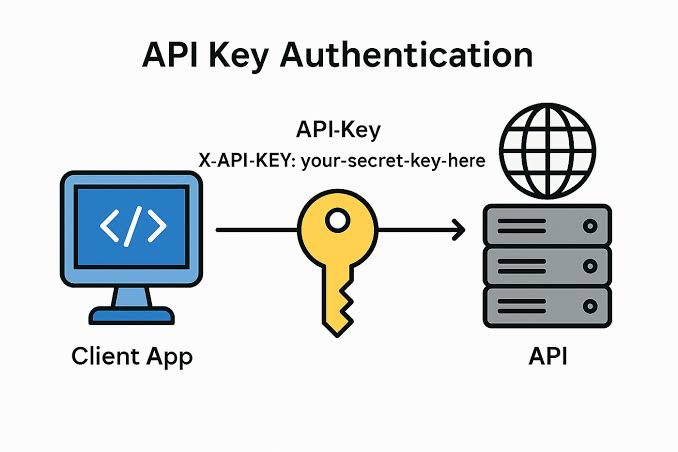
- Behavioral fingerprinting: Establishing a baseline for user intent to differentiate between standard enterprise workflows and adversarial collection.
- Real-time alerting: Automated triggers that notify security teams when token consumption or query frequency exceeds established thresholds.
Anomaly detection in API request patterns
Detection tools must analyze request entropy and frequency. Malicious distillation often manifests as highly repetitive query structures or sequences that cover a wide range of topics in a short timeframe, which is atypical for human users. High-entropy bursts—where the request diversity is artificially high—often signal an automated attempt to map the model’s entire knowledge base.
Response distribution analysis
Monitoring the statistical variance of model outputs provides a secondary layer of defense. If a specific API key or IP address consistently triggers a narrow distribution of responses that match the model’s most confident outputs, it may indicate that a student model is being trained to mirror the teacher’s decision boundaries. Tools that track output variance help identify when a user is attempting to extract the model’s ‘soft labels’ rather than seeking a direct answer.
Implementation of monitoring tools in production
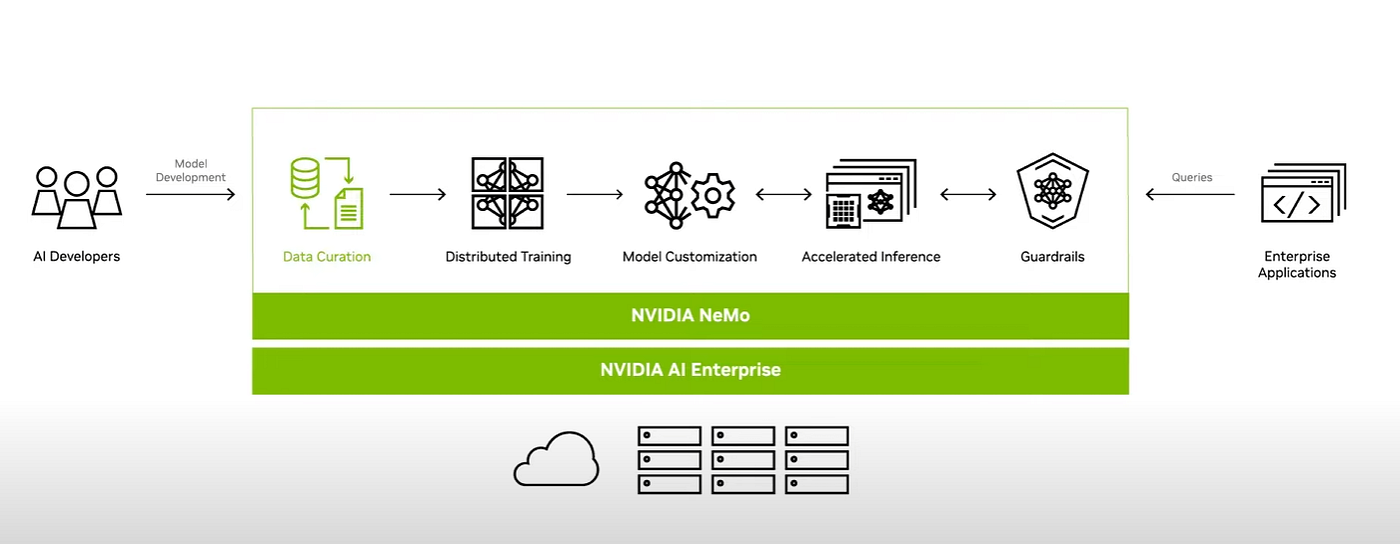
Integrating security layers into existing LLM infrastructure requires a multi-stage approach. Organizations should prioritize logging request metadata, including prompt length, token usage, and response latency, to build a baseline of normal behavior.
| Strategy | Focus Area | Effectiveness |
|---|---|---|
| Rate Limiting | Volume Control | Moderate |
| Entropy Monitoring | Pattern Detection | High |
| Logit Obfuscation | Data Quality | High |
| Semantic Analysis | Intent Verification | Moderate |
Below is a comparison of common monitoring strategies for LLM security:
Integration with observability platforms
Security teams often connect these logs to platforms like Prometheus or the ELK stack. By setting custom thresholds for token consumption per user, teams can trigger real-time alerts when a specific account exceeds standard usage patterns. Automated rate-limiting or temporary API key suspension can then be triggered to prevent distillation attacks before the student model is fully trained.
Limitations and false positives in detection
Strict security measures often conflict with the needs of power users who genuinely require high-volume access. Distinguishing between a legitimate enterprise integration and a malicious distillation attempt is a significant technical challenge. Organizations must calibrate thresholds based on account tiers and historical usage. Using behavioral fingerprinting—such as analyzing the semantic coherence of queries—can help reduce false positives, ensuring that legitimate automated workflows are not interrupted by security protocols.
Strategic defense beyond monitoring
Monitoring is only one part of a robust security posture. Hardening the model itself makes the extraction process significantly more difficult and costly for the attacker. Combining observability with proactive defense creates a layered security model that is difficult to bypass. For those managing complex AI deployments, utilizing crypto tools powerful enough to handle large-scale data analysis can also provide insights into anomalous traffic patterns.
Logit obfuscation and output perturbation
Techniques like logit obfuscation involve adding noise to the model’s output probabilities, making it harder for an attacker to extract the exact confidence scores of the teacher model. By reducing the information density of responses, developers ensure that the student model receives less ‘signal’ during the distillation process, effectively degrading the quality of the stolen model.
Frequently Asked Questions
What is the primary goal of a distillation attack?
The goal is to clone the reasoning capabilities and knowledge of a proprietary teacher model by training a smaller student model on the teacher’s outputs.
How do I distinguish between a power user and an attacker?
Use behavioral fingerprinting to analyze the semantic coherence of queries; legitimate users typically follow logical workflows, whereas attackers often use high-entropy, diverse prompts to map the model.
Can I completely prevent distillation?
While you cannot stop all attempts, you can make the process prohibitively expensive and technically difficult through output perturbation and strict API monitoring.
What is the role of logit obfuscation?
It adds noise to model outputs, which reduces the quality of the data an attacker can collect, thereby degrading the performance of any resulting student model.
- Operational realities of anthropic model distillation in enterprise AI workflows
- Reality of anthropic preventing distillation attacks in enterprise systems
- Enterprise adoption of how to use Claude for model distillation in production workflows
- Verifying anthropic distillation reddit community insights for enterprise deployment


