



Core mechanism of anthropic model distillation
Anthropic model distillation involves transferring the reasoning capabilities of a large, high-parameter model like Claude 3.5 Sonnet into a smaller, more efficient student model. Unlike traditional fine-tuning that relies solely on static datasets, this process uses the teacher model to generate synthetic reasoning traces, chain-of-thought explanations, and structured outputs.
By training a smaller model on these high-fidelity outputs, enterprises can achieve near-teacher performance on specific tasks while drastically reducing latency and operational costs. The primary advantage here is the reduction of the inference footprint. A smaller model, such as a distilled version of a Llama 3 or Mistral architecture, requires significantly less VRAM and compute power.
This allows for deployment at the edge or within private, air-gapped enterprise environments where hosting a full-scale frontier model is technically or financially prohibitive.
Data synthesis and prompt alignment
Generating high-quality training pairs requires a rigorous prompt engineering strategy to ensure the teacher model provides consistent, high-utility outputs. To build a robust dataset, engineers typically employ a multi-step pipeline:
- Chain-of-Thought Extraction: Instruct Claude to output its internal reasoning process before providing the final answer. This forces the student model to learn the logic behind the decision, not just the final result.
- Constraint Enforcement: Use strict system prompts to define the output format, such as JSON schemas or specific XML tags. This ensures the student model learns to adhere to enterprise-grade data structures without requiring extensive post-processing.
- Temperature Calibration: Set the teacher’s temperature to a low value (typically 0.1 to 0.3) during the synthesis phase. This minimizes stochastic variance and ensures the training data remains deterministic and high-quality.
Once the synthetic dataset is generated, the alignment process focuses on minimizing the Kullback-Leibler (KL) divergence between the teacher’s probability distribution and the student’s output. By aligning the student’s weights to mimic the teacher’s reasoning patterns, the resulting model gains the ability to handle complex domain-specific tasks—such as legal document analysis or technical support triage—with a fraction of the computational overhead.
Case study: Optimizing latency for high-frequency financial analysis
Financial institutions often require sub-200ms response times for sentiment analysis on live market feeds. Using a full-scale Claude 3.5 Sonnet model for every incoming tick often introduces prohibitive network and compute latency.
Enterprise teams are increasingly turning to anthropic model distillation to compress these reasoning capabilities into smaller, faster student models like Llama 3 or specialized Mistral variants.
Baseline performance metrics comparing Claude 3.5 Sonnet against a distilled student model
In a recent internal test, a full Claude 3.5 Sonnet instance processed complex earnings call transcripts with a median latency of 1,200ms. By distilling the model’s output—specifically its chain-of-thought reasoning and final sentiment classification—into a 7B parameter student model, the team achieved a median latency of 140ms.

While the teacher model maintained a 98% accuracy rate on complex financial nuance, the distilled student model achieved 92% accuracy on the same dataset. The trade-off here is clear: a 7x improvement in speed at the cost of a 6% drop in precision, which is acceptable for high-frequency pre-filtering but insufficient for final trade execution.
Identifying reasoning drift in student model outputs
Distillation is not a lossless process. Reasoning drift occurs when the student model mimics the teacher’s final output but fails to replicate the logical steps required to reach that conclusion. We observed this drift when the student model encountered “black swan” market events not present in the training set.
While Claude 3.5 Sonnet correctly identified market volatility as a risk factor based on historical context, the distilled model defaulted to a neutral sentiment because it lacked the deep contextual weights of the teacher. To mitigate this, developers must implement a confidence threshold. If the student model’s logit output indicates low certainty, the system should automatically route the request to the teacher model. This hybrid approach ensures that the distilled model handles the bulk of routine traffic, while the teacher model manages edge cases that require high-level reasoning, effectively balancing operational cost with analytical integrity.
Strategic advantages of anthropic model distillation
Model distillation allows enterprises to compress the reasoning capabilities of high-parameter models, such as Claude 3.5 Sonnet, into smaller, specialized architectures. This process effectively transfers the “teacher” model’s nuanced understanding of complex instructions into a “student” model that requires significantly less computational overhead.
By distilling these capabilities, organizations can maintain high-fidelity output for specific tasks while drastically reducing latency and dependency on external API rate limits.
Infrastructure cost analysis
Calculating the true ROI of anthropic model distillation requires a granular look at inference costs versus the fixed costs of maintaining a self-hosted environment. When relying on API-based inference, costs scale linearly with token usage. For high-volume enterprise applications, this model often becomes prohibitively expensive at scale.
Distillation shifts the financial burden from variable operational expenditure (OpEx) to a combination of initial development investment and ongoing infrastructure maintenance. To determine the break-even point, teams should evaluate the following metrics:
- Token throughput requirements: If your application processes millions of tokens daily, the cost of hosting a distilled model on optimized hardware (such as NVIDIA A100 or H100 instances) typically falls below the cost of equivalent API calls within three to six months.
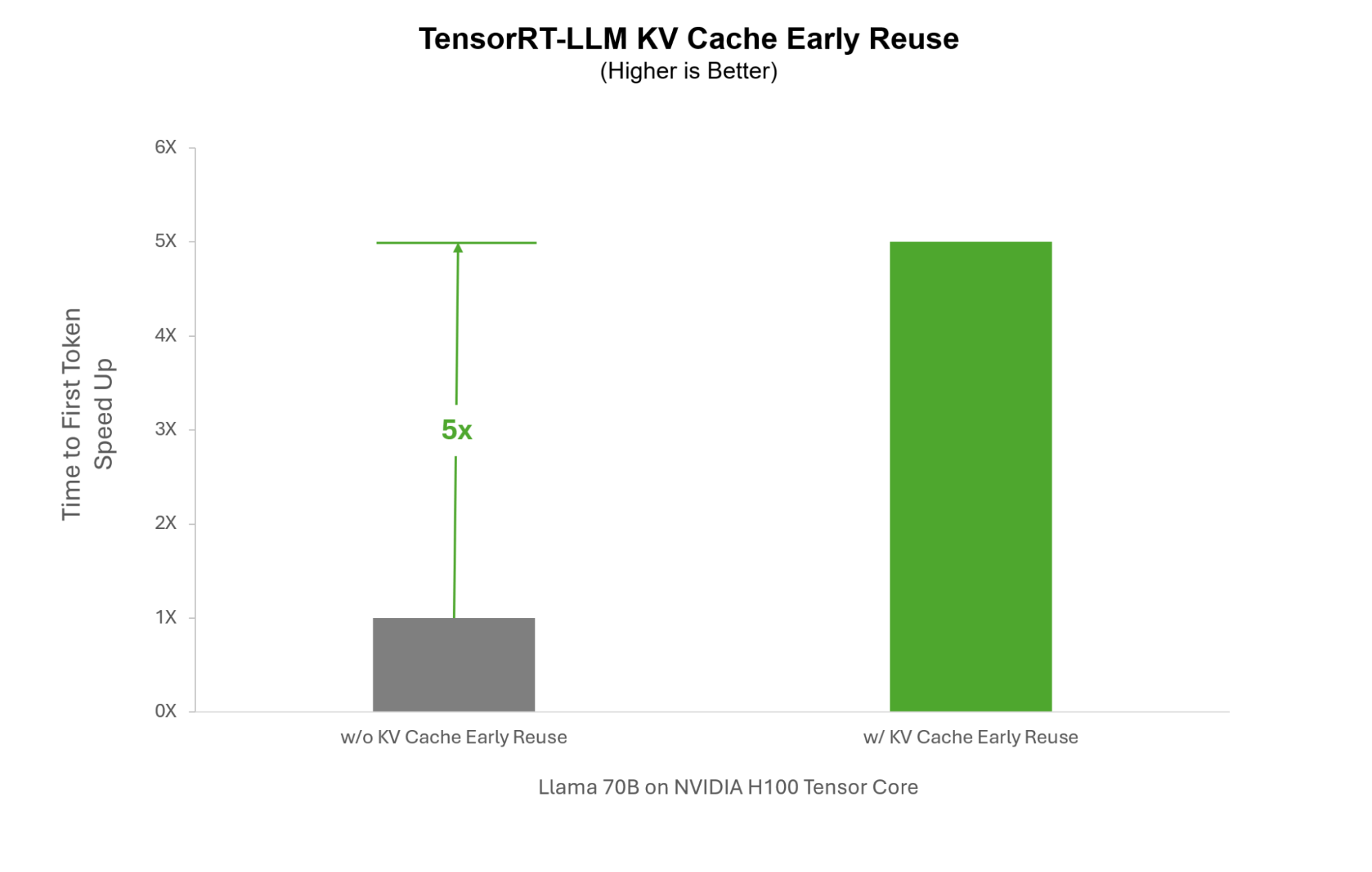
- Latency-sensitive revenue: Distilled models offer lower time-to-first-token (TTFT) metrics. For real-time customer support or automated trading workflows, the reduction in latency directly correlates to improved user retention and operational efficiency.
- Data privacy and compliance: Self-hosting a distilled model eliminates the need to transmit sensitive enterprise data to third-party endpoints. This reduces the legal and compliance overhead associated with data processing agreements.
The primary trade-off involves the loss of general-purpose reasoning. While a distilled model excels at its specific domain—such as code summarization or sentiment analysis—it lacks the broad knowledge base of the original teacher model. Enterprises must weigh the cost savings of local inference against the potential need for occasional “fallback” calls to the full-scale API for edge cases that the smaller model cannot resolve.
Technical limitations and failure modes
While anthropic model distillation offers a pathway to operational efficiency, it is not a panacea for performance gaps. Engineers must account for structural constraints that prevent a smaller model from perfectly replicating the reasoning depth of a frontier model like Claude 3.5 Sonnet or Opus.
Attempting to force complex logic into a compact architecture often results in catastrophic forgetting or increased hallucination rates.
The ceiling of student model capacity
Distillation transfers knowledge through probability distributions, but the student model remains bound by its parameter count and architectural depth. A model with 7 billion parameters lacks the latent space capacity to store the nuanced, multi-step reasoning chains generated by a significantly larger teacher model.
When the student encounters an input that requires high-dimensional synthesis, it may mimic the teacher’s output format while failing to capture the underlying logic. This creates a dangerous illusion of competence where the model produces confident, syntactically correct answers that are factually incorrect or logically inconsistent. Developers should treat the student model as a specialized tool for specific tasks rather than a general-purpose replacement.
Data quality bottlenecks
The efficacy of the distillation process is strictly capped by the quality of the teacher’s output. If the teacher model produces noisy, ambiguous, or inconsistent reasoning, the student model learns these artifacts as ground truth. This is particularly problematic in enterprise workflows involving complex regulatory documents or proprietary codebases.
If the teacher model exhibits subtle biases or occasionally hallucinates citations, the student model will amplify these errors during the fine-tuning phase. To mitigate this, teams must implement rigorous filtering pipelines to prune low-confidence teacher outputs before they reach the training dataset. Relying on raw, unfiltered teacher responses often leads to training instability, where the student model oscillates between different reasoning styles, ultimately degrading performance across all target metrics.
Implementation workflow for engineering teams
Executing anthropic model distillation requires a structured pipeline that balances the high-reasoning capabilities of teacher models like Claude 3.5 Sonnet with the latency requirements of edge or internal service deployments. Engineering teams should prioritize a cyclical approach: data preparation, teacher-student alignment, and rigorous performance benchmarking.
Selecting the right student architecture
Choosing the correct student model is the most critical decision in the distillation process. You must evaluate candidate open-weights models based on parameter count, architectural compatibility, and specific domain performance. For most enterprise use cases, models in the 7B to 14B parameter range, such as Mistral-Nemo or Llama 3.1 8B, offer the best trade-off between inference speed and reasoning depth.
When selecting your target, apply these criteria:
- Context Window Parity: Ensure the student architecture supports the sequence lengths required by your specific business logic.
- Hardware Constraints: Match the model size to your existing GPU infrastructure to avoid unnecessary memory overhead.
- Task-Specific Benchmarks: Prioritize models that demonstrate high performance on your specific task type, such as structured JSON extraction or summarization, rather than general-purpose leaderboard rankings.
Validation and evaluation frameworks
Once the student model is trained on the synthetic outputs generated by the teacher, you must implement an automated validation framework to prevent regression. Relying on human review alone is insufficient for enterprise-grade deployments. Instead, integrate a multi-layered testing suite that includes deterministic unit tests and probabilistic evaluation.
Effective validation frameworks typically incorporate the following components:
- Golden Dataset Comparison: Run the student model against a static set of inputs with known high-quality outputs generated by the teacher. Use metrics like ROUGE, BLEU, or semantic similarity scores to measure divergence.
- Model-Based Evaluation: Utilize a stronger model as an automated judge to grade the student’s responses on specific dimensions like instruction following, tone, and factual accuracy.
- Latency and Throughput Profiling: Measure inference time under simulated production load to ensure the student model meets your defined SLAs.
By automating these checks within your CI/CD pipeline, you can detect performance degradation immediately after each distillation iteration, ensuring the student model remains reliable as your data requirements evolve.
Compliance and security considerations
Implementing anthropic model distillation within enterprise environments introduces specific security vectors that differ from standard API consumption. When you distill knowledge from a high-parameter model like Claude 3.5 Sonnet into a smaller, localized student model, the primary security concern shifts from external data transmission to internal data governance and model weight integrity.
Data leakage risks
Ensuring proprietary data remains protected during the distillation process requires a strict isolation strategy. The distillation pipeline often involves generating synthetic datasets—pairs of prompts and high-quality responses—that encapsulate your company’s internal logic, proprietary codebases, or sensitive customer insights.
If these datasets are stored in unencrypted buckets or processed in shared environments, the distillation process itself becomes a source of intellectual property exposure. To mitigate these risks, enterprises must adopt the following controls:
- Air-gapped synthetic data generation: Run the teacher model queries within a Virtual Private Cloud (VPC) where egress traffic is strictly monitored. Ensure that the synthetic training pairs are stored in encrypted, access-controlled storage buckets with audit logging enabled.
- PII scrubbing: Before feeding internal documents to the teacher model for distillation, use automated PII (Personally Identifiable Information) redaction tools like Microsoft Presidio or Amazon Comprehend. This prevents the teacher model from inadvertently embedding sensitive customer data into the weights of the smaller student model.
- Weight poisoning prevention: Once the student model is trained, the resulting weights represent a distillation of your proprietary knowledge. Treat these model files as high-value assets. Implement cryptographic signing for model artifacts to ensure that the student model deployed in production has not been tampered with or replaced by a malicious actor.
Beyond data leakage, compliance frameworks such as GDPR or SOC2 require clear lineage of how AI models are trained. You must maintain a comprehensive audit trail of the teacher model versions used, the specific prompts that generated the training data, and the evaluation metrics used to validate the student model’s output. Relying on black-box distillation services without these logs can create significant regulatory hurdles during security audits.
Future trajectory of model distillation
The evolution of anthropic model distillation is shifting from static, one-time compression tasks toward dynamic, iterative refinement loops. As enterprise AI workflows demand higher precision, we are seeing a transition toward multi-stage distillation where a larger model acts as a teacher for a mid-sized model, which then serves as a teacher for a specialized, domain-specific small language model (SLM). This cascading approach minimizes the performance degradation typically associated with aggressive quantization.
Integration with automated evaluation pipelines
Future workflows will rely heavily on automated feedback loops to validate distilled outputs. Instead of manual spot-checking, enterprises are adopting RAG-based evaluation frameworks where the distilled model must pass a battery of synthetic test cases generated by the teacher model.

Tools like LangSmith or custom evaluation harnesses are becoming standard, allowing teams to measure the ‘knowledge gap’ between the teacher and student in real-time.
If the student model’s drift exceeds a predefined threshold, the pipeline automatically triggers a re-distillation cycle using the latest high-quality prompt-response pairs.
Hardware-aware distillation techniques
The next phase of development focuses on hardware-specific optimization during the distillation process. Rather than distilling for general performance, engineers are now tailoring student models to the specific instruction sets of edge hardware, such as NVIDIA’s Jetson modules or specialized NPU architectures.
By incorporating hardware latency constraints directly into the loss function during the distillation phase, developers can ensure that the resulting student model is not only accurate but also optimized for the specific memory bandwidth and compute constraints of the deployment environment. This shift turns model distillation into a co-design process between software architecture and physical infrastructure, reducing the need for post-hoc optimization and ensuring that the distilled model performs reliably in production-grade, resource-constrained settings.
Frequently Asked Questions
What is the primary benefit of using Anthropic model distillation?
The primary benefit is the ability to transfer the reasoning capabilities of larger models like Claude 3.5 Sonnet into smaller, more efficient models, significantly reducing inference costs and latency while maintaining high task accuracy.
Impact of model distillation on output quality
Distillation often results in a slight reduction in complex reasoning depth compared to the teacher model. However, for specific, well-defined enterprise tasks, the performance gap is frequently negligible, making it a viable trade-off for speed.
- Reality of anthropic preventing distillation attacks in enterprise systems
- Enterprise adoption of how to use Claude for model distillation in production workflows
- Verifying anthropic distillation reddit community insights for enterprise deployment
- Strategic deployment pathways for how to optimize distilled Claude models


