



The shift toward distilled Claude models in enterprise workflows
Model distillation involves training a smaller, task-specific student model to mimic the outputs of a larger, high-performance teacher model like Claude 3.5 Sonnet. By learning how to use Claude for model distillation, developers can generate high-quality, chain-of-thought reasoning traces to create synthetic datasets.
These datasets teach compact models—such as Llama 3.1 8B or Mistral-Nemo—to perform complex logic tasks with significantly lower latency. This workflow transforms Claude from a general-purpose chatbot into a specialized data factory for private, on-premise infrastructure. Enterprises can deploy highly efficient, domain-specific models that retain the core logic of frontier LLMs while operating within restricted network environments.
Economic drivers behind model distillation
Enterprises are moving away from high-latency, high-cost API calls because of the compounding expenses associated with scaling production-grade applications. Relying exclusively on Claude 3.5 Sonnet for every inference request incurs a cost of $3.00 per million input tokens and $15.00 per million output tokens. For high-throughput systems processing millions of requests daily, these costs become unsustainable.
By using Claude to distill knowledge, companies achieve three primary economic advantages:
- Reduced Inference Costs: Once a smaller model is fine-tuned on Claude’s outputs, the cost per inference drops to the price of hosting an open-weights model on platforms like AWS Bedrock, Google Vertex AI, or private GPU clusters.
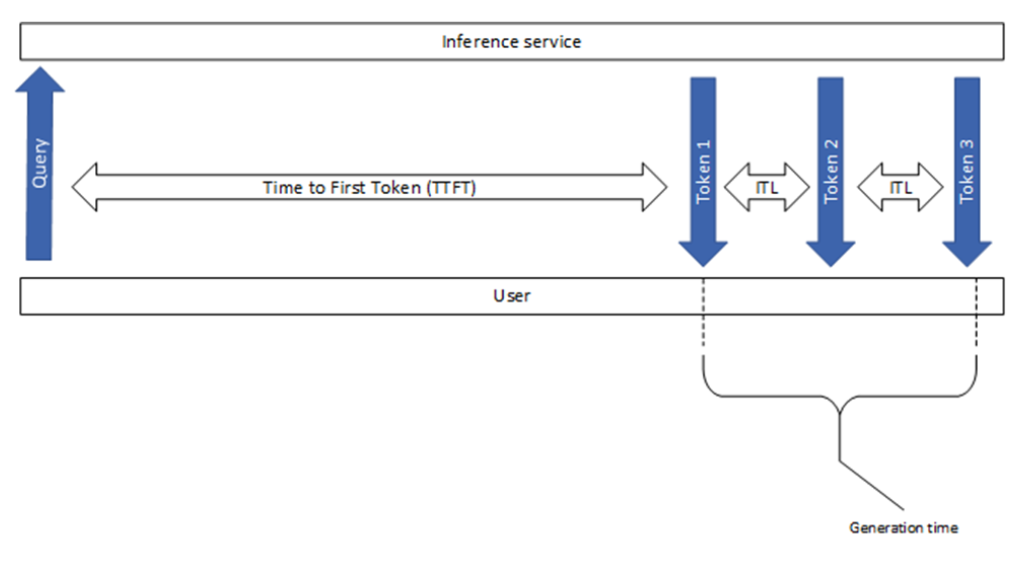
- Latency Optimization: Distilled models typically run on smaller hardware footprints, reducing time-to-first-token (TTFT) by 60-80% compared to querying the full-scale Claude API.
- Data Sovereignty: Distillation allows organizations to retain the reasoning capabilities of Claude within their own VPCs, ensuring that sensitive data never leaves the internal environment after the initial training phase.
The technical implementation requires a structured pipeline where Claude acts as the annotator. Engineers define specific prompt templates to elicit chain-of-thought responses, which are then cleaned and formatted into JSONL datasets. This dataset serves as the ground truth for supervised fine-tuning (SFT) of smaller architectures, effectively baking Claude’s reasoning patterns into a model that can be deployed at the edge.
Technical requirements for how to use claude for model distillation
To effectively use Claude for model distillation, you must establish a robust pipeline that bridges the Anthropic API with your target model’s training architecture. The process requires a stable environment capable of handling asynchronous API requests, typically utilizing the anthropic-sdk in Python.
Ensure your local environment has sufficient memory to buffer the JSONL outputs generated by Claude 3.5 Sonnet before they are ingested into your fine-tuning pipeline for smaller models like Llama 3 or Mistral.
Structuring synthetic datasets for high-fidelity training
When using Claude 3.5 Sonnet to generate training pairs, the prompt engineering strategy dictates the fidelity of the distilled model. Use a strict system prompt that enforces a specific schema, such as a JSON object containing instruction, input, and output fields. To maximize quality, incorporate few-shot examples within the system prompt that demonstrate the reasoning style you want the smaller model to emulate.
- Chain-of-Thought (CoT) preservation: Instruct Claude to output the reasoning process before the final answer. This allows the student model to learn the underlying logic rather than just the final token sequence.
- Constraint enforcement: Use the
max_tokensparameter to limit verbosity, ensuring the synthetic data remains concise and high-density. - Schema validation: Implement a Pydantic model in your ingestion script to validate every response from the API. Discard any outputs that fail to match your required data structure.
Managing token costs during the generation phase
Distillation can become expensive if you generate millions of tokens without optimization. When you use Claude for this purpose, leverage the cache_control feature for your system prompts. By caching the base instructions and few-shot examples, you significantly reduce the input token cost per request.
Implement a tiered generation strategy. Start by generating a small, high-quality validation set of 1,000 samples. Evaluate these using a metric like ROUGE or BERTScore before scaling to a larger dataset. This iterative approach prevents wasting budget on synthetic data that fails to improve the student model’s performance.
Performance trade-offs between distilled models and frontier APIs
Distilling Claude’s reasoning capabilities into a smaller student model, such as a Llama 3 8B or Mistral 7B, involves a deliberate sacrifice in parameter count for a gain in inference speed and cost-efficiency. While Claude 3.5 Sonnet excels at complex instruction following, a distilled model often struggles with multi-step logical chains.
Evaluate whether the latency reduction—often dropping from 500ms to under 50ms per request—outweighs the potential 5-15% degradation in zero-shot reasoning accuracy.
Benchmarking distilled model accuracy against Claude

To determine if your distilled model is production-ready, establish a rigorous evaluation pipeline using the same prompt distribution you intend to deploy. Start by generating a golden dataset of 500 to 1,000 high-quality input-output pairs using Claude 3.5 Sonnet via the Anthropic API. Use these pairs to calculate a baseline performance score using metrics like ROUGE-L for summarization or Exact Match for structured data extraction.
When measuring the performance gap, look beyond simple accuracy percentages. Implement the following benchmarking steps:
- Logit Comparison: Use tools like Weights & Biases to track the KL divergence between the probability distributions of the teacher (Claude) and the student model.
- LLM-as-a-Judge: Use a stronger model to grade the outputs of your distilled model on a scale of 1-5 based on specific rubrics like ‘helpfulness’ and ‘adherence to constraints.’
- Edge Case Stress Testing: Specifically test the distilled model on ‘out-of-distribution’ prompts that were not included in the training set. If the performance drop exceeds 20%, the model is likely overfitting.
If the distilled model fails to hit your target threshold, consider increasing the ‘temperature’ of the teacher model during the synthetic data generation phase. This introduces more variance into the training labels, which can help the student model generalize better to unseen inputs.
Operational risks in proprietary model distillation
Using Claude for model distillation introduces specific technical and legal dependencies that can compromise production stability. When you rely on Anthropic’s API to generate synthetic training datasets, your downstream student model inherits the inherent biases and stylistic fingerprints of the teacher model. If Claude’s underlying architecture is updated, the distribution of your synthetic data may drift, leading to performance degradation.
Engineers must implement robust data validation pipelines to mitigate these risks. Before feeding Claude-generated outputs into a training loop, perform automated semantic consistency checks using tools like DeepEval or RAGAS. These frameworks allow you to quantify the hallucination rate of your synthetic samples.
Compliance with Anthropic usage policies
Navigating the terms of service regarding synthetic data generation and model training is critical to avoid account suspension. Anthropic’s Acceptable Use Policy restricts the use of their models to train or fine-tune competing large language models. While using Claude to create domain-specific datasets for specialized, smaller-scale models is generally permissible, verify that your student model does not violate the ‘Prohibited Uses’ clause regarding the creation of models intended to replicate Claude’s core capabilities.

To remain compliant, maintain a clear audit trail of your data pipeline. Document the specific prompts used to generate the synthetic data and ensure that the resulting student model is narrow in scope. If your student model begins to exhibit behaviors that mirror Claude’s proprietary safety guardrails, you risk triggering automated compliance flags. Review the latest Anthropic API documentation regularly to ensure your deployment architecture remains within the bounds of their current commercial usage agreements.
Frequently Asked Questions
Primary benefits of using Claude for model distillation
The primary benefit is the ability to transfer the reasoning capabilities of Claude 3.5 Sonnet into smaller, task-specific models. This reduces inference latency and operational costs while maintaining high accuracy for niche enterprise workflows. Understanding the reality of anthropic preventing distillation attacks is essential for long-term success.
Distinction between distillation processes and standard fine-tuning
Distillation involves training a smaller ‘student’ model to mimic the output distribution of a larger ‘teacher’ model like Claude. Standard fine-tuning typically relies on human-labeled datasets, whereas distillation uses synthetic data generated by the teacher to scale training data efficiently. For those looking to refine their results, learning how to optimize distilled claude models can significantly improve output quality. Additionally, if you are integrating these workflows with decentralized tools, you might explore how to use binance web3 wallet for dapps to manage your digital assets securely.
- Operational realities of anthropic model distillation in enterprise AI workflows
- Reality of anthropic preventing distillation attacks in enterprise systems
- Verifying anthropic distillation reddit community insights for enterprise deployment
- Strategic deployment pathways for how to optimize distilled Claude models


