



Is digital marketing agency profitable in the current market?
A digital marketing agency can be highly profitable, but the path to sustainability is often obscured by high operational costs and client acquisition expenses. While gross revenue figures frequently reach six or seven figures, the actual take-home profit is often a fraction of that amount.
Profitability in this sector relies heavily on your ability to scale headcount efficiently without allowing overhead to consume your margins. If you are struggling to find the right partner, exploring digital marketing agencies can provide a benchmark for your own operations.
The reality of net profit margins
Most boutique agencies operate with net profit margins between 10% and 20%. This may seem low compared to high-margin software businesses, but it is standard for service-based models where human capital is the primary cost driver. If your agency generates $100,000 in monthly recurring revenue (MRR), you might expect to keep $10,000 to $20,000 after all expenses are settled.
Several factors contribute to this margin compression:
- Labor Costs: Salaries, benefits, and payroll taxes typically account for 50% to 60% of total agency revenue. As you scale, you must hire specialists, which increases your fixed cost base regardless of client churn.
- Software Stacks: Modern agencies rely on a suite of tools—such as SEMrush, HubSpot, Slack, and project management software like Asana—that can easily cost hundreds of dollars per seat, per month.
- Client Acquisition Cost (CAC): The cost to acquire a new client often includes paid advertising, sales commissions, and time spent on discovery calls. If your CAC exceeds 20% of the contract value, your profitability on that specific account is severely diminished.
- Non-Billable Time: Internal meetings, administrative tasks, and professional development represent time that cannot be invoiced. If your team spends 30% of their week on internal operations, your effective hourly rate drops significantly.
Agencies that fail to track these metrics often find themselves in a “growth trap,” where increasing revenue leads to increased complexity and higher overhead. This ultimately results in stagnant or shrinking net profits.
To maintain a healthy bottom line, agencies must prioritize high-value retainers over one-off projects and strictly manage the ratio of billable to non-billable hours.
The trap of service-based scaling
Many founders enter the industry asking, “is digital marketing agency profitable,” only to discover that revenue growth often masks a shrinking bottom line. The primary culprit is the linear relationship between headcount and output.
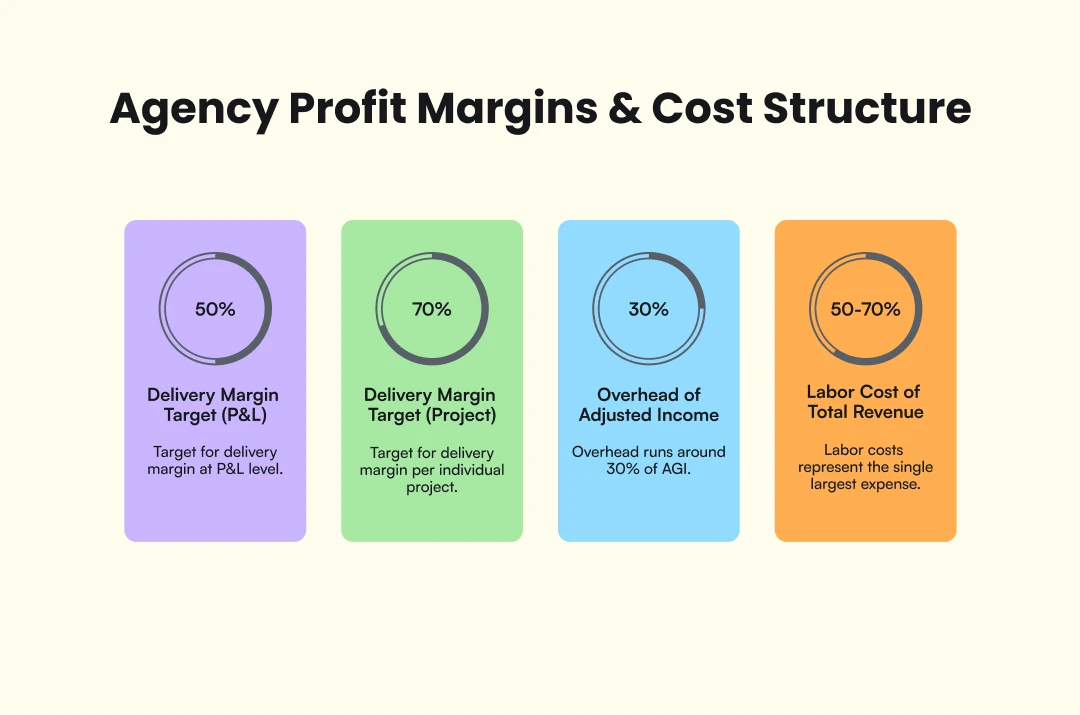
In a service-based model, scaling usually requires hiring more staff to handle an increased client load. Unlike software-as-a-service (SaaS) products, where the marginal cost of adding a user is near zero, agencies face a direct correlation between labor hours and revenue potential. For those specifically in the tech sector, understanding why your saas digital marketing agency is failing to scale is a critical first step toward recovery.
Labor costs versus billable hours — The mathematical breakdown of why headcount growth kills agency margins
The profitability of an agency hinges on the utilization rate—the percentage of an employee’s time that is directly billable to a client. If you hire a specialist at a $70,000 annual salary, their true cost to the business is closer to $95,000 when factoring in payroll taxes, benefits, software seats, and office overhead.
To break even on that hire, you must bill them out at a rate that covers these costs plus a profit margin.
Consider this breakdown for a standard mid-level strategist:
- Annual Cost to Company: $95,000
- Available Working Hours: 2,080 hours per year
- Target Utilization Rate: 70% (1,456 billable hours)
- Required Hourly Rate: $65.25 just to break even
The trap emerges when agencies fail to account for non-billable time, including internal meetings, professional development, and administrative tasks. If the utilization rate drops to 50% due to poor project management or excessive internal overhead, the required hourly rate to maintain profitability jumps to over $91 per hour.
When agencies scale by adding headcount without increasing their hourly rates or improving process efficiency, they inevitably reach a point where every new client adds more operational friction than net profit. This creates a “hollow growth” scenario where the agency appears larger on paper, but the owner’s take-home pay remains stagnant or declines due to the compounding complexity of managing a larger, less efficient team.
Client acquisition costs: the silent profit killer
Many agency owners fall into the trap of measuring success by gross revenue while ignoring the actual cost of securing each contract. When you factor in the time spent on discovery calls, proposal drafting, and the inevitable churn of low-quality leads, the net margin on a new client often shrinks to near zero in the first three months.
If your agency spends $1,500 in ad spend and labor to land a client paying $1,000 per month, you are operating at a loss until the second quarter of the engagement.
Organic vs. paid acquisition — Comparing the long-term profitability of inbound content versus cold outreach
The method you choose to fill your pipeline dictates your long-term viability. Paid acquisition—such as running LinkedIn Ads or Google Search campaigns—provides immediate volume but carries a high, recurring cash cost. If your conversion rate is 2%, you are paying for 49 wasted clicks for every single lead that signs a contract.
This model requires a high lifetime value (LTV) to remain sustainable, meaning you must retain clients for at least 12 months to recoup the initial investment.
In contrast, inbound content marketing functions as a capital-efficient asset. By publishing technical case studies, white papers, or deep-dive analyses on specific industry pain points, you attract prospects who are already educated and pre-sold on your expertise. While the upfront investment in high-quality content is significant, the cost per lead drops drastically over time.
Once a piece of content ranks for a high-intent keyword, it generates leads for free, effectively lowering your blended acquisition cost.
Cold outreach, while often necessary for new agencies, is the most expensive path when accounting for labor. Paying a sales development representative (SDR) or spending hours manually personalizing emails creates a high “human capital” overhead. If your agency is not tracking the hourly rate of the person performing the outreach against the conversion rate of those leads, you are likely subsidizing your growth with unpaid labor.
To maintain profitability, agencies must shift toward a hybrid model where inbound assets do the heavy lifting, allowing paid channels to serve only as a targeted accelerator rather than a primary lifeline.
Productized services as a path to higher margins
Many agencies struggle with profitability because they treat every client engagement as a bespoke, custom project. This approach leads to unpredictable labor costs and bloated operational hours. Transitioning to a productized service model allows an agency to sell specific, repeatable outcomes at a fixed price, which is often the primary reason why a digital marketing agency becomes profitable rather than just busy. For those looking for specialized guidance, saas marketing agencies often provide the frameworks needed to standardize these offerings.
Standardizing deliverables — Reducing scope creep by defining exact service boundaries
Scope creep is the silent killer of agency margins. When a client asks for “a few extra social media posts” or “minor adjustments” to a landing page, these tasks often go unbilled, eroding the profit on the original contract. By defining exact service boundaries, you shift from selling time to selling a product.
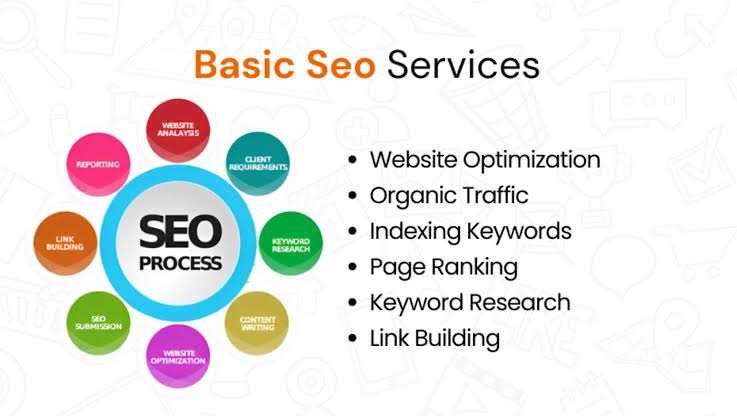
To implement this effectively, document every deliverable in a clear Service Level Agreement (SLA). For example, instead of selling “SEO services,” sell a “Technical SEO Audit and Implementation Package” that includes exactly 15 hours of work, two rounds of revisions, and a specific list of deliverables like a keyword map, a site speed report, and meta-tag optimization.
If a client requests work outside of these parameters, you have a clear basis to issue a change order with additional fees.
This standardization provides three distinct financial advantages:
- Predictable labor costs: Your team knows exactly what to produce, allowing you to estimate the time required with high accuracy.
- Scalability: You can create internal Standard Operating Procedures (SOPs) for each productized service, enabling you to train junior staff to handle execution while maintaining quality.
- Easier sales cycles: Clients find it easier to say yes to a clearly defined package with a fixed price than to an ambiguous hourly retainer.
When you stop customizing every aspect of your service, you reduce the cognitive load on your team and eliminate the hidden hours spent in internal meetings trying to figure out how to fulfill vague client requests. This shift forces you to focus on efficiency, as any time saved during the production process flows directly to your bottom line.
Operational efficiency and tool stack costs
Profitability in a digital marketing agency often hinges on the delta between billable hours and the cumulative cost of your software ecosystem. Many agencies fall into the trap of ‘SaaS bloat,’ where redundant subscriptions for project management, SEO auditing, and social media scheduling overlap, creating a silent drain on monthly recurring revenue. To maintain healthy margins, you must treat your tech stack as a variable cost that requires quarterly pruning.
Consolidating your tech stack — How to audit redundant SaaS subscriptions that drain monthly cash flow
An effective audit begins by mapping every active subscription against the specific client deliverables they support. If you are paying for three different SEO tools—such as Ahrefs, Semrush, and Moz—you are likely over-leveraging your budget for overlapping datasets. Choose one primary platform for deep analytics and consolidate secondary needs into more affordable, niche-specific plugins or browser extensions.
Follow these steps to streamline your overhead:
- Export your billing history: Review the last 90 days of credit card statements to identify every recurring software charge.
- Utilization check: Cross-reference user seats with actual logins. If a team member has access to a $200/month tool but hasn’t logged in for 30 days, revoke the license immediately.
- Feature parity analysis: Identify tools that offer redundant features. For instance, if your project management software (like Asana or ClickUp) includes time-tracking and reporting, you may be able to cancel standalone time-tracking subscriptions like Harvest or Toggl.
- Consolidate to ‘All-in-One’ suites: Where possible, migrate to platforms that bundle CRM, email marketing, and landing page builders. While the monthly fee for an enterprise suite is higher, it is almost always cheaper than maintaining five separate, siloed subscriptions that require manual data integration.
When evaluating if a digital marketing agency is profitable, remember that every dollar saved on unnecessary software is a dollar added directly to your net margin. By automating workflows through integrated tools rather than manual labor, you reduce the need for additional headcount, further protecting your bottom line from the hidden costs of operational inefficiency. For those in the crypto space, utilizing a specialized crypto marketing agency can also ensure your budget is spent on high-impact, industry-specific strategies rather than generic tools.
Frequently Asked Questions
Is a digital marketing agency profitable in the current market?
Yes, it can be highly profitable, but only if you maintain a gross margin above 50%. Many agencies struggle because they underestimate the cost of talent acquisition, software subscriptions, and client churn, which can quickly erode thin margins. If you are just starting, you might also want to look into web3 growth marketing to differentiate your service offering.
What is the biggest hidden cost for a new agency?
The most significant hidden cost is ‘scope creep’ combined with unbilled internal time. When team members spend hours on non-billable administrative tasks or revisions not covered by the initial contract, the effective hourly rate drops below the cost of labor.


