



Market liquidity signals in floor price analysis
The effective valuation of NFT collections using floor price vs rarity requires balancing entry-level liquidity with the long-term potential of scarce traits. The floor price represents the lowest cost to acquire an asset within a specific NFT collection, serving as the primary indicator of market liquidity.
When a collection maintains a high floor price relative to its historical average, it suggests that holders are unwilling to sell at lower valuations, often signaling strong community conviction. Conversely, a rapidly declining floor price frequently precedes a liquidity crunch, where sellers outpace buyers, forcing the entry point downward in a cascading effect.
Investors must distinguish between organic floor price movement and artificial manipulation. Wash trading—where wallets buy and sell the same asset to inflate volume—can create a false sense of liquidity. To verify the health of a floor price, examine the depth of the order book on marketplaces like OpenSea or Blur, or those accessible via Binance Web3 Wallet. A healthy market shows a wide distribution of listings above the floor, rather than a single “wall” of assets priced identically, which often indicates a lack of genuine demand.
Floor price as a baseline for risk
The floor price dictates the immediate downside risk for new buyers by establishing the liquidation threshold. If an investor purchases an asset at or near the floor, their financial risk is directly tied to the collective sentiment of the project. If the floor drops by 20%, the asset’s secondary market value effectively depreciates by that same margin, regardless of its individual traits.

For risk-averse participants, the floor price serves as a defensive metric. By calculating the gap between the floor price and the last sale price of a specific NFT, buyers can determine the “premium” they are paying for rarity or aesthetic appeal.
If the premium is too high, the asset becomes illiquid; should the floor price collapse, the rarity premium often evaporates first, leaving the holder with an asset that is difficult to sell at any price above the new, lower floor. Understanding this baseline allows for a more disciplined approach to capital allocation, ensuring that buyers do not overextend on assets that lack fundamental support from the broader collection floor.
Rarity premiums and the search for long-term value
Investors often conflate floor price with the intrinsic worth of individual assets, a key aspect of on-chain asset valuation methods, but rarity premiums introduce a layer of complexity that dictates long-term liquidity. While the floor price represents the entry-level cost for the least desirable item in a collection, rarity premiums reflect the market’s willingness to pay extra for specific, statistically scarce attributes.
Relying solely on the floor price ignores the potential for outsized returns on high-ranking assets, yet chasing rarity without data validation often leads to holding illiquid bags that fail to sell during market downturns.
Quantifying trait scarcity with rarity tools
To move beyond subjective valuation, collectors must utilize objective data aggregators to assess the true rarity of an asset. Tools like Rarity.tools or NFTGo provide a standardized rarity score by calculating the mathematical probability of a specific trait combination appearing within the total supply. For instance, if a collection has 10,000 items, an asset with a trait shared by only 10 items will naturally command a higher premium than one with common traits.
When evaluating these premiums, compare the asset’s rarity rank against its current listing price relative to the collection’s floor. A common pitfall is paying a 500% premium for an asset that ranks in the top 5% of rarity but lacks historical volume for similar items. Use these platforms to check the ‘last sold’ data for comparable rarity tiers.
If similar assets have not traded in the last 30 to 60 days, the perceived rarity premium is likely inflated and lacks market support. Effective valuation requires identifying assets where the rarity premium is backed by consistent trade volume, ensuring that the asset remains liquid even if the collection’s overall floor price experiences volatility.
Ultimately, the most sustainable strategy involves identifying ‘mid-tier’ rarities that offer a balance between aesthetic appeal and measurable scarcity. These assets often benefit from the ‘floor-sweeping’ effect, where buyers looking for a slight upgrade from the base price naturally gravitate toward these items, providing a consistent exit path that purely speculative, ultra-rare assets often lack.
Comparative valuation of NFT collections using floor price vs rarity
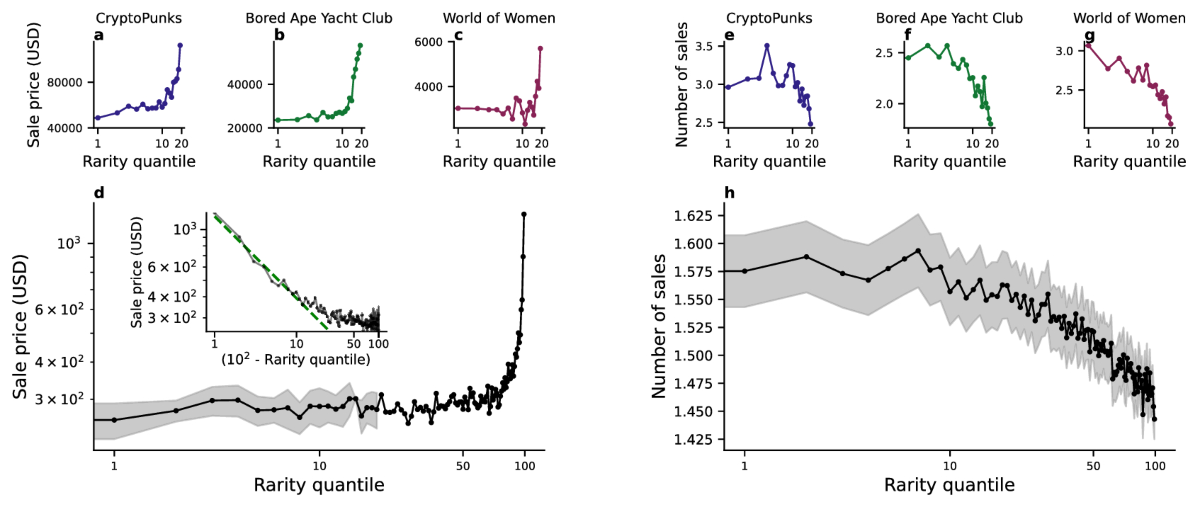
The floor price represents the entry-level cost to acquire the least desirable asset within a collection, serving as a liquidity benchmark. While it provides a quick snapshot of market sentiment, it fails to capture the premium value inherent in traits that are statistically scarce.
Relying solely on the floor price often leads to an underestimation of an asset’s true market worth, as it treats every token as a homogenous commodity rather than a unique digital collectible. Conversely, rarity-based valuation models, such as those provided by Rarity.tools or TraitSniper, assign scores based on the mathematical scarcity of individual traits.
A high-rarity NFT may command a price significantly higher than the floor because collectors prioritize aesthetic uniqueness and historical significance. The tension between these two metrics creates a pricing gap that savvy investors exploit to identify arbitrage opportunities.
Identifying mispriced assets in low-volume markets
In markets with low trading volume, floor prices are frequently volatile and easily manipulated by a few “sweeps” or “panic sells.” Sellers often list rare items at or near the floor price because they prioritize immediate liquidity over long-term value realization. This behavior creates a recurring inefficiency where high-rarity assets are priced as “common” items.
To identify these mispriced assets, follow these steps:
- Cross-reference trait rankings: Use a rarity ranking tool to confirm the asset’s percentile. An asset in the top 5% of a collection should rarely be priced within 10% of the floor price.
- Analyze listing history: Check if the seller has multiple listings. Often, a seller dumping a large “bag” will price rare items incorrectly just to clear their wallet, providing an entry point for buyers.
- Monitor volume-to-rarity correlation: If a collection has high volume but the floor price remains stagnant, look for “rarity gaps” where unique traits are trading at a discount compared to their historical average.
When the floor price is stagnant, the rarity premium becomes the primary driver of value. By focusing on assets where the rarity score significantly exceeds the market’s current valuation, investors can acquire high-quality digital assets that are insulated from the “race to the bottom” often seen in floor-price-focused trading.
Execution risks in high-rarity acquisitions
Investors often fall into the trap of assuming that rarity directly correlates with immediate market demand. While a high-rarity NFT—such as one with a unique trait combination or a low serial number—may carry a higher theoretical valuation, the practical execution of a sale is fraught with friction.
Unlike floor-priced assets, which benefit from high volume and constant turnover, rare items operate in a niche market segment where the pool of potential buyers is significantly smaller.
The liquidity discount on rare assets
Rare NFTs frequently suffer from a liquidity discount, meaning they trade at a lower velocity than common items. If you purchase a rare asset based on its rarity score, you must account for the time-cost of capital.
A floor-priced item can often be liquidated within minutes on marketplaces like OpenSea or Blur. Conversely, a top-tier rare asset might sit on the order book for weeks or months while you wait for a collector who specifically values that trait set.
When calculating the valuation of NFT collections using floor price vs rarity, consider the following risks:
- Market Sentiment Shifts: Meta-trends change rapidly. A trait that is considered ‘rare’ today may lose its premium status if the community shifts its focus to a different aesthetic or utility-based attribute.
- The ‘Mid-Tier’ Trap: Assets that are neither floor-priced nor top-1% rare often face the worst liquidity. They lack the high-volume demand of the floor and the prestige demand of the ultra-rare, leaving them stranded in a stagnant price bracket.
- Over-reliance on Rarity Tools: Third-party rarity calculators often assign arbitrary weights to traits. If the broader market does not agree with a specific tool’s ranking, your perceived value will not materialize in a transaction.
To mitigate these risks, successful collectors often employ a ‘barbell strategy.’ They maintain a core position in floor-priced assets to ensure portfolio liquidity while allocating a smaller percentage of capital to high-conviction, ultra-rare pieces. This approach prevents the investor from being forced to sell a rare asset at a steep discount during a market downturn just to generate cash flow.
Decision matrix for portfolio allocation
Selecting between floor price and rarity-based strategies depends on your specific risk tolerance and liquidity requirements. A floor-based approach prioritizes market depth, allowing for rapid entry and exit, whereas a rarity-based strategy demands a long-term horizon and a deeper understanding of specific trait demand within a niche community.
![Asset Allocation Matrix [Free download]](https://static.appfluence.com/images/asset-allocation-matrix.png)
Strategic criteria for entry
Use this checklist to determine which valuation method aligns with your current investment objectives before committing capital to an NFT collection:
- Liquidity Needs: If you require the ability to exit a position within 24 hours, focus on floor price. High-volume collections with tight spreads between the floor and the next available listings are ideal for this strategy.
- Collection Maturity: Established blue-chip projects often exhibit stable floor prices. Conversely, newer, highly speculative mints are better analyzed through rarity, as early adopters often pay premiums for specific traits that may later become the standard for the collection’s prestige.
- Trait Scarcity Verification: When prioritizing rarity, verify trait distribution using tools like Rarity.tools or NFTGo. Do not rely on subjective aesthetic value; confirm that the specific trait combination is statistically significant enough to command a secondary market premium.
- Market Sentiment: During bearish cycles, floor prices tend to compress faster than high-rarity assets, which may retain value due to their perceived status. In bull markets, floor prices often inflate rapidly, making rarity-based sniping more difficult as the price gap between common and rare items narrows.
The valuation of NFT collections using floor price vs rarity is not a binary choice but a spectrum. Conservative portfolios should allocate 70-80% of their capital toward floor-based assets to maintain liquidity, while reserving 20-30% for rarity-based plays that offer higher potential upside at the cost of significantly longer holding periods.
Always account for the ‘liquidity discount’—the reality that rare items may take weeks or months to sell, even if their theoretical valuation is high. As you explore these assets, remember that blockchain meets nfts to redefine how we perceive digital ownership.
Frequently Asked Questions
Limitations of floor price in asset valuation
Floor price represents the entry-level cost for the least desirable item in a collection. It ignores the premium value assigned to rare traits, which can account for a significant portion of a collection’s total market capitalization. If you are how to manage NFTs in Binance Wallet, consider these valuation nuances.
Methodology for calculating rarity premiums
Rarity premium is calculated by comparing the sale price of a specific asset against the collection’s floor price. Tools like Rarity.tools or NFTGo provide rarity scores that help quantify how much a specific trait set deviates from the average, allowing for a more precise valuation. When importing external NFTs to Binance Web3 Wallet, ensure your rarity data is synced correctly.


