



Interoperability standards for patient data portability: Self-Sovereign Identity for Healthcare using Blockchain
Achieving seamless data exchange in healthcare requires blockchain-based identity solutions to adhere to universal standards rather than proprietary silos. When evaluating vendors, prioritize platforms that utilize open-source protocols to ensure a patient’s digital identity remains functional across different hospital networks, insurance providers, and diagnostic laboratories.
Without a commitment to standardized data schemas, the implementation of Self-Sovereign Identity for Healthcare using Blockchain risks creating new, fragmented data islands that hinder clinical workflows.
Compliance with W3C verifiable credentials
The foundation of a portable identity system is its strict adherence to W3C Verifiable Credentials (VC) and Decentralized Identifiers (DIDs). A robust vendor must demonstrate that their architecture allows a patient to hold their own credentials—such as immunization records or lab results—in a digital wallet that is readable by any compliant verifier.
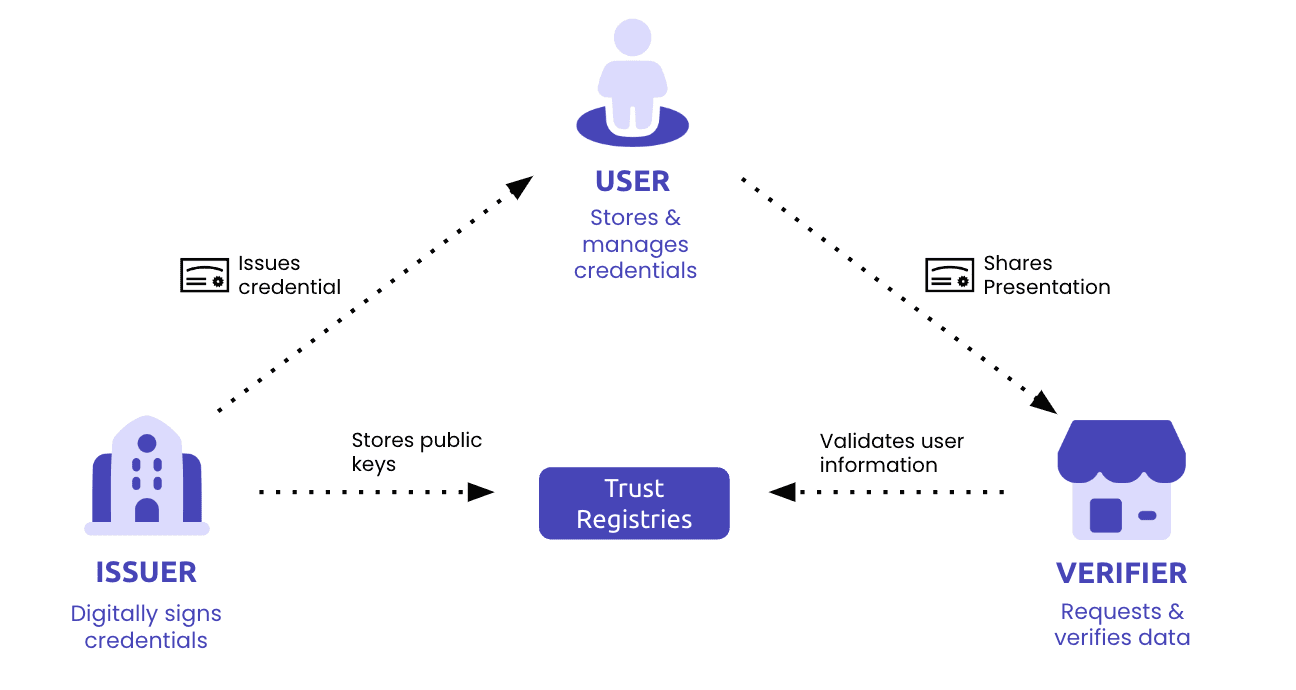
Check for support of the DID Resolution specification, which enables systems to look up public keys on a distributed ledger without relying on a centralized authority. This technical alignment ensures that a credential issued by a primary care physician in one region can be cryptographically verified by a specialist in another, regardless of the underlying blockchain bitcoin web3 technology update.
Integration with existing electronic health records
Blockchain-based identity is only effective if it can communicate with the legacy Electronic Health Record (EHR) systems currently dominating the clinical environment, such as Epic or Cerner. Evaluate vendors based on their support for HL7 FHIR (Fast Healthcare Interoperability Resources) APIs.
A capable solution should act as a middleware layer that maps blockchain-verified attributes to standard FHIR resources. This integration allows a hospital to authenticate a patient’s identity via their blockchain-based wallet and automatically populate the corresponding fields in the EHR. Look for vendors that provide comprehensive SDKs and documented API endpoints to reduce the technical friction of bridging decentralized identity protocols with established database architectures.
Cryptographic security and privacy preservation
When evaluating blockchain vendors for healthcare, security must move beyond basic encryption. True self-sovereign identity for healthcare using blockchain requires a decentralized public key infrastructure (DPKI) that ensures patient data remains under the user’s control while maintaining auditability for medical providers.
Vendors must demonstrate that their architecture supports immutable identity anchoring without storing sensitive Personal Health Information (PHI) directly on the ledger.
Zero-knowledge proof implementation
The core value of zero-knowledge proofs (ZKPs) in this context is the ability to verify medical credentials without exposing raw patient data. A robust vendor solution should implement protocols like zk-SNARKs or CL-signatures to allow a patient to prove they possess a valid vaccination record or insurance coverage status without revealing their full medical history, date of birth, or specific diagnostic codes.
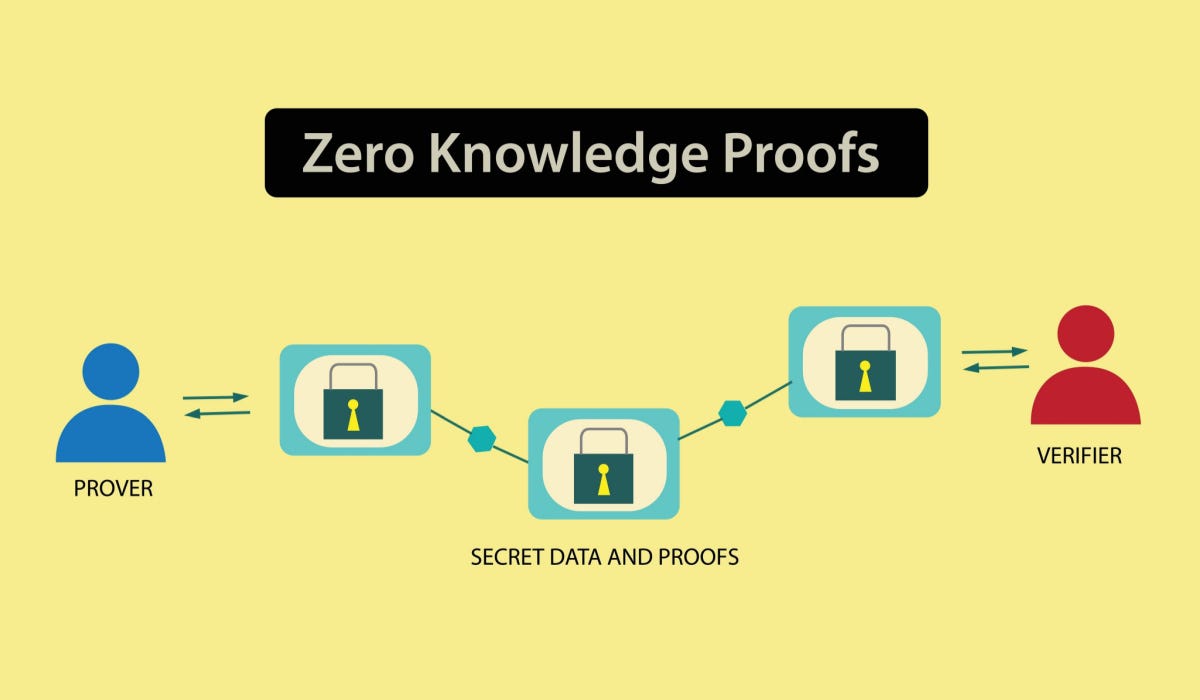
During the selection process, request a technical demonstration of how the vendor handles selective disclosure. A high-quality implementation will allow a patient to generate a cryptographic proof that satisfies a clinic’s requirement—such as confirming a blood type or allergy status—while keeping the underlying data siloed in the patient’s local wallet.
Key management and recovery mechanisms
Self-custody of medical identity keys introduces a significant risk: the permanent loss of access to critical health records. Vendors must offer a tiered approach to key management that balances autonomy with safety.
Evaluate whether the platform supports social recovery or multi-signature schemes where a trusted institution, such as a primary care provider or a designated family member, acts as a guardian. While pure self-custody is the ideal for sovereignty, institutional-assisted recovery is often necessary for healthcare compliance.
Look for vendors that utilize Hardware Security Modules (HSMs) or Secure Enclaves on mobile devices to store private keys, ensuring that even if a device is compromised, the medical identity remains protected. Avoid vendors that mandate centralized storage of private keys, as this reintroduces the single point of failure that securing healthcare data is intended to eliminate.
Regulatory alignment and data sovereignty
Implementing a self-sovereign identity for healthcare using blockchain requires strict adherence to global data protection frameworks such as GDPR, HIPAA, and the CCPA. The core challenge lies in reconciling the immutable nature of distributed ledgers with the “right to be forgotten.”
A compliant architecture must ensure that no Protected Health Information (PHI) or Personally Identifiable Information (PII) is ever written directly onto the public blockchain. Instead, the ledger should only store cryptographic hashes or pointers, acting as a verifiable registry for identity claims rather than a database for medical records.
Data residency and off-chain storage
Determining where PII is stored is critical to satisfying regional legal requirements for health information. Most jurisdictions mandate that sensitive medical data remains within specific geographic borders. To achieve this, organizations should adopt a decentralized storage model where the blockchain serves as the trust anchor while raw data resides in localized, off-chain repositories.
When evaluating vendors, prioritize those that offer the following technical mechanisms:
- Verifiable Credentials (VCs): Ensure the vendor utilizes W3C-compliant VCs that allow patients to hold their own identity attributes locally on their devices, such as a digital wallet, rather than relying on a centralized server.
- Zero-Knowledge Proofs (ZKPs): Look for ZKP integration, which allows a patient to prove a specific attribute—such as age or insurance eligibility—without revealing the underlying sensitive data to the verifier.
- Localized Data Vaults: Confirm that the vendor supports decentralized storage solutions like IPFS or private cloud buckets configured to specific geographic regions. This ensures that when a patient deletes their data, the off-chain storage is purged, rendering the corresponding blockchain hash useless and effectively achieving the right to erasure.
Vendors must demonstrate how their architecture handles the “Right to Erasure” under GDPR Article 17. If a vendor cannot explain how a hash on the blockchain becomes orphaned or invalidated upon the deletion of the off-chain data, they pose a significant compliance risk to the healthcare provider. Always request a detailed data flow diagram that explicitly separates the identity layer from the clinical data layer to ensure that residency requirements are met at every point of the transaction lifecycle.
Performance metrics for high-frequency clinical environments
Implementing a decentralized identity framework requires rigorous benchmarking against legacy centralized databases. In high-frequency clinical settings, such as emergency departments or busy outpatient clinics, the system must handle hundreds of identity verification requests per minute without introducing latency that could impact patient safety.
Key performance indicators (KPIs) should focus on throughput, latency, and resource consumption under peak load conditions.
Transaction finality in clinical workflows
Measuring the time required for identity verification during emergency medical admissions is the most critical metric for evaluating blockchain-based identity solutions. Unlike standard financial transactions, clinical identity verification must be near-instantaneous to allow providers access to electronic health records (EHR) during life-critical situations.
Vendors must demonstrate a transaction finality time of under 500 milliseconds to be considered viable for acute care environments. To assess this, your technical team should conduct stress tests using the following criteria:
- Time-to-First-Byte (TTFB) for Verifiable Credentials: Measure the duration from the initial QR scan or NFC tap by the patient to the moment the hospital system receives a cryptographically verified identity token.
- Concurrency Limits: Test the system’s ability to process at least 500 concurrent identity requests without a degradation in response time.
- Offline-First Availability: Evaluate the vendor’s mechanism for caching identity proofs. If the blockchain network experiences a momentary partition, the system must still allow providers to verify a patient’s identity using locally stored, signed credentials.
When selecting a vendor for Self-Sovereign Identity for Healthcare using Blockchain, demand documented performance reports from real-world clinical pilots. Theoretical throughput numbers often fail to account for the overhead of zero-knowledge proof (ZKP) generation on mobile devices.
A vendor that cannot provide data on how their identity wallet performs on mid-range smartphones—the most common device type for patients—poses a significant risk to clinical operational efficiency. Finally, monitor the gas fees or transaction costs associated with identity revocation and credential issuance. While the verification process itself is often off-chain, the underlying ledger interactions must remain cost-predictable. Unpredictable fee spikes during network congestion can lead to service outages, effectively locking clinicians out of patient records when they are needed most.
Governance models for decentralized identity networks
Establishing a robust governance framework is the most critical step when implementing self-sovereign identity for healthcare using blockchain. Unlike public, permissionless networks, healthcare ecosystems require a consortium-based approach where trust is anchored in known entities like hospitals, insurance providers, and regulatory bodies.
Governance dictates how identities are verified, how data schemas are updated, and how disputes regarding credential revocation are resolved.
Node participation and consensus mechanisms
The architecture of a healthcare identity network relies on the distribution of nodes. In a typical consortium model, healthcare providers act as validator nodes, ensuring that the ledger remains tamper-proof while maintaining compliance with HIPAA or GDPR.
Technology vendors often provide the software stack, but they should ideally act as infrastructure facilitators rather than governance authorities. If a vendor holds majority control over consensus, the network risks vendor lock-in, which undermines the core principle of user-controlled identity.
When evaluating consensus mechanisms, prioritize protocols that balance throughput with energy efficiency and security. For healthcare, Proof-of-Authority (PoA) is frequently superior to Proof-of-Work (PoW). In a PoA model, identity is tied to the reputation of the participating healthcare institution. This mechanism allows for faster transaction speeds—essential for real-time patient record verification—without the computational overhead of mining.
Key governance considerations for your vendor selection include:
- Voting Rights: Determine if the governance model allows for equitable voting power among all consortium members, or if it is weighted by the size of the institution.
- Schema Management: Establish a clear process for how new credential types (e.g., vaccination records, insurance eligibility) are added to the network. This prevents fragmentation where different providers use incompatible data formats.
- Dispute Resolution: Define legal and technical protocols for handling instances where a credential issuer provides fraudulent or erroneous data.
- Node Exit Strategy: Ensure that if a healthcare provider leaves the consortium, their historical data remains accessible to the patient, preventing data silos or loss of access to personal health records.
By prioritizing a decentralized governance structure, organizations ensure that the blockchain remains a neutral utility rather than a proprietary product. This alignment of incentives among providers, patients, and regulators is the foundation of a sustainable identity ecosystem.
Frequently Asked Questions
Primary technical requirements for healthcare SSI vendors
Vendors must support W3C Decentralized Identifiers (DIDs) and Verifiable Credentials (VCs) standards. Additionally, they must provide robust key management solutions, such as Hardware Security Modules (HSM) or Multi-Party Computation (MPC), to ensure that patient private keys remain under the user’s control without sacrificing recovery options.
Alignment of blockchain-based SSI with HIPAA compliance
SSI enhances HIPAA compliance by minimizing the need for centralized data storage. By using off-chain storage for sensitive Protected Health Information (PHI) and only storing cryptographic proofs or hashes on the blockchain, vendors can ensure that no identifiable medical data is permanently recorded on a public or immutable ledger. For more on how this tech impacts society, see our guide on effective techniques blockchain.
- What is self-sovereign identity (SSI)? Moving beyond centralized trust
- Economic evaluation of self-sovereign identity for electric vehicle charging
- Technical skill sets driving demand for self-sovereign identity jobs & career opportunities
- Strategic evaluation of Self-Sovereign Identity Whitepapers & PDF Resources


