



Trade-offs between custodial convenience and self-custody control
Following this Binance wallet security guide helps you balance operational speed against absolute asset sovereignty when choosing between an integrated exchange wallet and a private hardware device. A custodial wallet on Binance provides immediate liquidity for high-frequency trading, whereas self-custody shifts the entire burden of private key management and security maintenance to the user.
For those comparing options, understanding the Binance vs hardware wallet privacy comparison trade-offs is essential for long-term planning.
Custodial risk profiles on centralized exchanges
Centralized exchanges operate on a model of delegated trust. Users rely on Binance’s internal security infrastructure, including their Secure Asset Fund for Users (SAFU), to protect against platform-level breaches.
While this removes the risk of losing a recovery seed phrase, it introduces counterparty risk where the exchange acts as the final arbiter of account access.
Core components of a robust Binance wallet security guide
Implementing a comprehensive security posture within the Binance ecosystem requires layering defensive protocols to mitigate unauthorized access. Users must move beyond basic password protection to establish multi-layered verification systems that secure both the account login and the withdrawal process.
If you are looking to enhance your account, learning how to enable 2FA on Binance wallet is a critical first step.
Multi-factor authentication and device management
The most effective defense is the mandatory use of hardware-based 2FA. Navigate to the security dashboard to link a YubiKey or similar FIDO2-compliant security key.
This physical requirement ensures that even if your credentials are phished, an attacker cannot bypass the hardware handshake required to authorize a login or a withdrawal.
Anti-phishing code and withdrawal whitelisting
Enable the anti-phishing code feature to receive a unique identifier in every official email from Binance, allowing you to verify communication authenticity instantly. Furthermore, activate withdrawal whitelisting to restrict outgoing transfers to pre-approved addresses only.
This prevents unauthorized actors from draining funds to unknown wallets even if they gain temporary access to your account.
Regular Security Reviews and Software Updates
Maintaining optimal Binance wallet security extends beyond initial setup; it requires ongoing vigilance. Regularly review your account’s security settings, including active 2FA methods, whitelisted withdrawal addresses, and API key permissions, at least once a month.
Crucially, ensure that your operating system, web browser, and the Binance mobile application are always updated to their latest versions. Software updates frequently include critical security patches that protect against newly discovered vulnerabilities, making outdated software a significant risk vector for compromise.
Evaluating the Binance Web3 Wallet security architecture
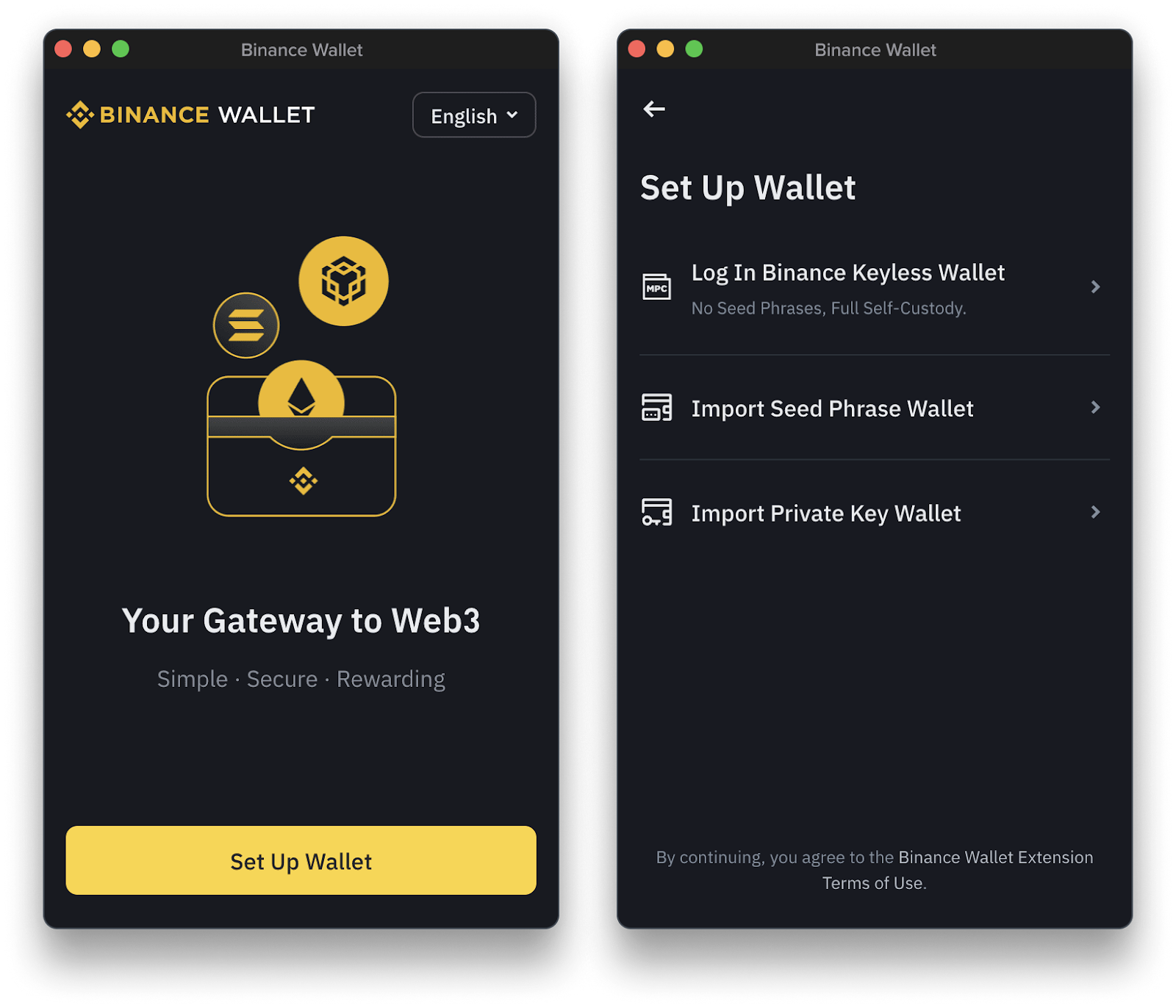
The Binance Web3 Wallet utilizes Multi-Party Computation (MPC) technology to modernize the traditional private key structure. Unlike standard wallets that store a single private key, MPC splits the key into three distinct shards, ensuring that no single entity—including Binance—holds the complete key at any time.
For those interacting with decentralized finance, it is important to understand how to manage multi-chain dapps in binance wallet safely.

Multi-party computation mechanisms
By distributing these shards across your device, the cloud, and Binance’s servers, the architecture prevents a single point of failure. Accessing your assets requires the coordination of these shards, which significantly complicates attempts by malicious actors to compromise the wallet remotely.
Risk mitigation for high-frequency traders
Active traders often require API access for automated strategies, which creates a significant attack surface. Security in this context depends on strict permissioning and minimizing the scope of what an API key can perform.
API key management and permission restrictions
Never grant “Withdrawal” permissions to an API key used for trading. Restrict the key to “Enable Reading” and “Enable Spot & Margin Trading” only.
Additionally, implement IP whitelisting so that the API key only accepts requests from your specific server IP address, rendering stolen keys useless to attackers operating from different locations.
When to transition from Binance to cold storage
The transition to cold storage becomes necessary when the value of your assets exceeds your personal risk tolerance for exchange-based custody. For long-term “HODL” strategies, hardware wallets like Ledger or Trezor provide an air-gapped environment that is immune to the digital attack vectors inherent in any internet-connected platform.
Asset allocation strategies for long-term holding
A common professional standard is to keep only the capital required for immediate trading on the exchange. If more than 20% of your total net worth is held in cryptocurrency, the majority should reside in cold storage, with the exchange wallet serving strictly as a transactional bridge.
Advanced Security Auditing for Binance Users
Beyond standard settings, users should perform periodic security audits of their account activity. Review the “Device Management” tab in your account settings to revoke access for any unrecognized browsers or mobile devices.
Additionally, check your “Login History” for any suspicious IP addresses or unusual login times. If you notice unauthorized activity, immediately change your password and rotate your API keys to invalidate any potentially compromised sessions.
The role of operational security (OpSec)
Beyond technical settings, maintain strict OpSec. Use a dedicated email address for your Binance account that is not used for social media or public forums. This reduces the likelihood of your account being targeted via credential stuffing attacks.
Furthermore, consider using a password manager like Bitwarden or 1Password to generate unique, high-entropy passwords for your exchange account, ensuring that a breach on another site does not compromise your crypto holdings.
![HCM] Công Ty Opsec Security Việt Nam Tuyển Dụng Chuyên Viên Logistics Full-time 2022 - YBOX](https://static.ybox.vn/2022/4/6/1649489983462-logo%20700x400%20(75).png)
Common security pitfalls and recovery limitations
User error remains the leading cause of asset loss. Phishing attacks that mimic the Binance login portal or social engineering attempts to gain access to your 2FA device can bypass even the most robust platform security.
If you ever encounter technical issues, consult a how to fix binance wallet connection error guide to resolve common errors.
Understanding and Avoiding Common Scams
Beyond technical vulnerabilities, social engineering and sophisticated scams pose significant threats. Be wary of unsolicited messages, emails, or calls claiming to be from Binance support, offering exclusive investment opportunities, or demanding immediate action.
Binance will never ask for your password, 2FA codes, or private keys. Always verify the sender’s email address and look for inconsistencies in language or branding. Common tactics include fake customer support numbers, romance scams leading to fraudulent investment platforms, and malware disguised as legitimate crypto tools. If an offer seems too good to be true, it almost certainly is.
Recovery procedures without compromising security
Binance provides recovery options such as identity verification and manual review, but these processes are intentionally rigorous to prevent account hijacking. Understand that the more “recoverable” an account is, the more potential attack vectors exist for an adversary to exploit.
Regulatory compliance and insurance coverage
While Binance maintains the SAFU fund to cover losses from extreme platform-level breaches, this does not constitute personal insurance for individual account compromises. Regulatory compliance ensures that Binance adheres to strict KYC and AML standards, which adds a layer of institutional oversight but does not replace the need for personal vigilance.
Understanding the Risks of Third-Party Integrations
Many users connect their Binance accounts to third-party portfolio trackers or tax reporting tools via API keys. While convenient, these integrations expand your attack surface.
Always verify the reputation of the service provider before granting read-only access. If a service does not explicitly require trading or withdrawal permissions, ensure those boxes remain unchecked in your API management settings. Regularly audit these connections and revoke access for any tools you no longer actively use to maintain a clean security perimeter.
Best Practices for Mobile Security
Since many users manage their Binance accounts via mobile devices, securing the handset is as critical as securing the account itself. Ensure your mobile operating system is updated to the latest version to patch known vulnerabilities.
Avoid using public Wi-Fi networks for trading; instead, use a reputable VPN or your cellular data connection to prevent man-in-the-middle attacks. Furthermore, enable biometric locks (FaceID or fingerprint) on the Binance app to add a physical layer of security that prevents unauthorized access if your phone is unlocked and unattended.
| User Profile | Primary Security Focus | Recommended Storage |
|---|---|---|
| Active Trader | API Security & 2FA | Binance Custodial Wallet |
| Long-term Investor | Cold Storage & Seed Security | Hardware Wallet (Cold Storage) |
| DeFi Participant | MPC Key Management | Binance Web3 Wallet |
Frequently Asked Questions
Account recovery protocols after device loss
You must use the account recovery process on the Binance website, which requires identity verification (KYC) and potentially a manual review by the support team to confirm your ownership.
Safety considerations for large balance storage on Binance
Binance is a secure platform, but keeping large amounts on any exchange introduces counterparty risk. For significant long-term holdings, cold storage is the industry-standard recommendation.
Immediate actions for suspected account compromise
Immediately disable your account via the security settings or contact Binance support to freeze withdrawals, then reset your passwords and 2FA methods from a secure device.
Two-factor authentication setup procedures
Go to your Security dashboard, select the 2FA option (Authenticator App or Passkey), and follow the on-screen instructions to link your device or hardware key.
Insurance coverage details for wallet funds
Binance maintains the Secure Asset Fund for Users (SAFU) to cover platform-level hacks, but this does not cover individual account compromises resulting from user error or phishing.


