



Market positioning for distilled model integration
To understand how to optimize distilled Claude models, you must balance latency requirements against reasoning depth. Distillation creates a smaller, student model that mimics the behavior of a larger, more complex teacher model, such as Claude 3.5 Sonnet.
This process reduces the computational overhead per token, making it a viable strategy for high-throughput applications where milliseconds impact user retention.
Identifying high-value use cases
Not every task requires the broad reasoning capabilities of a frontier model. Selecting the right workload for a distilled model is the first step in effective optimization. You should target tasks that exhibit high repetition, structured output requirements, or narrow domain constraints.
- Classification and Tagging: If your system categorizes support tickets or extracts specific metadata from user inputs, a distilled model often achieves near-parity with larger models while operating at a fraction of the cost.
- Data Transformation: Tasks such as converting unstructured text into JSON schemas or normalizing logs benefit significantly from distillation. These processes rely on pattern recognition rather than deep logical synthesis.
- Latency-Sensitive Interactions: Applications requiring real-time feedback, such as autocomplete features or live chat sentiment analysis, prioritize speed. Distilled models provide the necessary response times that larger architectures cannot sustain under high concurrency.
When evaluating whether to move a task to a distilled model, measure the performance gap using a golden dataset. If the distilled model maintains an accuracy rate within 2-3% of the teacher model on your specific validation set, the trade-off in reasoning depth is usually justified by the gains in operational efficiency.
Conversely, avoid using distilled models for complex multi-step reasoning, creative writing, or tasks requiring extensive external knowledge retrieval, as these areas frequently expose the limitations of a compressed parameter space.
Technical requirements for how to optimize distilled claude models
Optimizing distilled Claude models requires a rigorous infrastructure capable of handling large-scale inference tasks and precise gradient alignment. Before initiating the distillation process, ensure your environment supports high-memory GPU instances, such as NVIDIA A100s or H100s, to manage the computational overhead of generating teacher outputs.
You must also establish a robust pipeline for logging token usage and latency metrics, as these variables directly dictate the cost-efficiency of your final deployment.
Dataset curation and quality filtering
The efficacy of a distilled model is strictly bounded by the quality of the synthetic data produced by the teacher model. To minimize noise, implement a multi-stage filtering process.
First, utilize a secondary, smaller verification model to score teacher outputs based on factual consistency and adherence to specific formatting constraints. Discard any samples that fall below a 0.85 confidence threshold.
Second, apply deduplication techniques using MinHash or embedding-based clustering to ensure the training set does not contain redundant information, which can lead to overfitting on specific phrasing rather than underlying logic. Prioritize high-entropy examples where the teacher model demonstrates complex reasoning, as these provide the most signal for the student model to learn nuanced patterns.
Parameter tuning and quantization trade-offs
Balancing inference speed against accuracy loss is the primary challenge when refining distilled architectures. During the optimization phase, consider applying Post-Training Quantization (PTQ) to reduce the model footprint.
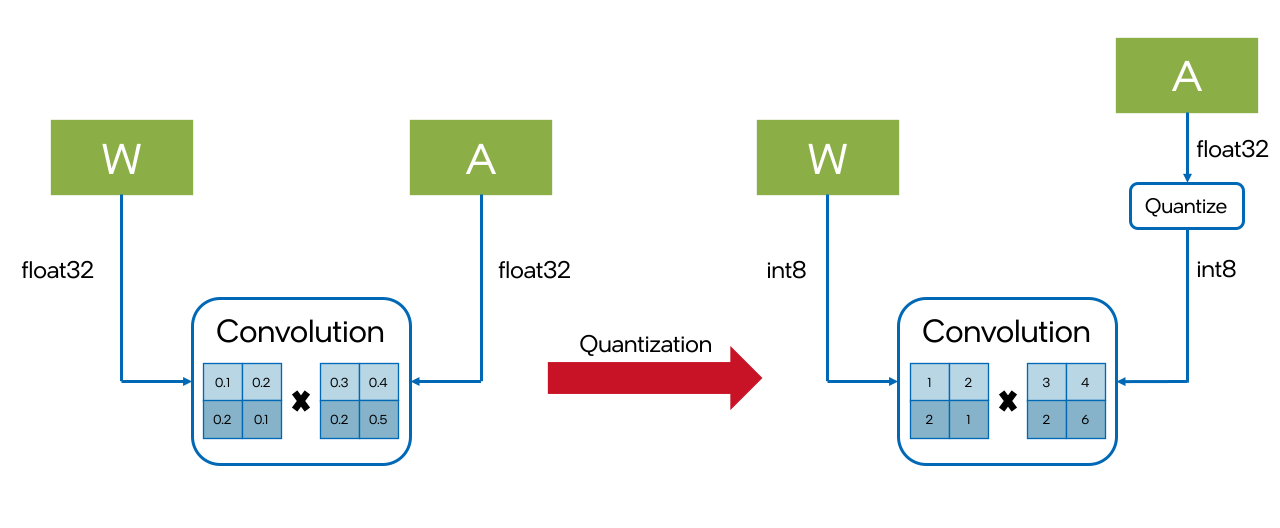
While moving from FP16 to INT8 or INT4 precision significantly lowers memory requirements and increases throughput, it often introduces a degradation in perplexity. To mitigate this, perform a sensitivity analysis on individual layers to identify which parameters are most critical to performance; keep these in higher precision while quantizing less sensitive layers.
If the accuracy drop exceeds your threshold, employ Quantization-Aware Training (QAT) to allow the model to adapt its weights to the lower-precision representation during the distillation process itself. Monitor the trade-off by plotting the Pareto frontier of latency versus benchmark scores, ensuring the final model meets your specific production requirements for real-time responsiveness without sacrificing core task performance.
Risk mitigation in distilled model performance
Distilling large Claude models into smaller, task-specific architectures introduces significant risks regarding output drift and logical degradation. When compressing the reasoning capabilities of a frontier model into a smaller parameter space, the student model often loses the nuanced edge-case handling present in the teacher.
To maintain reliability, developers must implement rigorous validation loops that compare the student’s output against a golden dataset of teacher-generated responses.
Monitoring for catastrophic forgetting
Catastrophic forgetting occurs when a student model overwrites its general-purpose reasoning capabilities to accommodate specific task patterns. This phenomenon is particularly prevalent when fine-tuning on narrow, synthetic datasets.
To detect this, maintain a baseline evaluation suite that tests the model on tasks outside its primary domain, such as general logic puzzles or standard coding syntax, alongside its specialized task.
Implement these specific monitoring techniques to preserve core model integrity:
- KL Divergence Tracking: Measure the Kullback-Leibler divergence between the probability distributions of the teacher and the student. A sudden spike in divergence indicates the student is diverging from the teacher’s logical path, signaling a need to adjust the distillation loss function.
- Consistency Benchmarking: Run a subset of 500-1,000 queries through both the teacher and the student models simultaneously. Use a secondary, high-performance model (such as Claude 3.5 Sonnet) to act as an automated judge, scoring the student’s responses based on adherence to the teacher’s original reasoning steps.
- Logit Drift Analysis: Monitor the top-k token probabilities during inference. If the student model begins assigning high probability to tokens that the teacher model consistently rejects, the model is likely experiencing weight decay in its internal logic layers.
When you observe performance drops in general reasoning, revert to a previous checkpoint and increase the weight of the teacher’s original distribution in your loss function. Balancing the distillation loss with a cross-entropy loss against the original training data helps anchor the student model, ensuring it retains the foundational intelligence of the Claude architecture while specializing in your target use case.
Operational prioritization for development teams
Integrating distilled Claude models into production environments requires a shift from experimental fine-tuning to rigorous performance monitoring. Engineering teams should prioritize the deployment of smaller, distilled variants only after establishing a baseline performance metric using the full-scale Claude 3.5 Sonnet or Opus models.
By utilizing tools like LangSmith or Weights & Biases, developers can log input-output pairs to create a golden dataset, which serves as the ground truth for evaluating the accuracy of the distilled model during iterative training cycles.
Cost-benefit analysis of distillation cycles
Determining when to stop optimizing is critical to maintaining project velocity. The law of diminishing returns applies sharply to model distillation; once a distilled model achieves 90-95% parity with the teacher model on your specific task, further training cycles often yield negligible accuracy gains while significantly increasing compute costs and engineering hours.
To quantify this, track the ‘Latency-to-Accuracy’ ratio. If a 10% reduction in latency requires a 50% increase in training data volume or compute time, the optimization cycle has likely reached its effective limit.
Teams should adopt a tiered deployment strategy to manage these trade-offs effectively:
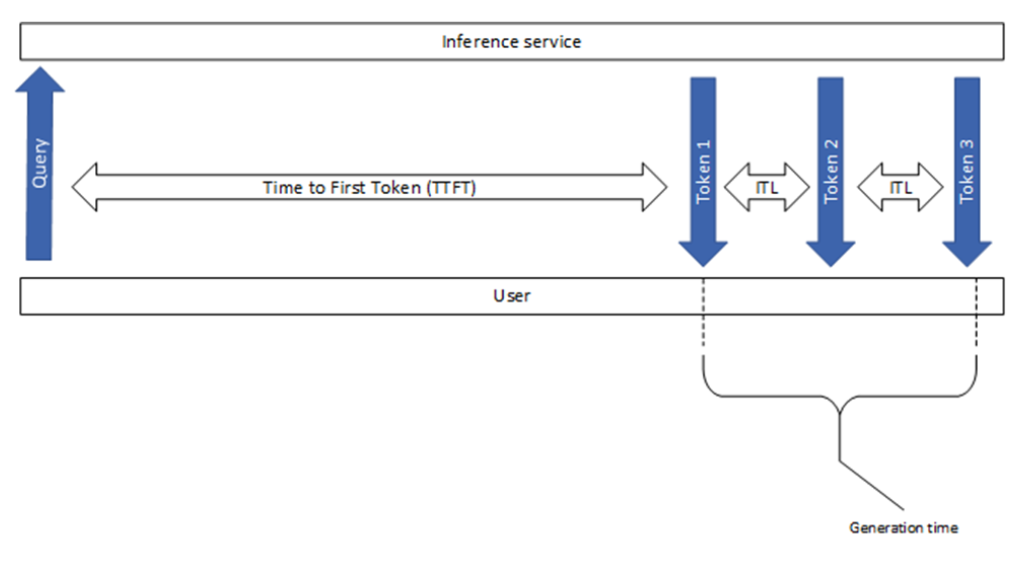
- Phase 1: Latency Benchmarking. Measure the time-to-first-token (TTFT) and total generation time for the teacher model against the distilled version.
- Phase 2: Error Analysis. Categorize failures in the distilled model. If errors are concentrated in edge cases, consider using a hybrid approach—routing simple queries to the distilled model and complex queries to the teacher model—rather than forcing further distillation.
- Phase 3: Automated Regression Testing. Implement a CI/CD pipeline that automatically runs the distilled model against a suite of unit tests every time a new distillation epoch is completed.
By focusing on these operational metrics, development teams avoid the trap of ‘over-optimizing’ for marginal gains. The goal is to reach a stable state where the distilled model provides a predictable, low-latency experience that meets the specific requirements of the application without sacrificing the core reasoning capabilities inherited from the Claude architecture.
Frequently Asked Questions
Primary performance trade-offs when using distilled Claude models
Distilled models prioritize lower latency and reduced compute costs compared to full-scale frontier models. The trade-off typically involves a reduction in complex reasoning depth and nuanced instruction following, which requires specific prompt engineering and output validation to mitigate.
Criteria for determining task suitability for distilled models
Tasks involving high-volume, repetitive data extraction, summarization, or classification are ideal. If the task requires multi-step logical deduction or high-stakes domain expertise, a distilled model may require a RAG (Retrieval-Augmented Generation) architecture to maintain accuracy.
- Operational realities of anthropic model distillation in enterprise AI workflows
- Reality of anthropic preventing distillation attacks in enterprise systems
- Enterprise adoption of how to use Claude for model distillation in production workflows
- Verifying anthropic distillation reddit community insights for enterprise deployment


