



Market positioning of non-PoS sustainable architectures
Enterprise environments often find Proof-of-Stake (PoS) inadequate due to inherent latency issues and the economic finality delays required to secure large-scale networks. By shifting toward energy efficient consensus mechanisms beyond PoS, developers can achieve sub-second finality and higher throughput without the massive energy footprint associated with legacy mining or the economic overhead of staking.
Differentiating Proof-of-Authority and Proof-of-History
Proof-of-Authority (PoA) relies on a set of pre-approved validators, effectively eliminating the energy-intensive competition found in traditional models. This centralized approach allows for near-instant transaction settlement, making it ideal for private enterprise chains.
Conversely, Proof-of-History (PoH) utilizes a cryptographic clock to verify the passage of time between events. By embedding a verifiable delay function (VDF) directly into the ledger, PoH allows nodes to agree on the sequence of events without constant peer-to-peer communication, drastically reducing network overhead.
Technical requirements for energy efficient consensus mechanisms beyond PoS
Deploying alternative consensus models requires a shift in infrastructure strategy, moving away from high-compute mining rigs toward high-bandwidth, low-latency server clusters. These systems prioritize network throughput and rapid data propagation over raw hashing power.
Hardware optimization for Directed Acyclic Graph (DAG) structures
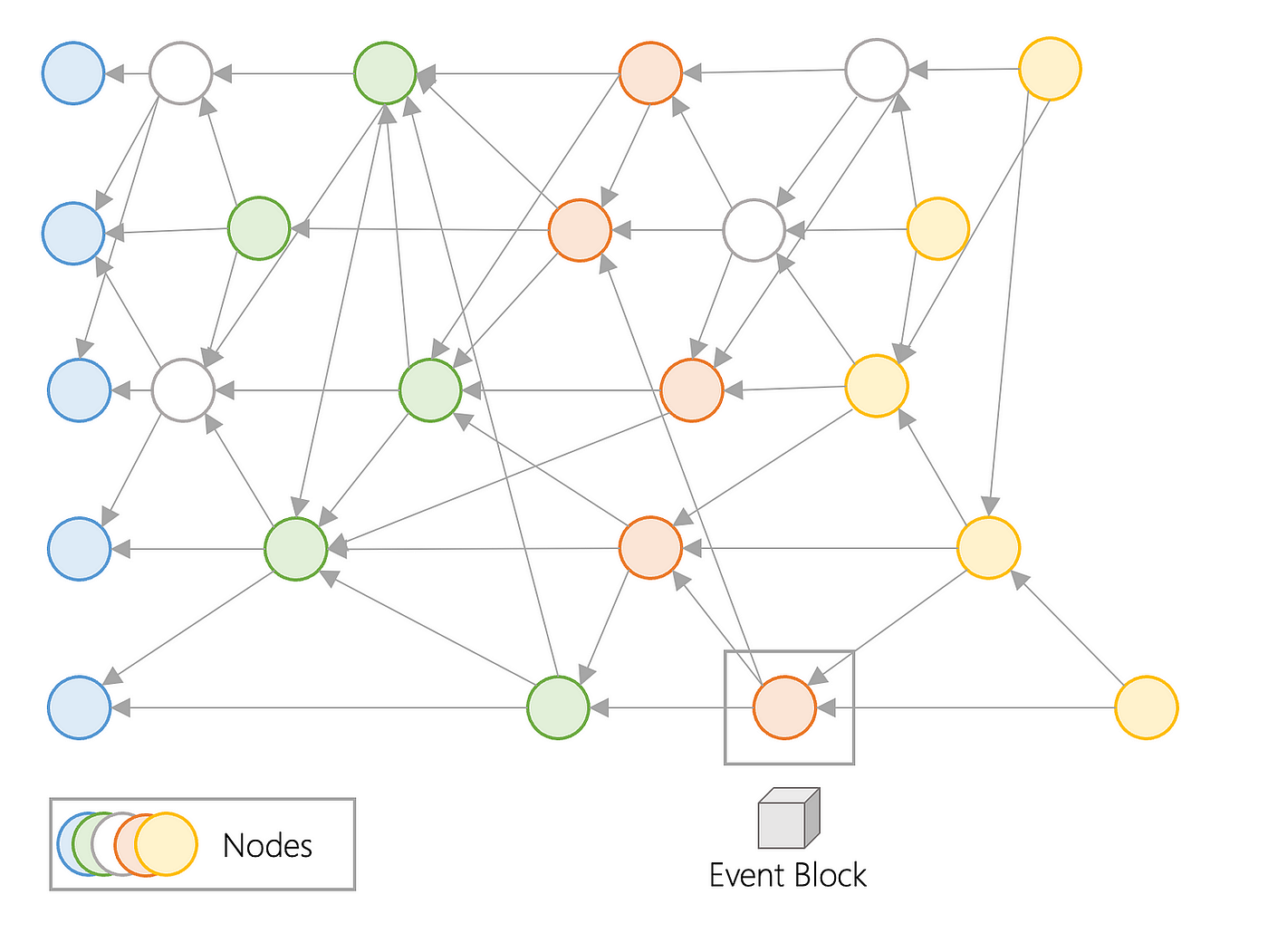
DAG-based ledgers, such as those used by Hedera or Fantom, require significant RAM and high-speed I/O to maintain the complex graph structure of the transaction history. Unlike linear blockchains, DAGs allow multiple transactions to be processed in parallel.
Consequently, validator nodes must be equipped with enterprise-grade NVMe storage and high-core-count CPUs to handle the concurrent validation of incoming transaction bundles.
Network topology considerations for low-latency consensus
Beyond hardware, the physical placement of validator nodes significantly impacts performance in non-PoS systems. For PoA networks, placing nodes in geographically diverse data centers with dedicated fiber-optic interconnects minimizes the propagation delay of block headers.
In PoH systems, the synchronization of the VDF clock relies on stable network jitter. Therefore, utilizing precision time protocol (PTP) hardware clocks at the server level is essential to maintain consensus integrity across distributed clusters.
The role of sharding in maintaining efficiency
To prevent performance degradation as transaction volume grows, developers are increasingly implementing state sharding. By partitioning the ledger into smaller, manageable segments, nodes only need to process a fraction of the total network traffic.
This reduces the computational burden on individual validators, ensuring that the energy efficiency of the network remains stable even as the user base expands. Implementing sharding requires careful management of cross-shard communication to prevent security vulnerabilities, often utilizing asynchronous message passing to maintain atomicity.
Risk assessment of alternative consensus protocols
Moving away from the economic finality of stake-based systems introduces unique security trade-offs. While these protocols are highly efficient, they often sacrifice the decentralized censorship resistance that PoS provides.
Centralization vectors in reputation-based validation
Systems relying on reputation or identity-based validation are susceptible to social engineering and political pressure. Because validator selection is tied to organizational identity rather than capital at risk, a coordinated effort by a small group of entities can theoretically halt or fork the network.
Organizations must implement robust governance frameworks and multi-signature requirements to mitigate the risks of validator collusion.
Prioritizing deployment for enterprise blockchain applications
Selecting the correct consensus model depends on the specific industry requirements for throughput, latency, and trust. A decision matrix approach ensures that technical choices align with business objectives.
Decision matrix for high-frequency transaction environments
For supply chain tracking or high-frequency trading platforms, PoA is generally the superior choice due to its deterministic finality. If the application requires a public-facing, high-throughput ledger, PoH or DAG-based architectures offer the best balance of speed and sustainability.
Organizations should prioritize PoA when trust is already established between partners, and shift to DAGs when the network requires permissionless participation.
Operationalizing sustainable consensus at scale
Transitioning to these models requires more than just software selection; it demands a rigorous approach to node maintenance and monitoring. For instance, in a PoA network, the rotation of validator keys must be automated via Hardware Security Modules (HSMs) to prevent unauthorized access.
Furthermore, monitoring tools like Prometheus and Grafana should be configured to track ‘consensus lag’—a metric that measures the time difference between a node receiving a transaction and its inclusion in the ledger. By setting alerts for latency spikes, operators can proactively re-route traffic or adjust node peering to maintain optimal performance.
Future scalability of sustainable consensus models
As network traffic increases, the long-term viability of non-PoS mechanisms hinges on the ability to shard state and optimize data propagation. Future iterations of DAG and PoH protocols are focusing on dynamic sharding, which allows the network to scale horizontally as more nodes join.
This evolution ensures that energy efficiency remains constant even as transaction volumes reach millions per second.
Frequently Asked Questions
Energy consumption metrics per blockchain transaction
Energy consumption varies wildly by protocol. Bitcoin transactions can consume over 1,000 kWh per transaction, while energy-efficient alternatives like Hedera or Solana consume less than 0.001 kWh per transaction.
Blockchain technology role in climate change mitigation
Yes, by enabling transparent carbon credit tracking, optimizing renewable energy grids through decentralized energy trading, and providing immutable proof of emissions reductions.
Comparative analysis of energy-efficient cryptocurrency protocols
Cryptocurrencies utilizing DAG or PoH, such as Hedera (HBAR) and Solana (SOL), are among the most energy-efficient, often requiring negligible electricity compared to traditional PoW or even standard PoS networks.
Verification standards for blockchain-based carbon credits
They can be, but they require rigorous verification of the underlying project. Blockchain provides transparency in the ledger, but the physical reality of the carbon sequestration must be audited by third parties.
Operational transition strategies for renewable energy mining
Mining farms transition by relocating to regions with surplus hydroelectric or geothermal power and entering into direct power purchase agreements (PPAs) with renewable energy providers to guarantee green energy sourcing.


