



Direct cost structures in asset digitization
Real estate tokenization case studies reveal that the financial viability of a digital asset project hinges on the initial capital outlay required to bridge legacy property law with blockchain infrastructure. Developers must account for smart contract auditing, legal structuring, and the issuance platform fees before a single token is minted.
These costs are rarely linear; they scale based on the complexity of the underlying asset’s legal jurisdiction and the chosen blockchain protocol’s throughput requirements.
Capital expenditure versus operational overhead
Distinguishing between one-time development costs and ongoing maintenance of the tokenized registry is essential for accurate ROI projections. Capital expenditure (CapEx) in this sector includes the upfront costs of real estate tokenization frameworks, such as drafting private placement memoranda (PPM) tailored for digital securities, and the technical development of the token smart contract.
For instance, a typical commercial real estate tokenization project may incur between $50,000 and $150,000 in upfront legal and technical development fees, depending on the regulatory complexity of the target market.
Conversely, operational overhead (OpEx) represents the recurring costs necessary to keep the asset compliant and functional on the secondary market. These costs include:
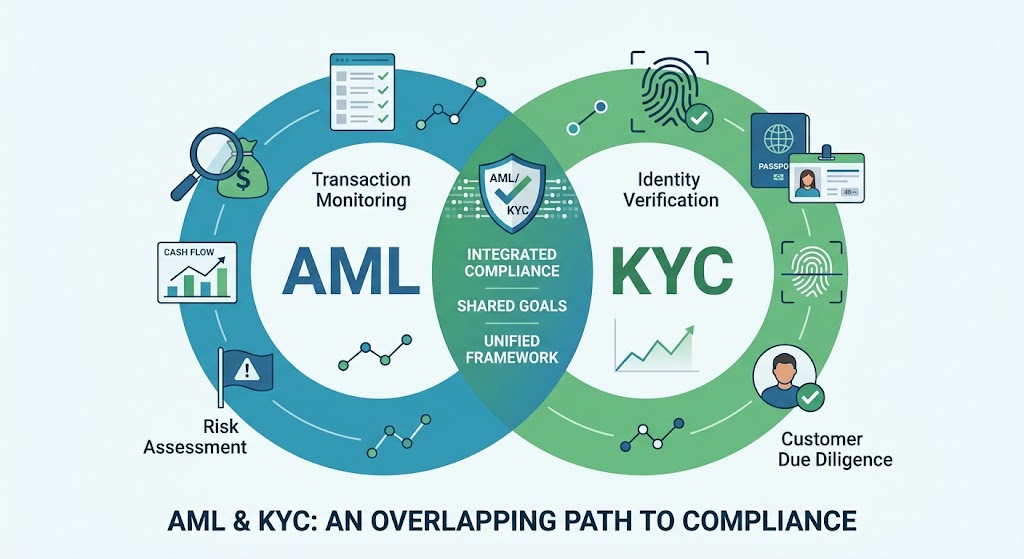
- Registry Maintenance: Annual fees paid to blockchain infrastructure providers or transfer agents to manage the cap table and ensure compliance with KYC/AML updates.
- On-chain Liquidity Costs: Fees associated with maintaining liquidity pools on decentralized exchanges or secondary trading platforms.
- Smart Contract Upgrades: Periodic security audits required to patch vulnerabilities or adapt to new blockchain network standards, which can cost between $10,000 and $30,000 annually.
Investors and project sponsors often underestimate the OpEx, leading to margin compression. While CapEx is a barrier to entry, the long-term sustainability of a tokenized asset depends on the efficiency of the OpEx model.
Projects that leverage automated compliance protocols—where transfer restrictions are hardcoded into the token—significantly reduce the need for manual administrative oversight. This lowers the ongoing operational burden compared to traditional real estate syndications.
Quantifying liquidity premiums in real estate tokenization case studies
Tokenization transforms illiquid physical assets into fractionalized digital securities, theoretically narrowing the bid-ask spread that plagues traditional property markets. By enabling 24/7 trading on blockchain-based platforms, investors gain access to liquidity that was previously locked behind multi-month closing cycles.
Empirical data from recent projects, such as the St. Regis Aspen Resort tokenization, demonstrates that liquidity premiums are realized through the reduction of transaction friction and the democratization of secondary market access.
Secondary market velocity and exit liquidity
Measuring the time-to-liquidity requires a direct comparison between the settlement speed of blockchain-based assets and conventional commercial real estate (CRE) transactions. In a traditional CRE deal, the exit process involves legal due diligence, title insurance, and escrow services, often resulting in a transaction window of 6 to 12 months.
Tokenized assets, by contrast, utilize smart contracts to automate compliance and ownership transfers, compressing settlement times to near-instantaneous execution. For instance, when analyzing secondary market velocity, we observe that tokenized shares of commercial buildings on platforms like RealT or Harbor allow investors to exit positions in days rather than months.
This liquidity premium is quantifiable by calculating the ‘Liquidity Velocity Ratio’—the volume of tokens traded relative to the total supply over a specific period. Assets with higher velocity consistently show lower volatility in their pricing, as the ability to exit quickly reduces the risk premium investors demand for holding the asset.
However, liquidity remains dependent on the depth of the specific exchange ecosystem. While the technical infrastructure allows for instant settlement, the actual exit liquidity is dictated by the number of active participants on the secondary platform.
Investors must distinguish between ‘technical liquidity’ (the ability to move tokens) and ‘market depth’ (the ability to sell without significant price slippage). Successful case studies indicate that projects integrated with established decentralized finance (DeFi) protocols tend to exhibit superior exit liquidity compared to those restricted to proprietary, closed-loop trading environments.
Operational efficiency gains through automated distribution
Tokenized real estate platforms replace legacy manual processes with blockchain-based settlement layers, significantly reducing administrative overhead. By digitizing ownership records on a distributed ledger, property managers eliminate the need for third-party registrars and manual cap table updates.
This transition shifts the focus from back-office reconciliation to real-time asset performance monitoring.
Smart contract automation of waterfall distributions
Programmable dividends represent the most immediate operational benefit in real estate tokenization case studies. Traditional private equity structures often rely on manual waterfall calculations, where a general partner must verify investor eligibility, calculate pro-rata shares, and initiate individual wire transfers.
This process is prone to human error, high banking fees, and settlement delays that can span several business days. Smart contracts automate this entire sequence through the following mechanisms:
- On-chain eligibility checks: The contract verifies the wallet address against an allowlist, ensuring only KYC-verified investors receive distributions.
- Instant settlement: Once the property management system triggers a dividend event, the smart contract executes the transfer of stablecoins (such as USDC or EURC) to all token holders simultaneously.
- Elimination of intermediary fees: By bypassing traditional banking rails, platforms avoid international wire fees and correspondent banking charges, which can consume 1% to 3% of total distribution volume in cross-border transactions.
For instance, a commercial real estate project utilizing an ERC-20 token standard can distribute quarterly rental yields to thousands of global investors in seconds. The code acts as the escrow agent, ensuring that the distribution logic—such as preferred return hurdles or catch-up provisions—is executed exactly as defined in the offering document.

This transparency reduces the audit burden, as every transaction is recorded immutably on the blockchain, providing a verifiable trail for both regulators and investors. By removing the manual reconciliation of bank statements against investor ledgers, firms can reduce the cost of capital administration by an estimated 40% to 60% compared to traditional syndication models.
Risk-adjusted return assessment
Evaluating the performance of digital assets requires a shift from traditional net operating income (NOI) calculations to a model that accounts for liquidity premiums and smart contract overhead. In successful real estate tokenization case studies, investors often observe a compression in yield that is offset by the ability to trade fractional interests on secondary markets.
This liquidity premium effectively lowers the required rate of return compared to illiquid, private equity-held properties. When measuring risk-adjusted returns, analysts must apply the Sharpe ratio to tokenized portfolios by incorporating the volatility of the underlying blockchain settlement layer.
While the physical asset may remain stable, the secondary market price of the token can fluctuate based on platform-specific demand. Investors should discount projected cash flows by a factor that accounts for both the physical property vacancy risk and the technical risk of the smart contract execution.
Regulatory compliance costs as a drag on yield
Compliance is not a one-time setup fee but a recurring operational expense that directly impacts the internal rate of return (IRR). Token issuers must integrate automated KYC/AML protocols into the token smart contract to ensure that every secondary market transfer remains compliant with securities laws, such as Regulation D or Regulation S in the United States.
These costs typically manifest in three areas:
- On-chain verification services: Third-party providers charge per-wallet verification fees to ensure that only whitelisted investors can hold the tokens.
- Reporting automation: Platforms require ongoing maintenance to generate tax documentation and regulatory filings that reflect the current cap table in real-time.
- Legal monitoring: Jurisdictional shifts often necessitate periodic smart contract audits or legal opinions to ensure that the tokenized structure remains compliant with evolving local property and securities regulations.
For smaller offerings, these compliance overheads can account for 2% to 5% of the total annual yield. Investors must scrutinize the prospectus to determine if these costs are borne by the issuer or deducted from the distribution pool.
A failure to account for these recurring expenses often leads to an overestimation of the net yield, making the tokenized asset appear more attractive than its traditional counterpart on a risk-adjusted basis.
Comparative ROI benchmarks
Evaluating the financial success of blockchain-based property assets requires moving beyond traditional net operating income (NOI) calculations. Real estate tokenization case studies demonstrate that investors must account for liquidity premiums and smart contract-driven distribution efficiencies.
While traditional private equity real estate funds often target internal rates of return (IRR) between 8% and 12%, tokenized offerings frequently aim for similar yields but with significantly lower minimum investment thresholds and reduced administrative overhead.
Data-driven performance evaluation
Standardizing reporting metrics is essential to ensure apples-to-apples comparisons across different tokenization projects. Investors should prioritize the following metrics when reviewing performance data:
- Tokenized Yield (TY): The annualized distribution of rental income or dividends paid directly to the digital wallet, net of platform fees.
- Secondary Market Liquidity Ratio: A measure of how quickly a token can be traded on an alternative trading system (ATS) or decentralized exchange (DEX) without excessive price slippage.
- Operational Expense Ratio (OER) Reduction: The percentage decrease in management costs achieved through automated dividend distribution and blockchain-based cap table management compared to traditional LLC structures.
Case studies from platforms like RealT and Lofty AI illustrate that the shift toward fractional ownership often results in a higher velocity of capital. By removing the need for manual wire transfers and third-party escrow services for dividend payouts, these platforms reduce the friction that typically drags down the net performance of smaller real estate syndications.
However, these gains can be offset by the volatility of the underlying crypto-asset used for settlement or the regulatory compliance costs embedded within the token smart contract. When comparing projects, look for audited performance reports that explicitly separate the asset’s rental yield from any potential token price appreciation.
A project might show a high total return, but if that return is driven primarily by speculative secondary market demand rather than consistent rental income, the risk profile changes significantly. Analyzing the consistency of dividend payouts over a 24-month period remains the most reliable indicator of a tokenized asset’s long-term financial health.
Frequently Asked Questions
Primary cost drivers in real estate tokenization
Primary costs include smart contract auditing, legal structuring for compliance (KYC/AML), platform issuance fees, and ongoing maintenance of the on-chain registry. These costs often replace traditional brokerage and administrative overheads.
Impact of tokenization on property investment ROI
Tokenization improves ROI primarily through increased liquidity, which reduces the liquidity discount typically applied to private real estate. Additionally, fractionalization allows for lower entry barriers, potentially increasing the total investor pool and capital velocity.


