



The Top 10 best Fintech Companies in 2026: Leaders shaping the future of finance are transforming how individuals and businesses manage, move, and access money. From global payment networks and digital banks to financial software providers and blockchain innovators, these organizations are redefining the financial landscape through AI, real-time payments, and embedded infrastructure.
Technology is becoming deeply embedded in financial services. Artificial intelligence (AI), real-time payments, cloud infrastructure, embedded finance, digital banking, blockchain, and automation are changing how financial products are developed and delivered. As these systems scale, businesses must prioritize robust best cloud security companies to protect sensitive financial data.
With this in mind, this list highlights 10 fintech companies to watch in 2026. The selection considers technology innovation, market presence, product development, digital finance adoption, scalability, and potential impact on the broader fintech ecosystem.
What Is Fintech?
Fintech, short for financial technology, refers to the use of technology to improve, automate, or create financial services. The sector covers a broad range of activities, including digital payments, online banking, financial software, lending platforms, wealth management, blockchain, digital assets, and other technology-driven financial solutions.
Unlike traditional financial institutions, fintech companies often use software, cloud infrastructure, APIs, mobile applications, and data-driven technologies to deliver financial services more efficiently and conveniently.
How Is Fintech Changing Financial Services?
The fintech industry is increasingly moving financial services toward digital-first experiences. Customers can make payments, transfer money, manage accounts, access financial information, and use business tools without relying entirely on traditional branches or manual processes. Success in this space often depends on partnering with best user experience companies to ensure these digital tools remain intuitive for the end user.
At the same time, fintech is becoming more integrated with other industries. Ecommerce platforms, SaaS companies, marketplaces, and business management systems are increasingly embedding financial services directly into their products.
Top 10 best Fintech Companies in 2026: Leaders shaping the future of finance
The following companies represent different segments of the fintech ecosystem, from global payment infrastructure and digital banking to financial software, ecommerce, blockchain, and fintech-focused growth platforms.
1. Visa
Visa is one of the world’s largest digital payments technology companies, connecting consumers, merchants, financial institutions, businesses, governments, and fintech companies through its global payment network. Rather than functioning as a traditional bank, Visa primarily provides the infrastructure and technology that allows electronic payments and money movement to take place at scale.
One of Visa’s important areas of development is Visa Direct, which enables businesses, financial institutions, and fintech companies to move money to eligible cards, accounts, and digital wallets. Visa says Visa Direct can support domestic and cross-border money movement across more than 195 countries and territories, making it relevant to the continued growth of real-time and cross-border payments.

Visa is also increasing its use of artificial intelligence in payments and fraud prevention. The company describes AI as a core component of its payment infrastructure, including applications such as fraud detection, risk scoring, and payment security. Visa Direct alone processes billions of transactions, giving the company a large environment in which to apply these technologies.
Visa’s role is particularly significant because its technology increasingly supports not only traditional card payments but also fintech platforms, digital wallets, cross-border payments, and newer digital financial services.
Why watch Visa in 2026:
-
Global digital payment infrastructure
-
Real-time and cross-border money movement
-
AI-powered payment security
-
B2B and real-time payment solutions
-
Continued growth of digital commerce
Visa is therefore worth watching not simply as a card network, but as a broader financial infrastructure provider supporting the next generation of digital payments.
2. Mastercard
Mastercard is another major global payments technology company. Its network connects consumers, merchants, financial institutions, businesses, governments, and digital partners, while its technology supports payment authorization, clearing, settlement, and a growing range of financial services.
Mastercard has also expanded beyond traditional card payments. Its broader portfolio includes account-based payments, cybersecurity, fraud prevention, open finance, data services, money movement, and digital asset-related solutions.
One particularly interesting development in 2026 is Mastercard’s focus on AI-powered commerce. The company launched Agent Pay, a framework designed to support transactions initiated by AI agents. The concept reflects a potential shift from consumers manually completing every transaction toward AI systems being able to discover, select, and purchase services on behalf of users.
This is significant because it changes the concept of digital payments. Instead of designing payment experiences only for humans clicking buttons on websites or apps, payment infrastructure may increasingly need to support transactions executed programmatically by software agents.
Mastercard’s recent strategy therefore places it at the intersection of payments, cybersecurity, AI, commerce, and financial infrastructure.
Why watch Mastercard in 2026:
-
Global digital payment infrastructure
-
AI-powered commerce
-
Open finance
-
Cybersecurity and fraud prevention
-
Account-based and real-time payments
-
Digital assets and emerging payment models
Mastercard’s broad technology ecosystem positions it as a key company to watch as financial services continue moving beyond traditional banking.
3. PayPal
PayPal is one of the most recognizable names in digital payments and online commerce. Its ecosystem includes payment processing, digital wallets, checkout, merchant services, payouts, consumer financial products, and risk-management capabilities.
PayPal’s importance comes from its position between consumers and merchants. Consumers can use PayPal and related services to make payments online, while businesses can use its infrastructure to accept payments, manage transactions, process payouts, and support customers across different channels.
The company is also expanding its role beyond the traditional digital wallet model. Its broader ecosystem includes services such as PayPal Checkout, Pay Later, Venmo, merchant payment solutions, and other financial services. This reflects the industry’s shift toward platforms that combine payments with commerce and financial tools.
PayPal is also undergoing organizational and technology changes as it looks to simplify its operations and strengthen its product focus. Recent reporting has highlighted the company’s efforts to restructure its business around areas including checkout, consumer financial services, payment services, and crypto.
Why watch PayPal in 2026:
-
Global digital payments
-
Online checkout and payment processing
-
Pay Later and digital wallet services
-
Fraud and risk management
-
Crypto and emerging payment services
As merchants look for simpler ways to manage payments across multiple channels, PayPal remains an important fintech company to follow.
4. Revolut
Revolut represents the rise of the digital-first banking model. Rather than starting with a traditional branch network, Revolut built its financial services experience around a mobile application.
The platform has expanded beyond basic money transfers to include services such as spending, payments, foreign exchange, cards, savings, investments, and other financial products. This broader product strategy reflects the concept of a financial “super app,” where customers can manage multiple aspects of their financial lives from one digital platform.
Cross-border financial services are another important part of Revolut’s proposition. Its digital-first model is particularly relevant for consumers who travel, work internationally, receive money from abroad, or manage multiple currencies.
In September 2026, Revolut received conditional approval from the U.S. Office of the Comptroller of the Currency for a national bank charter, an important step in its plan to establish a full-scale U.S. banking operation. Reuters reported that Revolut had a global customer base of about 80 million and plans to offer products including checking accounts, installment loans, credit cards, foreign exchange services, and a stablecoin in the U.S. market, subject to further approvals.
Why watch Revolut in 2026:
-
Digital-first banking
-
Mobile financial services
-
Cross-border payments
-
Consumer-focused fintech innovation
-
Super-app strategy
-
Expansion of digital financial products
Revolut is therefore an important company to watch for its attempt to turn a mobile fintech platform into a broader global banking ecosystem.
5. Nubank
Nubank is one of the most prominent digital banking companies in Latin America. The company, operating under the Nu brand, focuses on simplifying financial services through digital products, proprietary technology, data, and mobile-first experiences.
According to the company’s current information, Nu serves 139 million customers across Brazil, Mexico, and Colombia, making it a significant example of how digital banking can scale across emerging markets. The company says its mission is to reduce complexity and expand financial access through technology, responsible lending, and transparent financial products.
)
Nubank’s model is particularly interesting because it addresses a different challenge from many developed-market fintech companies. Instead of simply making existing banking experiences more convenient, digital banks in emerging markets can help broaden access to financial products and introduce simpler alternatives to traditional banking.
Its technology-driven model also allows the company to build products around customer data and digital interactions rather than relying primarily on physical branches.
Why watch Nubank in 2026:
-
Digital banking
-
Financial inclusion
-
Mobile-first financial services
-
Large emerging-market opportunity
-
Technology-driven customer experience
Nubank demonstrates how fintech can become a tool not only for convenience but also for expanding access to financial services across emerging markets.
6. Intuit
Intuit demonstrates how fintech increasingly extends beyond payments and banking into financial software and AI-powered business tools. To maintain a competitive edge, firms often seek the best ui design company to ensure their interfaces are as efficient as their backend software.
Rather than focusing primarily on payment processing or digital banking, Intuit operates a portfolio that includes TurboTax, Credit Karma, QuickBooks, Mailchimp, and Intuit Enterprise Suite. These products serve consumers, small businesses, and enterprises across areas such as taxes, accounting, credit, marketing, and financial management.
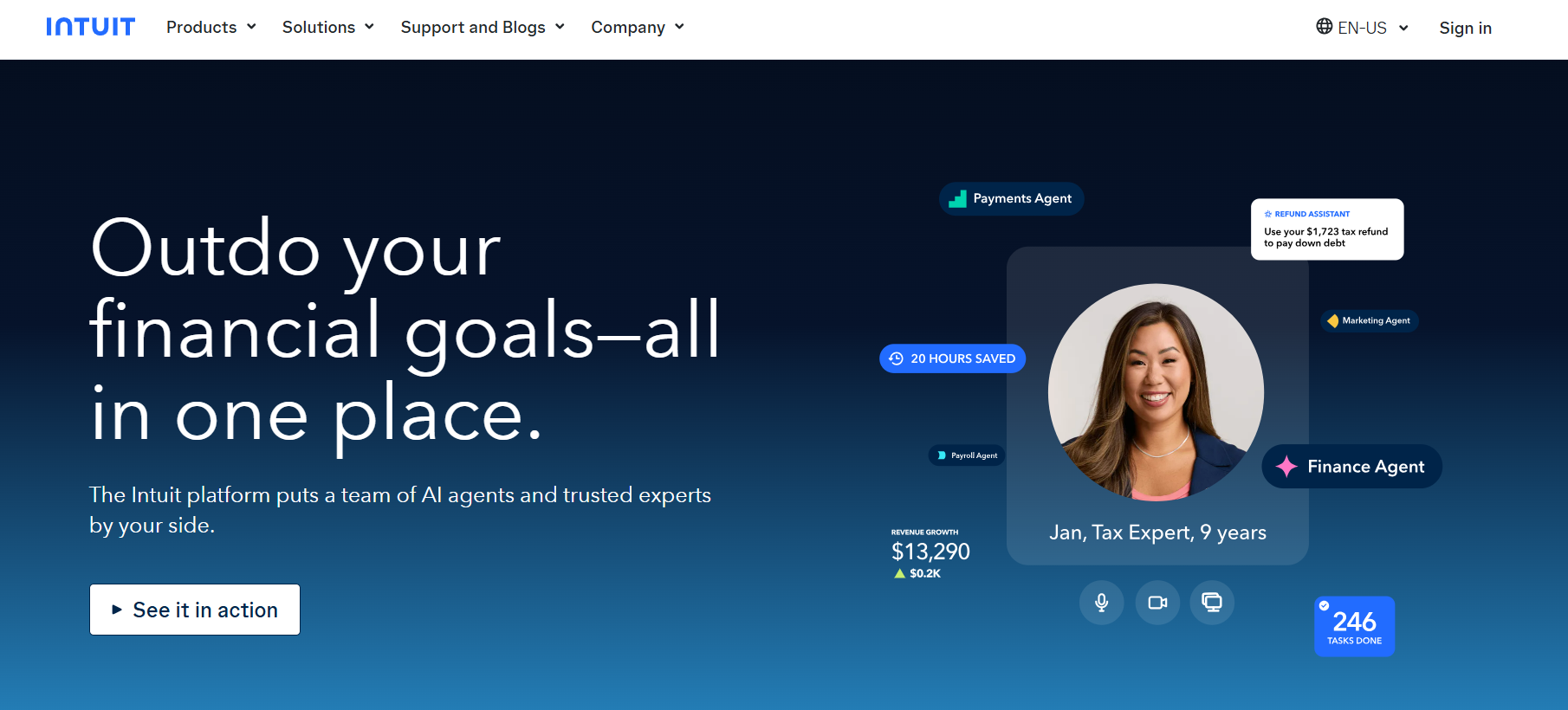
This makes Intuit particularly relevant to the growing convergence between fintech, SaaS, data, and AI. Financial technology is increasingly becoming part of everyday business software rather than existing as a standalone banking application.
The company is also actively integrating AI into its products. In 2026, Intuit announced that TurboTax, Credit Karma, QuickBooks, Mailchimp, and Intuit Enterprise Suite could be accessed within Claude, allowing users to interact with Intuit’s financial and business capabilities through an AI interface.
This direction illustrates a potentially important shift: financial software may increasingly move from tools that simply display financial information toward systems that can interpret information, provide recommendations, and help users take action.
Why watch Intuit in 2026:
-
Financial management software
-
AI-powered financial services
-
Accounting and business technology
-
Credit and personal finance tools
-
Enterprise financial solutions
Intuit is therefore worth watching as fintech increasingly becomes intertwined with AI-powered business and financial decision-making.
7. Fiserv
Fiserv operates primarily behind the scenes of the financial ecosystem. The company provides technology and infrastructure for financial institutions, merchants, enterprises, small businesses, and fintech companies.
Fiserv describes itself as operating at the intersection of banking and commerce, providing technology that supports payments, financial services, merchant operations, and digital commerce. Its current platform includes solutions for financial institutions, enterprises, fintech companies, and small businesses.
The scale of its infrastructure helps explain why companies like Fiserv matter even when consumers may not interact with the brand directly. The company reports working with thousands of financial institutions and supporting millions of merchant locations globally.
Fiserv is also involved in the modernization of financial infrastructure through areas such as cloud technology, APIs, digital banking, embedded finance, and payment systems. Its recent focus on agentic AI also shows how infrastructure providers are beginning to explore AI applications in financial institutions.
Why watch Fiserv in 2026:
-
Payment technology
-
Banking infrastructure
-
Cloud and API modernization
-
Real-time payments
-
Digital asset infrastructure
-
AI for financial institutions
Fiserv is important because it demonstrates that fintech innovation is not only about consumer-facing apps. Much of the industry’s transformation happens inside the infrastructure that financial institutions and businesses rely on.
8. Shopify
Shopify is primarily known as an ecommerce platform, but its financial technology capabilities have made it increasingly relevant to fintech.
Shopify provides merchants with tools covering online stores, checkout, payments, analytics, marketing, shipping, and applications. Its broader platform allows businesses to manage multiple parts of their commerce operations from one system.

The fintech component becomes particularly clear through Shopify Payments and Shop Pay. Shopify Payments allows merchants to accept payments directly through the platform, while Shop Pay provides a streamlined checkout experience.
Shopify is also pushing further into AI-powered commerce. Its current payment ecosystem includes features around AI-driven selling and agentic storefronts, illustrating how ecommerce, payments, and AI are beginning to converge.
The company’s scale also makes this trend significant. Shopify says millions of businesses across more than 175 countries use its platform, while its ecosystem has facilitated more than $1 trillion in sales.
Why watch Shopify in 2026:
-
Embedded payments
-
Ecommerce financial technology
-
Shop Pay
-
Global commerce infrastructure
-
AI-powered commerce
-
Merchant financial infrastructure
Shopify demonstrates one of the most important fintech trends of the decade: financial services are increasingly embedded directly into the platforms where businesses already operate.
9. Binance
Binance represents the digital asset side of the fintech ecosystem. For those interested in the broader industry shifts, From crypto payments to tokenized assets: The evolution of Blockchain finance provides essential context on how these platforms are maturing.
The company describes itself as a blockchain ecosystem whose product portfolio includes a major digital asset exchange alongside services covering areas such as payments, research, education, trading, earning, and other crypto-related activities.
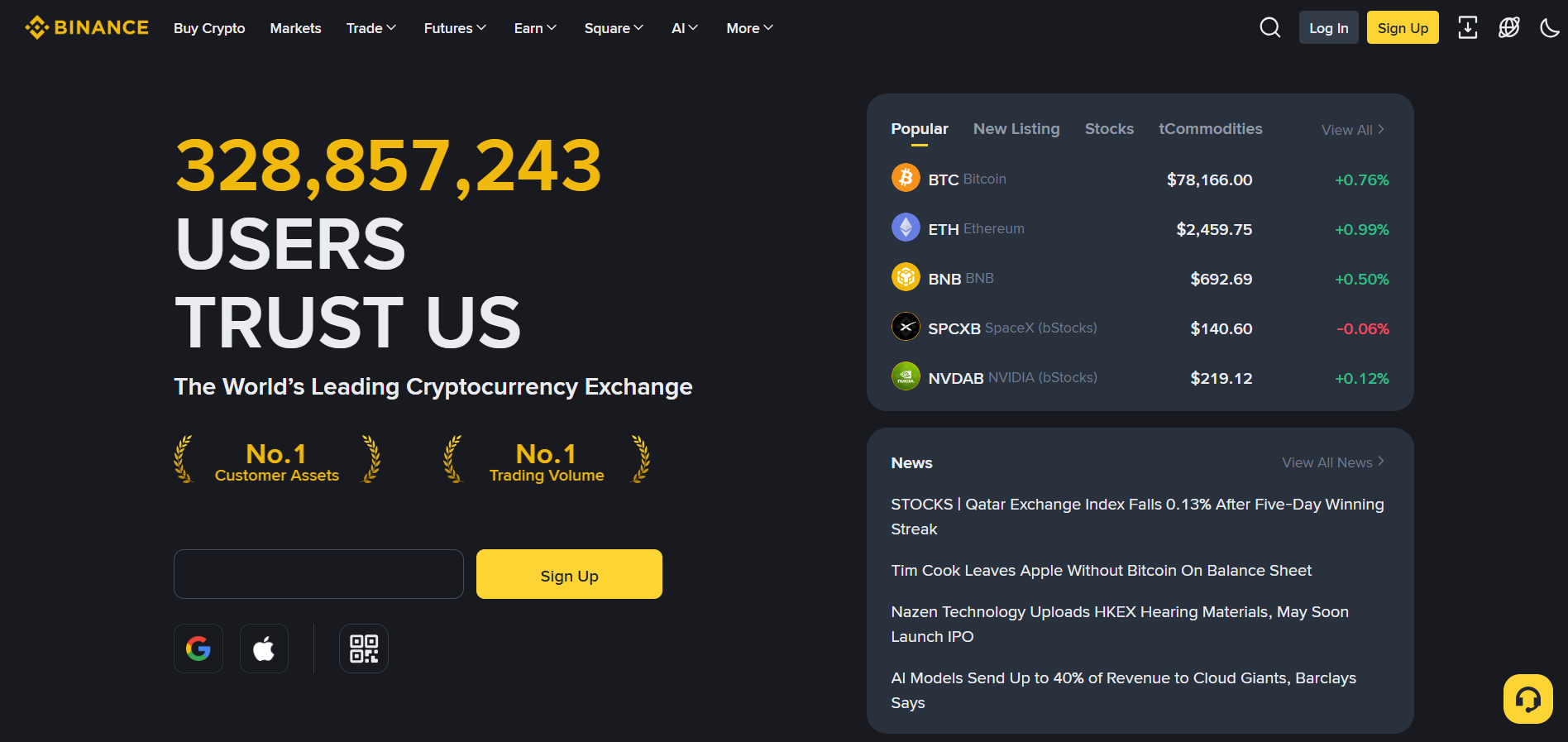
Binance’s importance extends beyond cryptocurrency trading. Its ecosystem has developed around multiple components of digital finance, including Binance Pay, peer-to-peer transactions, digital asset products, blockchain infrastructure, and research.
The company is also increasingly exploring the intersection of AI and financial services. Its 2026 content highlights Binance Agent OS and efforts to connect AI agents with financial markets, while its broader product strategy points toward a multi-asset financial platform.
Why watch Binance in 2026:
- Digital assets
- Cryptocurrency infrastructure
- Blockchain ecosystem
- Crypto payments
- DeFi and Web3
- AI-agent integration
- Multi-asset financial services
Binance is therefore worth watching as the boundaries between crypto, traditional finance, payments, and AI-driven financial services continue to evolve.
10. Fintech24h
Fintech24h brings a different perspective to this list. Unlike Visa, Mastercard, or Revolut, it does not primarily operate as a payment network or digital bank. Instead, Fintech24h positions itself as a growth and marketing partner for Blockchain, Fintech, and AI projects.
Its current service portfolio includes KOL marketing, PR and media campaigns, community growth, event marketing, AI marketing, and business development. The company also provides services such as partner mapping, fundraising-related support, and strategic networking within the Web3 ecosystem.

This role is increasingly relevant as the fintech industry becomes more competitive. Building a strong financial technology product is only one part of growth. Companies also need to establish credibility, reach relevant audiences, communicate their value proposition, and build communities around their products.
Fintech24h therefore represents the marketing and growth layer of the fintech ecosystem. Its focus on fintech, blockchain, Web3, and AI places it at the intersection of technology development and market adoption.
Why watch Fintech24h in 2026:
- Fintech and Web3 industry coverage
- Blockchain and AI marketing
- KOL and influencer marketing
- PR and media campaigns
- Community growth
- Business development
- Digital brand visibility
As competition in fintech becomes increasingly intense, companies need more than innovative products. Building visibility, authority, and trust online is becoming an important part of fintech growth. This makes platforms operating at the intersection of fintech, technology, media, and digital marketing agency for saas companies increasingly relevant.
Key fintech trends to watch in 2026
The companies on this list operate across different areas of fintech, but several common trends are shaping the industry.
1. AI-Powered Financial Services
Artificial intelligence is becoming increasingly integrated into financial products.
Financial companies can use AI to analyze large amounts of data, detect unusual activity, automate workflows, improve customer support, and create more personalized experiences.
The growing focus on AI also means fintech companies will increasingly compete on how effectively they integrate AI into existing products rather than simply whether they use AI.
2. Embedded Finance
Embedded finance is changing how customers interact with financial services.
Payments, lending, insurance, banking, and other financial capabilities can be integrated directly into ecommerce platforms, SaaS products, marketplaces, and business applications.
This creates a more seamless experience because users can access financial services without leaving the platform they already use.
3. Real-Time Payments
Consumers and businesses increasingly expect money to move quickly and securely.
Real-time payment infrastructure is therefore becoming an important area of fintech innovation. Payment providers and financial infrastructure companies need to support faster transactions while maintaining security, reliability, and compliance.
4. Digital Banking
Digital-first banks continue to challenge traditional banking models.
By using mobile applications and technology-driven infrastructure, neobanks can offer customers more convenient ways to manage everyday financial activities.
The continued development of companies such as Revolut and Nubank reflects this broader transformation.
5. Blockchain and Digital Assets
Blockchain remains an important part of fintech’s evolution.
Beyond cryptocurrency, blockchain-related technologies can influence payments, settlement, tokenization, digital assets, and financial infrastructure.
Stablecoins are also becoming increasingly relevant to discussions around digital payments and money movement.
Why Do These Fintech Companies Matter in 2026?
The fintech industry is no longer limited to startups building payment applications.
It now includes:
- Global payment networks
- Digital banks
- Financial software providers
- Ecommerce platforms
- Banking infrastructure companies
- Blockchain and digital asset businesses
- Fintech media and growth platforms
This diversity is important because financial technology is becoming embedded across the broader digital economy.
Visa and Mastercard demonstrate the scale of global payment infrastructure, while PayPal and Revolut represent digital-first payment and financial experiences. Nubank highlights the continued expansion of digital banking, while Intuit demonstrates the importance of financial software and AI.
Fiserv represents financial infrastructure modernization, Shopify highlights the convergence of fintech and ecommerce, and Binance represents the growing role of blockchain and digital assets.
Fintech24h adds another layer by connecting fintech and Web3 businesses with marketing, media, SEO, and growth opportunities.
Together, these companies illustrate that the future of fintech will likely involve multiple technologies and business models working together rather than a single definition of what a fintech company should be.
What Does the Future of Fintech Look Like?
The next stage of fintech will likely be defined by deeper integration rather than standalone financial applications.
Financial services are increasingly becoming part of the digital products people already use. Payments can be embedded into ecommerce platforms, financial insights can be integrated into business software, and AI can assist with financial decisions and workflows.
At the infrastructure level, real-time payments, APIs, cloud computing, and blockchain technologies can continue to reshape how financial institutions and technology companies build financial products.
At the same time, security, compliance, and customer trust will remain essential. As financial services become more digital, companies will need to balance innovation with reliability and responsible risk management.
The fintech companies that stand out will therefore not necessarily be those using the newest technology, but those that can turn technology into secure, scalable, accessible, and useful financial experiences.
Frequently Asked Questions
What is a fintech company?
A fintech company uses technology to provide, improve, or automate financial services. Examples include digital payment providers, online banks, financial software companies, lending platforms, blockchain businesses, and digital asset platforms.
What are the biggest fintech trends in 2026?
Key fintech trends in 2026 include AI-powered financial services, embedded finance, real-time payments, digital banking, fraud prevention, blockchain, tokenization, and digital assets.
Which fintech companies should I watch in 2026?
Companies such as Visa, Mastercard, PayPal, Revolut, Nubank, Intuit, Fiserv, Shopify, Binance, and Fintech24h are worth following because they operate across major areas of the evolving fintech ecosystem.
Is fintech still growing in 2026?
Yes. Financial services continue to adopt digital platforms, AI, cloud infrastructure, automation, real-time payments, and embedded financial services, creating new opportunities for fintech companies across multiple markets.
What makes a fintech company worth watching?
Factors can include technology innovation, market presence, product development, customer adoption, scalability, financial infrastructure, and the company’s ability to respond to emerging trends.


