



Financial valuation of privacy-focused asset management
Implementing a rigorous Binance wallet privacy settings guide serves as a direct hedge against the financial volatility associated with unauthorized account access and data leakage. By treating privacy configurations as a capital allocation strategy, users can quantify the reduction in potential loss against the administrative time required to maintain these settings.
Quantifying risk reduction through privacy controls
The cost of data exposure is often measured in the total loss of liquid assets, whereas the cost of privacy configuration is measured in hourly labor. For a high-net-worth individual, the time investment of one hour per month to audit permissions yields a significant reduction in the probability of a multi-thousand-dollar exploit. By restricting API access and limiting dApp interaction, you effectively lower the attack surface, translating to a measurable decrease in insurance-equivalent risk premiums.
Core components of the Binance wallet privacy settings guide
Technical security within the Binance ecosystem relies on granular control over how your wallet interacts with external protocols. A structured approach to these settings ensures that operational security remains high without sacrificing the ability to execute trades.
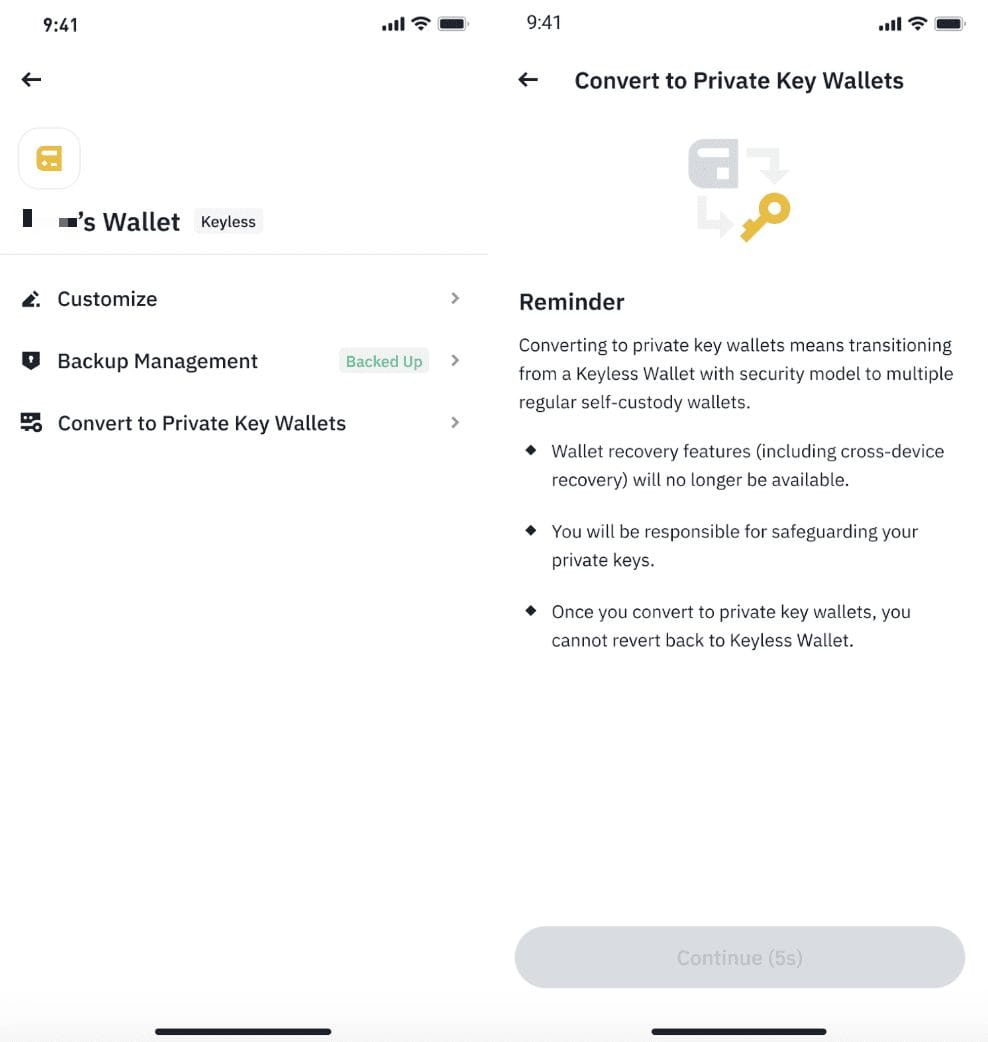
Permission management for decentralized applications
Restricting dApp access to specific asset balances is a primary method for protecting your portfolio. By manually setting expenditure caps within the wallet interface, you prevent malicious smart contracts from draining your entire balance during a single interaction. The ROI of this practice is immediate, as it limits the maximum possible loss to the specific amount authorized for a transaction.
Transaction metadata obfuscation techniques
While blockchain transparency is a core tenet of crypto, metadata obfuscation provides a layer of operational security. Utilizing privacy-preserving features within the Binance wallet environment helps prevent third-party trackers from linking your wallet address to your identity or other financial activities. This trade-off between transparency and privacy is essential for institutional-grade asset management.
Operational efficiency in privacy configuration
Streamlining your security setup is necessary to avoid administrative fatigue, which often leads to poor security hygiene. By automating routine checks, you maintain high standards while minimizing the time spent on manual oversight.
Automated versus manual privacy auditing
Manual audits are prone to human error and are time-intensive, whereas automated security monitoring tools offer consistent, real-time protection. The labor costs of manual checks often exceed the subscription costs of professional-grade security monitoring tools, making automation a more efficient choice for active traders.
Practical steps for implementing security protocols
To begin, navigate to the ‘Security’ tab in your Binance account. Enable ‘Anti-Phishing Code’ to ensure that emails from Binance are legitimate, which prevents credential theft. Next, restrict API access by whitelisting only specific IP addresses. This ensures that even if your API key is compromised, the attacker cannot execute trades from an unauthorized server location.
Advanced Network and Session Security
Always use a dedicated, non-public Wi-Fi connection or a reputable VPN when accessing your Binance wallet to prevent man-in-the-middle attacks and avoid common Binance wallet connection errors. Furthermore, clearing your browser cache and disabling auto-fill for sensitive login fields prevents local credential harvesting by malicious browser extensions.
The Role of Browser Isolation
For power users, utilizing a dedicated browser profile or a hardened browser like Brave or Mullvad Browser exclusively for crypto activities adds a layer of isolation. This prevents cross-site scripting (XSS) attacks from malicious websites from accessing your Binance session cookies, effectively creating a sandbox that protects your financial data from broader internet threats.
Managing API Key Scoping

A critical, often overlooked step in your Binance wallet privacy settings guide is the restriction of API key permissions. When generating an API key, never enable ‘Enable Withdrawals’ unless absolutely necessary for automated trading bots. By limiting the key to ‘Enable Reading’ and ‘Enable Spot & Margin Trading’, you ensure that even a compromised API key cannot be used to move funds out of your account to an external wallet address.
Understanding Withdrawal Whitelisting
Withdrawal whitelisting is a vital security layer that restricts fund transfers to pre-approved addresses only. By populating your whitelist with your own cold storage addresses, you create a structural barrier that prevents an attacker from draining your account to an unknown destination, even if they gain full account access. This feature is found under the ‘Withdrawal Address Management’ section and should be considered mandatory for any serious portfolio.
Implementing Multi-Signature Authorization
For institutional or high-value retail accounts, enabling multi-signature (multisig) requirements for withdrawals adds a layer of human-in-the-loop verification. This ensures that even if one device is compromised, the attacker cannot authorize a transfer without the secondary signature from a hardware security module or a separate, air-gapped device.
Measuring ROI on privacy-centric security investments
Frameworks for determining the value of your security efforts should focus on tangible metrics. If your privacy settings lead to a reduction in unauthorized transaction attempts or successful phishing mitigations, the investment in time is objectively profitable.
Key performance indicators for wallet security
Effective security management tracks specific metrics, such as the number of active dApp permissions, the frequency of API key rotations, and the latency added by security layers.
Evaluating the cost of security breaches
When calculating ROI, consider the “Total Cost of Recovery” (TCR). This includes not just the value of stolen assets, but the legal fees, tax reporting complexities, and the opportunity cost of locked accounts during a security investigation, which often requires a Binance wallet troubleshooting guide. A proactive Binance wallet privacy settings guide acts as an insurance policy, where the premium is your time and the payout is the avoidance of these catastrophic recovery costs.
Risk assessment of over-restricting wallet functionality
There is a point of diminishing returns where excessive privacy settings impede liquidity and trading speed. Over-restricting your wallet can lead to missed market opportunities, which represents a hidden cost to your portfolio performance.
Balancing liquidity requirements with privacy protocols
Delayed transactions caused by overly restrictive settings can be costly in high-volatility environments. It is essential to categorize your assets into ‘cold’ storage with high privacy and ‘hot’ trading wallets with optimized, slightly more permissive settings to maintain necessary market responsiveness.
The impact of hardware security modules
Integrating hardware security keys (such as YubiKey) adds a physical layer of authentication that software-based 2FA cannot match. While this requires an upfront hardware cost, the reduction in risk for high-volume accounts provides a clear positive ROI by neutralizing remote credential theft attempts.

Long-term maintenance of privacy configurations
Security is not a one-time setup but a recurring operational requirement. As the threat landscape evolves, your privacy configurations must be updated to remain effective against new attack vectors.
Lifecycle management of wallet permissions
Establishing a monthly cadence for reviewing and revoking stale permissions is a best practice. This lifecycle management ensures that your wallet does not harbor legacy access rights that could be exploited by compromised third-party platforms. Regularly checking the ‘Connected Sites’ list in your wallet settings allows you to prune access for dApps you no longer utilize, effectively shrinking your attack surface over time.
Threat Intelligence Integration
Staying informed about common phishing vectors specific to the Binance ecosystem is a vital part of long-term maintenance. Subscribing to official security alerts and monitoring community forums for reports of new wallet-draining smart contracts allows you to proactively adjust your privacy settings before a vulnerability is exploited in the wild.
Advanced Verification: The Role of Passkeys
Modern security standards now include FIDO2-compliant passkeys. By replacing traditional SMS-based 2FA with passkeys, you eliminate the risk of SIM-swapping attacks. This upgrade is a low-cost, high-impact addition to your security stack that significantly hardens your account against remote takeover attempts.
Strategic Security Auditing for Institutional Portfolios
For users managing significant capital, a static security posture is insufficient. Implementing a quarterly ‘Security Stress Test’ involves simulating a potential breach scenario, such as a compromised API key or a leaked session token, to verify that your current Binance wallet privacy settings guide holds up under pressure. This includes verifying that your withdrawal whitelist is current and that your multi-signature requirements are functioning as intended. By documenting these tests, you create an audit trail that is essential for institutional compliance and personal peace of mind.
Frequently Asked Questions
Binance access to private keys
No, Binance does not have access to the private keys of non-custodial wallets connected to their platform. If you are using the custodial Binance exchange wallet, Binance manages the keys on your behalf.
Methods for enhancing account privacy
You can enhance privacy by enabling two-factor authentication (2FA), using a dedicated email address for your account, and regularly auditing the list of authorized devices and API keys in your security settings.
Safety assessment of large asset storage
For significant holdings, learning how to set up a hardware wallet (cold storage) is recommended for long-term security.
Procedures for removing authorized devices
Navigate to the ‘Security’ section in your account dashboard, locate the ‘Device Management’ or ‘Manage Devices’ tab, and select the option to remove or deauthorize any unrecognized or unused devices.
Data sharing policies with regulatory authorities
Binance complies with legal requests from law enforcement agencies in jurisdictions where they operate, provided those requests meet the necessary legal requirements and documentation standards.


