



This article identifies the Top 10 HealthTech and EdTech companies to watch in 2026, highlighting innovators that are reshaping how people access healthcare, manage clinical operations, learn new skills, and prepare for the future of work. From AI-powered healthcare workflows to online vocational training and intelligent learning platforms, technology is moving deeper into industries that have traditionally relied on manual processes.
However, the most interesting companies are not always the biggest names in the market.
This list focuses on specialized HealthTech and EdTech companies that are building focused products, solving specific industry problems, and showing meaningful momentum in 2026. Rather than including global technology giants that already dominate the conversation, the selection highlights companies worth watching for their products, technology, business models, and potential impact.
Note: This is a curated editorial list, not a strict ranking by revenue or valuation. Companies were selected based on product differentiation, market relevance, innovation, and recent momentum.
Top 10 HealthTech and EdTech companies to watch in 2026
1. Aledade – Technology for Value-Based Healthcare
Aledade is a HealthTech company focused on one of the biggest structural changes in healthcare: the transition from traditional fee-for-service models toward value-based care.

Instead of simply helping patients book appointments or access telehealth services, Aledade works with primary care organizations and helps them manage populations, improve outcomes, and participate more effectively in value-based care programs.
The company provides technology, data, and operational support that helps independent physician practices make better decisions about patient care. This is particularly important as healthcare providers face increasing pressure to improve outcomes while controlling costs.
Aledade’s scale has also continued to grow. In February 2026, the company announced that it had added more than 700 primary care organizations to its network for the 2026 performance year. Its network reached more than 3,000 primary care partners caring for more than 3 million patients in value-based care programs.
Why Aledade is worth watching
- Focuses on the economics of healthcare, not just patient-facing apps.
- Helps smaller and independent practices participate in value-based care.
- Combines healthcare data, technology, and operational support.
- Has demonstrated significant network expansion.
Best known for: Value-based care infrastructure and primary care enablement.
2. Omada Health – Scaling Virtual Care for Chronic Conditions
Omada Health is a digital healthcare company focused on helping people manage chronic conditions through virtual care. Its platform combines digital tools, clinical support, coaching, and personalized programs to help members manage conditions such as diabetes, hypertension, and cardiometabolic disease. 
Rather than positioning itself as a general-purpose telehealth platform, Omada focuses on ongoing care between traditional doctor visits. This approach allows the company to support patients continuously while giving employers, health plans, and other healthcare organizations a scalable way to manage chronic conditions.
Omada has reached significant scale. As of June 2026, the company reported more than 1.09 million members, over 2,000 customers, and more than 25 million people with benefits coverage for one or more Omada programs. Its second-quarter 2026 revenue reached $88 million, representing 43% year-over-year growth.
Why Omada Health is worth watching
- Has reached more than one million members.
- Focuses on chronic and cardiometabolic care rather than general telehealth.
- Combines digital technology with clinical support.
- Works with employers, health plans, and pharmacy benefit managers.
- Continues expanding into GLP-1 and broader metabolic health programs.
- Has demonstrated strong revenue and membership growth in 2026.
Best known for: Virtual care, chronic disease management, and digital cardiometabolic health.
3. Komodo Health – Turning Healthcare Data Into Intelligence
Komodo Health sits at the intersection of healthcare data, analytics, and AI.
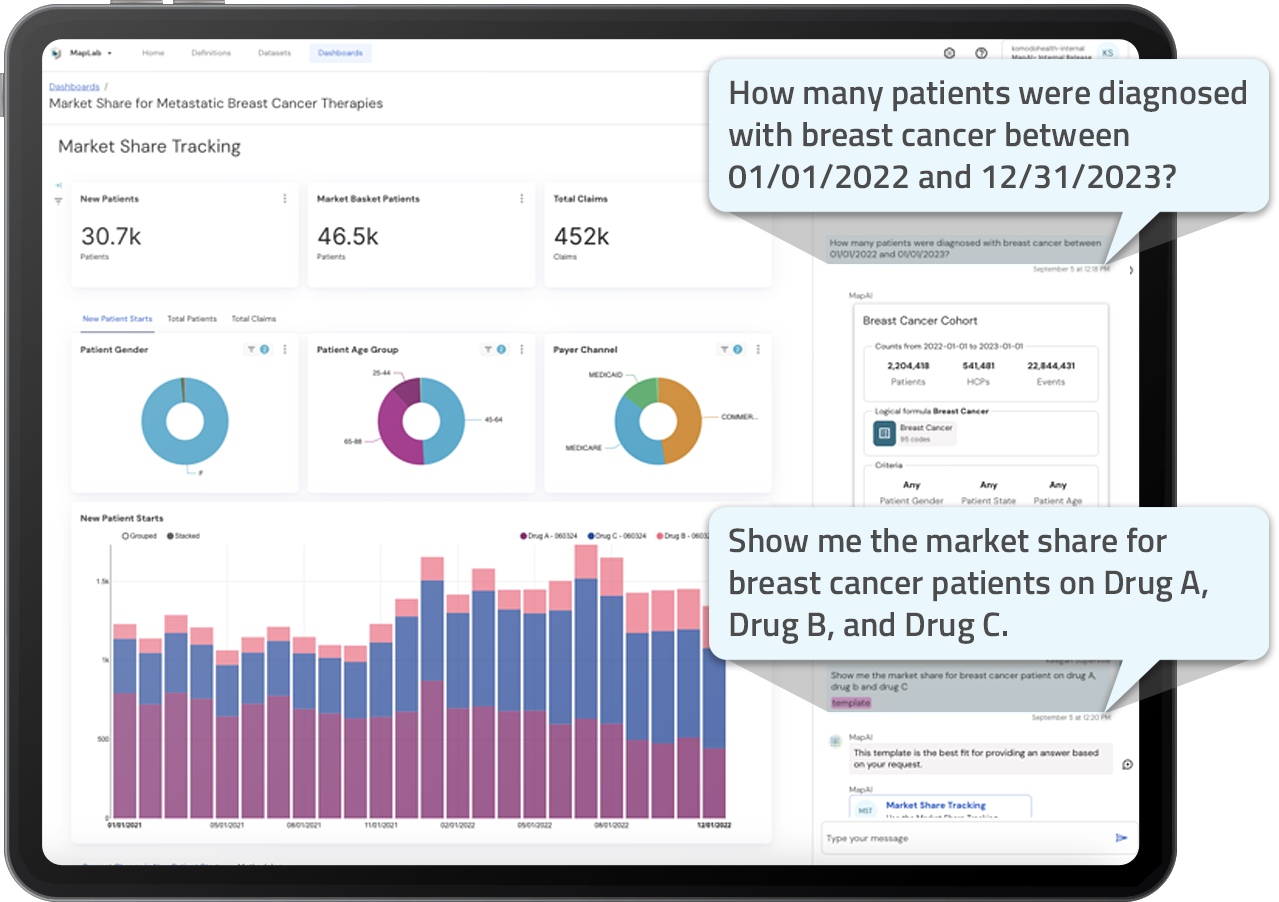
Healthcare organizations generate enormous amounts of information, but raw data is not necessarily useful without the infrastructure to organize, connect, and analyze it. For firms handling sensitive data, implementing best cloud security companies is essential to protect patient information.
Komodo Health has built a healthcare data platform designed to help organizations understand patient journeys, healthcare markets, treatment patterns, and other complex signals.
Its current platform includes more than 1 trillion linked records and over 330 million de-identified patient journeys, according to the company. Komodo says its healthcare data foundation is refreshed daily and supports AI-driven healthcare analysis.
This makes Komodo particularly relevant as pharmaceutical companies, life sciences organizations, and healthcare businesses increasingly use AI to support research, commercial strategy, and decision-making.
Why Komodo Health is worth watching
- Combines healthcare data with AI and analytics.
- Focuses on complex real-world healthcare information.
- Supports life sciences and healthcare organizations.
- Shows how data infrastructure can become a core HealthTech product.
Best known for: Healthcare intelligence, real-world data, and analytics.
4. Medallion – Automating Healthcare Provider Operations
Medallion tackles a less visible but extremely important healthcare problem: provider administration.
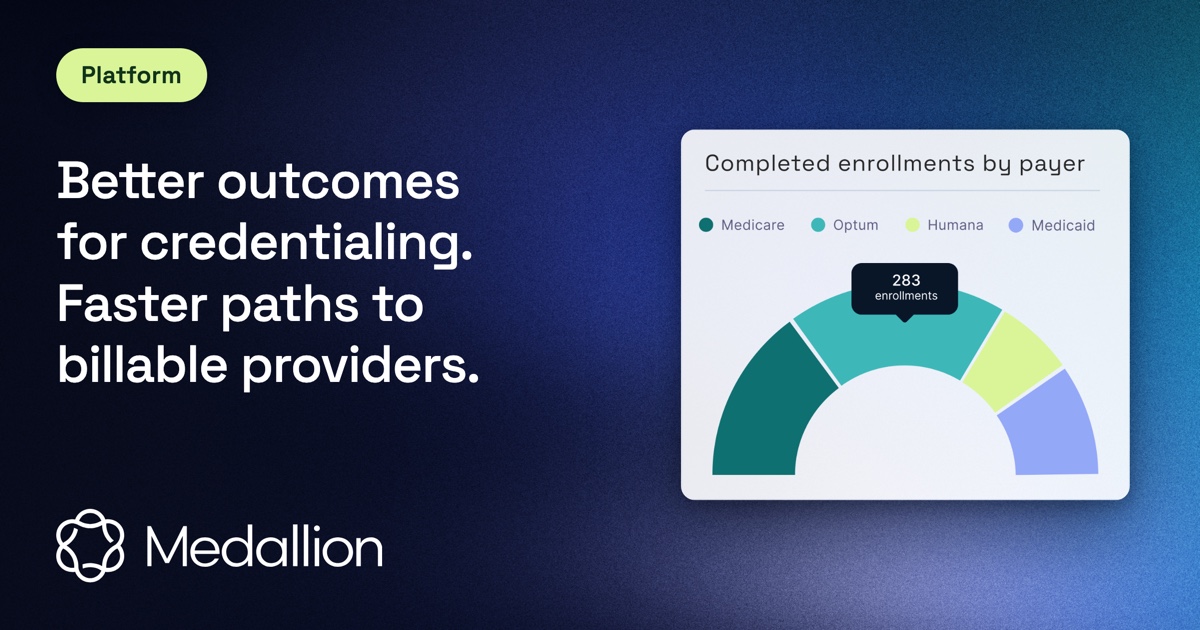
Before a healthcare professional can treat patients, healthcare organizations often need to verify credentials, manage licenses, complete payer enrollment, monitor compliance, and maintain accurate provider information.
These workflows can become extremely complicated when an organization operates across multiple states or manages a large provider network.
Medallion provides technology for provider credentialing, enrollment, licensing, monitoring, roster management, and other operational processes. The company says more than 300 healthcare organizations use its platform, with approximately 500,000 providers managed through its system.
Its use of AI agents to automate parts of provider operations is particularly relevant as healthcare organizations try to expand without proportionally increasing administrative headcount.
Why Medallion is worth watching
- Solves a highly specific healthcare operational problem.
- Uses AI to automate repetitive provider workflows.
- Helps healthcare organizations scale their provider networks.
- Addresses an area where manual processes remain common.
Best known for: Provider credentialing, enrollment, licensing, and data management.
5. Assort Health – Bringing AI Into the Patient Journey
Assort Health represents one of the most interesting HealthTech trends in 2026: AI agents for healthcare operations.
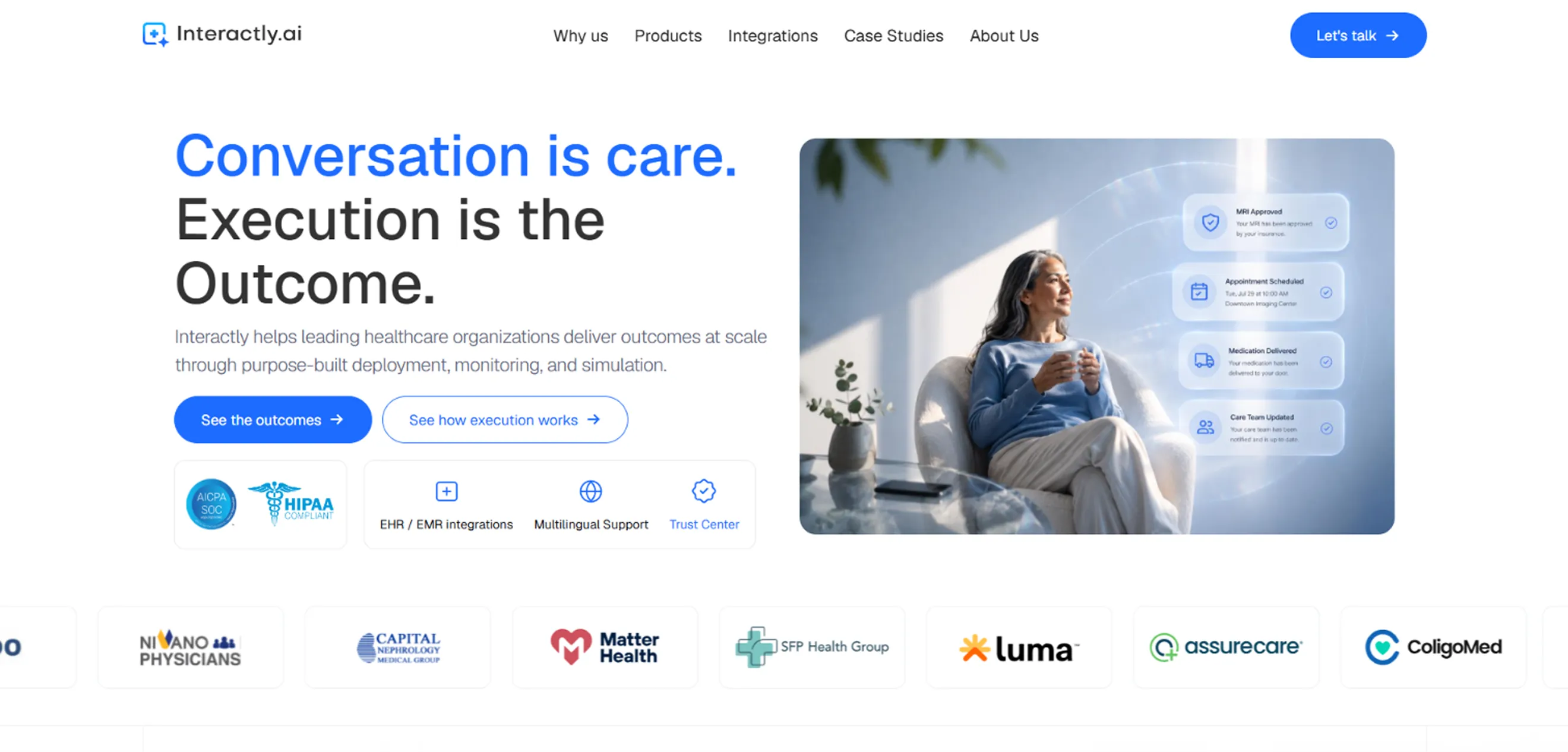
Assort started with a relatively focused problem—helping healthcare organizations manage patient phone calls and appointment scheduling—but has expanded into a broader AI platform covering the patient journey.
Its technology can support scheduling, patient intake, referrals, insurance and eligibility workflows, medication requests, payments, and proactive patient outreach. The company says its platform has handled more than 250 million patient interactions and supports more than 15,000 providers across more than 23 specialties.
The company also announced a $120 million Series C in June 2026 at a reported $1.2 billion valuation, demonstrating significant investor interest in healthcare AI automation.
Why Assort Health is worth watching
- Applies AI agents to real healthcare workflows.
- Goes beyond simple chatbots.
- Automates patient access and administrative processes.
- Has expanded from scheduling into a broader patient-journey platform.
Best known for: AI-powered patient access and healthcare automation.
6. Tempus AI – Applying AI to Precision Medicine
Tempus AI is a HealthTech company using artificial intelligence and large-scale clinical and molecular data to support more personalized healthcare.

Unlike digital health platforms that primarily focus on patient engagement or virtual consultations, Tempus operates closer to the clinical and research infrastructure layer. Its technology helps physicians and researchers access and analyze complex healthcare data to support diagnosis, treatment decisions, clinical trials, and drug development.
The company has built one of the industry’s largest healthcare data platforms. Tempus reports more than 45 million research records and over 500 petabytes of data stored in its cloud environment. Its network also reaches approximately 65% of U.S. academic medical centers and 55% of U.S. oncologists.
Why Tempus AI is worth watching
- Combines AI with clinical and molecular healthcare data.
- Has built a large healthcare data infrastructure.
- Serves physicians, healthcare organizations, researchers, and pharmaceutical companies.
- Has significant adoption across U.S. academic medical centers and oncology.
- Is expanding AI from analytics into clinical decision support and autonomous workflows.
- Operates at the intersection of HealthTech, AI, precision medicine, and life sciences.
Best known for: AI-powered precision medicine, clinical data, diagnostics, and healthcare intelligence.
7. Multiverse – Connecting Learning With the Future of Work
Multiverse is an EdTech company taking a different approach to professional education.

Rather than focusing primarily on traditional online courses, Multiverse combines workplace learning, apprenticeships, coaching, and AI-powered upskilling.
Its platform helps companies identify skills gaps and train employees in areas such as AI, data, technology, and software engineering. The learning is designed to happen alongside real work, allowing employees to apply what they learn directly to their jobs.
This model is increasingly relevant as businesses struggle with rapidly changing technology skills. When evaluating partners for digital transformation, firms often look for best ui design company to help scale their reach.
Instead of asking employees to leave their jobs and return to traditional education, companies can increasingly train their existing workforce while employees continue working.
Multiverse also reported in 2026 that it had raised $70 million to expand its position as an AI adoption and upskilling platform.
Why Multiverse is worth watching
- Connects education directly to employment.
- Focuses on AI, data, and technology skills.
- Combines human coaching with AI.
- Addresses the growing corporate need for workforce reskilling.
Best known for: Apprenticeships, professional upskilling, and AI adoption.
8. Stepful – Making Healthcare Education More Accessible
Stepful sits at the intersection of EdTech and HealthTech.
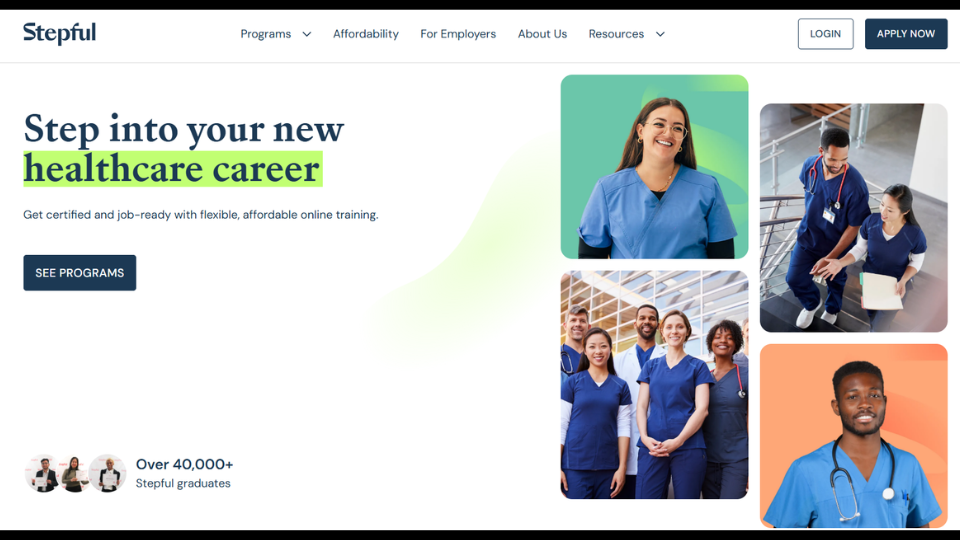
The company provides online training programs designed to prepare students for healthcare careers such as medical assisting, pharmacy technology, and dental assisting.
Rather than requiring students to spend several years in traditional education, Stepful focuses on shorter, career-oriented programs that combine online learning with practical experience and career support.
Its current programs include four- to seven-month options, depending on the role. The company says it has more than 40,000 graduates.
In February 2026, Stepful announced a $7.5 million funding round to expand nationally and introduce additional healthcare training programs.
Stepful is particularly interesting because it addresses two problems at the same time: the shortage of healthcare workers and the difficulty many learners face when trying to enter healthcare careers.
Why Stepful is worth watching
- Combines education technology with workforce development.
- Focuses on high-demand healthcare roles.
- Offers flexible online learning.
- Connects training with certification and employment support.
Best known for: Online healthcare career training.
9. Yoodli – AI-Powered Communication Training
Yoodli is an EdTech company focused on something traditional learning platforms often struggle to teach effectively: communication through practice.
Yoodli uses AI roleplay to allow learners to practice situations such as sales conversations, interviews, presentations, coaching sessions, and other high-stakes interactions.
Instead of simply watching a video about communication, users can actively speak with an AI persona and receive feedback on areas such as content, delivery, pacing, and performance.
In 2026, Yoodli expanded its platform into a broader experiential learning model that combines learning, practice, and real-world application. The company says its platform is used by organizations including Google Cloud, Salesforce, KPMG, and Snowflake.
This reflects a wider shift in EdTech from content consumption to skills practice. For those building these platforms, finding the best user experience companies is critical to ensuring high engagement.
Why Yoodli is worth watching
- Uses AI for realistic communication practice.
- Moves beyond traditional video-based learning.
- Provides immediate feedback.
- Targets corporate training and professional development.
Best known for: AI roleplay and communication coaching.
10. Parallel Learning – Technology for Special Education
Parallel Learning is an EdTech company focused on a highly specialized area: supporting students with learning differences.

Parallel works with schools and education providers to deliver online services such as specialized instruction, speech-language pathology, behavioral and mental health counseling, and psychoeducational assessments.
Its platform helps schools access qualified specialists when they do not have enough professionals available locally.
The company currently reports working with more than 115 school districts across 25 states, with more than 200 providers in its network. Parallel Learning
This makes Parallel an interesting example of how EdTech is expanding beyond conventional learning management systems. Technology is increasingly being used not only to deliver lessons but also to connect schools with the specialized professionals students need.
Why Parallel Learning is worth watching
- Focuses on an underserved area of education.
- Combines technology with human specialists.
- Helps schools address staffing shortages.
- Provides services designed around students with learning differences.
Best known for: Special education services and technology-enabled student support.
What These HealthTech and EdTech Companies Have in Common
Although these companies operate in different markets, several patterns connect them.
1. They solve specific problems
The strongest companies in this list are not trying to become a platform for everything.
Medallion focuses on provider operations. Cedar focuses on healthcare financial experiences. Yoodli focuses on communication practice. Stepful focuses on healthcare career training.
This specialization allows companies to build deeper expertise around a particular problem.
2. AI is becoming part of the workflow
AI is no longer limited to experimental chatbots.
Companies such as Assort Health use AI agents to automate patient interactions, while Yoodli uses AI to simulate real conversations and provide feedback. Multiverse uses AI alongside human coaching to support workplace learning. Assort Health
The more interesting question is therefore not simply “Does this company use AI?”
It is:
Where does AI actually remove friction from the user’s workflow?
3. Industry-specific technology is becoming more valuable
Generic software can be useful, but healthcare and education have complicated requirements.
Healthcare technology needs to account for clinical workflows, patient privacy, insurance, regulations, and provider operations.
Education technology has to consider teachers, students, parents, schools, employers, assessment, and learning outcomes.
The companies on this list are valuable partly because they build technology around these specific environments.
4. The line between HealthTech and EdTech is becoming less clear
Stepful is a good example.
It is an EdTech company, but its entire learning model is designed around healthcare workforce needs.
As healthcare organizations face staffing shortages and technology changes the skills employees need, healthcare education and healthcare technology increasingly overlap.
How to Choose the Right HealthTech or EdTech Company to Watch
Not every fast-growing company is necessarily a good company to follow.
If you are researching the market, consider these factors:
- Product differentiation: Does the company solve a problem that existing platforms do not address well?
- Market demand: Is the company responding to a structural problem, such as healthcare staffing shortages, administrative costs, or AI-related skills gaps?
- Technology adoption: Is technology genuinely integrated into the product, or is AI mainly being used as a marketing term?
- Customer traction: Look for evidence of real customers, partnerships, users, or measurable outcomes.
- Business model: Understand whether the company sells to consumers, healthcare providers, schools, employers, governments, or other businesses.
- Long-term relevance: The most interesting companies are often those solving problems that are likely to become more important over the next five to ten years.
Frequently Asked Questions
1. What are HealthTech companies?
HealthTech companies use technology to improve healthcare delivery, administration, patient experiences, clinical workflows, healthcare data, or access to care. They can include digital health platforms, healthcare AI companies, provider management software, healthcare payment platforms, and medical data companies.
2. What are EdTech companies?
EdTech companies develop technology that supports education and learning. This can include online learning platforms, digital classrooms, tutoring, workforce training, AI learning tools, assessment technology, and education management systems.
3. What is the difference between HealthTech and EdTech?
The main difference is the industry they serve. HealthTech focuses on healthcare, while EdTech focuses on education and learning.
However, the two sectors increasingly overlap. Companies such as Stepful combine education technology with healthcare workforce development, creating a bridge between the two industries.
4. Which HealthTech companies are worth watching in 2026?
Some of the specialized HealthTech companies worth watching include Aledade, Cedar, Komodo Health, Medallion, Assort Health, and Candid Health. They focus on areas ranging from value-based care and healthcare data to patient access and revenue cycle automation. For those interested in the broader landscape, you can explore top 10 best fintech companies in 2026 to see how financial innovation parallels these trends.
5. Which EdTech companies are worth watching in 2026?
Multiverse, Stepful, Yoodli, and Parallel Learning are among the more specialized EdTech companies worth following. Their products focus on workforce upskilling, healthcare training, communication coaching, and special education services. Multiverse also aligns with the standards seen in top 10 smart contract security audit companies in 2026 regarding technical rigor.
6. Is AI important for HealthTech and EdTech?
Yes. AI is increasingly being incorporated into both sectors, but its role varies.
In HealthTech, AI can automate administrative workflows, analyze healthcare data, support patient interactions, and improve operational efficiency.
In EdTech, AI can personalize learning, generate educational content, simulate real-world situations, and provide individualized feedback.
The companies most likely to stand out are those using AI to solve a specific problem rather than simply adding an AI feature to an existing product.


