



Selecting the right tools is essential for local companies, and these are the top 10 customer service automation platforms for Singapore businesses in 2026. Customer expectations in Singapore are increasingly shaped by fast, conversational, and always-on digital experiences. Customers may contact a company through WhatsApp, Instagram, a website chat widget, email, or even a phone call—and they generally expect businesses to respond quickly regardless of the channel.
This is where customer service automation is becoming increasingly useful. Modern platforms can automate FAQs, conversation routing, appointment bookings, order updates, lead qualification, ticket handling, and other repetitive support tasks while allowing human agents to step in when a request becomes more complex.
For Singapore businesses, choosing a customer service automation platform is not simply about finding the chatbot with the most AI features. Local businesses also need to consider WhatsApp support, multilingual conversations, CRM integrations, human handoff, data protection, analytics, and the complexity of their customer journeys.
Below are 10 customer service automation platforms worth considering in 2026. The list deliberately focuses on established specialist platforms, regional technology companies, and practical alternatives rather than extremely large global technology corporations that dominate the general software market.
What Is Customer Service Automation?
Customer service automation refers to using software, artificial intelligence, workflows, and integrations to handle repetitive customer-service activities with limited manual intervention.
Traditional automation might involve a rule such as:
If a customer asks about business hours, automatically send the opening-hours message.
Modern customer service automation can go further. An AI agent can understand the customer’s intent, retrieve information from a knowledge base, access relevant business data, perform a permitted action, and escalate the conversation to a human when necessary.
Common applications include:
- Automated FAQ responses
- AI-powered chatbots
- WhatsApp customer support
- Automated ticket routing
- Appointment scheduling
- Order-status enquiries
- Customer verification
- Lead qualification
For Singapore businesses, messaging is particularly important. Platforms such as SleekFlow, WATI, Respond.io and Qiscus place considerable emphasis on conversational channels and unified inboxes, while tools such as Ah Va focus more heavily on local phone and WhatsApp interactions.
Top 10 Customer Service Automation Platforms for Singapore Businesses in 2026
1. SleekFlow
Best for: Omnichannel messaging, ecommerce, retail, F&B, and customer-facing businesses
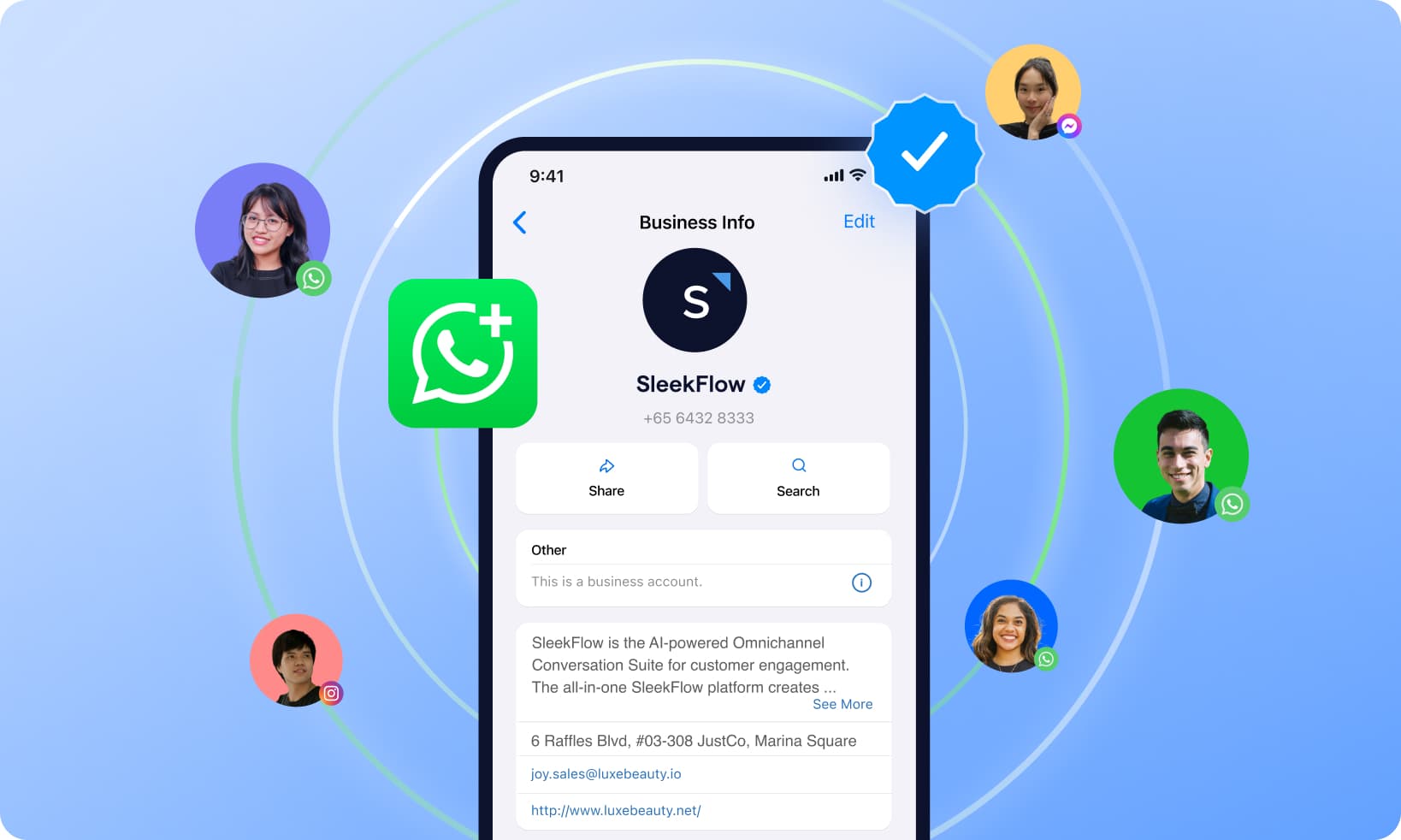
SleekFlow is one of the more Singapore-relevant platforms in this category, particularly for businesses that manage a large proportion of their customer interactions through messaging channels. The company has its headquarters in Singapore and positions its platform around omnichannel conversations, CRM connectivity, automation, and AI agents. If you are interested in local innovation, you might also want to explore the empowher singapore event to see how the ecosystem is evolving.
Its platform combines WhatsApp, Instagram, live chat and other channels within a unified environment. Businesses can use automation to route incoming conversations, qualify enquiries, follow up with customers, and manage support interactions.
Its newer AgentFlow capabilities expand the customer service automation use case beyond simple chatbot responses. AI agents can work from company knowledge, follow predefined playbooks, connect with systems such as Shopify, HubSpot and Salesforce, and hand conversations to human agents when required.
- AI agents for sales and support
- Omnichannel inbox
- WhatsApp integration
- Workflow automation
- CRM integrations
- Ecommerce integrations
- Automated routing
- Human handoff
- Customer analytics
- Knowledge-base-driven responses
Why Singapore Businesses May Consider It
SleekFlow is particularly relevant for businesses where WhatsApp and social messaging are central to customer service. Its Singapore presence and focus on Southeast Asian business workflows also make it a natural option for companies serving local and regional customers.
2. Respond.io
Best for: Mid-market B2C companies handling high-volume customer conversations
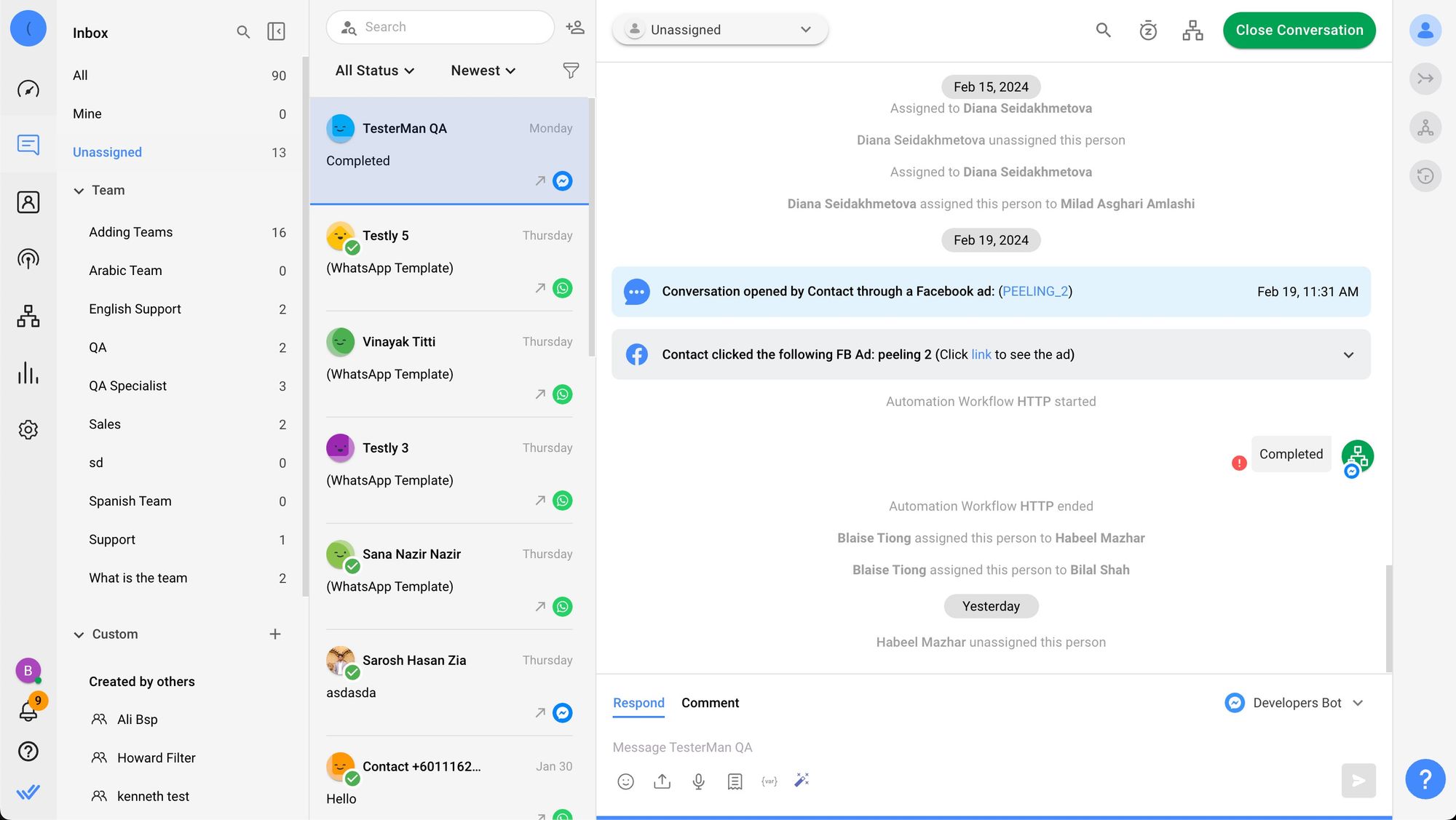
Respond.io focuses on customer conversations rather than traditional help-desk ticketing alone. Its platform is designed for businesses that have outgrown simple messaging inboxes and need to manage conversations across multiple channels while connecting them to CRM information.
The company describes its platform as serving more than 10,000 mid-market B2C businesses, with AI agents, CRM context, omnichannel conversations and automation built into the workflow.
For customer service automation, one of its notable strengths is the connection between AI, conversation routing and customer data. AI agents can answer frequently asked questions, qualify enquiries, recommend products, book appointments and escalate more sensitive cases to human agents.
Key Features
- AI agents
- Omnichannel inbox
- CRM integration
- Automated conversation routing
- Lead qualification
- Customer-service workflows
- Human escalation
- Analytics
- WhatsApp-focused workflows
- Conversation history
Why Singapore Businesses May Consider It
Respond.io can be useful for Singapore companies whose customer service operation is heavily conversation-driven rather than centred entirely around email tickets.
It is especially relevant to businesses receiving substantial volumes of WhatsApp, social-media and other messaging enquiries.
3. AiChat
Best for: Retail, F&B, hospitality and consumer brands

AiChat is a Singapore-based conversational AI company focused heavily on customer engagement and consumer-facing interactions.
Its platform can automate responses to frequently asked questions, qualify customers, connect conversations with sales teams, provide personalised recommendations, and support human agents through AI-assisted workflows. It also offers capabilities such as sentiment analysis and multilingual support.
The platform appears in Singapore’s IMDA GoBusiness technology ecosystem, where AiChat is listed among customer-engagement chatbot solutions with capabilities including automated replies, pre- and post-sales support, bookings, multilingual support and AI-driven analytics.
Key Features
- Conversational AI
- Automated FAQ responses
- Lead qualification
- Customer recommendations
- Sentiment analysis
- Multilingual support
- Agent assistance
- Analytics
- Customer engagement automation
- Multi-channel integration
Why Singapore Businesses May Consider It
AiChat is particularly relevant for consumer brands that want customer service automation to connect with marketing and customer engagement rather than operate as an isolated support function.
Retail, hospitality, F&B and other B2C companies can use conversational AI for questions, recommendations, qualification and customer support.
4. Rezonate
Best for: Healthcare, financial services, insurance and regulated customer interactions
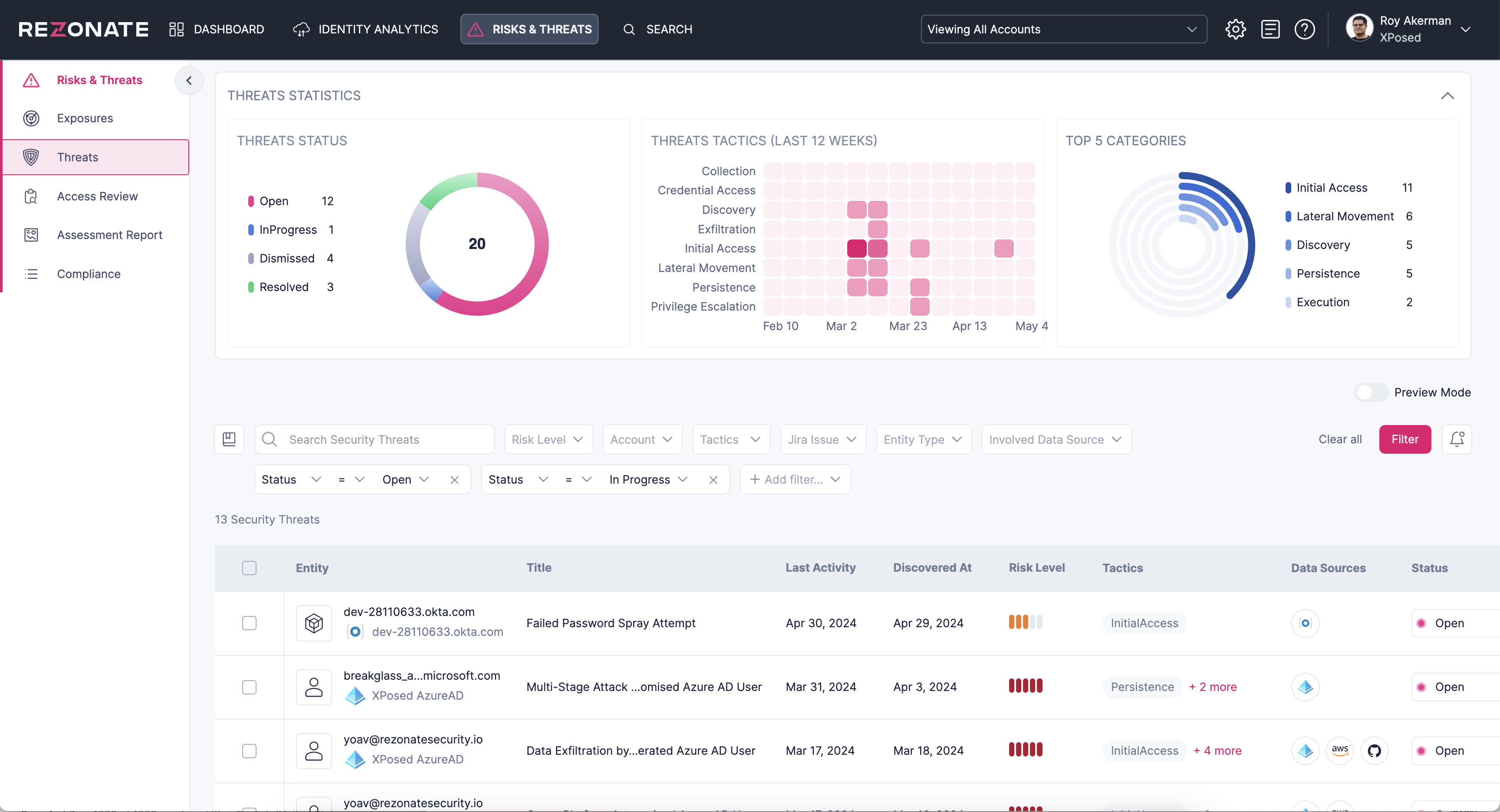
Rezonate is the current name of the company formerly known as KeyReply. Its platform focuses on AI-powered customer engagement, voice agents, WhatsApp automation, multi-channel conversations and governed workflows. The company maintains a Singapore presence.
Its background makes it particularly interesting for organisations where customer service involves more than answering simple FAQs. The platform has historically focused on virtual assistants and intelligent automation in healthcare and other environments where accuracy, workflow integration and governance matter.
Rezonate’s current platform, Kira, combines AI voice agents, digital messaging, workflow automation, human-in-the-loop support and knowledge management.
Key Features
- AI voice agents
- WhatsApp automation
- Omnichannel messaging
- Workflow automation
- Human handoff
- Knowledge management
- AI-powered customer engagement
- Enterprise integrations
- Governance controls
Why Singapore Businesses May Consider It
Rezonate is worth examining when customer service automation involves sensitive workflows, structured processes, or regulated environments.
For example, healthcare organisations may need automation around appointment interactions, patient communication and follow-ups while still maintaining clear boundaries for human intervention.
5. Qiscus
Best for: Regional businesses needing omnichannel customer conversations
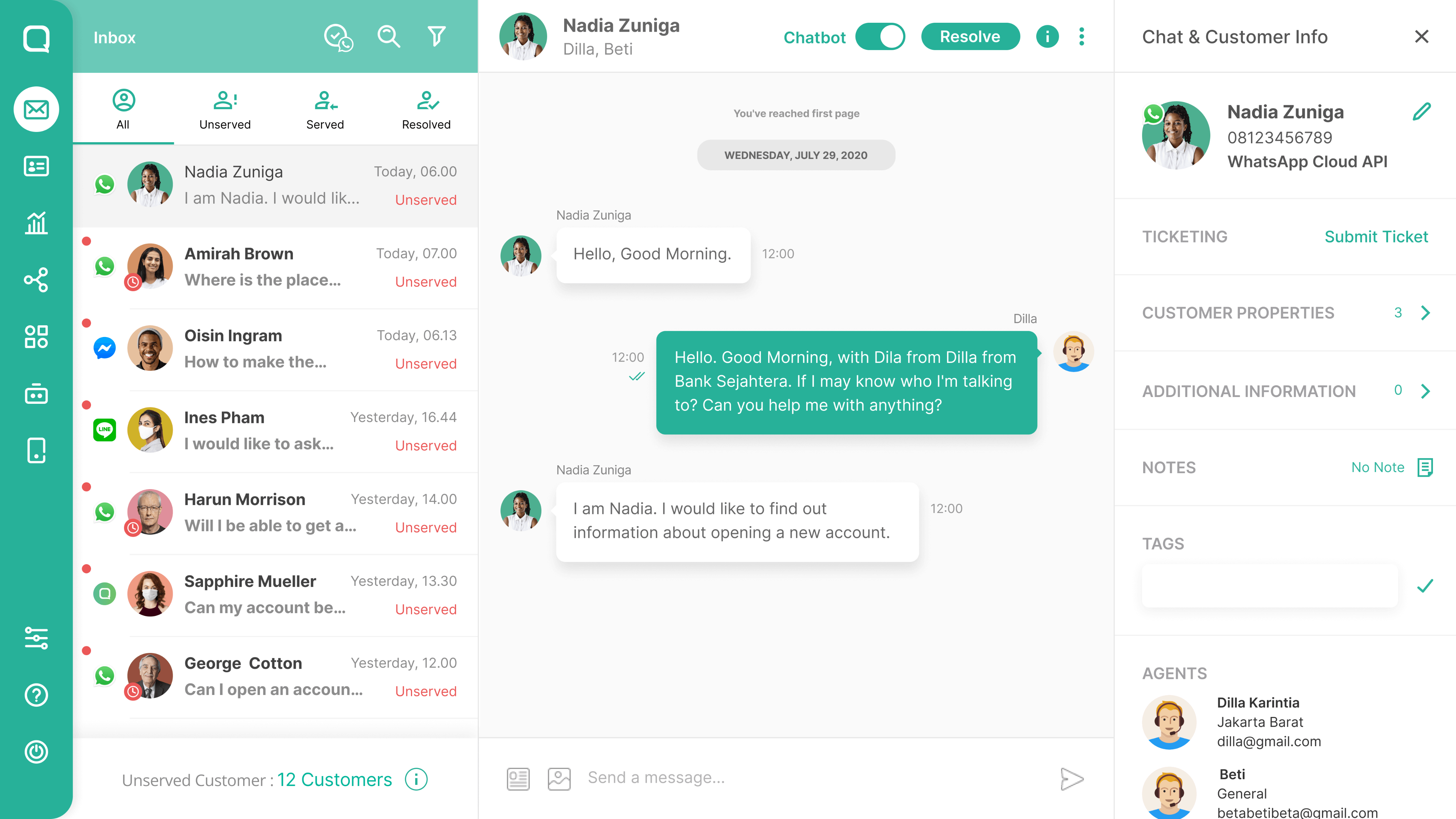
Qiscus is an Indonesian technology company that has developed a broader Southeast Asian customer-engagement footprint. Its platform brings customer conversations from multiple digital channels into a unified environment.
Qiscus currently promotes support across WhatsApp, Instagram, TikTok, Shopee and more than 20 other channels, alongside AI-agent capabilities.
For customer service automation, Qiscus AI can work from company knowledge, product documentation and internal SOPs. Businesses can monitor conversations, review interactions and use AI agents to handle common enquiries around the clock.
Key Features
- Omnichannel inbox
- AI customer-service agents
- WhatsApp integration
- Social-media integrations
- Ecommerce channels
- Knowledge-base grounding
- Conversation analytics
- Human-agent collaboration
- Ticket escalation
Why Singapore Businesses May Consider It
Qiscus can be relevant for companies that operate beyond Singapore and need customer service automation across Southeast Asian markets.
Its broad channel coverage is particularly useful for businesses that manage ecommerce, social commerce and messaging conversations across several countries.
6. WATI
Best for: WhatsApp-first customer service operations
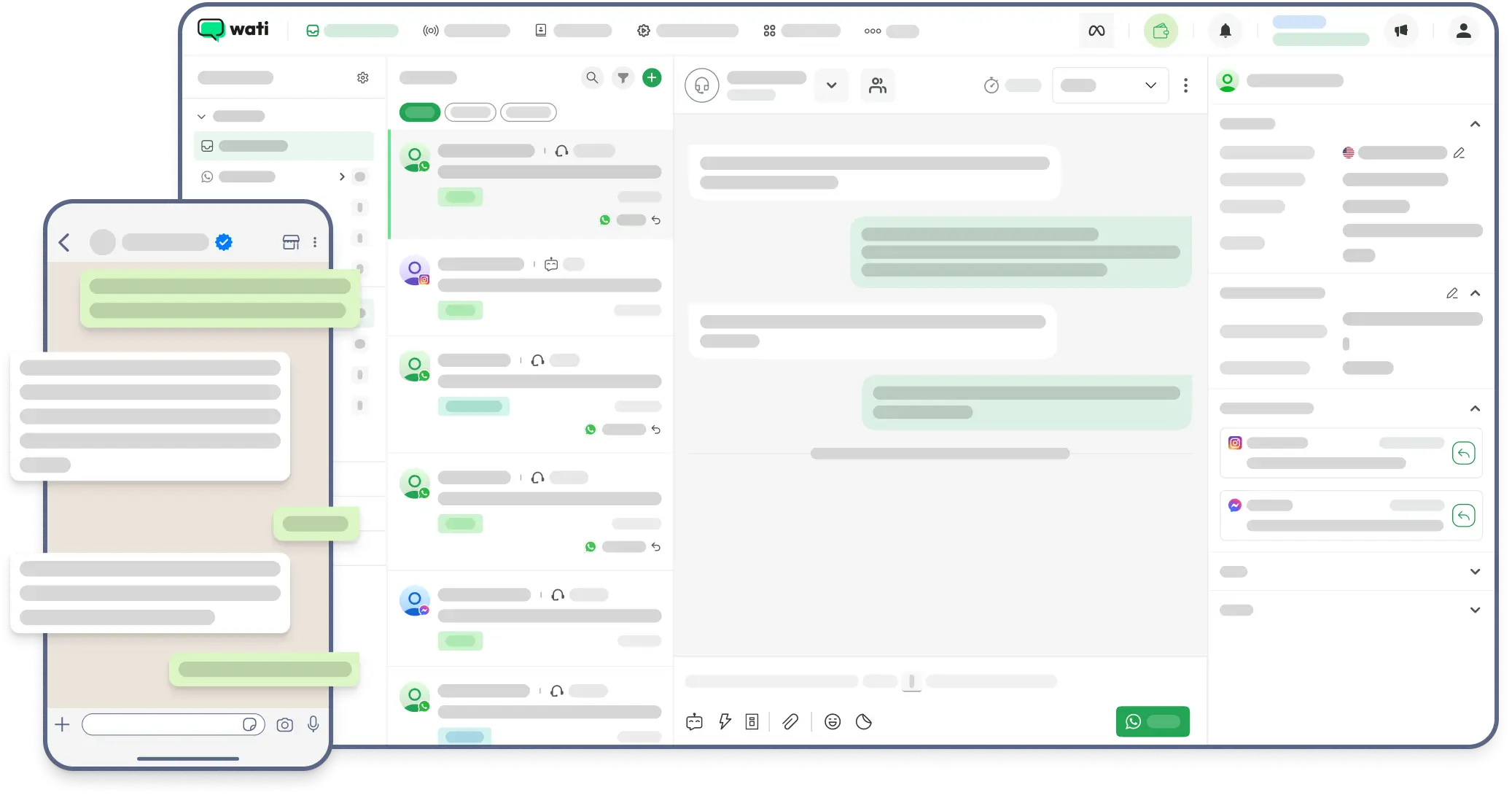
WATI is built around conversational business communication, with WhatsApp remaining one of its most important channels. Its 2026 platform combines messaging, automation, AI, CRM functionality and analytics. WATI’s support tools include AI agents, routing rules, shared inboxes, conversation history and performance analytics.
WATI also supports channels such as Instagram, Facebook, RCS, SMS, TikTok and website chat, allowing companies to expand beyond WhatsApp while retaining a messaging-first operating model.
Key Features
- WhatsApp customer support
- AI support agents
- Shared team inbox
- Automated routing
- No-code chatbot builder
- Conversation history
- CRM
- Analytics
- Instagram and Facebook messaging
- Automated workflows
Why Singapore Businesses May Consider It
For businesses where WhatsApp is the primary customer-service channel, WATI provides a focused way to introduce customer service automation without necessarily implementing a large traditional contact-centre platform.
It can be particularly relevant to ecommerce, retail, education, professional services and other businesses that communicate with customers primarily through messaging.
7. Tidio
Best for: SMEs, ecommerce stores and digital-first businesses
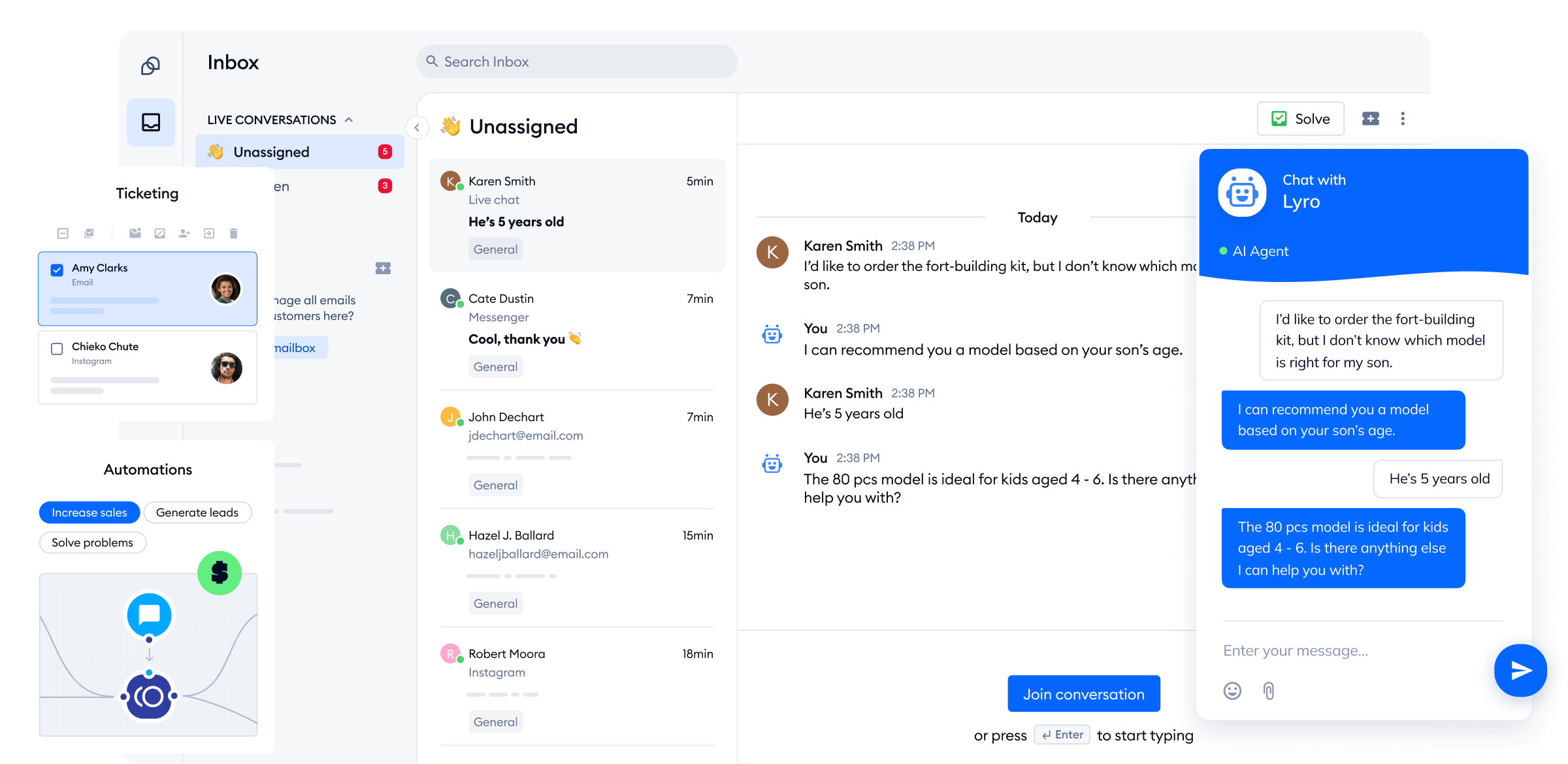
Tidio is designed for businesses that want to combine live chat, automated workflows and AI-powered customer support.
Its Lyro AI agent is designed to handle routine customer questions and can be configured with company information and guidance. Tidio also supports handoff from AI to human agents when conversations require additional assistance.
The platform is especially relevant to online businesses because customer questions often revolve around products, orders, shipping, returns, payments and other repetitive topics.
Key Features
- AI customer-service agent
- Live chat
- Automated responses
- Knowledge-based answers
- Human handoff
- Customer-support analytics
- Ecommerce support
- Multilingual capabilities
- Support ticket functionality
Why Singapore Businesses May Consider It
Tidio can make sense for smaller businesses that want to experiment with customer service automation without immediately adopting a complex enterprise service platform.
It is particularly suitable when the primary support environment is a website or ecommerce store.
8. Hiver
Best for: Teams that want to automate support without abandoning email-based workflows

Hiver takes a different approach from messaging-first platforms. Instead of building the customer service operation primarily around WhatsApp or social messaging, it focuses on bringing customer support operations into a shared workspace with email, chat, voice and other channels.
Its current platform includes AI Agents, AI Copilot, workflows, ticketing and cross-team collaboration. Hiver also supports connections with systems such as Salesforce, Shopify and NetSuite, allowing customer-service workflows to incorporate information from other business systems.
Key Features
- AI customer-service agents
- Shared inbox
- Email support
- Live chat
- Voice
- Automated triage
- Ticketing
- SLA workflows
- Cross-team collaboration
- CRM and business-system integrations
Why Singapore Businesses May Consider It
Hiver is worth considering when email remains an important part of customer support.
For companies with finance, operations, sales and support teams working together on customer issues, its cross-team workflow approach can be more useful than a messaging-only solution.
9. Freshdesk
Best for: SMEs and growing businesses that need AI-powered help desk automation
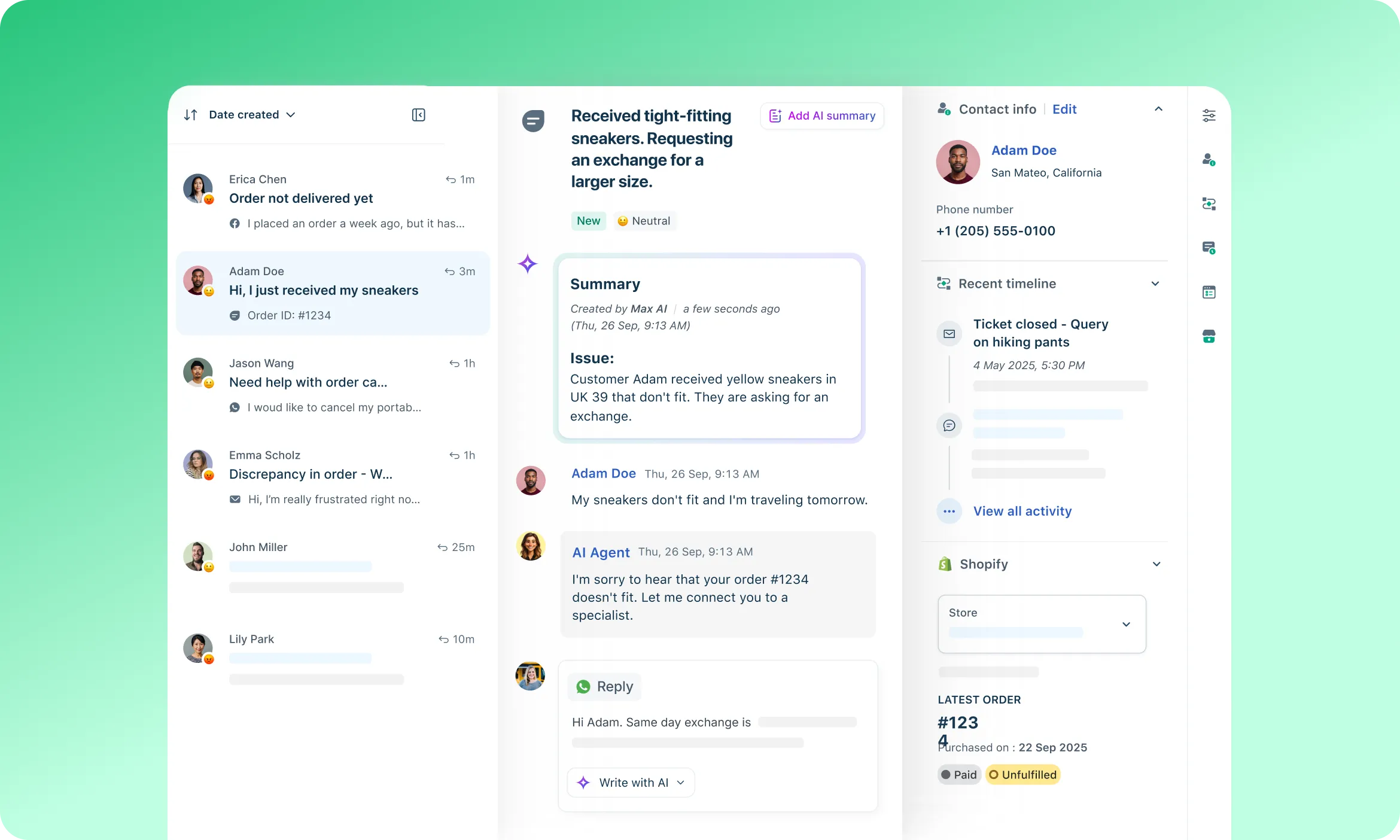
Freshdesk, developed by Freshworks, is a customer service platform designed to help businesses manage support requests, automate repetitive workflows, and provide assistance across multiple customer channels. Its combination of ticketing, knowledge bases, automation, analytics, and AI makes it suitable for businesses that need more structure than a simple chatbot or messaging inbox.
The platform’s AI capabilities, including Freddy AI, can assist with tasks such as answering customer questions, generating responses, summarising conversations, routing requests, and automating parts of the support workflow. Freshdesk also supports integrations with other business applications, allowing customer-service teams to connect support operations with their existing technology stack.
For Singapore businesses, Freshdesk can be particularly relevant to SMEs and growing companies that need to move from manually managed email or messaging support toward a more structured customer-service operation. Its support ecosystem also covers channels such as email, chat, voice, social messaging, and WhatsApp.
Key Features
- AI-powered customer support
- Freddy AI
- Automated ticket routing
- Workflow automation
- Knowledge base
- Omnichannel support
- Email and live chat
- WhatsApp integration
- Customer-service analytics
- CRM and third-party integrations
Why Singapore Businesses May Consider It
Freshdesk is a practical option for Singapore businesses that are starting to outgrow basic inboxes and manual customer-support processes. Instead of using separate tools to manage tickets, FAQs, automation, and customer conversations, teams can bring these workflows into a more structured service environment.
It can work particularly well for ecommerce companies, SaaS businesses, education providers, professional services, and other SMEs that need to manage increasing support volumes while keeping repetitive work automated.
10. Yellow.ai
Best for: Larger organisations requiring enterprise conversational AI
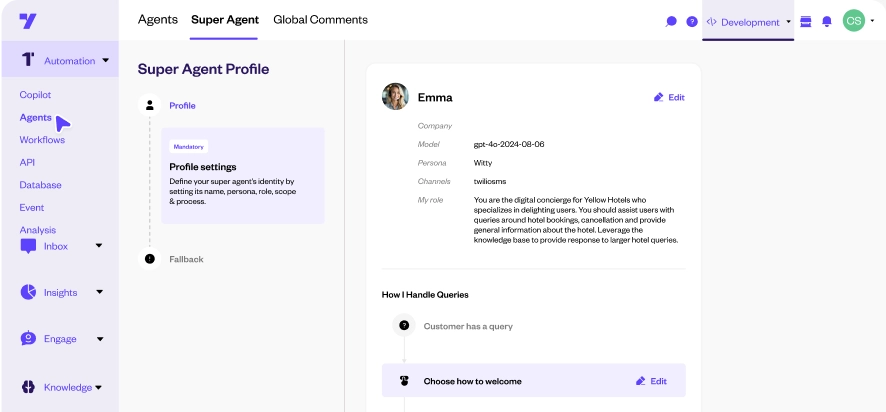
Yellow.ai sits toward the more enterprise-oriented end of this list. Rather than focusing solely on chatbots, its platform covers AI agents across chat, voice, email and messaging.
The platform provides AI-agent building, knowledge management, testing, analytics, customer-service inboxes and integrations with business systems. Its documentation also describes support for platforms such as Salesforce, Zendesk, Genesys, SAP and other enterprise systems.
Yellow.ai also supports multilingual and multi-region deployments, which can be relevant to companies operating across Singapore and the wider Asia-Pacific market.
Key Features
- AI customer-service agents
- Voice AI
- Chat automation
- Omnichannel support
- Knowledge management
- AI Copilot
- Automated testing
- Analytics
- Workflow integrations
- Multilingual support
Why Singapore Businesses May Consider It
Yellow.ai is more appropriate for organisations with complex customer-service operations, multiple channels and substantial integration requirements.
It may be particularly relevant to regional businesses that need to standardise customer service automation across several markets rather than only within Singapore.
Customer Service Automation Trends to Watch in 2026
From Chatbots to AI Agents
One of the most important changes is the movement from systems that simply generate answers toward AI agents that can perform defined tasks. To stay ahead of the curve, leaders should explore the top 10 AI automation tools for Europe in 2026 to see how global standards are evolving.
Platforms such as SleekFlow, Respond.io, Qiscus and Yellow.ai increasingly position AI agents around actions, workflows and integrations rather than only conversational responses.
More Omnichannel Conversations
Customers rarely think about which internal system a company uses. They simply choose the channel that is convenient.
This is driving businesses toward platforms that can connect WhatsApp, websites, social messaging, voice and other channels. If you are exploring new digital assets, you might also be interested in real estate tokenization platform pricing models as a way to diversify your business portfolio.
Greater Human-AI Collaboration
The emerging model is not necessarily AI versus human agents.
Instead, AI handles repetitive work while people take over complex conversations, exceptions and decisions requiring judgment. For those looking to scale their professional presence during this transition, understanding what is LinkedIn Premium Business can be a strategic move for networking and talent acquisition.
More Context-Aware Support
Future customer service automation will increasingly depend on context.
Instead of answering: ‘What are your business hours?’ with a generic, static response, context-aware support will leverage customer history, location, and current interactions to provide more relevant and personalized assistance. For businesses looking to refine their digital presence, investing in high-quality user interface design services india will be critical to ensuring these automated systems remain intuitive for the end user.


