



The top 10 crypto KYC and KYB providers for exchanges, wallets and launchpads in 2026 include specialized platforms like Sumsub, KYCAID, and Fractal ID, which help businesses automate identity verification, AML screening, and Travel Rule compliance. Selecting the right partner is essential for balancing strict regulatory requirements with a seamless user experience.
Crypto onboarding is no longer just a matter of checking whether a passport is genuine. As cryptocurrency exchanges, wallets, launchpads, tokenization platforms and other Web3 businesses mature, compliance teams need to solve several problems at once. They may need to verify individual users, investigate companies and beneficial owners, screen customers against sanctions and PEP databases, detect identity fraud, monitor transactions and comply with emerging Travel Rule requirements.
At the same time, verification needs to remain fast enough that legitimate users do not abandon the onboarding process.
This has made the market for best crypto KYC providers increasingly specialized. Some vendors focus primarily on identity verification, while others combine KYC with KYB, AML, fraud prevention, blockchain monitoring or Travel Rule functionality.
This guide compares 10 specialist KYC and KYB providers relevant to crypto and Web3 businesses in 2026. The list focuses on established identity and compliance companies rather than massive global technology or payments corporations.
The comparison covers their positioning, KYC and KYB capabilities, crypto relevance, fraud controls and suitability for exchanges, wallets and launchpads.
Top 10 crypto KYC and KYB providers for exchanges, wallets and launchpads in 2026
1. Persona
Persona is an identity infrastructure company that combines KYC, KYB and fraud-prevention workflows with configurable identity verification.
For crypto businesses, its offering is particularly interesting because Persona has a dedicated KYC + Crypto Watchlist workflow. The solution can collect a government-issued ID, perform selfie liveness and screen a customer’s cryptocurrency wallet address against crypto watchlists.
Key features
- KYC
- Identity verification
- KYB
- Business verification
- UBO-related verification workflows
- Government ID verification
- Selfie verification
- Liveness
- Fraud detection
One of Persona’s more interesting concepts is its reusable identity infrastructure.
Persona Wallet allows users to save verified identity information and reuse it in future verification flows with participating businesses. This can reduce the need for users to repeatedly submit the same identity documents.
That concept fits particularly well with the challenge described by this article’s title:
How do you verify users without making them hate the onboarding process?
Why crypto businesses may consider Persona
Crypto platforms frequently need different verification levels depending on the user.
A new retail customer might need:
ID → selfie → liveness → AML screening
A corporate customer might require:
Company verification → directors → UBOs → AML screening
Persona’s configurable approach allows businesses to build different verification journeys rather than forcing every user through the same process.
Its crypto watchlist functionality also adds a layer beyond basic identity verification by connecting a verified user with the wallet address they provide.
Potential limitation
Persona’s crypto-specific capabilities should be evaluated alongside dedicated blockchain analytics and Travel Rule infrastructure when a platform has more complex on-chain compliance requirements.
2. KYCAID
KYCAID is a specialist KYC, KYB and AML provider with a particularly relevant footprint across crypto exchanges, digital assets, NFT marketplaces and other regulated businesses.
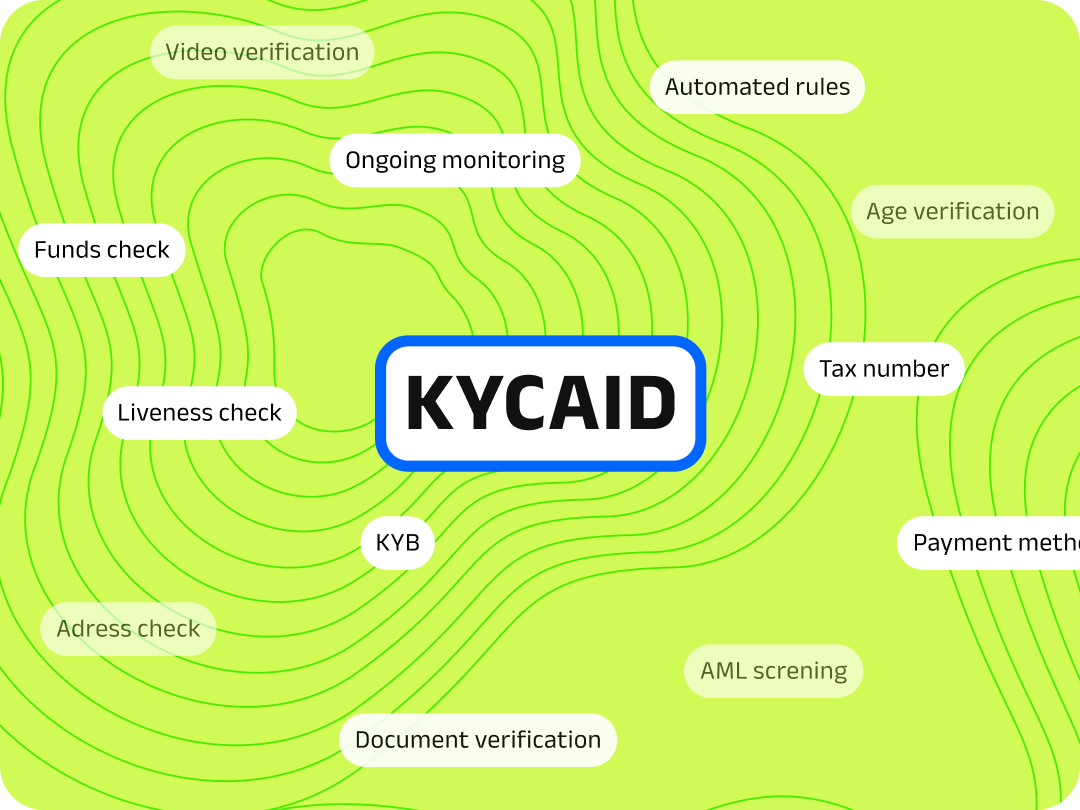
Its platform combines identity verification with biometric checks, business verification, AML screening and additional risk-related capabilities.
Key features
- Identity verification
- KYC
- KYB
- UBO verification
- Liveness
- Biometric verification
- AML screening
- Sanctions and PEP checks
- Adverse media
- Proof of address
- Crypto transaction monitoring
- Travel Rule-related capabilities
- API and SDK integration
KYCAID is useful for crypto businesses that need to verify both individuals and organizations.
For example, an exchange might have to onboard:
- Retail traders
- Professional traders
- Market makers
- Corporate accounts
- Institutional customers
A launchpad may have to verify both investors and token issuers.
Why crypto businesses consider KYCAID
The provider sits closer to the crypto compliance specialist end of the market than a generic identity platform.
That makes it relevant for businesses where KYC needs to connect with AML and crypto-related risk workflows rather than functioning as a standalone onboarding screen.
Potential limitation
Companies operating across many jurisdictions should validate the precise country and document coverage required for their customer base.
3. iDenfy
iDenfy focuses on identity verification, KYB, AML and fraud prevention, with crypto and blockchain businesses forming an important part of its target market.
Its platform supports identity verification, business verification and risk controls designed for international onboarding. Current industry coverage also places iDenfy among providers used by cryptocurrency exchanges, DeFi businesses, stablecoin companies and token projects.
Key features
- KYC
- KYB
- UBO verification
- AML screening
- Sanctions and PEP screening
- Document verification
- Face verification
- Liveness
- Fraud scoring
- Proof of address
- Customer risk assessment
- Reauthentication
- Crypto-focused compliance workflows
Why crypto businesses consider iDenfy
A major advantage is the ability to combine identity verification with broader risk signals.
That becomes important when an exchange wants to distinguish between a normal account opening and higher-risk activity requiring additional checks.
For example:
Standard user → KYC
Higher-risk user → KYC + additional verification
Corporate account → KYB + UBO verification
This type of configurable approach can help growing platforms avoid creating completely separate compliance systems for every customer category.
Potential limitation
Companies that require a very deep crypto-specific compliance stack may still need additional blockchain analytics or Travel Rule infrastructure.
4. Veriff
Veriff is an identity verification specialist focused on helping businesses verify users remotely while detecting fraudulent or manipulated identities. Its platform combines document verification, biometric checks, liveness detection and fraud prevention, making it relevant for crypto businesses that need to balance regulatory onboarding with a relatively low-friction user experience.
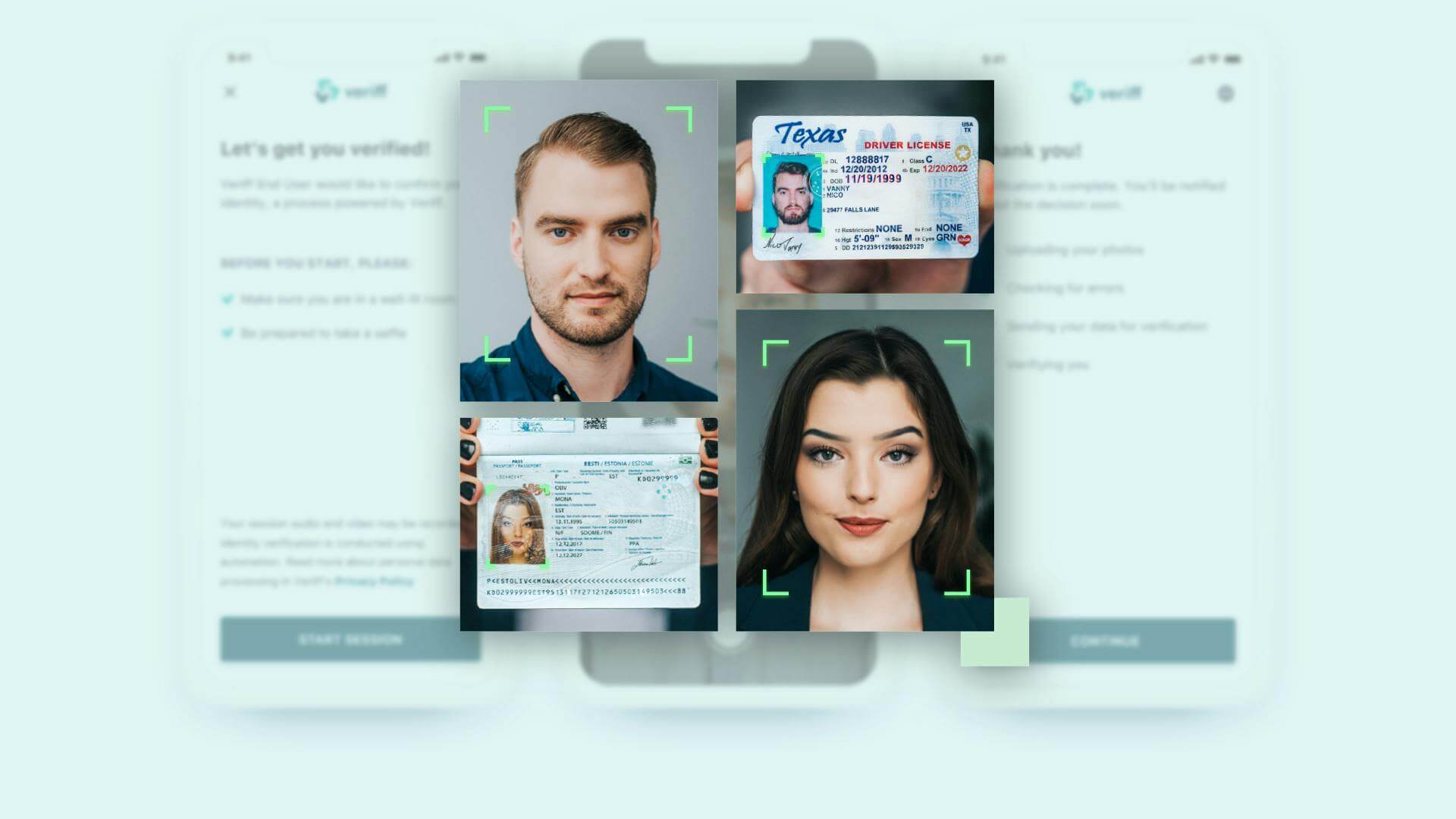
For cryptocurrency platforms, this distinction matters. A user may have a genuine identity document but still attempt to access an account using manipulated biometric data, a stolen identity or other forms of identity fraud.
Key features
- KYC and identity verification
- Government ID verification
- Document authenticity checks
- Face verification
- Liveness detection
- Biometric verification
- Fraud detection
- Device and behavioral signals
- AML-related screening workflows
- Reverification and ongoing identity checks
- API and SDK integration
Veriff’s identity-verification approach combines document and biometric signals with fraud detection rather than relying on a single identity check. Its platform is designed to identify suspicious verification attempts while allowing legitimate users to complete onboarding remotely.
Why crypto businesses may consider Veriff
Crypto exchanges and wallets often need to onboard users from multiple countries while maintaining strong controls against identity fraud.
A typical workflow could look like:
Government ID → Document verification → Face match → Liveness → Risk assessment → Account approval
For higher-risk cases, the business can introduce additional checks rather than applying the same level of friction to every customer.
This is particularly relevant to crypto because account creation can provide access to financial services, trading functionality or digital assets. A compromised identity-verification process can therefore become an entry point for account security issues and financial abuse.
Veriff’s fraud-prevention capabilities also make it relevant to the article’s deepfake and identity-fraud angle. Modern KYC systems increasingly need to distinguish genuine users from manipulated biometric or synthetic identity attempts.
Potential limitation
Veriff is primarily an identity-verification and fraud-prevention specialist. Crypto businesses that require blockchain analytics, wallet screening or Travel Rule infrastructure may need to integrate additional specialist providers.
Why crypto businesses may consider Veriff
Crypto exchanges and wallets often need to onboard users from multiple countries while maintaining strong controls against identity fraud.
A typical workflow could look like:
Government ID → Document verification → Face match → Liveness → Risk assessment → Account approval
For higher-risk cases, the business can introduce additional checks rather than applying the same level of friction to every customer.
This is particularly relevant to crypto because account creation can provide access to financial services, trading functionality or digital assets. A compromised identity-verification process can therefore become an entry point for account fraud and financial abuse.
Veriff’s fraud-prevention capabilities also make it relevant to the article’s deepfake and identity-fraud angle. Modern KYC systems increasingly need to distinguish genuine users from manipulated biometric or synthetic identity attempts.
5. Didit
Didit has developed a broader identity and fraud infrastructure covering KYC, KYB, AML, liveness, fraud detection and crypto-related compliance workflows.

Its KYB system verifies the company itself while also allowing the workflow to connect verification sessions for the individuals behind the business.
Key features
- KYC
- KYB
- Identity verification
- Document verification
- Face matching
- Liveness
- AML screening
- Sanctions screening
- Wallet screening
- Travel Rule
- Device intelligence
- Fraud detection
- Deepfake protection
This combination makes Didit particularly interesting for crypto platforms where identity and fraud cannot be separated.
A user might pass a document check but still present other risk signals involving:
- Device behavior
- IP reputation
- Duplicate accounts
- Synthetic identity indicators
- Suspicious wallet activity
Why crypto businesses consider Didit
The platform can connect the identity layer with additional fraud and crypto compliance workflows.
For a newer exchange or Web3 platform, that can reduce the number of separate systems required to construct the onboarding stack.
Potential limitation
Companies should verify the exact crypto monitoring and Travel Rule functionality required for their jurisdiction rather than assuming every compliance feature is included in every implementation.
6. ComplyCube
ComplyCube is a broader identity and compliance provider that serves multiple regulated industries, including cryptocurrency and digital assets.
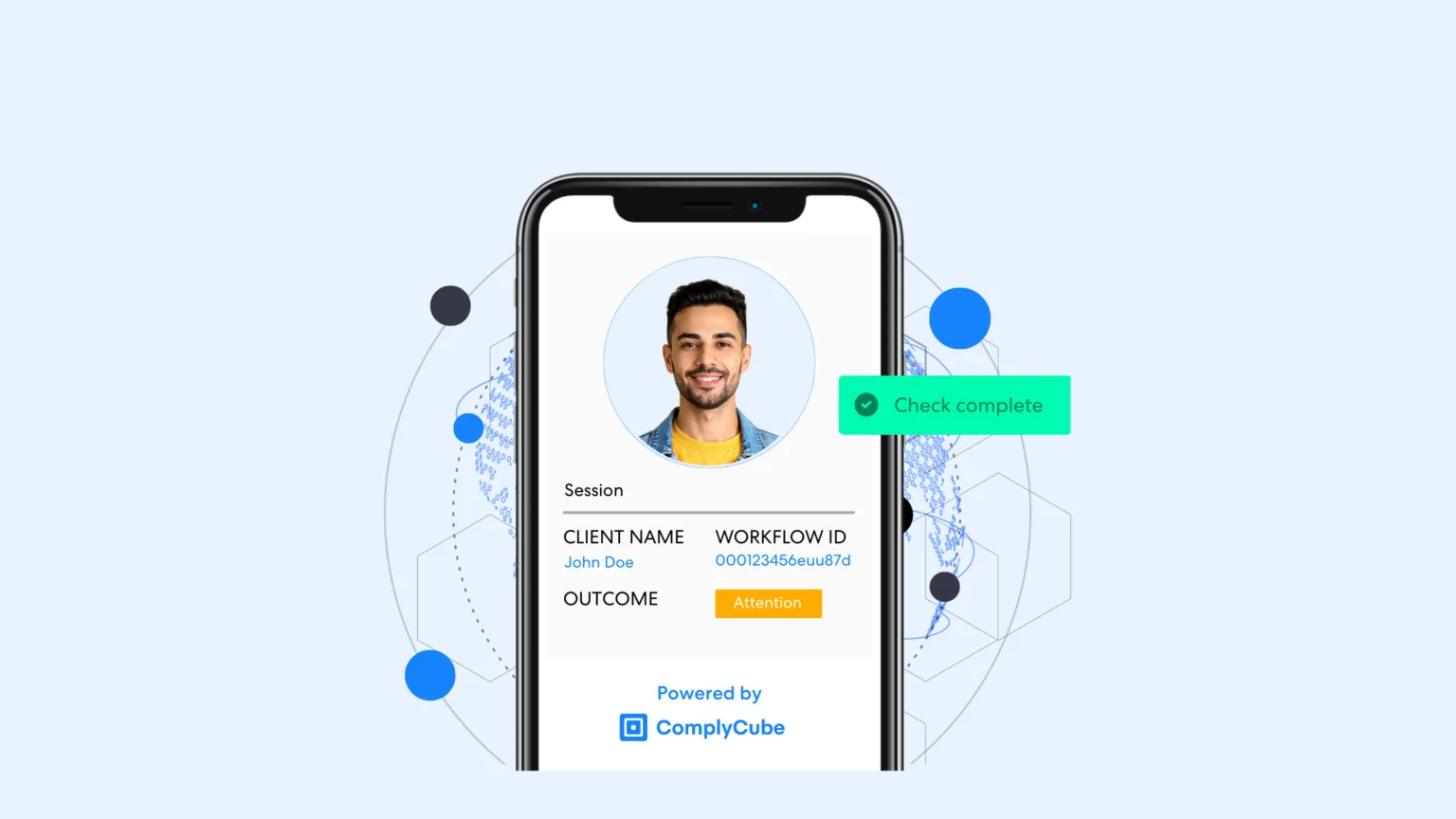
Its platform combines KYC, KYB, AML, biometrics, liveness and ongoing monitoring, making it suitable for businesses that want identity verification to sit inside a wider compliance workflow.
Key features
- Identity verification
- KYC
- KYB
- UBO verification
- Document verification
- Biometric verification
- Liveness
- AML screening
- Sanctions and PEP screening
- Adverse media
- Ongoing monitoring
- Customer risk assessment
- API and SDK integration
One of its notable areas is biometric and presentation-attack protection. The company’s documentation describes passive and active liveness capabilities and PAD-related controls designed to address spoofing attacks.
Why crypto businesses consider ComplyCube
Crypto companies often operate internationally, so country and document coverage can become an important factor.
ComplyCube’s international identity infrastructure can be useful for exchanges and wallets that need to support customers across multiple markets.
The platform also offers customizable verification experiences, which can help businesses integrate KYC into an existing brand rather than sending users through an entirely disconnected compliance portal.
Potential limitation
Crypto-native functionality such as blockchain analytics or Travel Rule operations may require additional infrastructure depending on the implementation.
7. Ondato
Ondato provides identity verification, AML, KYB and customer due-diligence infrastructure, with cryptocurrency businesses among its target users.
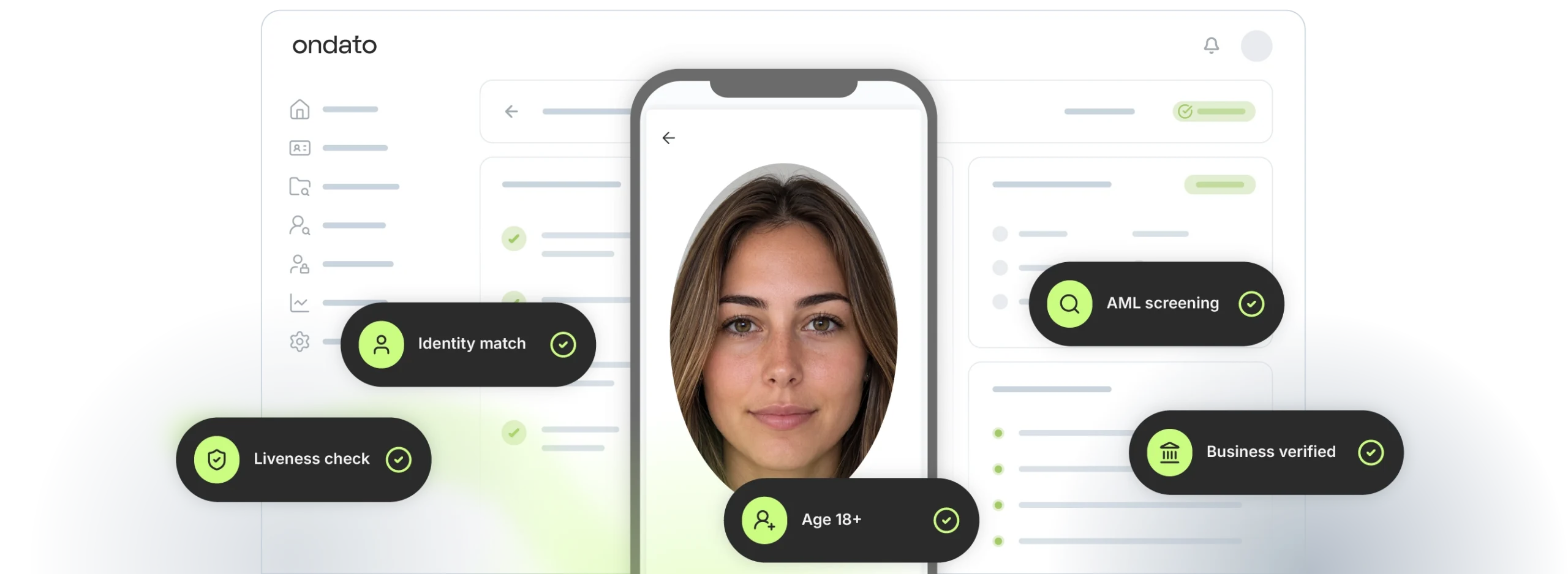
Its crypto offering is relevant to exchanges, wallet providers and blockchain companies that need to verify both individual and business customers.
Key features
- KYC
- KYB
- Identity verification
- Document verification
- Biometric verification
- Liveness
- AML screening
- Customer due diligence
- Enhanced due diligence
- Business verification
- UBO verification
Why crypto businesses consider Ondato
Crypto onboarding needs to balance two competing requirements:
Compliance depth
and
Low onboarding friction
Ondato’s focus on digital identity verification and automated customer due diligence makes it relevant for platforms trying to keep the verification journey relatively straightforward.
It can also support different verification requirements depending on customer risk and business type.
Potential limitation
Platforms requiring extensive on-chain monitoring or advanced Travel Rule infrastructure may need to combine Ondato with specialized crypto-compliance tools.
8. Shufti Pro
Shufti Pro focuses on digital identity verification, KYC, KYB and fraud prevention and has dedicated positioning around cryptocurrency and other higher-risk industries.
Its offering places considerable emphasis on biometric verification, document verification and defenses against sophisticated identity attacks.
Key features
- KYC
- KYB
- Identity verification
- Face verification
- Liveness
- AML screening
- Sanctions screening
- UBO verification
- Document forensics
- NFC verification
- Deepfake detection
- Injection detection
Deepfake protection
Deepfake attacks are becoming an increasingly relevant issue for digital identity systems.
An attacker may attempt to combine:
Synthetic face + manipulated document + virtual camera + stolen identity data
A basic document check may not be sufficient to detect this type of attack.
Shufti Pro therefore emphasizes biometric and injection-detection technologies alongside conventional identity verification.
Why crypto businesses consider Shufti Pro
Crypto platforms can be particularly attractive targets for identity fraud because successfully creating an account may lead to access to financial services.
For this reason, exchanges and other digital-asset platforms may need verification systems that go beyond checking whether an ID document appears genuine.
Potential limitation
Organizations should evaluate how the identity layer integrates with their separate blockchain analytics, transaction-monitoring and Travel Rule systems.
9. AMLBot
AMLBot is one of the more crypto-native companies in this comparison.

Rather than approaching cryptocurrency as just another industry vertical, its product ecosystem is built around the compliance challenges of digital assets, including KYC, KYB, AML and blockchain-related risk.
Key features
- KYC
- KYB
- AML screening
- Wallet screening
- Transaction monitoring
- Blockchain analytics
- Risk scoring
- Address screening
- Crypto investigations
- Compliance workflows
Why crypto businesses consider AMLBot
The distinction between traditional identity verification and blockchain compliance is particularly important here.
An exchange may know:
Who the customer is
but still need to know:
Where the customer’s funds came from
and:
What blockchain addresses the customer is interacting with
That means identity verification and on-chain risk monitoring often need to work together.
AMLBot’s crypto-native positioning makes it relevant for companies that want their compliance infrastructure to account for blockchain activity rather than treating it as an afterthought.
Potential limitation
Companies primarily looking for a simple consumer KYC interface may not need the full breadth of crypto compliance capabilities.
10. Sardine
Sardine approaches KYC from a broader fraud and financial-risk perspective.

Instead of treating identity verification as a standalone step, its infrastructure combines identity information with signals such as device intelligence, behavioral patterns, transaction risk and crypto wallet activity.
Current product coverage includes KYC, KYB, fraud prevention, AML, sanctions screening, wallet screening and transaction monitoring.
Key features
- KYC
- KYB
- UBO verification
- Identity verification
- Fraud prevention
- Device intelligence
- Behavioral signals
- AML
- Sanctions screening
- Wallet screening
- Transaction monitoring
- Crypto risk intelligence
Why this matters for crypto
Imagine two users who both pass the same identity check.
On paper, they may look identical.
But one account might show:
- A normal device
- A consistent location
- Normal transaction behavior
- A single account
while another might show:
- Multiple linked accounts
- Suspicious device signals
- Rapid account creation
- Unusual transaction patterns
- High-risk wallet exposure
A KYC provider focused only on document verification may not see the entire picture.
Sardine’s approach is therefore particularly relevant when identity risk and transaction fraud are closely connected.
Potential limitation
Smaller businesses looking only for basic identity verification may find its broader fraud infrastructure unnecessary.
Which Crypto KYC Provider Fits Each Type of Platform?
There is no single verification stack that works equally well for every crypto business.
KYC Providers for Crypto Exchanges
Exchanges generally have the broadest compliance requirements.
A typical exchange may need:
KYC → AML screening → Risk assessment → Transaction monitoring → Wallet screening → Travel Rule
This makes broader compliance platforms such as Sumsub, KYCAID, iDenfy, Didit and AMLBot particularly relevant. For those just starting to explore the landscape, understanding the types crypto exchanges can help clarify which compliance tools are necessary for their specific model.
The exact stack will depend on the exchange’s jurisdictions, licensing structure and customer profile.
For example, a retail-focused exchange may prioritize high-volume identity verification, while an institutional exchange may put substantially more weight on KYB and UBO verification.
KYC Providers for Crypto Wallets
Wallets are more complicated because the compliance requirements can differ significantly between custodial and non-custodial models. If you are building a wallet, you should first learn crypto exchange ultimate concepts to see how your product fits into the broader ecosystem.
A custodial wallet provider may need extensive customer verification and transaction monitoring.
A non-custodial wallet may instead focus more heavily on:
- Wallet screening
- Fraud prevention
- Sanctions exposure
- Proof of personhood
- Reusable identity
- Regulatory requirements applicable to its specific business model
Providers such as Fractal ID, Didit, Sumsub and AMLBot can therefore be relevant depending on the wallet’s architecture and compliance requirements. For those managing assets, knowing the difference between a centralized exchange cex and a decentralized exchanges dex is also vital for security planning.
Frequently Asked Questions
1. What is a crypto KYC provider?
A crypto KYC provider supplies technology that helps cryptocurrency businesses verify individual customers and perform identity-related compliance checks. Depending on the provider, services can include document verification, biometrics, liveness, AML screening, sanctions screening and ongoing monitoring.
2. What is KYB for crypto exchanges?
KYB, or Know Your Business, is the process of verifying a company before allowing it to become a customer, partner or counterparty. It can include company registration checks, ownership verification, UBO identification, director verification and AML screening.
3. Do crypto exchanges need both KYC and KYB?
Many exchanges serving both retail and institutional customers need processes for both individuals and businesses. KYC handles individual customers, while KYB is used for corporate entities and their relevant owners or representatives.
4. Do crypto wallets need KYC?
The answer depends on the wallet’s business model, custody structure, activities and applicable regulations. Custodial wallet providers can have different obligations from purely self-custodial software. Businesses should determine which requirements apply to their specific operations.
5. What is Travel Rule compliance in crypto?
Travel Rule compliance involves collecting and transmitting required information associated with certain virtual-asset transfers between regulated entities. It adds another layer of compliance beyond simply verifying a customer during onboarding.


