



Shifting dynamics in Crypto yield generation
Modern yield generation on centralized exchanges has transitioned from simple, static interest models to complex, liquidity-driven mechanisms. As institutional capital dominates the order books, the mechanics behind a standard Binance staking guide have evolved to reflect real-time market volatility rather than predictable, long-term returns.
Investors now face an environment where liquidity depth and exchange-wide collateralization ratios dictate the immediate viability of staking assets. If you are looking to diversify your strategy, understanding Binance Wallet vs Hardware Wallets is essential for long-term security.
Impact of APR fluctuations on portfolio strategy
The expectation of fixed-rate returns is increasingly obsolete in the current market. Institutional participants utilize algorithmic market-making strategies that prioritize capital efficiency, often leading to rapid APR adjustments based on supply-demand imbalances.
When large-scale liquidity providers shift their positions, the staking rewards for retail users can fluctuate significantly within a single 24-hour window. To adapt, professional traders no longer rely on “set and forget” staking methods. Instead, they treat staking as a dynamic component of their broader portfolio, frequently rebalancing assets based on the following factors:
- Utilization Ratios: High demand for borrowing specific assets often spikes staking rewards, but this also increases the risk of liquidation for those borrowing against their staked collateral.
- Institutional Inflows: Large institutional deposits into staking pools can dilute individual rewards, forcing users to monitor pool size relative to total network issuance.
- Lock-up Constraints: The trade-off between flexible and locked staking has become more pronounced; locked periods now carry a higher opportunity cost during periods of high market volatility, where liquidity is required to capitalize on sudden price movements.
Successful yield management now requires a proactive approach. Rather than assuming a consistent percentage yield, users must analyze the underlying liquidity trends of their chosen tokens. By understanding that staking rewards are a byproduct of institutional borrowing demand and market-wide liquidity, investors can better time their entries and exits to maximize net gains while mitigating the risks of staking crypto associated with sudden APR compression.
Core components of the Binance staking guide
Effective participation in Binance staking requires understanding the underlying liquidity mechanics that dictate reward distribution. Users must evaluate how their chosen assets interact with the exchange’s internal liquidity pools versus direct on-chain delegation protocols. For those exploring the broader ecosystem, checking the Binance web3 wallet dapp compatibility list can help identify which platforms offer the best integration for your assets.
Differentiating between locked and flexible staking
The primary distinction between these two modes lies in the trade-off between capital accessibility and yield percentage. Flexible staking allows users to redeem assets at any time, typically offering lower Annual Percentage Yields (APY) because the exchange maintains higher liquidity reserves to satisfy potential withdrawal requests. This mode functions similarly to a high-yield savings account, where the underlying assets remain available for instant liquidity.
Conversely, locked staking requires a commitment period ranging from 30 to 120 days. By restricting liquidity, the protocol provides higher rewards as compensation for the user’s inability to exit the position during market volatility. If a user chooses to redeem locked assets before the maturity date, they forfeit all accrued interest and may face a delay in the return of the principal, as the assets are actively committed to on-chain validator nodes.
Technical requirements for validator delegation
When a user initiates a stake on Binance, the exchange acts as a sophisticated intermediary that aggregates retail capital to meet the minimum requirements for validator status. On the backend, Binance executes a smart contract interaction that delegates the pooled assets to high-performing validator nodes.
The exchange monitors these nodes for uptime, commission rates, and slashing risks, effectively abstracting the technical complexity from the end user. The delegation process involves several automated steps:
- Asset Aggregation: The platform pools user funds into a singular wallet address to meet the minimum stake threshold required by the specific blockchain’s consensus mechanism.
- Node Selection: Binance utilizes proprietary algorithms to distribute capital across multiple validators to mitigate the risk of downtime or slashing penalties.
- Reward Distribution: The protocol calculates rewards based on the network’s block production, which are then distributed to user accounts after the exchange deducts a small operational fee for managing the infrastructure.
This automated delegation ensures that users do not need to manage private keys or monitor validator performance, though it does introduce a layer of centralized dependency on the exchange’s operational integrity.
Risk assessment for exchange-based staking
Staking assets on a centralized exchange introduces a distinct risk profile compared to self-custody. When you participate in a Binance staking guide workflow, you are essentially delegating your assets to a third-party validator managed by the platform. While this removes the technical burden of running a node, it shifts the focus toward counterparty risk and operational transparency.
Evaluating slashing risks in custodial staking
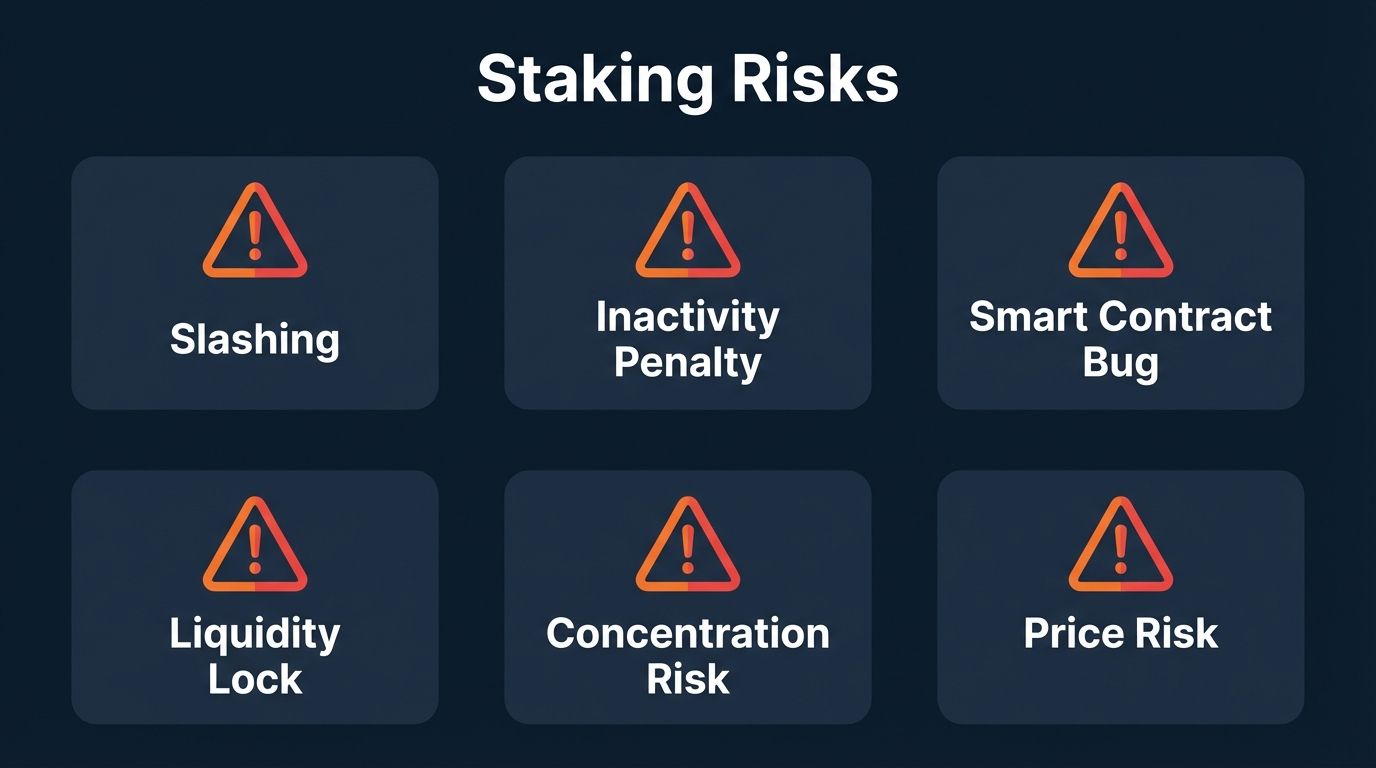
Slashing is a protocol-level penalty triggered when a validator acts maliciously or fails to maintain uptime. In a custodial environment, the exchange acts as the intermediary between the user and the blockchain consensus layer.
If the exchange’s validator node is slashed, the financial burden typically falls on the platform’s internal insurance funds or is socialized across the staking pool, depending on the specific asset’s terms of service. Users should verify the following before committing capital:
- Liability Clauses: Review the platform’s service agreement to confirm if they guarantee the return of principal in the event of a validator-side slashing incident.
- Validator Diversification: Binance often spreads staked assets across multiple validator nodes. This architectural choice mitigates the impact of a single node failure, as the total loss is diluted across the broader pool.
- Smart Contract Exposure: Even when staking native tokens, the exchange may utilize wrapped versions or internal accounting ledgers. Ensure you understand the difference between native staking and liquid staking derivatives (LSDs), as the latter introduces additional smart contract audit risks.
Institutional liquidity providers often hedge these risks by diversifying across multiple exchanges and private validator sets. For individual participants, the primary trade-off remains the convenience of one-click staking versus the loss of direct control over the validator’s operational integrity. Always monitor the platform’s ‘Staking Status’ page to ensure your assets are not locked in a pool currently undergoing maintenance or protocol upgrades, which can temporarily restrict liquidity.
Strategic asset allocation for stakers
Sophisticated market participants treat staking not merely as a passive holding strategy, but as a dynamic component of their broader portfolio management. When utilizing a Binance staking guide, users must distinguish between locked staking products and flexible savings to align with their liquidity requirements.
Institutional-grade strategies often involve laddering assets across different lock-up periods to ensure a portion of capital remains available for opportunistic trades during periods of high market volatility.
Calculating net yield after platform fees
Accurate yield assessment requires looking beyond the advertised Annual Percentage Yield (APY). Binance employs a tiered fee structure on certain staking products, often integrated directly into the distribution of rewards. To calculate your true net return, follow this methodology:
- Gross APY vs. Realized Yield: The displayed APY is an estimate based on historical performance. Subtract the platform’s service fee—often deducted from the total reward pool before distribution—to find your net yield.
- Opportunity Cost of Locking: If you lock assets for 30, 60, or 90 days, you forfeit the ability to sell during a price surge. Factor in the potential loss of capital gains when comparing staking rewards against the asset’s historical volatility.
- Compounding Frequency: Determine if the platform compounds rewards daily or at the end of the term. Daily compounding significantly impacts the effective annual rate (EAR) compared to simple interest models.
For example, if a token offers a 10% APY but the platform retains a 10% fee on generated rewards, your actual yield is 9%. Furthermore, if the asset experiences a 5% price correction during your lock-up period, the nominal staking reward may not offset the underlying asset depreciation.
Experienced stakers often use a spreadsheet to track the ‘break-even’ price point—the specific token price at which the staking reward covers the potential depreciation of the principal. By isolating these variables, you can determine whether the risk-adjusted return justifies the liquidity sacrifice inherent in locked staking products.
Navigating the Binance staking guide interface
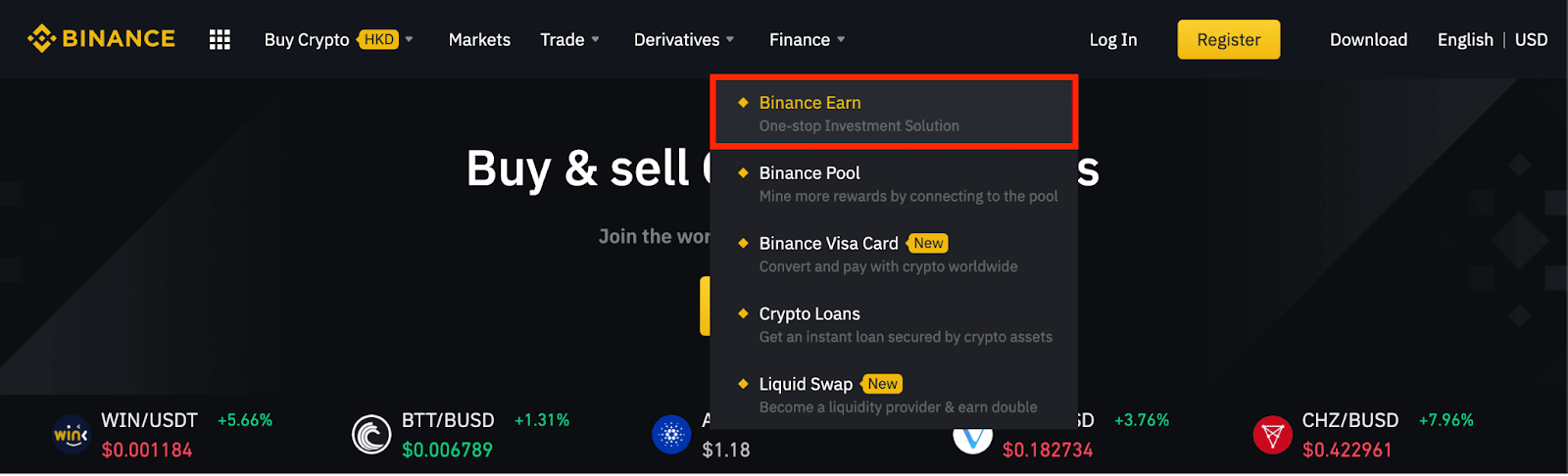
The Binance Earn dashboard serves as the primary hub for managing staked assets. Users must distinguish between ‘Locked Staking’ and ‘Simple Earn’ products, as these represent different liquidity mechanisms. Locked Staking often provides higher yields but restricts asset movement for a set duration, whereas Simple Earn offers more flexibility for institutional-grade liquidity management.
Executing a staking transaction
To initiate a stake, navigate to the ‘Earn’ menu located in the top navigation bar. Select ‘Simple Earn’ to view the list of available assets. Follow these specific steps to ensure your transaction is processed correctly:
- Asset Selection: Use the search bar to find your target token. Filter by ‘Locked’ or ‘Flexible’ based on your liquidity requirements.
- Subscription Parameters: Click ‘Subscribe’ to open the configuration window. Input the desired amount, ensuring it meets the minimum threshold displayed on the screen.
- Reviewing APR and Terms: Verify the Annual Percentage Rate (APR) and the subscription end date. Note that the ‘Value Date’ is when interest calculation begins, usually the following day.
- Confirmation: Review the summary, including the estimated interest payout. Check the ‘I have read and agree’ box and click ‘Confirm’.
Once confirmed, your assets are moved from your Spot wallet to your Earn wallet. You can monitor your active positions under the ‘Earn’ tab in your wallet overview. If you need to exit a position early, select ‘Redeem’ on the specific asset.
Be aware that early redemption in Locked Staking products typically results in the forfeiture of all accrued interest, and the principal may take up to 48 hours to return to your Spot wallet depending on the specific asset’s liquidity pool. Institutional participants often utilize the API interface for these transactions to automate yield farming strategies. By using the /sapi/v1/staking/staking endpoint, developers can programmatically lock assets, allowing for real-time adjustments to market volatility without manual intervention through the web portal.
Regulatory implications for global users
The operational framework for Binance staking is heavily influenced by regional financial oversight, which dictates how institutional liquidity flows into specific pools. As regulatory bodies like the SEC in the United States or ESMA in Europe refine their stance on proof-of-stake assets, Binance must adjust its product offerings to remain compliant.
This creates a fragmented experience where the availability of high-yield staking opportunities depends entirely on your residency status.
Geographic restrictions and eligibility criteria
When following any Binance staking guide, you will notice that certain assets are locked or completely hidden based on your verified KYC location. This is not a technical error, but a direct response to local securities laws.
For instance, staking rewards for specific governance tokens may be classified as unregistered securities in certain jurisdictions, forcing the exchange to restrict access for users in those regions. To determine your eligibility, the platform utilizes a geo-fencing mechanism that checks your account’s primary residence against the legal status of the asset in that territory.
If you attempt to stake an asset that is restricted in your region, the interface will typically display a ‘Service Unavailable’ notification. This is a critical risk factor for institutional investors who require long-term stability; if a regulatory shift occurs, your staked assets may be automatically unstaked or migrated to a non-earning wallet to maintain compliance.
Beyond regional bans, some jurisdictions impose ‘accredited investor’ requirements. Even if an asset is available on the global platform, you may be required to provide additional documentation proving your net worth or professional experience before you can participate in institutional-grade staking pools. Always check the ‘Staking Terms and Conditions’ page while logged into your account to see the specific exclusions applicable to your country. Relying on generic tutorials can lead to frustration if you fail to account for these localized regulatory hurdles.
Future outlook for yield-bearing products
The landscape of yield generation is shifting toward greater integration between centralized exchanges and decentralized protocols. As institutional capital demands higher transparency and risk-adjusted returns, Binance is evolving its staking infrastructure to support more complex asset management strategies.
Future iterations of any Binance staking guide will likely focus on automated rebalancing and multi-chain yield aggregation, moving away from simple lock-up mechanisms toward dynamic, high-frequency yield optimization.
Integration of liquid staking derivatives
Liquid Staking Derivatives (LSTs) represent a fundamental shift in how institutional investors approach capital efficiency. By allowing users to retain liquidity through tokenized representations of staked assets, LSTs solve the traditional trade-off between earning yield and maintaining market agility.
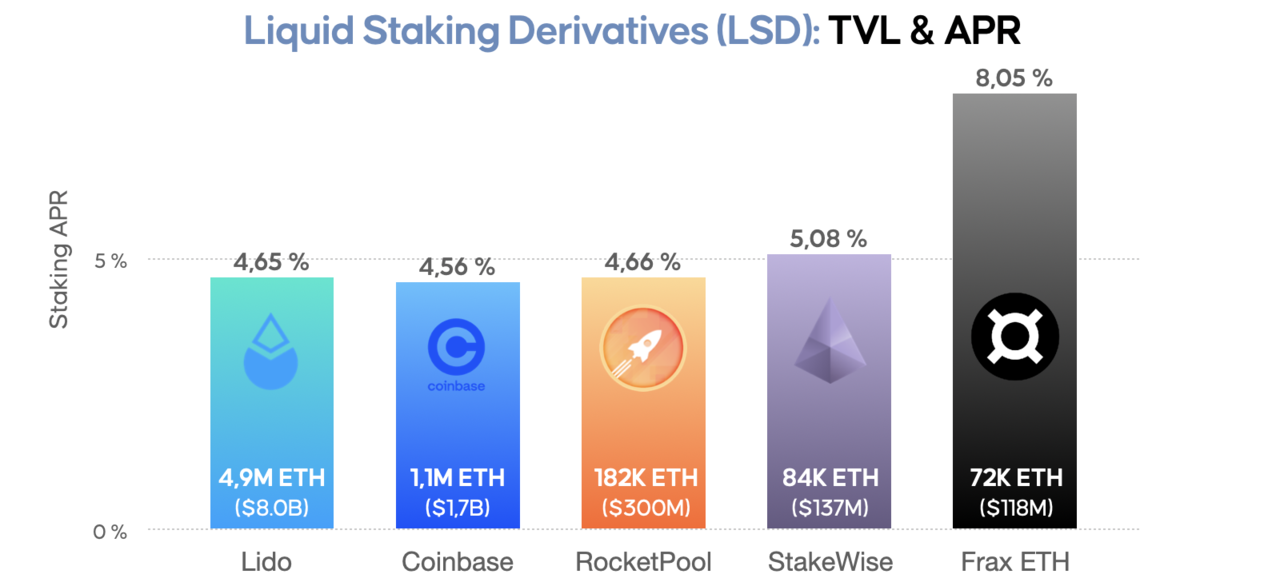
For instance, holding BETH (Binance ETH) or similar derivatives allows an investor to earn staking rewards while simultaneously utilizing the underlying value as collateral in decentralized lending markets or liquidity pools. This integration effectively doubles the utility of a single asset.
Institutional participants are increasingly favoring these derivatives because they mitigate the opportunity cost of long-term staking. Instead of locking capital in a static contract, users can deploy LSTs across various DeFi protocols to capture additional yield streams, a strategy that is becoming a cornerstone of modern portfolio management.
As this ecosystem matures, we expect to see more sophisticated cross-chain interoperability, where LSTs issued on one network can be seamlessly utilized within the Binance ecosystem to enhance overall staking performance. Risk management remains the primary hurdle for widespread adoption. While LSTs offer superior liquidity, they introduce smart contract risks and potential de-pegging scenarios that do not exist with native staking.
Future updates to the Binance staking guide will need to emphasize these risk-mitigation strategies, providing users with the tools to monitor protocol health and collateral ratios in real-time.
Frequently Asked Questions
Institutional liquidity impacts on individual stakers
Institutional inflows often lead to increased competition for block rewards and potential adjustments in APR tiers. As liquidity pools grow, the efficiency of manual staking may fluctuate compared to automated institutional products.
Institutional activity and the risk profile of Binance staking
While the core mechanism remains the same, institutional participation often correlates with higher total value locked (TVL), which can influence the stability of reward distributions and the frequency of protocol-level governance changes. If you encounter issues with your assets, you can consult a Binance wallet troubleshooting guide to resolve common errors.


