💎 Paid Premium Slots Available — Join the List Now
Choosing the right UX/UI design partner can determine how fast your product grows, how clearly users navigate it, and how confidently your team ships new features. Today, users expect digital experiences that are frictionless, intuitive, and trustworthy and delivering that requires more than beautiful visuals. It demands research-backed decisions, systematic design, and tight collaboration with engineering.
A strong UX/UI agency should help you achieve three outcomes:
- Clarity: turning complexity into simple, usable flows.
- Consistency: building scalable design systems your team can maintain.
- Impact: improving activation, conversion, and long-term retention.
This guide focuses on agencies that consistently deliver those results. Whether your goal is to validate an MVP, refine a fast-growing product, or modernize an enterprise platform, you’ll find here the partners best equipped to support your next stage with speed, precision, and measurable improvements.
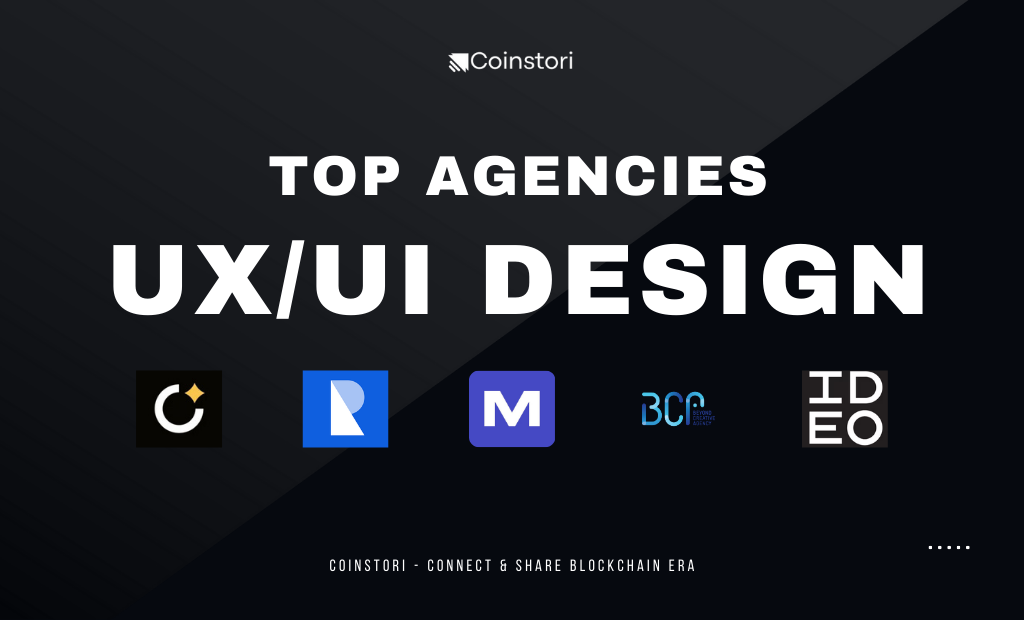
Top UX/UI design Agencies 2026
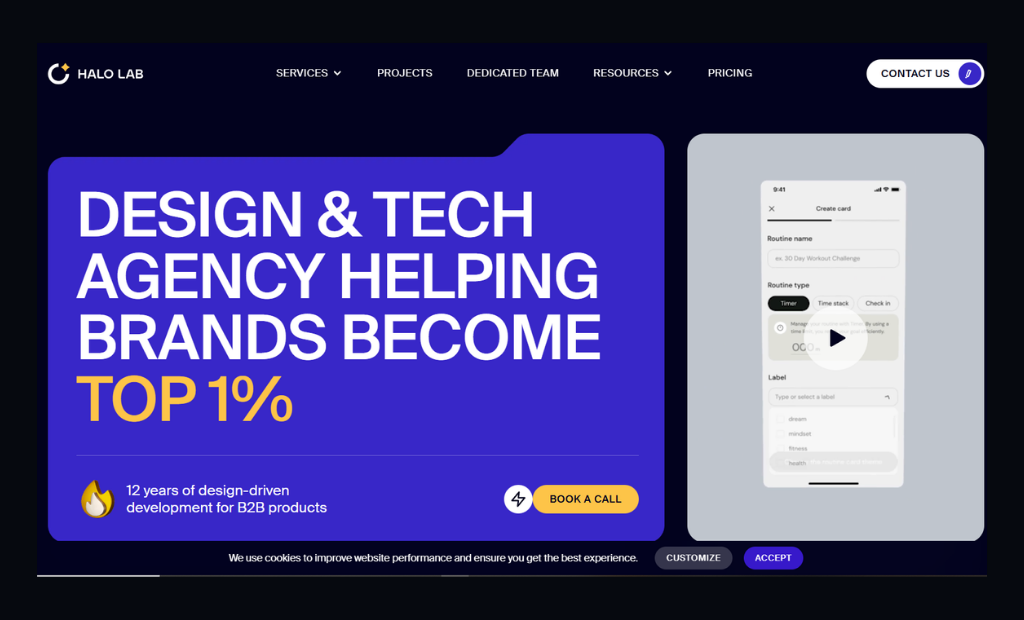
1. Halo Lab – Best for fast-moving startups and web-first product teams
Halo Lab delivers quick, modern, and visually energetic digital experiences. Its workflow favors rapid prototyping and fast releases, making it suitable for startups validating ideas.
Best for: Web-focused startups
Strengths: UI design, branding, front-end development
Known for: Bold visual language and strong web execution
Downside: Limited UX research depth
Unique offerings:
- Free expert workshop
- Cloud-based development support
- Efficient, fast-paced delivery cycles
2. Ramotion – Brand-driven product design for technology companies
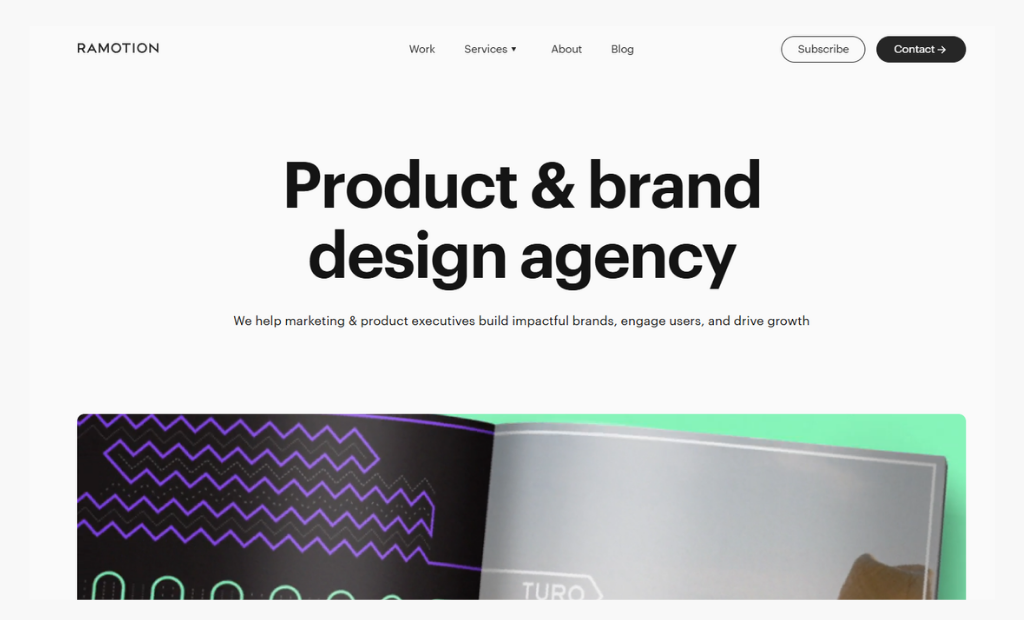
Ramotion bridges brand identity and product design with a unified creative process. Companies seeking consistent brand and product expression benefit from its structured approach.
Best for: Tech companies needing unified brand + product execution
Strengths: Visual identity, UI/UX, design-to-dev handoff
Known for: Work with Mozilla, Salesforce, Descript
Downside: Research efforts are moderate compared with research-focused studios
Unique offerings:
- Pre-IPO and M&A brand refresh
- Iconography development
- Brand personality and system frameworks
3. Method – Enterprise design and digital transformation
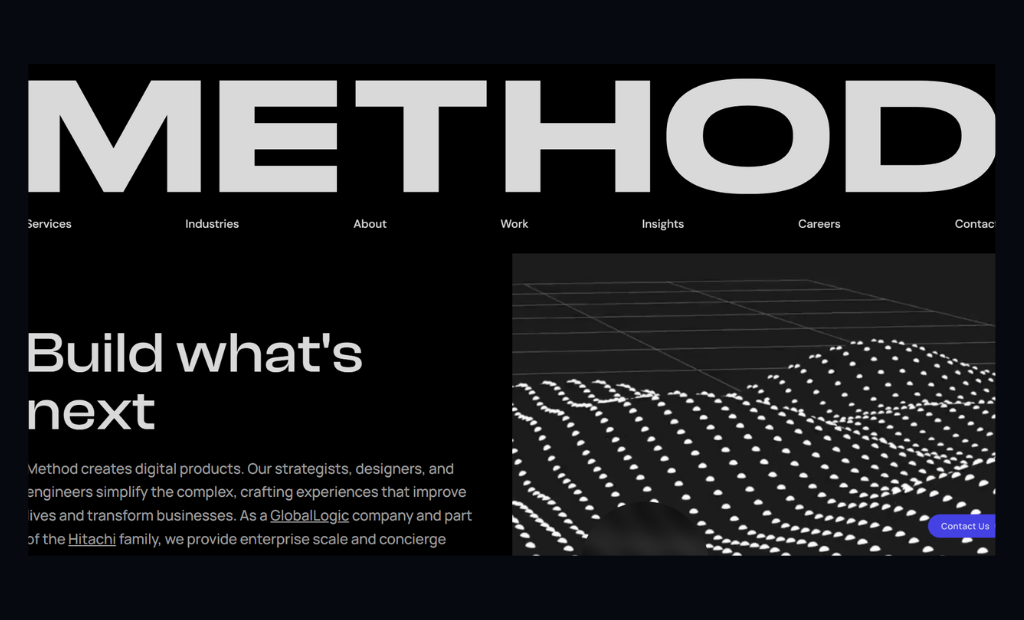
Method, a part of Hitachi, focuses on strategic transformation for organizations with large product ecosystems. Their practice integrates business design, UX, and long-term product development.
Best for: Enterprise platforms and complex legacy systems
Strengths: Business design, cross-platform UX, long-term strategy
Known for: Partnerships with BBC, Ubisoft, Ben & Jerry’s
Downside: Premium pricing suitable for large enterprise programs
Unique offerings:
- Modern Product coaching & capability building
- Data-driven UX methodologies
- Enterprise commerce and ecosystem strategy
4. Beyond Agency – Marketing-informed UX/UI and rapid prototyping
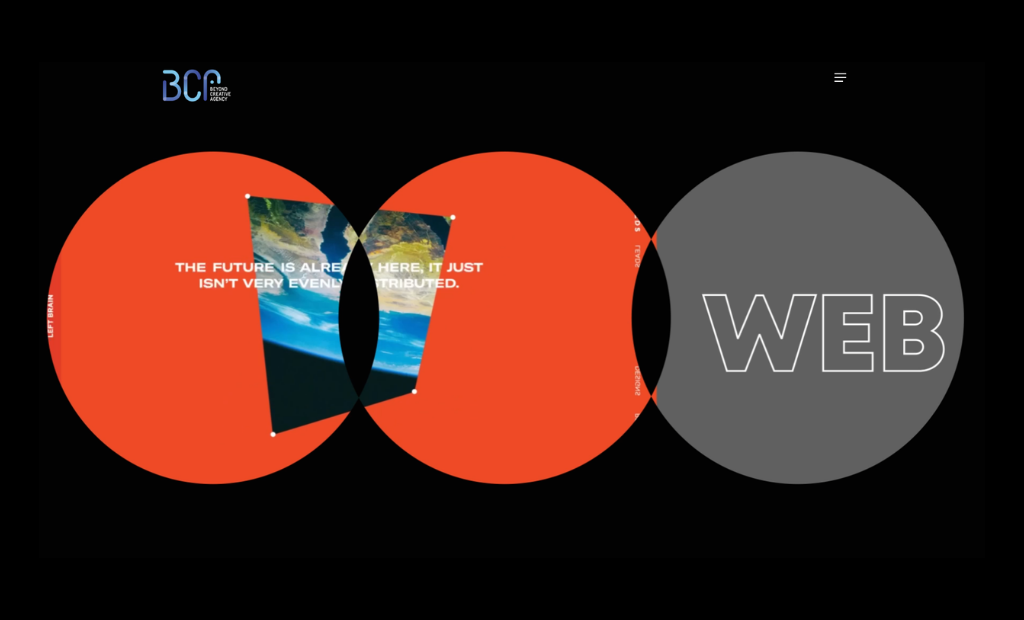
Beyond blends marketing strategy with UX/UI execution. It suits companies needing design connected directly to conversion, user engagement, and funnel performance.
Best for: Web design, prototyping, and marketing-led UX
Strengths: Engagement-based UX, brand-to-revenue execution
Known for: End-to-end marketing + design integration
Downside: Limited UX research depth
Unique offerings:
- Designers + marketers working as one team
- CRM, sales funnel, AI implementation support
- Data, demographic, and performance-driven strategy
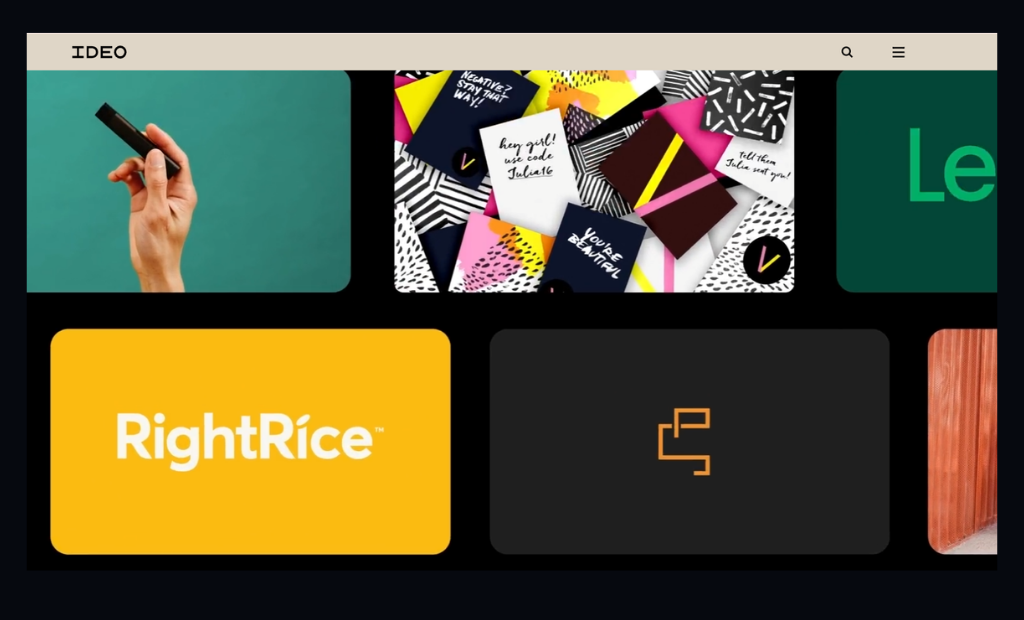
5. Ideo – Pioneers of Design Thinking
Ideo is one of the world’s most influential design companies. Their human-centered approach is foundational to modern UX practices.
Best for: System-level innovation and large-scale research
Strengths: Interdisciplinary design, prototyping, research
Downside: Pricing and project scope geared toward global organizations
Founded: 1991
Key clients: Swarovski, Apple, Rockefeller Foundation
6. Designit – Global design and innovation partner
Designit has a strong network of global studios and focuses on long-term product impact through design strategy and research-forward execution.
Best for: Organizations seeking sustained innovation programs
Strengths: UX/UI across industries, deep research, design ethics
Downside: Higher cost due to global scale
Key clients: Sephora, Lufthansa, Digital Hub Denmark
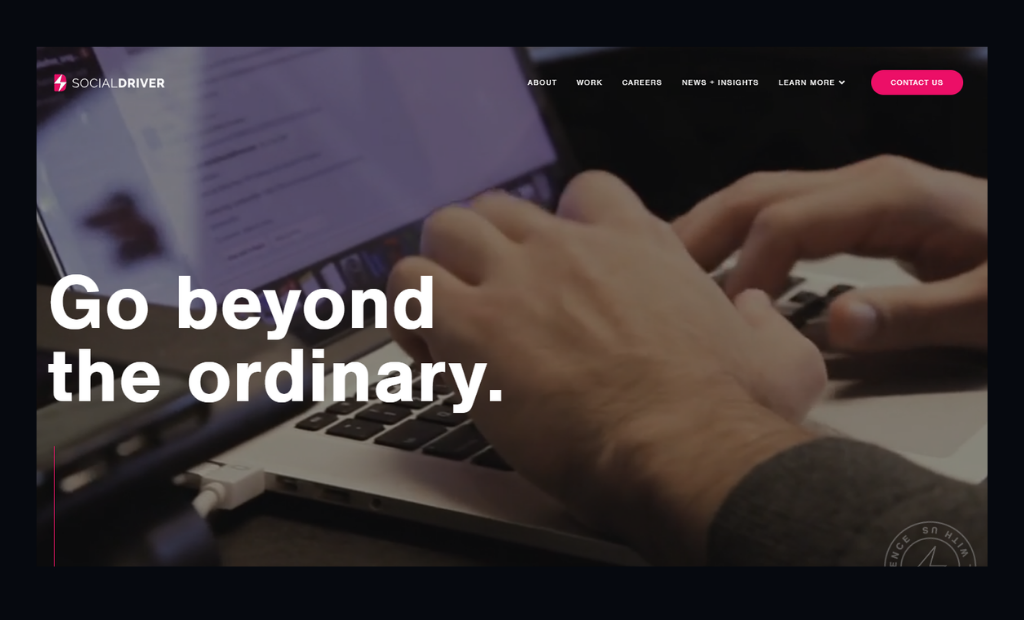
7. Social Driver – Social impact design for community-first organizations
Social Driver specializes in digital experiences for education, nonprofits, policy, and public-sector platforms.
Best for: Public impact and educational platforms
Strengths: Collaborative culture, accessible interfaces
Downside: Not optimized for enterprise tech or SaaS products
Key clients: American Nurses Association, Education Trust
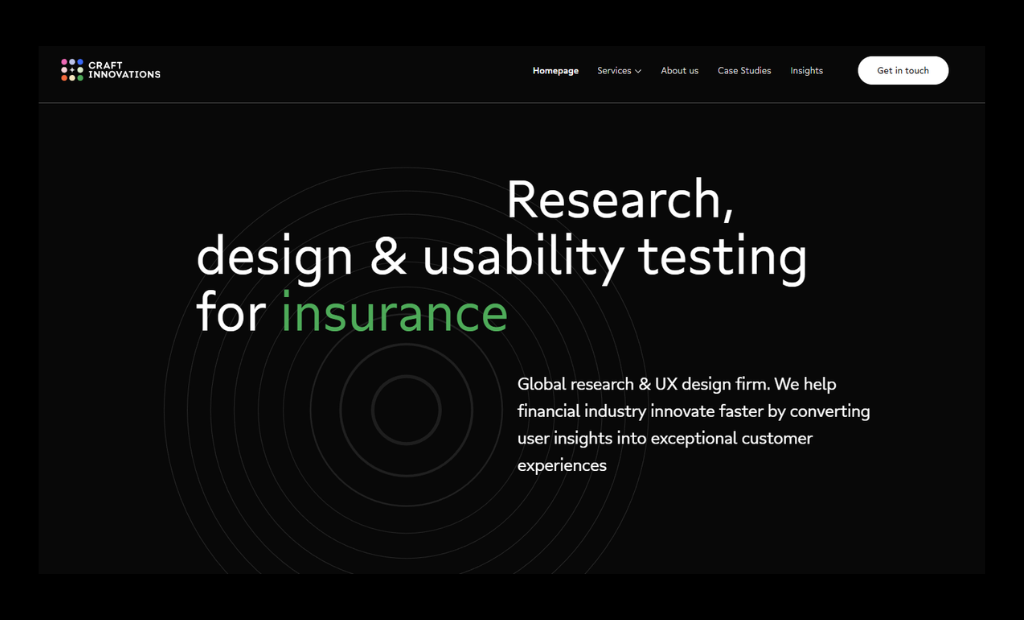
8. Craft Innovations – Fintech-focused UX research and design
Craft Innovations combines quantitative and qualitative research with measurable UX outcomes. Their SUM (Single Usability Metric) scores demonstrate disciplined testing and usability rigor.
Best for: Fintech, banking, and financial services
Strengths: UX audits, CRO, research with eye-tracking labs
Downside: Narrow focus on financial products
Key clients: Mastercard, PrivatBank, Roche
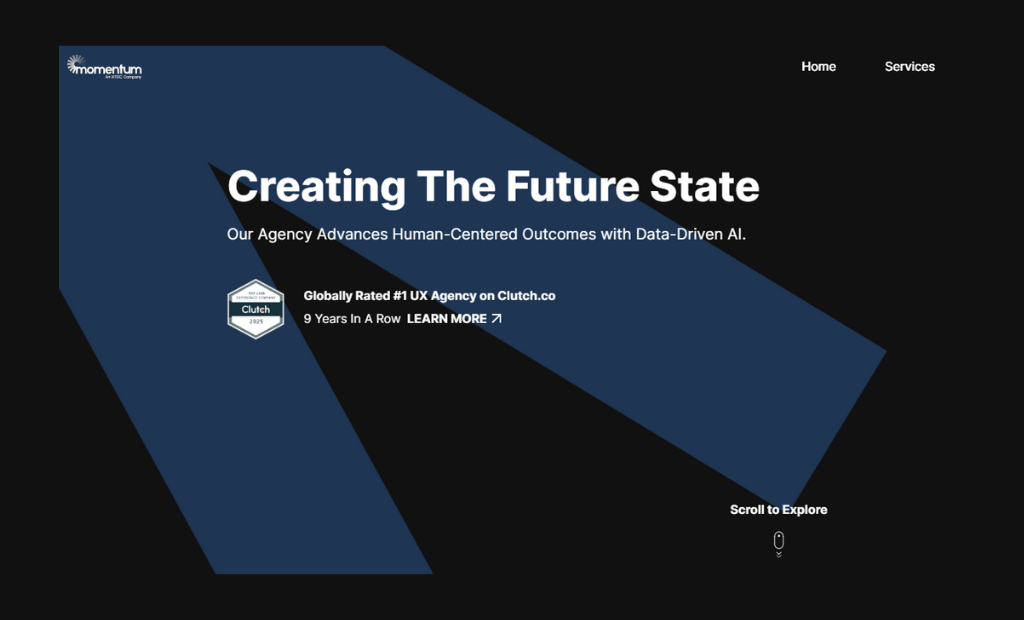
9. Momentum Design Lab – User-centric digital transformation for high-impact products
Momentum uses a blend of human empathy and intelligent data to deliver trustworthy, clear, and intuitive user experiences.
Best for: Platforms requiring structured UX frameworks
Strengths: UX/CX strategy, research, design systems
Downside: Smaller team compared with global studios
10. Eight Bit Studios – Emotion-driven UX for mobile products
Eight Bit Studios keeps a tight, focused team to preserve design quality and consistency. They excel at building apps with personality and emotional resonance.
Best for: Mobile apps with strong emotional or social components
Strengths: Empathy-led design, brand identity, mobile UI
Downside: Less suited for large enterprise ecosystems
Side-by-Side Comparison 2026
| Agency | Best For | Performance Snapshot | Notable Specialty |
|---|---|---|---|
Halo Lab | Startups, web-first products | Research: Low–Med Design: High Speed: Very Fast Pricing: Medium | Rapid UI/branding |
Ramotion | Tech companies | Research: Medium Design: High Speed: Medium Pricing: High | Brand + product synergy |
Method | Enterprise transformation | Research: High Design: High Speed: Medium Pricing: High | Business design |
Beyond Agency | Marketing-driven UX/UI | Research: Medium Design: Medium Speed: Fast Pricing: Medium | Conversion-focused UX |
Ideo | Global innovation | Research: Very High Design: High Speed: Medium Pricing: Very High | Design Thinking |
Designit | Long-term design partnerships | Research: High Design: High Speed: Medium Pricing: High | Global research |
Social Driver | Public impact | Research: Medium Design: Medium Speed: Medium Pricing: Medium | Community UX |
Craft Innovations | Fintech & banking | Research: Very High Design: High Speed: Medium Pricing: Medium | Eye-tracking research |
Momentum Design Lab | Complex UX frameworks | Research: High Design: High Speed: Medium Pricing: High | UX/CX systems |
Eight Bit Studios | Mobile apps | Research: Medium Design: High Speed: Medium Pricing: Medium | Emotion-led UX |
Methodology: How We Ranked These Agencies
This ranking is based on practical, verifiable criteria rather than marketing claims or sponsored placements. Each agency was evaluated using five core dimensions:
- Research Capability: The depth, structure, and consistency of user research, including qualitative studies, testing frameworks, and data-backed insights.
- Design Maturity: The agency’s ability to produce scalable, system-oriented design that holds up across platforms, states, and edge cases.
- Product Impact: Demonstrated improvements to onboarding, conversion, task completion, retention, or workflow efficiency.
- Engineering Collaboration: How effectively the agency partners with technical teams, including handoff quality, documentation standards, and feasibility awareness.
- Client Fit: Whether the agency has a history of working with startups, SaaS, fintech, enterprise, consumer products, or hardware.
No agency paid to be included, and no ranking decisions were influenced by partnerships or sponsorships. The goal is to provide a balanced, transparent, and useful comparison for decision-makers.
Who This Guide Is For
This guide is designed for leaders and teams who make decisions about digital products, including:
- Startup founders bringing new products to market
- Product managers responsible for scaling UX and UI quality
- Engineering leads seeking design partners who understand constraints
- Growth and marketing teams aiming to improve conversion and funnel efficiency
- Enterprise innovation teams modernizing legacy tools or systems
- Business owners looking for consistent, long-term design support
If your work touches digital product decisions research, UX strategy, interface design, usability, or product outcomes this guide gives you a structured way to evaluate the right kind of partner.
How To Choose the Right UX/UI Agency
Selecting a design partner is easier when you filter by what matters most. The following framework helps reduce uncertainty:
1. Match the agency to your product stage
- MVP / Early stage: prioritize speed, iteration, and lean UX
- Growth stage: prioritize design systems and conversion optimization
- Enterprise: prioritize research discipline, documentation, and scalability
2. Validate their process, not just their visuals: Good case studies explain why decisions were made, not just what was designed.
3. Check research depth: If an agency doesn’t ask questions about users, constraints, or business goals early on, expect misalignment later.
4. Ask how they work with engineering: A great design partner keeps developers in mind from the first wireframe.
5. Look for a track record in your industry: Fintech, healthcare, SaaS, e-commerce, and B2B tools each require different UX sensitivities.
6. Review documentation samples: Design systems, specs, and interaction guidelines say more about quality than a glossy portfolio.
Budget Expectations & Pricing Models
UX/UI agencies use several pricing structures. While rates vary by region and seniority, these ranges provide a realistic benchmark:
1. Hourly Rates (Typical)
- Startup-friendly agencies: $50–$90/hr
- Mid-tier global studios: $90–$150/hr
- Enterprise-focused agencies: $150–$220/hr
- Specialized research labs: $180–$280/hr
2. Fixed-Scope Engagements
Best for redesigns, audits, or clearly defined deliverables.
Common ranges: $8,000–$60,000 depending on complexity.
3. Monthly Retainers
Ideal for teams needing ongoing design + research + system maintenance.
Ranges from $6,000–$40,000/month depending on team size.
4. Product Sprint Packages
One- to four-week rapid discovery or prototyping engagements.
Typically $5,000–$25,000.
Red Flags When Hiring a UX/UI Agency
Top UX/UI Design Agencies 2026: Q&A with leading global studios for digital products
Below are the most common Q&A decision-makers ask when choosing Top UX/UI Design Agencies in 2026 – with practical, experience-based answers focused on outcomes, not just aesthetics.
1. What does Top UX/UI Design Agencies actually mean in 2026?
2. How do I choose the right UX/UI agency for my digital product?
3. What budget ranges do top UX/UI design agencies usually work with?
4. Are big-name studios always better than smaller UX/UI boutiques?
5. How important is industry specialization when picking a top UX/UI agency?
6. What process should I expect from a top UX/UI design agency?
7. How can I evaluate the quality of a UX/UI portfolio beyond pretty shots?
8. How do remote/global UX/UI design agencies collaborate effectively with my team?
9. What red flags should I watch out for when reviewing Top UX/UI Design Agencies?
10. How should I use a “Top UX/UI Design Agencies 2026” list when shortlisting vendors?
Buy me a croissant 🥐
If this story helped you, a tiny treat keeps the energy (and research) going.