



Top 10 corporate stablecoin payment and treasury automation platforms are essential tools for modern finance teams looking to streamline cross-border settlements and manage digital assets efficiently. As businesses expand globally, these platforms address persistent challenges like payment delays, high foreign exchange costs, and fragmented financial systems by leveraging blockchain-based settlement. By integrating stablecoin operations into existing workflows, companies can move value more reliably across international borders and diverse blockchain networks.
However, adopting stablecoins requires more than a digital wallet. Companies need reliable payment infrastructure, transaction approval workflows, compliance controls, treasury visibility, and accurate financial records. Without these capabilities, blockchain transactions can introduce additional operational risks rather than simplify existing processes.
This is where corporate stablecoin payment and treasury automation platforms can make a difference. Depending on the provider, businesses can automate supplier payments, process international payouts, manage digital asset balances, reconcile transactions, and integrate stablecoin operations with existing financial workflows. Some platforms specialize in payment infrastructure, while others focus on custody, treasury controls, or accounting automation.
In this guide, we explore 10 companies worth evaluating: BVNK, Conduit, Request Finance, Bitwave, Utila, Fireblocks, Cobo, Sphere, Eco, and Crossmint. Each platform serves a different part of the stablecoin ecosystem, so the best choice depends on a company’s payment volume, operational requirements, technical resources, and compliance obligations.
What Are Corporate Stablecoin Payment and Treasury Automation Platforms?
Corporate stablecoin payment and treasury automation platforms are software solutions and financial infrastructure services that help businesses send, receive, manage, and account for stablecoin transactions. Depending on their capabilities, they may support payment processing, digital wallets, liquidity management, transaction approvals, automated transfers, reconciliation, and reporting.
Stablecoins are digital assets designed to maintain a relatively stable value against a reference asset, commonly the US dollar. USDC and USDT are widely used examples, although supported assets vary by provider. Their blockchain-based settlement capabilities can help businesses process transactions outside traditional banking hours, subject to network conditions, liquidity availability, and the provider’s operating model.
For corporate finance teams, the main benefits are operational rather than speculative. These include reducing manual payment handling, improving visibility into digital asset balances, streamlining cross-border settlement, and creating more consistent financial records. Nevertheless, stablecoins are not risk-free: businesses must consider issuer and redemption risks, blockchain security, regulatory obligations, liquidity, and counterparty exposure.
How to Choose a Corporate Stablecoin Treasury Platform
Before comparing providers, businesses should identify the functions they need and distinguish between platforms that move funds and those that primarily manage or record transactions.
-
Payment automation: Look for batch transfers, recurring payment workflows where supported, programmable approvals, and reliable transaction-status monitoring.
-
Treasury management: Evaluate balance visibility, wallet governance, liquidity routing, automated sweeping, and rebalancing capabilities.
-
Compliance and security: Review customer verification, transaction screening, access permissions, audit trails, custody arrangements, and jurisdictional availability.
-
Accounting and reconciliation: Consider transaction categorization, invoice matching, reporting, and integrations with existing enterprise resource planning systems.
-
Blockchain and currency coverage: Confirm support for the stablecoins, networks, fiat currencies, and payment corridors your business actually uses.
-
Integration and scalability: Assess API documentation, implementation requirements, service reliability, pricing, and the ability to support increasing transaction volumes.
The following platforms were selected to represent different approaches to corporate stablecoin payments and treasury automation, rather than to suggest that every provider offers the same capabilities.
Top 10 Corporate Stablecoin Payment and Treasury Automation Platforms
1. BVNK
Best for: Enterprise stablecoin payments, cross-border settlement, and embedded financial infrastructure.
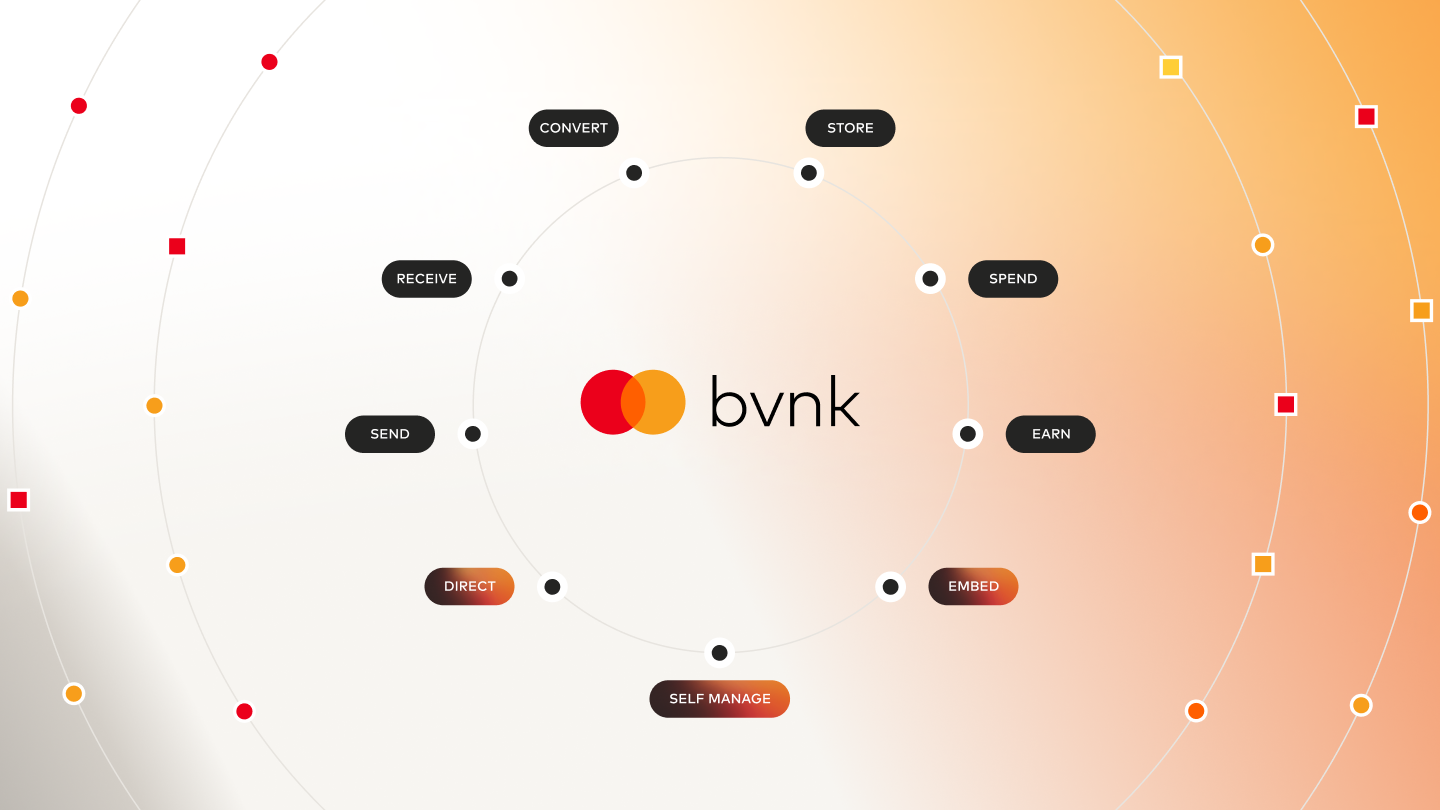
BVNK provides stablecoin infrastructure designed to connect traditional financial systems with blockchain-based payments. Its platform supports business use cases involving payment collection, international payouts, fiat-to-stablecoin conversion, and the integration of stablecoin functionality into financial products.
For companies operating across multiple markets, BVNK can help consolidate payment operations through a unified infrastructure layer. Businesses can use stablecoin rails to support international transfers while retaining the ability to interact with traditional currencies and payment systems. Its infrastructure also addresses operational requirements such as compliance controls, wallet management, and transaction processing.
From a treasury perspective, the ability to manage fiat and stablecoin flows within a connected environment can reduce the complexity of coordinating multiple providers. This is particularly relevant for fintech companies, payment service providers, marketplaces, and businesses that need to distribute funds to international customers or partners.
BVNK is worth considering when a business needs stablecoin functionality as part of a broader payment operation rather than simply a standalone wallet. Its suitability will depend on supported markets, onboarding requirements, pricing, and the precise custody and settlement model available for the intended use case.
2. Conduit
Best for: Cross-border business payments and stablecoin-enabled international settlement.
Conduit focuses on international payments infrastructure that uses stablecoins to support cross-border money movement. It is relevant to businesses and fintech operators seeking alternatives to conventional international transfers, especially where multiple currencies, payment intermediaries, and settlement delays create operational friction.
For corporate finance teams, cross-border settlement can involve more than transferring money. Businesses must coordinate funding, currency conversion, beneficiary details, payment status, and reconciliation across different jurisdictions. A stablecoin-enabled payment platform can simplify parts of this process by connecting blockchain settlement with the local currency payout mechanisms available in supported corridors.
Conduit’s potential value lies in helping businesses connect these components without building every payment integration independently. This can be useful for companies serving international customers, managing supplier payments, or developing financial products that require crypto payments tokenized.
However, payment orchestration should not automatically be equated with complete treasury automation. Businesses should verify whether the relevant implementation supports automated balance sweeping, programmable approval rules, recurring payments, and consolidated reporting, rather than assuming these capabilities are included in every offering.
Conduit is a strong candidate for organizations whose primary challenge is moving funds internationally and coordinating the payment infrastructure behind those transactions.
3. Request Finance
Best for: Stablecoin-based accounts payable, vendor payments, invoicing, and batch payouts.
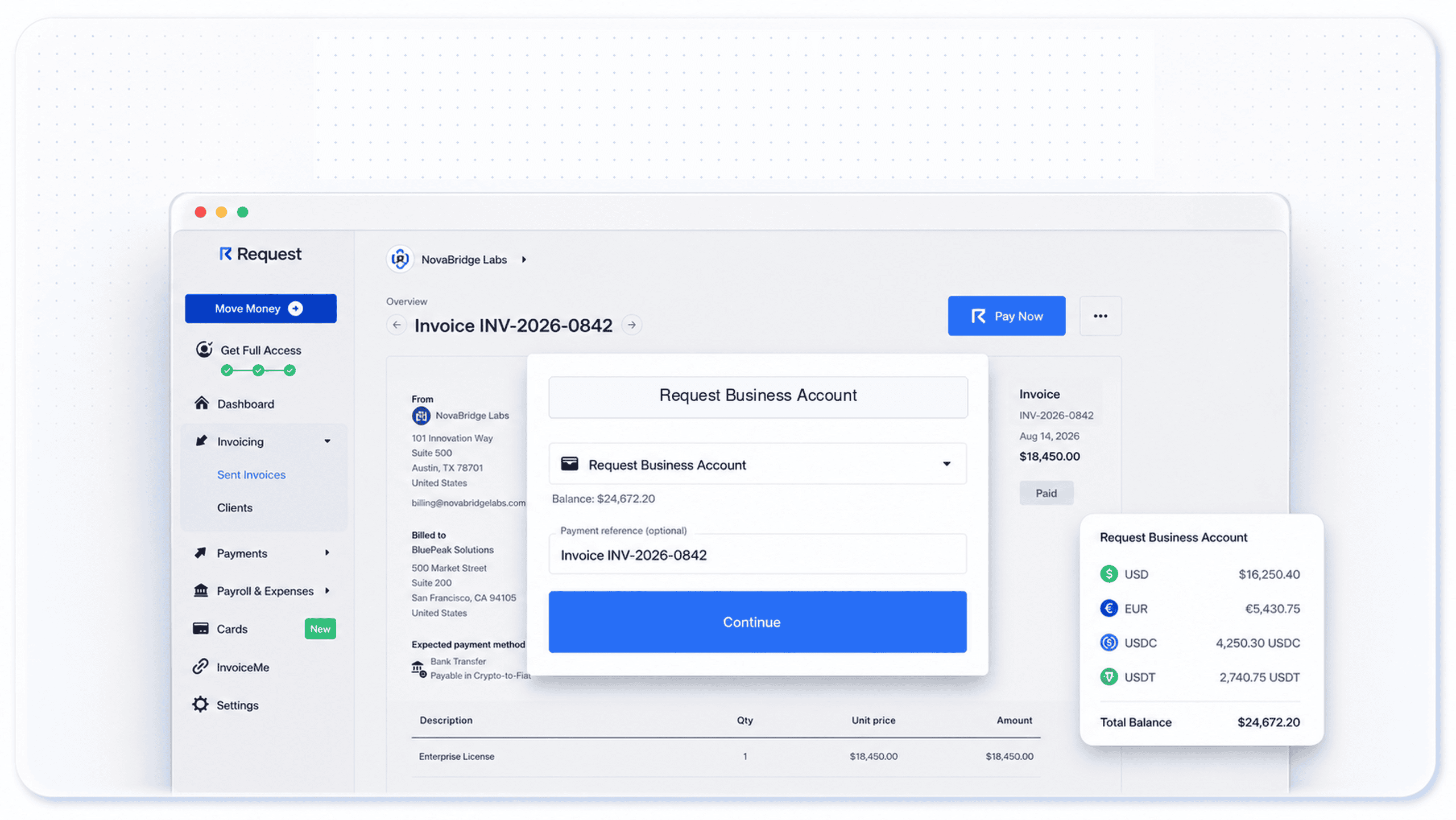
Request Finance brings business payment workflows and stablecoin transactions into a finance-oriented environment. Its platform supports invoicing, payment approvals, vendor payments, and the management of stablecoin and traditional currency transactions. It is particularly relevant to Web3 businesses, distributed teams, and companies that regularly pay international contractors or suppliers.
One of the practical challenges of corporate stablecoin adoption is integrating blockchain transactions into familiar financial processes. A business may be able to transfer tokens from a wallet, but its finance team still needs invoices, approval records, payment documentation, and a reliable way to reconcile expenses. Request Finance addresses this operational layer by combining payment activities with business finance workflows.
Batch payouts are another relevant use case. Rather than handling every payment individually, finance teams can organize multiple recipients into a more structured payment process, subject to the platform’s supported workflows and account configuration. This can help reduce repetitive administrative work when paying contractors, contributors, or vendors.
Request Finance is particularly worth evaluating for companies that want to operationalize stablecoin payments without building an entirely custom finance stack. Buyers should compare its supported currencies, payout destinations, approval controls, accounting requirements, and pricing against their expected transaction volume.
4. Bitwave
Best for: Enterprise digital asset accounting, stablecoin payments, and financial reconciliation.
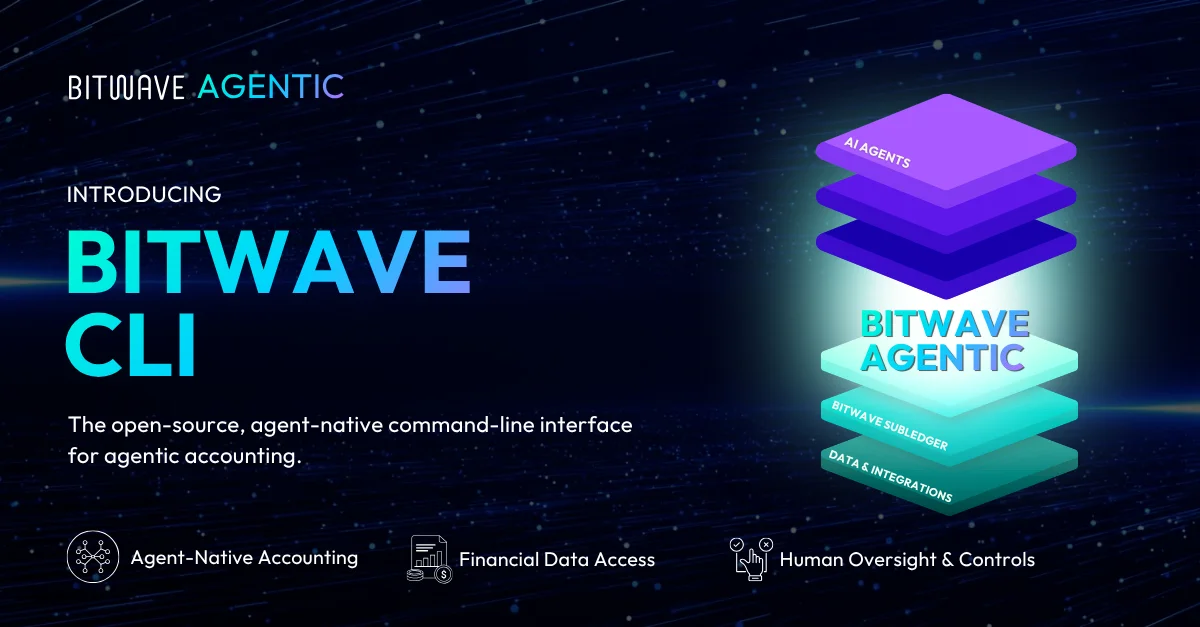
Bitwave focuses on the financial operations surrounding digital assets. Its platform combines digital asset accounting, payment workflows, reporting, and compliance-related capabilities, helping businesses connect blockchain activity with their existing finance systems.
For corporate treasury teams, transaction visibility is only one part of the problem. Every transfer may also need to be classified, matched to an invoice, assigned to the appropriate entity, and reflected accurately in the accounting ledger. When a business operates across multiple wallets, exchanges, and blockchain networks, manual reconciliation can become time-consuming and difficult to audit.
Bitwave addresses these challenges through transaction accounting, automated categorization, reconciliation workflows, and integrations with enterprise finance systems. Its stablecoin payment capabilities can also support business-to-business payment processes, including invoice-related workflows and configurable payment approvals.
The platform is particularly relevant to organizations that already hold or transact in digital assets and need stronger financial controls around those activities. Compared with a payment-first provider, Bitwave’s differentiation is its emphasis on connecting on-chain transactions with accounting and reporting requirements.
Companies evaluating Bitwave should determine whether they need a complete payment infrastructure provider, a specialized accounting layer, or a combination of both. Its role in the overall stack depends on the custody and payment providers with which the business chooses to operate.
5. Utila
Best for: Institutional stablecoin treasury management, governed wallets, and automated payouts.
Utila provides digital asset infrastructure for fintechs, banks, payment firms, and enterprises. Its offering includes institutional wallet management, stablecoin payment infrastructure, treasury operations, and programmable controls for managing digital asset transactions.
A corporate treasury may need to maintain multiple wallets for different subsidiaries, customers, operational purposes, or blockchain networks. Without consistent governance, these arrangements can make it harder to monitor balances, control transaction permissions, and establish a reliable audit trail. Utila addresses this challenge through infrastructure designed to help organizations manage digital asset operations with centralized visibility and configurable policies.
Its stablecoin payment capabilities include high-volume payouts, batch transfers, dedicated deposit addresses, programmable approvals, and integrations with on- and off-ramp providers. Depending on the implementation, treasury teams can also automate workflows involving balance sweeping, liquidity routing, and reconciliation.
Utila is particularly relevant to companies building their own stablecoin payment products or operating complex digital asset workflows. Rather than relying entirely on a bundled payment provider, businesses can use institutional wallet infrastructure and connect selected counterparties and service providers.
Organizations should assess supported blockchain networks, key-management architecture, governance policies, integration complexity, and the responsibilities retained by their own teams. For businesses with substantial technical and operational requirements, these considerations are central to selecting an appropriate treasury platform.
6. Fireblocks
Best for: Institutional digital asset operations, transaction governance, and treasury infrastructure.
Fireblocks provides infrastructure for organizations that need to secure, manage, and transfer digital assets. Its platform is used for institutional custody-related workflows, transaction policy enforcement, digital asset transfers, and connectivity across the broader digital asset ecosystem.
For businesses managing stablecoins across multiple wallets or counterparties, transaction security and governance are essential. Finance teams need to define who can initiate a transfer, who must approve it, which destinations are permitted, and how transactions are recorded for later review. Fireblocks offers infrastructure designed to support these operational controls.
Its relevance to treasury automation comes from the ability to establish governed transaction workflows and coordinate digital asset movements across connected systems. Businesses can use such infrastructure as part of a broader treasury stack, combining wallet controls with separate payment, accounting, or liquidity services when required.
Fireblocks is not interchangeable with every stablecoin payment platform. A company primarily seeking an invoicing interface or a ready-to-use vendor payment account may need additional software to complete that workflow. Conversely, an institution with complex custody, security, and approval requirements may prioritize Fireblocks as a foundational component.
Before adoption, organizations should evaluate the custody model, supported networks, policy configuration, integration options, operational responsibilities, and total implementation cost.
7. Cobo
Best for: Multi-chain digital asset custody, wallet infrastructure, and institutional treasury operations.
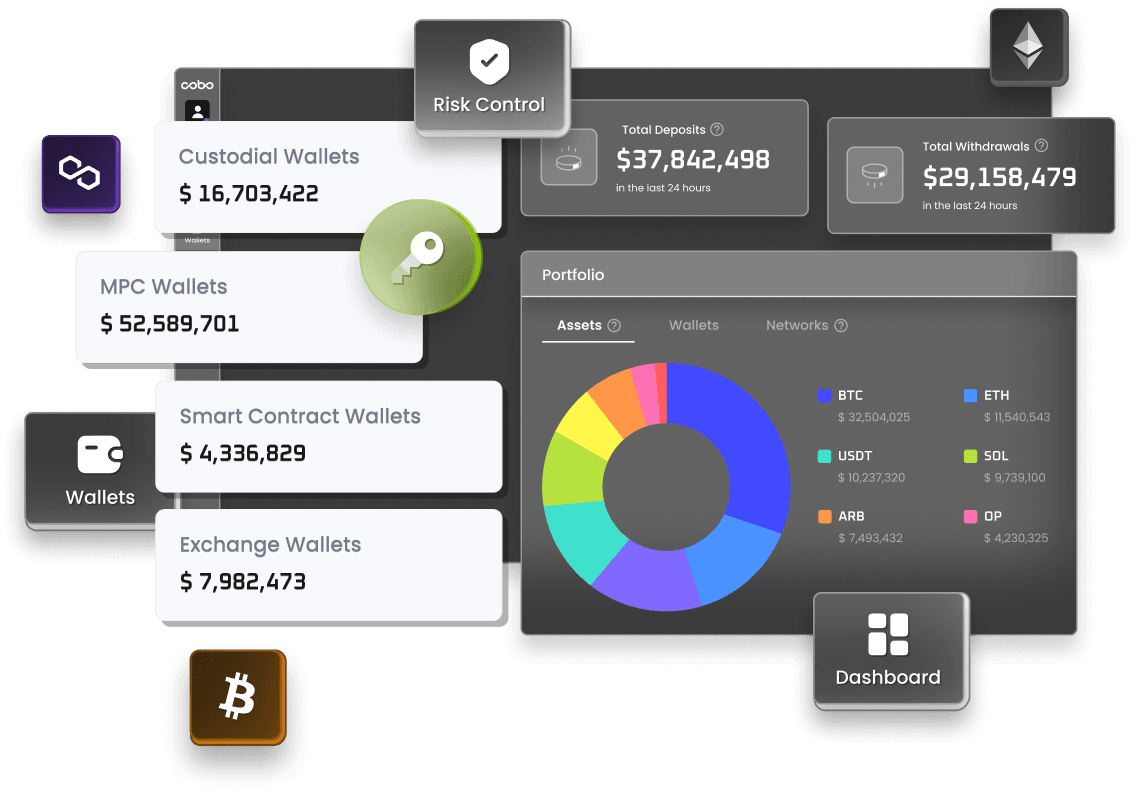
Cobo provides digital asset infrastructure that includes wallet technology, custody-related services, and tools for organizations operating across blockchain networks. Its relevance to stablecoin treasury management comes from the need to securely hold assets while coordinating transfers, permissions, and operational workflows.
Businesses that maintain stablecoin balances across several networks can face a fragmented treasury environment. Funds may be distributed among operational wallets, customer accounts, payment providers, and different blockchain ecosystems. Without appropriate controls, consolidating balances and reviewing transactions can require substantial manual effort.
Cobo’s wallet and digital asset infrastructure can help organizations structure these operations and establish more consistent control over their holdings. Depending on the selected service and configuration, businesses can evaluate capabilities involving transaction authorization, wallet management, and institutional asset operations.
Cobo is most relevant when custody architecture and wallet infrastructure are significant parts of the treasury problem. It should not automatically be treated as a complete replacement for accounts payable software, payment orchestration, or enterprise accounting systems.
Businesses should confirm the exact product configuration, supported stablecoins and networks, custody arrangements, and availability of automation features before choosing Cobo for a corporate treasury deployment.
8. Sphere
Best for: Stablecoin payment orchestration and multi-chain financial operations.

Sphere is a stablecoin-focused infrastructure provider associated with business payment workflows and blockchain-based money movement. It is relevant to organizations seeking to simplify stablecoin transactions and coordinate payment operations across supported networks and financial integrations.
For companies with international customers or counterparties, the challenge is often not simply sending a stablecoin transaction. They must also connect payment instructions with funding sources, destination addresses, operational controls, and the systems used to monitor completed or failed transfers. Payment infrastructure can help reduce the amount of custom integration work required to coordinate these components.
Sphere is worth evaluating for businesses interested in connecting stablecoin payment flows with broader financial operations. Depending on the service and implementation, its relevance may extend to payment processing, orchestration, and related operational workflows.
However, buyers should distinguish between documented payment capabilities and more advanced treasury features. Automated sweeping, cross-chain rebalancing, netting, and rule-based liquidity allocation are separate requirements that should be validated directly rather than inferred from general payment infrastructure positioning.
Sphere may suit businesses that want a more integrated stablecoin operating model, particularly when their requirements extend beyond basic wallet transfers. The final assessment should focus on supported networks, integration options, operational controls, and the specific payment corridors the business intends to serve.
9. Eco
Best for: Programmable cross-chain stablecoin transfers and liquidity movement.
Eco focuses on infrastructure for moving value across blockchain networks, making it relevant to businesses that need to coordinate stablecoin transfers between supported chains. Its technology is particularly interesting for applications where liquidity fragmentation and cross-chain execution create operational challenges.
A company operating across multiple blockchain ecosystems may hold stablecoins on one network while needing funds on another. Moving those balances manually can introduce delays, additional transaction steps, and fragmented monitoring. Cross-chain infrastructure can help simplify the movement of assets between supported networks, subject to the underlying execution design and liquidity conditions.
Eco’s routing and cross-chain infrastructure can be considered as part of a treasury automation architecture in which stablecoin transfers need to be coordinated programmatically. It is particularly relevant for technically sophisticated teams building financial products or treasury workflows that require blockchain interoperability.
Nevertheless, cross-chain execution is not the same as a complete corporate treasury management system. Eco should be evaluated for the specific transfer and routing functions it provides, while businesses separately assess wallet governance, accounting, compliance, and fiat settlement requirements.
For organizations building multi-chain financial applications, Eco may serve as a specialized infrastructure component rather than a standalone finance department platform.
10. Crossmint
Best for: Embedded stablecoin payments, wallet infrastructure, and API-driven financial applications.
Crossmint provides infrastructure that enables businesses and developers to integrate digital wallets and blockchain-based payment functionality into applications. Its relevance to corporate stablecoin operations comes from the ability to build payment experiences and digital asset workflows without developing every underlying component from scratch.
Companies creating fintech applications, marketplaces, digital platforms, or services that need stablecoin functionality may require wallet provisioning, payment APIs, transaction handling, and integrations with supporting infrastructure. Crossmint’s developer-oriented approach can help teams incorporate these capabilities into their products.
From a treasury perspective, embedded wallet infrastructure can be useful when a business needs to manage funds across multiple customers, applications, or operational flows. However, the exact extent of treasury automation depends on the product configuration and integrations selected.
Crossmint is therefore best evaluated as an infrastructure option for businesses with technical teams and application-level requirements. Organizations should confirm supported stablecoins and networks, transaction controls, fiat on- and off-ramp availability, compliance responsibilities, and reporting capabilities before treating it as a complete treasury solution.
For businesses building their own financial products, Crossmint may offer a useful foundation for stablecoin functionality, while dedicated treasury and accounting tools can address additional corporate finance needs.
Key Benefits of Stablecoin Treasury Automation for Businesses
1. Faster settlement across borders. Stablecoin transfers can settle outside conventional banking hours, potentially reducing waiting times for international transactions. Actual end-to-end speed depends on blockchain confirmation, conversion, compliance checks, and local payout arrangements.
2. Less manual payment administration. Batch transfers, programmable approval workflows, and automated transaction handling can reduce repetitive tasks for finance and operations teams. The degree of automation depends on the platform and its integrations.
3. Improved treasury visibility. Centralized balance views and transaction reporting can help businesses monitor funds distributed across wallets, networks, and payment channels. A complete view may require integrations with multiple providers.
4. More structured financial records. Accounting integrations, invoice matching, and transaction categorization can make it easier to reconcile blockchain activity with internal records. These controls are especially important for businesses that must produce auditable financial statements.
5. More flexible financial infrastructure. Stablecoin payment rails can complement traditional banking services, giving businesses additional options for cross-border settlement and digital financial products. They do not eliminate the need for suitable banking relationships, compliance processes, or liquidity management.
Common Challenges to Consider Before Adoption
Despite their potential benefits, corporate stablecoin payment and treasury automation platforms require careful evaluation. Stablecoins can carry issuer, redemption, depegging, and counterparty risks. Blockchain transfers may be irreversible, while sending assets through the wrong network or address can result in losses.
Regulatory requirements also vary by jurisdiction and business model. Companies should review licensing arrangements, sanctions screening, customer verification, transaction monitoring, tax treatment, and accounting policies before launching production workflows.
Integration is another consideration. A payment platform may support stablecoin transfers but lack the treasury controls, reporting, or enterprise resource planning connections required by a finance team. Some businesses will therefore need a combination of payment infrastructure, institutional wallets, and accounting software.
Finally, transaction fees should be assessed on an end-to-end basis. Blockchain network fees are only one component; conversion spreads, withdrawal charges, banking fees, liquidity costs, implementation expenses, and ongoing compliance requirements may also affect the total cost of ownership.
Frequently Asked Questions
1. What is a corporate stablecoin payment platform?
A corporate stablecoin payment platform helps businesses send, receive, or process stablecoin transactions for activities such as supplier payments, international transfers, contractor payouts, and digital financial services. Depending on the provider, it may also support fiat conversion, transaction monitoring, and payment reconciliation.
2. What is the difference between stablecoin payments and treasury automation?
Stablecoin payments focus on moving funds between parties. Treasury automation covers a broader set of financial operations, potentially including balance monitoring, wallet governance, transaction approvals, liquidity allocation, automated transfers, and reconciliation. Some providers combine both functions, while others specialize in only one layer.
3. Which platform is best for corporate stablecoin payments?
There is no universal winner. BVNK is worth evaluating for enterprise payment infrastructure, Conduit for cross-border settlement, and Request Finance for business payment workflows such as invoicing and batch payouts. Companies with institutional wallet or accounting requirements may instead prioritize Utila, Fireblocks, or Bitwave.
4. Can stablecoins replace traditional business bank transfers?
Stablecoins can complement or replace certain transfer workflows where the relevant assets, payment corridors, counterparties, and regulatory arrangements are supported. They are not a universal substitute for banking infrastructure because businesses may still need fiat accounts, local payout rails, currency conversion, and regulated financial services.
5. Are stablecoin treasury platforms suitable for small and medium-sized businesses?
Some platforms offer workflows that can suit smaller companies, while institutional infrastructure providers may be better suited to organizations with more complex security and integration requirements. The appropriate choice depends on transaction volume, supported markets, budget, internal technical resources, and the level of financial control required.


