In 2026, the terms blockchain, Bitcoin, and Web3 are still widely misunderstood. They often appear together in conversations about crypto, finance, and emerging technology, which leads many people to assume they represent the same thing. In reality, they refer to three different concepts that operate at different layers of the digital ecosystem.
Understanding how they difference and how they connect is essential for anyone trying to make sense of the modern internet, digital assets, or decentralized technology.
Start With the Foundation: What Is Blockchain Technology?
Blockchain is the core technology behind Bitcoin and Web3. Before exploring use cases, tokens, or decentralized applications, it’s essential to understand how blockchain actually works and why it matters.
Read the Blockchain Fundamentals →Why these concepts are still confused
The confusion largely comes from how people were introduced to this space. For most, Bitcoin was the first encounter. It appeared in the news as a volatile digital currency, and blockchain was mentioned only as the technology behind it. Later, Web3 entered the conversation, often framed as a rebranding of crypto rather than a broader architectural shift.
This sequence created a mental shortcut that still persists:
- Blockchain is assumed to mean Bitcoin
- Bitcoin is assumed to represent all blockchain use cases
- Web3 is assumed to be another name for crypto
While these ideas are connected, none of them are interchangeable.
Blockchain: the core technology layer
Blockchain is a technological framework, not a financial product or a digital asset. It enables data to be recorded and shared across a network in a way that does not rely on a central authority. Each record is linked to the previous one through cryptography, creating a chain of data that is extremely difficult to alter retroactively.
What makes blockchain distinctive is not the type of data it stores, but how it stores and verifies that data. In practice, blockchain systems are designed to be:
- Decentralized, with no single point of control
- Transparent, allowing participants to verify records
- Tamper-resistant, making unauthorized changes impractical
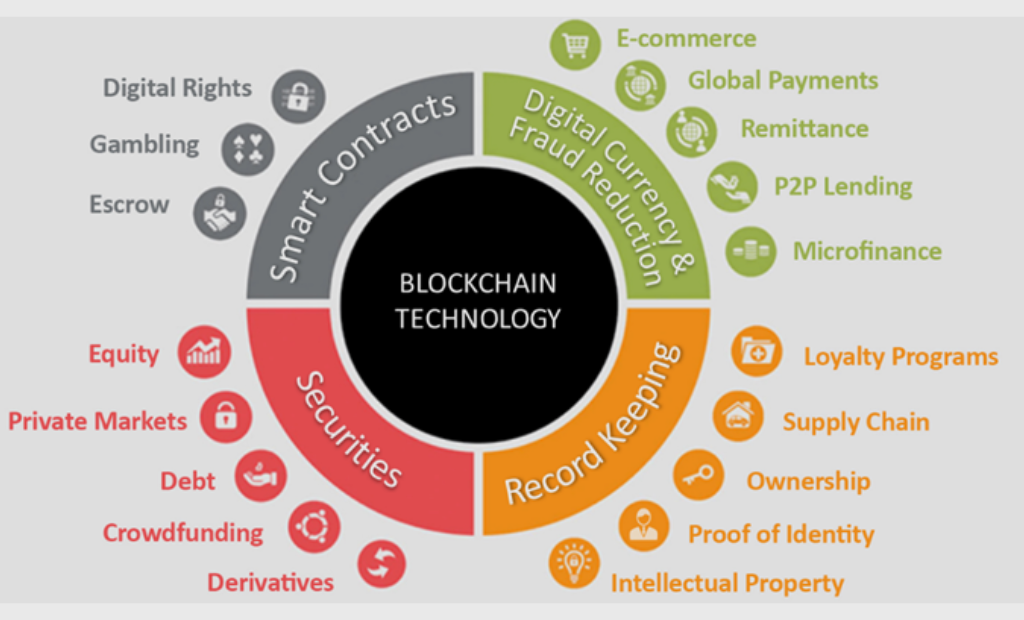
Because blockchain is infrastructure, it can support a wide range of applications. Financial transactions were simply the first widely adopted example.
A helpful analogy is the internet itself. The internet is not a website or an app; it is the underlying system that allows websites and apps to exist. Blockchain plays a similar role for decentralized systems.
Bitcoin: A specific application of Blockchain
Bitcoin is a digital currency built on top of blockchain technology. It was created to enable peer-to-peer value transfer without intermediaries such as banks or payment processors. Its design emphasizes security, scarcity, and resistance to censorship.
Bitcoin’s importance lies in the fact that it was the first successful demonstration of blockchain at scale. It showed that a decentralized network could securely manage value and reach consensus without central oversight.
However, Bitcoin’s scope is intentionally limited. It is optimized for monetary use, not for running complex applications or managing diverse data types. This distinction is critical:
- Bitcoin relies on blockchain to function
- Blockchain is not limited to Bitcoin
Many modern blockchain systems exist that have nothing to do with Bitcoin or currency at all.
Web3: A new model for the Internet
Web3 represents a broader shift in how digital systems are structured and owned. Instead of platforms controlling data, identities, and digital assets, Web3 proposes an internet where users retain direct ownership and control.
This model is made possible by combining blockchain with smart contracts and decentralized protocols. While cryptocurrencies play a role in this ecosystem, Web3 is fundamentally about how trust, ownership, and coordination work online.
In practical terms, Web3 enables:
- Financial systems that operate without centralized institutions
- Digital ownership of assets and identities
- Community-driven governance through decentralized organizations
- Applications that run on open, permissionless infrastructure
Bitcoin fits within this ecosystem as a monetary layer, but Web3 extends far beyond payments.
Blockchain vs Bitcoin vs Web3: A structured comparison
Looking at these concepts side by side clarifies their relationship:
| Aspect | Blockchain | Bitcoin | Web3 |
|---|---|---|---|
| Nature | Technology | Digital currency | Internet ecosystem |
| Primary role | Data infrastructure | Value transfer | Decentralized applications |
| Is it money? | No | Yes | No |
| Uses blockchain? | — | Yes | Yes |
| Scope | Broad | Narrow | Broad |
Each exists at a different level: blockchain as infrastructure, Bitcoin as a single application, and Web3 as an ecosystem built on that infrastructure.
How they evolved over time
Their historical development also explains why they are often grouped together. Blockchain entered public awareness through Bitcoin, which proved the concept worked. As developers explored broader possibilities, platforms introduced smart contracts, enabling applications beyond payments. This progression eventually led to Web3, where blockchain became the backbone for decentralized digital services rather than just currency systems.
By 2026, the focus has shifted from experimentation to usability, scalability, and real-world integration. Blockchain is increasingly viewed as core infrastructure, Bitcoin as a digital monetary asset, and Web3 as an evolving internet paradigm.
Why understanding the difference matters
Clarity around these terms has real consequences. Misunderstanding them can lead to poor investment decisions, flawed product strategies, or unrealistic expectations about what decentralized technology can deliver.
Understanding the distinctions helps people:
- Evaluate blockchain projects more accurately
- Separate technological fundamentals from market speculation
- Communicate ideas clearly in professional contexts
- Build or adopt systems with realistic assumptions
In a space driven by narratives, precision creates advantage.
Why Understanding the Distinctions Actually Matters
In a space driven by narratives, precision creates a real advantage.
Evaluate Projects More Accurately
Distinguish between blockchain infrastructure, crypto assets, and Web3 applications to judge whether a project’s value proposition is actually sound.
Separate Tech from Speculation
See where real technological fundamentals end and pure market hype begins, so you can avoid decisions driven only by price action.
Communicate with Clarity
Use the right language in professional contexts when discussing blockchain, Bitcoin, and Web3 with teams, clients, and stakeholders.
Build on Realistic Assumptions
Design, build, or adopt systems based on how the stack actually works, not on misconceptions or oversimplified narratives.
A simple mental model
To summarize without oversimplifying:
- Blockchain is the technology that enables decentralized systems
- Bitcoin is a digital currency that uses that technology
- Web3 is a decentralized internet built using that technology
Keeping these roles separate makes the broader ecosystem far easier to understand.
How Blockchain Is Reshaping Modern Finance
Blockchain in finance has evolved far beyond cryptocurrencies. From peer-to-peer payments to DeFi, tokenized assets, and CBDCs, this article explores how financial infrastructure is being rebuilt.
Explore Blockchain in Finance →Final thoughts
Blockchain, Bitcoin, and Web3 are interconnected but distinct. Each addresses different problems and operates at a different layer of the digital stack. Confusing them obscures their individual value; understanding their relationship reveals how transformative this technology truly is.
Blockchain vs Bitcoin vs Web3: Common Questions Explained
Clear answers to the most frequent questions about how blockchain, Bitcoin, and Web3 relate to each other — and where they are different.
No. Blockchain is the underlying technology, while Bitcoin is a digital currency that uses that technology. Blockchain can power many systems that have nothing to do with Bitcoin.
Not at all. Bitcoin was the first widely known use case, but today blockchains support finance, supply chains, identity, gaming, governance, and many other non-monetary applications.
Web3 is a new model of the internet built on blockchain where users can own their data, assets, and identities directly, instead of depending on centralized platforms to control everything.
No. Crypto assets are one component of Web3, but Web3 also includes decentralized applications, DAOs, NFTs, on-chain identity and many other building blocks of a user-owned internet.
Yes. Blockchain can be used on its own, for example in closed enterprise systems or for data verification. Web3 is a broader ecosystem built on blockchains, not a requirement for using them.
In practice, yes. Blockchain provides the shared, tamper-resistant state and ownership layer that gives Web3 its decentralized properties. Without it, most Web3 apps would become just Web2 again.
Because they appeared in the public eye together. Bitcoin introduced blockchain, Web3 later built on blockchain, and media coverage often mixes the terms, so many people treat them as interchangeable.
No. Finance was the earliest “killer app”, but blockchains can secure any kind of data: certificates, licenses, supply chain records, votes, reputation scores and more.
Start with core blockchain concepts, then understand how Bitcoin uses them, and only after that move on to Web3 use cases such as DeFi, NFTs and DAOs.
Because it helps you evaluate projects more accurately, separate real technology from speculation, communicate clearly, and build or adopt systems on realistic assumptions instead of hype.
Buy me a croissant 🥐
If this story helped you, a tiny treat keeps the energy (and research) going.